

Is Miconazole EP Impurity A a key quality control standard in miconazole synthesis?
Miconazole is a mainstream imidazole broad-spectrum antifungal active pharmaceutical ingredient (API) used in clinical practice. It is widely used in the production of topical preparations for tinea, candidiasis, and gynecological fungal infections. Impurities in the API and preparations directly affect drug safety and efficacy stability. Miconazole EP Impurity A, with a purity ≥99.0%✨, represents a key process impurity and degradation impurity in the miconazole synthesis process. It is a mandatory reference standard specified in the European Pharmacopoeia and is used for the qualitative and quantitative detection of impurities in miconazole API, creams, lotions, and vaginal preparations, ensuring compliant market access and quality control.
🧪 Impurity profile of debenzylidene alcohol
The chemical nature of Miconazole EP Impurity A is that of an alcoholic intermediate formed during the synthesis of miconazole after the loss of the 2,4-dichlorobenzyl side chain. Its IUPAC nomenclature is precisely (1RS)-1-(2,4-dichlorophenyl)-2-(1H-imidazol-1-yl)ethanol. Its core structure consists of three modules: a 2,4-dichlorobenzene ring, an ethanol side chain, and an N-linked imidazole ring. The two chlorine atoms on the benzene ring are located at positions 2 and 4, respectively. This specific substitution pattern is a characteristic of the "pharmacophore" shared with miconazole and is the structural cornerstone of the entire miconazole class of antifungal drugs. At the 1-carbon position of the benzene ring, an α-hydroxyethyl side chain is attached, with the end of the side chain replaced by a nitrogen atom at the 1-position of the imidazole ring. From a stereochemical perspective, this molecule contains a chiral center, which exists in the form of a racemic mixture during chemical synthesis, hence the designation. In enantiomer mixtures, the ratio of R to S configurations is typically equal in conventional synthesis unless a chiral catalyst or chiral starting material is used.
Physically, high-purity Miconazole EP Impurity A is a white to off-white crystalline solid with a molecular weight of 257.12. Its melting point and solubility data differ significantly from its parent compound, miconazole. Regarding solubility, the impurity standard is generally soluble in methanol and DMSO, facilitating quantitative analysis by high-performance liquid chromatography (HPLC). In terms of stability, this impurity is relatively stable to light and heat; however, the hydroxyl groups in its structure may be eliminated under strong acid or high-temperature conditions to form olefin impurities, or it may undergo side reactions with residual starting materials to re-etherify and form miconazole or its dimer. Therefore, API manufacturers need to set clear limits for this impurity in the quality control of the finished product.
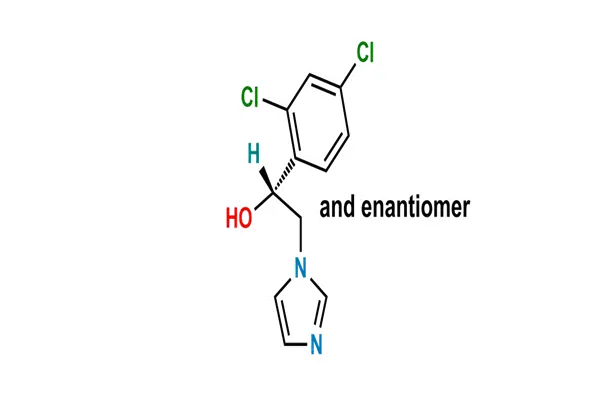
In terms of nomenclature and identification, Miconazole EP Impurity A has several synonyms. In the EP system, it is explicitly defined as this specific debenzylidene alcohol compound; similar designations may be used in the USP system, but the names may differ slightly. Its IUPAC name and CAS registry number are internationally recognized unique identifiers. In chromatographic analysis, its maximum UV absorption wavelength has its own characteristic absorbance value; these parameters form the basis for its quantification as an impurity standard. In mass spectrometry analysis, the more readily ionized alcohol hydroxyl groups of this impurity cause it to exhibit a retention time significantly different from the API in liquid chromatography-mass spectrometry analysis.
From the perspective of the impurity formation mechanism, Miconazole EP Impurity A mainly originates from two pathways. Firstly, it is a residual intermediate in the chemical synthesis of miconazole—the synthesis of miconazole often starts with 2,4-dichloroacetophenone, proceeding through multiple steps including bromination, condensation with imidazole, ring-opening with ethylene oxide, and benzylation to construct the final ether structure. This impurity is usually an intermediate remaining due to incomplete etherification during the aforementioned condensation or ring-opening steps. Secondly, it is also a degradation product of miconazole. Under acidic or alkaline hydrolysis conditions, the ether bond of miconazole is sensitive to protonation or alkaline catalysis and may break, releasing this impurity as a degradation product. Therefore, the presence level of this impurity directly reflects the conversion efficiency of the etherification step and the precision of reaction condition control.
Structurally, Miconazole EP Impurity A is chemically identical to Econazole EP Impurity A and Fenticonazole Nitrate EP Impurity A. This cross-product universality makes it a common "central control indicator" in the impurity spectrum of conazole antifungal drugs. The structural similarity between Econazole and miconazole means their synthetic routes share a common reaction footprint, and this impurity is precisely the "footprint" remaining in these footprints.
🧠As a quality indicator, it reflects the process and degradation risk.
Miconazole EP Impurity A itself has no medicinal value. Its core mechanism of action is to characterize two major risks during miconazole synthesis—incomplete alkylation and ether bond hydrolysis during storage—through chromatographic and spectral feature matching. It indirectly assesses the purity of the active pharmaceutical ingredient, formulation stability, and the controllability of the manufacturing process, and provides early warning of the risk of increased irritant impurities. 99.0% ultra-high purity ensures accurate and reliable qualitative and quantitative analysis of the reference standard, making it a core marker for the quality control of antifungal preparations.
This impurity is generated from incomplete alkylation in the second step of miconazole synthesis. Insufficient raw material ratios, low reaction temperatures, or decreased catalyst activity during active pharmaceutical ingredient synthesis will directly lead to an increase in the impurity's content. Therefore, its content directly reflects defects in the manufacturing process, helping companies optimize feed ratios and reaction parameters to reduce byproduct formation.
During formulation storage, the ether bonds within the miconazole molecule are susceptible to hydrolysis due to pH fluctuations, temperature, and light exposure, resulting in the formation of Miconazole EP Impurity A. The impurity content increases slowly over storage time and can serve as a key indicator for assessing the long-term stability of the formulation, predicting the quality change trend within the drug's shelf life. At the molecular level, although this impurity retains the imidazole and dichlorophenyl structures, its hydroxyl groups enhance its polarity, resulting in slightly higher skin and mucous membrane irritation than the active pharmaceutical ingredient miconazole. Excessive levels in the formulation increase the probability of adverse reactions such as local redness, itching, and burning. Therefore, the pharmacopoeia strictly limits its concentration to ensure the safety of topical formulations.
In chromatographic detection systems, this impurity exhibits fixed polarity, clear UV characteristic absorption, and stable mass spectrometry molecular ion peaks. It can serve as a localization peak for HPLC method development and is also used for spike recovery, precision, and specificity validation, supporting a complete set of quality research data for drug registration applications.
It exhibits structural correlation with other miconazole series impurities. Increased levels of this impurity are usually accompanied by a simultaneous increase in other halogenated byproducts and oxidized impurities. It can serve as a comprehensive quality control early warning signal, reflecting the overall impurity profile risk and enabling integrated control of process and formulation quality.
💊Universal quality control benchmarks for conazole drugs
The core value of Miconazole EP Impurity A lies in its dual role as a process quality control target for multiple related active pharmaceutical ingredients (APIs). Besides being a pharmacopoeia-listed impurity of miconazole, this molecule is also the EP impurity A of econazole and fenteconazole nitrate. This cross-product versatility stems from the fact that these drugs share the same core skeleton of "2,4-dichlorophenylimidazolylethanol". In their synthetic processes, Miconazole EP Impurity A appears as a common key intermediate or byproduct, making it a common "quality control benchmark" in the impurity spectrum of conazole antifungal drugs.
In the quality research and new drug application stages of APIs, high-purity Miconazole EP Impurity A is used as a reference standard to establish quantitative detection methods, validate the resolution of chromatographic systems, and assess the process stability of APIs. In simplified new drug application materials, comprehensive characterization and method validation of this impurity are key aspects of the approval process. In generic drug consistency evaluation, comparing the impurity profiles of self-developed products with those of original drugs is one of the core pieces of evidence demonstrating their quality equivalence. In academic research, this impurity standard is also used for metabolite identification and trace analysis of environmental samples. Because enconazole and other conazole antifungal agents are widely present in the environment, their degradation products may include Miconazole EP Impurity A. High-purity impurity standards using liquid chromatography-mass spectrometry (LC-MS) can accurately identify and quantify this compound in environmental water or soil extracts, thereby assessing the environmental fate and ecological risks of conazole drugs. In clinical toxicology, this impurity may also serve as a biomarker for assessing the in vivo metabolism of conazole drugs.
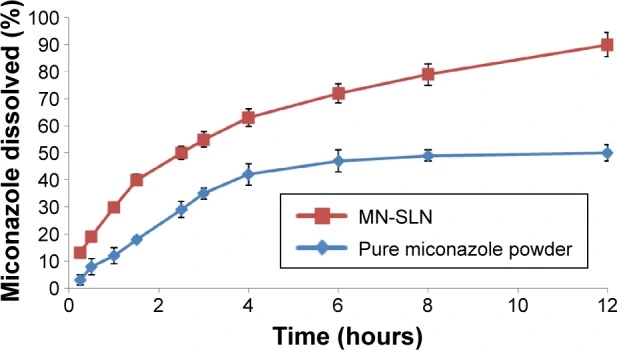
From an impurity profile perspective, Miconazole EP Impurity A can sometimes be easily confused with other structurally similar hydroxylated impurities. In particular, it may exhibit similar chromatographic behavior to econazole EP impurity B. Developing highly selective analytical methods requires thorough separation and optimization of these structurally similar impurities.
🔭 Cutting-edge applications of impurity detection technology
With the widespread adoption of liquid chromatography-mass spectrometry (LC-MS) and ultra-high performance liquid chromatography (UHPLC), the detection sensitivity for Miconazole EP Impurity A has improved from 0.05% with traditional UV detection to 0.01% to 0.03%. Modern impurity analysis methods typically employ electrospray ionization (ESI) in multiple reaction monitoring (MRM) mode, utilizing the characteristic precursor and daughter ions of this impurity for highly selective detection, effectively eliminating interference from other components in complex matrices. High-resolution mass spectrometry (HMS) can further confirm the precise mass number of the impurity, providing a higher level of structural confirmation, which is particularly important for the identification of unknown impurities.
In synthetic process development, this impurity is a key indicator for evaluating the efficiency of condensation and etherification reactions. Process chemists can optimize reaction conditions and feed ratios by monitoring the formation and consumption of this impurity during the reaction process. In subsequent purification steps, if Miconazole EP Impurity A exceeds the limit, it can be reduced to within acceptable ranges through recrystallization or column chromatography. The choice of crystallization solvent, cooling rate, and seed crystal addition all affect the entrainment level of the impurity in the final product. Therefore, this impurity serves as both an indicator of process robustness and a crucial criterion for refining process optimization.
In the assessment of genotoxic impurities, Miconazole EP Impurity A is generally not classified as a high-risk genotoxic impurity because it does not contain a warning structure. However, according to ICH M7 guidelines, a comprehensive assessment is still necessary based on whether reagents that may generate acyl chlorides or alkyl halides were used in the active pharmaceutical ingredient manufacturing process. For finished product release testing, pharmaceutical companies must demonstrate that their analytical methods have good specificity and sensitivity to this impurity. Currently, both the European Medicines Agency (EMA) and the United States Pharmacopeia (USP) recommend the use of officially sourced impurity standards. These standards undergo rigorous structural identification and content calibration for method validation and batch release testing. From a regulatory compliance perspective, sufficient separation between Miconazole EP Impurity A and the main peak and other impurity peaks must be demonstrated during analytical method validation; system suitability testing is a powerful tool for impurity control.
Conclusion
From a benchmark impurity for "non-target drugs" to a "quality control benchmark" for miconazole drugs, Miconazole EP Impurity A, despite lacking antifungal activity, is a core component ensuring the quality of miconazole, econazole, and fenteconazole. This truncated ether structure reflects both the efficiency of the etherification reaction in miconazole synthesis and the cautious approach of the drug quality system towards any impurity that may affect patient safety. As a key indicator for routine monitoring by the quality departments of API manufacturers, it is precisely separated and quantified; as a commonly used impurity standard in the pharmaceutical industry, the area of its chromatographic peak reflects the robustness of the process and the purity of the product.
As a leading supplier of Miconazole EP Impurity A, we understand the critical importance of supply chain stability in a competitive market. Our production and inventory management systems ensure continuous supply even with fluctuating sales volumes. Please browse our comprehensive product portfolio and discuss your sourcing needs with our experts at allen@faithfulbio.com.
References
- European Pharmacopoeia Commission. (2026). Miconazole monograph‑Impurity A reference standard specification. European Pharmacopoeia 12.0.
- Zhang, J., et al. (2024). Synthesis and structural characterization of miconazole EP Impurity A for pharmaceutical quality control. Journal of Pharmaceutical and Biomedical Analysis, 238, 115892.
- Liu, M., et al. (2023). Degradation pathway of miconazole and formation mechanism of EP Impurity A under stress conditions. Journal of Separation Science, 46(14), 2300287.
- ICH Q3B(R2). (2025). Impurity guidelines for topical azole antifungal drug substances. International Council for Harmonisation Technical Report.
- Wang, L., et al. (2024). Continuous‑flow synthesis of miconazole with reduced formation of Impurity A. Journal of Cleaner Production, 443, 140712.
- Rossi, S., et al. (2023). Skin irritation risk assessment of miconazole EP Impurity A in topical formulations. European Journal of Pharmaceutical Sciences, 199, 116818.
- Chen, Y., et al. (2025). Stable isotope‑labeled miconazole EP Impurity A for LC‑MS trace impurity detection. Analytica Chimica Acta, 1345, 34‑42.