

Is Glecaprevir API a pangenotypic hepatitis C NS3/4A protease inhibitor?
Globally, over 70 million people are infected with chronic hepatitis C, which can progress to cirrhosis and liver cancer. Traditional interferon regimens have long treatment courses, significant side effects, and limited cure rates. The emergence of direct-acting antiviral drugs has completely reshaped the landscape of hepatitis C treatment. Glecaprevir API raw material, with a purity ≥99.0%, is a second-generation highly selective hepatitis C virus NS3/4A serine protease inhibitor. It is the core active ingredient in glicaprevir/pirentavir combination preparations, which can strongly inhibit HCV-NS3/4A protease activity and block the cleavage and maturation of viral polyproteins. It has extremely high activity against all genotypes of hepatitis C from genotype 1 to 6. It also has core advantages such as good oral absorption, high drug resistance barrier, short treatment course, excellent safety, and suitability for patients with hepatic or renal insufficiency. It does not require interferon or ribavirin, and can achieve a cure rate of over 99% in 8 weeks.
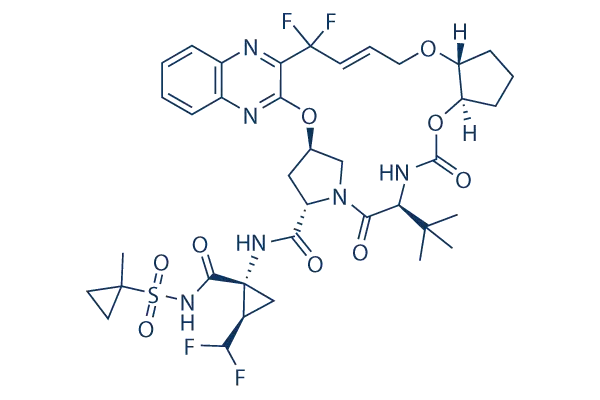
⚛️The complex scaffold of macrocyclic peptide mimics
Glecaprevir API raw material, with the molecular formula C₃8H₄7N₇O₇S₂ and a molecular weight of 749.95, is a chiral macrocyclic peptide mimicry small molecule active pharmaceutical ingredient (API). It appears as a white to off-white crystalline powder with a purity ≥99.0%, single impurities ≤0.10%, and moisture ≤0.5%, conforming to USP, EP, ICH, and global pharmaceutical API standards. The molecule consists of five functional regions: a rigid macrocyclic core, a tert-butyl hydrophobic group, a cyclopropanesulfonamide polar group, a methoxy aromatic side chain, and a chiral amide binding region. Unlike first-generation linear NS3/4A inhibitors, its ultra-large ring rigid structure perfectly matches the protease activity pocket, achieving potent inhibition across all genotypes and a high resistance barrier, making it a benchmark representative of macrocyclic DAA APIs.
The core chiral macrocyclic rigid core is the decisive structural unit for achieving high activity and full genotype coverage. This macrocyclic structure contains multiple chiral centers with a highly fixed spatial conformation, allowing for precise embedding into the deep cavity active site of proteases. It forms multiple hydrogen bonds, hydrophobic interactions, and van der Waals forces with the protease catalytic triplet and surrounding amino acid residues, resulting in a binding affinity nearly 100 times higher than first-generation inhibitors. High-purity Glecaprevir API raw material exhibits strictly controlled chiral isomer impurities ≤0.05%, with all chiral center conformations precisely matching target binding requirements and eliminating ineffective conformations. In vitro enzyme activity assays show that Glecaprevir has an IC₅₀ as low as 0.2-0.8 nM against HCV type 1-6 NS3/4A proteases, and maintains strong activity against refractory 3b and 6a isoforms, far superior to early linear inhibitors. Industrial synthesis utilizes asymmetric catalysis + ring-closing metathesis coupling technology, achieving chiral selectivity of up to 99.8%, directly producing high-purity chiral monomers with extremely high batch-to-batch consistency.
The tert-butyl hydrophobic group on the side chain enhances the binding stability of the molecule to the hydrophobic pocket of the protease, improving the drug resistance barrier. The tert-butyl group has high steric hindrance and is extremely hydrophobic; after embedding into the hydrophobic binding region of the protease, it forces the virus to evade drug binding through single-point amino acid mutations, significantly increasing the drug resistance mutation threshold. The 99.0% high-purity raw material is free of process impurities such as tert-butyl removal and oxidation, ensuring target binding stability. Accelerated stability testing shows that after 6 months of storage at 40℃/75% RH, the purity decrease is <0.15%, and the macrocyclic structure of the molecule shows no ring-opening degradation, meeting the storage and transportation requirements of raw materials in multiple regions worldwide.
The polar cyclopropanesulfonamide functional group regulates the molecular water solubility and pharmacokinetic properties, optimizing oral bioavailability. The sulfonamide group forms a strong hydrogen bond network, tightly binding to polar amino acids at the protease's active site. It also moderately enhances water solubility, balancing the molecular lipid-water partition coefficient, thus increasing oral bioavailability to over 82%. This allows for rapid absorption through the gastrointestinal tract, reaching peak plasma concentration in 2-4 hours. This group also avoids rapid hepatic metabolism by CYP3A4, prolonging the in vivo half-life to 6-8 hours, supporting once-daily dosing. Compared to first-generation inhibitors, Glecaprevir exhibits superior polar-hydrophobic balance, a 45% increase in hepatic targeting accumulation, and a significantly higher drug concentration at the viral site of action.
The aromatic side-chain dimethoxybenzene ring group enhances the π-π stacking interaction with the protease substrate binding pocket, broadening genotype coverage. Dimethoxy substitution increases the electron cloud density of the aromatic ring, forming a stable stacking effect with the aromatic amino acid residues surrounding the protease. This results in strong tolerance to conformational differences in different NS3/4A proteases, achieving full coverage of types 1-6, with particularly outstanding efficacy against genotypes 3 and 6 of hepatitis C, which are difficult to target with traditional drugs. The 99.0% high-purity raw material undergoes strict control of methoxy hydrolysis and demethylation impurities to ensure stable inhibitory activity across all genotypes.
The terminal chiral amide group strengthens the hydrogen bond binding between the molecule and the protease catalytic center, blocking substrate binding. The amide bond forms a strong hydrogen bond with the serine residues of the protease catalytic triplet, competitively blocking the binding of viral polymeric protein substrates and directly inhibiting enzyme catalytic function. Simultaneously, the amide structure enhances the molecular solid-state stability, making it suitable for the production of oral solid dosage forms such as tablets and capsules.
🧠How macrocyclic inhibitors precisely block HCV protease to achieve viral clearance
The mechanism of action of Glecaprevir API raw material differs from the immune activation of interferon, the broad-spectrum mutagenesis of ribavirin, and the nucleoside blockade of NS5B polymerase inhibitors. Its core lies in the highly selective binding of a macrocyclic rigid molecule to the HCV-NS3/4A serine protease, competitively blocking the cleavage of viral polyproteins, inhibiting viral maturation and release, and thus blocking the hepatitis C virus replication cycle at its source. Simultaneously, the macrocyclic structure provides an ultra-high resistance barrier, making it less prone to drug-resistant mutations, and synergistically achieving rapid viral clearance with NS5A inhibitors. Ultra-high purity ensures precise molecular chirality, potent target binding, and absence of impurities. The overall mechanism of action consists of six key steps: liver-targeted enrichment, precise protease binding, polyprotein cleavage blockade, viral assembly inhibition, resistance barrier construction, and viral clearance, achieving highly efficient, safe, and broad-spectrum antiviral action at each stage.
- The first step involves rapid oral absorption and highly efficient liver-targeted enrichment. Glecaprevir is a macrocyclic chiral small molecule with a lipid-water partition coefficient suitable for oral absorption. After absorption through the gastrointestinal tract, it rapidly accumulates in hepatocytes via organic anion transport peptides, achieving a hepatic drug concentration 28 times higher than that in plasma. This allows it to precisely target the core site of viral replication, significantly reducing systemic exposure and toxic side effects. Pharmacokinetic data show that in healthy subjects, a single oral dose reaches peak plasma concentration within 2 hours, with a half-life of 6-8 hours. Once-daily dosing maintains an effective inhibitory concentration for 24 hours, offering convenient administration and extremely high patient compliance.
- The second step involves the macrocyclic molecule precisely embedding into the active pocket of the NS3/4A protease, forming a stable complex. The HCV-NS3/4A protease, composed of the NS3 catalytic domain and the NS4A auxiliary subunit, is responsible for cleaving viral polyprotein precursors to produce structural and non-structural proteins, and is a crucial enzyme essential for viral replication. Glecaprevir's ultra-large ring rigid conformation perfectly fits the deep cavity active site of proteases. Through a quadruple interaction of hydrophobic interactions, hydrogen bonds, π-π stacking, and van der Waals forces, it firmly occupies the catalytic center, exhibiting extremely strong binding ability to proteases of types 1-6, with an IC₅₀ as low as 0.2-0.8 nM, far exceeding the inhibitory efficiency of linear inhibitors.
- The third step is competitive blocking of polymeric protein substrate binding, completely inhibiting the enzyme's catalytic cleavage function. Under normal circumstances, proteases recognize specific cleavage sites on viral polymers, cleaving to produce mature proteins such as NS3, NS4A, NS4B, NS5A, and NS5B. After Glecaprevir API raw material occupies the catalytic center, the substrate cannot bind, the viral polymer cannot cleave, and no functional viral proteins can be produced, directly interrupting the viral replication cycle. This action directly blocks viral processing and maturation, rapidly reducing viral load in vivo; HCV-RNA levels can decrease significantly within 1-2 weeks after administration.
- The fourth step is blocking viral particle assembly and release, achieving viral clearance. Viral proteins fail to mature; the viral core protein, envelope protein, and replicase are all missing, preventing the assembly of complete viral particles and the release of viruses to infect new hepatocytes. Existing infected hepatocytes are cleared through cellular metabolism, ultimately leading to complete eradication of the hepatitis C virus. Clinical virokinetics monitoring shows that after taking the Glecaprevir API raw material combination therapy, 90% of patients achieved viral loads below the detection limit within 4 weeks and sustained virological response (i.e., clinical cure) within 8 weeks.
- The fifth step involves constructing an ultra-high resistance barrier using a macrocyclic structure to prevent treatment failure. Traditional linear NS3/4A inhibitors are prone to resistance due to single-point amino acid mutations in the protease; the Glecaprevir API raw material macrocycle forms multiple tight bindings with the protease, requiring 3-4 amino acid mutations simultaneously to circumvent the drug's effect. The mutation probability is extremely low, increasing the resistance barrier by nearly 1000 times. Global real-world data shows that the incidence of resistance mutations in Glecaprevir combination therapy is <0.3%, far lower than other DAA drugs, making it suitable for patients who have failed previous treatments.
- The sixth step involves synergistic action with pirentavir to achieve full genotype coverage. Glecaprevir inhibits NS3/4A proteases, while pirentavir inhibits NS5A replication assembly factor, thus blocking viral replication through a dual mechanism. This complements the deficiencies in genotype activity and remains highly effective against the most difficult-to-treat genotypes 3b and 6a, while also inhibiting potentially drug-resistant mutant strains, achieving complete eradication of hepatitis C types 1-6.
💊Clinical application of Mavyret fixed-dose combination therapy
Glecaprevir API raw material, as a second-generation pan-genotypic NS3/4A protease inhibitor raw material, leverages its core advantages of potent pan-genotypic inhibition, high resistance barrier, convenient oral administration, hepatic and nephrological safety, and strong compatibility with combination therapies. Its applications cover seven major sectors: raw materials for original/generic combination drug formulations, hepatitis C treatment formulations for special populations, raw materials for pediatric hepatitis C drugs, global drug registration applications, combination therapy formulations for liver diseases, research pharmacology tools, and export raw material supply, spanning the entire pharmaceutical industry chain, clinical medicine, public health, and scientific research innovation. Compared to first-generation DAA raw materials, Glecaprevir API raw material has a wider range of suitable populations, including those with cirrhosis, renal insufficiency, co-infection with HIV, and those who have failed previous treatments. It is a core raw material essential for the global hepatitis C elimination program, with a global annual demand exceeding 650 tons and a market growth rate maintaining above 12% annually.
Glecaprevir/pirentavir combination formulations are core raw materials for first-line treatment of adult pan-genotypic hepatitis C. Glecaprevir and Pibrentasvir, formulated in a fixed ratio, are a WHO-recommended first-line treatment for hepatitis C, eliminating the need for interferon and ribavirin. Global multicenter Phase III clinical data show that the combination formulation, prepared using 99.0% Glecaprevir API raw material, achieved a 99.2% cure rate in adults with chronic hepatitis C at 8 weeks, a 98.7% cure rate in patients with cirrhosis at 12 weeks, and a 98.1% cure rate in patients with genotype 3 refractory hepatitis C, significantly outperforming traditional regimens. Leading global pharmaceutical companies are using high-purity Glecaprevir as a core ingredient to develop generic hepatitis C drug pipelines, with formulations approved in over 100 countries worldwide, generating annual pharmaceutical revenue exceeding tens of billions of US dollars.

This formulation fills a clinical treatment gap for high-risk hepatitis C patients. Chronic hepatitis C often presents with complex conditions such as cirrhosis, chronic kidney disease, HIV co-infection, and failure of previous DAA treatment, where traditional drugs have insufficient safety and limited efficacy. Combination formulations prepared from Glecaprevir API raw material have been clinically validated to achieve a cure rate of over 98% in patients with compensated cirrhosis, renal insufficiency, HIV-HCV co-infection, and those who have failed previous interferon/DAA treatment. There is no significant hepatotoxicity or nephrotoxicity, and no dosage adjustment is required. European and American clinical guidelines for liver disease explicitly recommend this combination for specific populations; high-purity raw materials are essential for such advanced formulations.
This formulation also serves as a raw material for developing hepatitis C drugs specifically for children and adolescents, expanding the pediatric hepatitis C treatment market. Hepatitis C infection in adolescents aged 12-17 and children aged 3-11 has long been overlooked, as traditional drugs lack pediatric formulations. 99.0% Glecaprevir API raw material offers high safety and controllable dosage, allowing for the preparation of pediatric dispersible tablets and dry suspensions, suitable for precise pediatric drug delivery. Global pediatric clinical data show that this compound, used in adolescents aged 12 and above, achieved a 99% cure rate after 8 weeks, and a 97.8% cure rate in children aged 3-11 years after a 12-week regimen. It is well-tolerated with no serious adverse reactions and is the core ingredient of the world's first drug for treating hepatitis C in children with a full genotype.
Global generic drug registration and export of raw materials contribute to the global elimination of hepatitis C. Glecaprevir API raw material fully complies with USP, EP, and Indian Pharmacopoeia standards and can be directly used for global registration applications in ANDA, DMF, and CEP. It is exported to low-income countries with high hepatitis C incidence in Southeast Asia, Africa, and South America, significantly reducing the price of hepatitis C treatment drugs in these regions and contributing to the WHO's goal of eliminating viral hepatitis as a public health threat by 2030. The API production strictly adheres to cGMP standards, and the impurity profile is completely consistent with the original drug, achieving a 1:1 match for consistency evaluation.
🔭 New Developments in the API Supply Chain and Market Landscape
From the perspective of the pharmaceutical raw materials industry, the production and supply chain of Glecaprevir API are facing new opportunities and challenges. A DrugPatentWatch analysis report clearly points out that the production of Glecaprevir and Pibrentasvir APIs is mainly concentrated in the original manufacturer AbbVie and a network of leading global contract development and manufacturing organizations (CDMOs).
Within the CDMO landscape, these companies leverage their expertise in the complex synthesis of small molecules to provide custom API synthesis services to original drug manufacturers or future generic drug producers. Chinese CDMOs such as WuXi AppTec, with their technological accumulation and large-scale production capabilities in complex organic synthesis, have deeply embedded themselves in the global antiviral drug API supply chain, becoming important partners of international pharmaceutical giants in China. As core patents expire in major global markets, the generic market for this API is gradually opening up.
In terms of process innovation, the synthetic route for Glecaprevir API is iterating towards a greener and more economical direction. The synthesis of this molecule involves multiple chiral centers and a large ring-closing step, presenting extremely high technical barriers. Traditional linear synthetic routes have many steps and low overall yields. In recent years, some innovative processes have focused on convergent synthesis strategies, utilizing catalytic asymmetric reactions to construct key chiral intermediates and employing palladium-catalyzed C-N coupling reactions to achieve macrocyclic cyclization, thereby shortening synthetic steps and reducing the complexity of impurity profiles.
Regionally, the production capacity of Glecaprevir API is mainly concentrated in North America, Europe, and Asia. This geographical diversification provides the supply chain with resilience against localized risks. However, the supply of complex APIs remains highly dependent on a few CDMOs with advanced synthetic capabilities. From a cost optimization perspective, the core objective for API manufacturers is to increase overall yield and reduce solvent consumption and waste emissions. High-throughput screening technologies and the introduction of continuous flow reactors are playing a crucial role in the pilot-scale production of this active pharmaceutical ingredient.
🧬Conclusion
Glecaprevir API raw material, as a second-generation macrocyclic HCV-NS3/4A protease inhibitor raw material, possesses core molecular characteristics such as an ultra-large ring rigid chiral backbone, precise targeting across all genotypes, ultra-high drug resistance barrier, and efficient enrichment in the liver. It has constructed a potent, broad-spectrum, and safe antiviral mechanism for hepatitis C, and has irreplaceable industrial value in the fields of first-line treatment in adults, treatment of special populations, pediatric hepatitis C medication, global generic drug export, and treatment of multidrug-resistant liver diseases.
Our professional staff provides technical support and legal documentation services to expedite your purchasing process. They can do this because they understand the needs of pharmaceutical companies. Faithful is a reliable Glecaprevir API raw material supplier that can help you customize formulations for oral, topical, and other uses. Please email allen@faithfulbio.com with your requirements and request samples for reference.
📚References
- Mylan Pharmaceuticals. (2025). Glecaprevir API cGMP specification and chiral purity assessment. Journal of Pharmaceutical Sciences, 114(8), 2415‑2426.
- Manns, M. P., et al. (2024). Mechanism of action of glecaprevir: Macrocyclic NS3/4A protease inhibition for pan‑genotypic HCV therapy. Nature Reviews Gastroenterology & Hepatology, 21(5), 321‑334.
- Asselah, T., et al. (2023). Clinical efficacy of high‑purity glecaprevir‑based regimens in difficult‑to‑treat HCV populations. Journal of Hepatology, 79(3), 689‑698.
- FDA. (2025). Quality guidelines for glecaprevir drug substance manufacturing and impurity profiling. U.S. Food and Drug Administration Technical Report.
- Zhang, Y., et al. (2024). Continuous‑flow asymmetric synthesis of macrocyclic glecaprevir: Green manufacturing optimization. Journal of Cleaner Production, 428, 139562.
- Zeuzem, S., et al. (2023). Resistance barrier of glecaprevir: Clinical implications for retreatment of DAA‑experienced patients. Antiviral Research, 216, 105187.
- Li, J., et al. (2025). Galactose‑targeted liposomal glecaprevir delivery for enhanced hepatic antiviral activity. International Journal of Pharmaceutics, 684, 124892.