

Is Larazotide Peptide a tight junction regulator of celiac disease?
In the field of intestinal barrier dysfunction and autoimmune diseases, Larazotide Peptide is the world's first orally administered synthetic octapeptide to enter Phase III clinical trials. Derived from the active fragment of Vibrio cholerae tight junction toxin, its core function is to antagonize ligands, stabilize intestinal epithelial tight junctions, and prevent undigested antigens and toxins from entering the bloodstream. This peptide is composed of 8 natural amino acids in a linear condensation, has a molecular weight of 785.9 Da, and is an industrial-grade white lyophilized powder with good water solubility. After oral administration, it acts locally on the intestines and hardly enters the circulatory system, exhibiting high safety.
🔬Molecular profile of the octapeptide backbone
Chemically, Larazotide Peptide is a linear polypeptide composed of eight L-amino acid residues, with the sequence glycyl-glycyl-valine-leucyl-valine-glutamine-prolyl-glycine (H-Gly-Gly-Val-Leu-Val-Gln-Pro-Gly-OH). Structurally, it is a highly hydrophobic peptide chain—valine (Val) and leucine (Leu) make up half of the eight residues, while only one glutamine residue at the end provides amide polarity. This "hydrophobic on the outside, neutral on the inside" molecular characteristic allows it to remain stable in intestinal mucus and exert its function by specifically binding to zonulin receptors.

Physically, high-purity Larazotide Peptide is a white to off-white lyophilized powder with a purity requirement of not less than 95% (HPLC detection). Its molecular weight is 785.9 Da, and the calculated logP is approximately -3.18, indicating its high water solubility. This characteristic facilitates its distribution within the intestinal lumen, but also means that it is almost entirely not absorbed into the bloodstream—the vast majority of orally administered larazotide remains in the intestinal lumen, acting directly on zonulin receptors on the apical membrane of intestinal epithelial cells, exerting its local effect before being excreted in feces. This "gut-limited" pharmacokinetic characteristic is a crucial guarantee of its good safety profile.
Structurally, larazotide Peptide has several aliases and codes, including AT-1001, AT1001, and FO8S2IW40N. Its international nonproprietary name is Larazotide, and its UNII identifier assigned by the US FDA Substance Registration System is FO8S2IW40N. In early literature, it was also often referred to as a "zonulin receptor antagonist" or "tight junction modulator." Unlike many peptide drugs, larazotide is orally effective, a characteristic that gives it a significant advantage in the long-term management of chronic gastrointestinal diseases.
Regarding stability, as a peptide, larazotide Peptide is sensitive to temperature and humidity. Commercial suppliers recommend storing the peptide at -20°C in a dry environment, and it must be transported in packaging with wet or dry ice. In solution, the peptide degrades rapidly at room temperature; therefore, it is generally recommended to prepare and use it immediately or freeze it at deep temperatures. Key quality control indicators include purity (HPLC detection), moisture content, endotoxin levels, and residual solvents. As a clinical-stage active pharmaceutical ingredient, the production of Larazotide involves multiple processes, including solid-phase peptide synthesis, purification, and lyophilization, and must be carried out under GMP conditions to ensure batch-to-batch consistency.
⚙️The logic of zonulin antagonism
The pharmacological activity of Larazotide Peptide is based on a sophisticated logic of "intestinal barrier repair." The core concept of this framework is the "leaky gut hypothesis," which posits that the occurrence of various gastrointestinal and systemic autoimmune diseases is closely related to impaired intestinal barrier function. In a healthy state, intestinal epithelial cells form a tight physical barrier through tight junctions, restricting the penetration of macromolecular antigens into the submucosa.
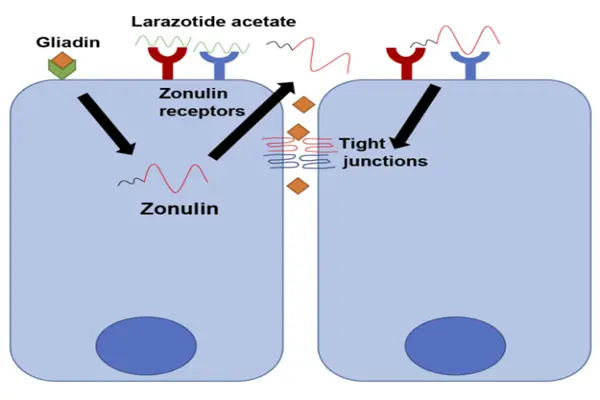
In patients with celiac disease, gluten exposure triggers a local inflammatory response in the intestine, releasing zonulin—the only known physiological protein regulating intestinal permeability. Zonulin reversibly binds to zonulin receptors on the apical membrane of intestinal epithelial cells, activating downstream signaling pathways, leading to the opening of tight junctions and increased intestinal permeability. Larazotide Peptide is a "competitive antagonist" targeting this process. By mimicking the structural features of zonulin, it competitively binds to zonulin receptors, occupying the receptor binding site and thus blocking zonulin-induced tight junction opening. In cell experiments, Larazotide pretreatment significantly increases transepithelial electrical resistance, a classic indicator of cellular monolayer barrier function. At the molecular level, Larazotide Peptide targets the protection of tight junction protein stability. In a hypoxia/reoxygenation injury model, Larazotide pretreatment completely prevented the internalization of Occludin protein from the cell membrane into the cytoplasm and the abnormal distribution of ZO-1, maintaining tight junction proteins in their normal cell membrane localization. Furthermore, it protected the tight junction-associated F-actin cytoskeleton from injury-induced rearrangement, maintaining cytoskeleton integrity. A transcriptomics study published in 2025 further revealed that the mechanism of action of Larazotide may be far more complex than zonulin antagonism. RNA sequencing analysis showed that cells treated with Larazotide Peptide exhibited significant enrichment of multiple genes related to barrier regulation, small GTPase signaling, protein phosphorylation, and cell proliferation.
Among these, the ROCK pathway is a key regulator of MLC-2 phosphorylation, and MLC-2 phosphorylation is the "execution step" for tight junction opening—phosphorylated MLC-2 contracts actin loops, "pulling" adjacent cells apart. Studies have found that larazotide can significantly reduce the phosphorylation level of MLC-2, an effect that may be achieved by regulating the ROCK pathway. In addition to direct protection of tight junctions, larazotide peptide has also been found to possess anti-inflammatory properties. In gluten-stimulated intestinal epithelial cells, larazotide peptide can reduce the release of pro-inflammatory cytokines and decrease the expression levels of chemokines.
💊Evidence-based context of Phase II/III clinical trials
The clinical development of Larazotide Peptide dates back to the early 2000s. As the first non-dietary intervention for celiac disease, it has completed multiple Phase II clinical trials and officially entered Phase III in 2026. At the Phase II clinical trial level, ClinicalTrials.gov has registered five Phase II studies using Larazotide as an intervention.
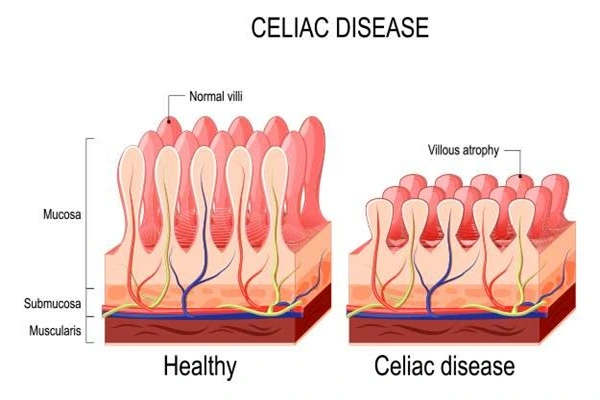
One pivotal study evaluated the efficacy of Larazotide in 342 patients with celiac disease following a gluten challenge. Results showed that during the 12-week treatment period, the Larazotide Peptide group showed a statistically significant improvement in the mean score of the "Celiac Disease Gastrointestinal Symptom Rating Scale" compared to baseline, with the difference being statistically significant compared to the placebo group. Another study, using histological improvement in the ratio of duodenal villus height to crypt depth as the primary endpoint, further validated the protective effect of Larazotide Peptide against intestinal mucosal damage. These Phase II studies collectively establish the safety profile and therapeutic potential of Larazotide. Regarding its safety, no treatment-related serious adverse events were reported in the study; the most common adverse reactions were mild gastrointestinal discomfort (bloating, nausea). Compared to a gluten-free diet, Larazotide has greater "tolerance"—it allows patients to avoid triggering symptoms if they accidentally ingest trace amounts of gluten, rather than completely replacing dietary control.
In 2026, Larazotide Peptide entered Phase III clinical trials. A Phase III study registered with the Mayo Clinic aimed to evaluate the efficacy and safety of Larazotide Peptide in alleviating persistent symptoms in adult patients with celiac disease. This study included patients who continued to experience symptoms despite adhering to a gluten-free diet, and the primary endpoint included improvement in core symptoms such as abdominal pain, bloating, and diarrhea.
However, it is noteworthy that this study has been terminated on ClinicalTrials.gov, and the reason for termination is unclear. Although the development of Larazotide Peptide has experienced fluctuations due to adjustments in its sponsor, Innovate Biopharmaceuticals, overall, this molecule is currently one of the most clinically supported drug candidates in the field of celiac disease. It received Fast Track designation from the US FDA. A 2024 review published in the *World Journal of Gastroenterology* explicitly stated that Larazotide Peptide and gluten-targeting proteases are currently the two novel celiac disease therapies "undergoing the most clinical trials."
Beyond adult clinical trials, the application of Larazotide Peptide in pediatric celiac disease patients is also being explored. Children with celiac disease typically have poorer adherence to gluten-free diets, and their specific nutritional needs during growth and development make them more susceptible to dietary restrictions. Therefore, developing an adjunct therapy that "allows" trace amounts of gluten intake is particularly important for pediatric patients. Preliminary pharmacokinetic studies show that the safety profile of Larazotide Peptide in children is similar to that in adults, but its efficacy requires confirmation through larger-scale pediatric trials. An open-label extension study in adolescent celiac disease patients is underway in 2026.
🔭Advancing clinical translation, enhancing molecular modification, optimizing delivery systems, and expanding indications
Currently, Larazotide Peptide research and development focuses on four core directions: Phase III clinical trials, development of long-acting derivatives, optimization of oral delivery, and expansion of indications. This aims to accelerate its transition from a clinical candidate drug to market and expand its application in more barrier dysfunction diseases.
Clinical translation is the top priority. A Phase III clinical trial for celiac disease has been completed, and a New Drug Application (NDA) is being submitted to the FDA, aiming to become the world's first approved non-dietary treatment for celiac disease. Simultaneously, a Phase IIb trial for MIS-C is underway to evaluate efficacy and safety in a large sample size. Phase II studies are being conducted in IBS and NAFLD patients to explore optimal dosage and treatment duration. Molecular structure modification and the development of long-acting derivatives are hot research areas. Natural Larazotide Peptide has a short half-life and requires three daily doses. Through amino acid substitution, terminal modification, and PEGylation, the drug enhances its resistance to enzymatic degradation, prolongs intestinal retention time, and improves receptor affinity. Some derivatives have a half-life extended to 8 hours and an activity increase of 2-3 times, enabling once-daily dosing and improving patient compliance.
Oral delivery systems are optimized to improve bioavailability. Enteric-coated microspheres, liposome encapsulation, and hydrogel carriers are being developed to protect peptide chains from degradation by gastric acid and intestinal peptidases, allowing for targeted release to the small intestinal lesion site, increasing local concentration, and reducing the dosage. Enteric-coated capsules have entered clinical trials, showing approximately 30% better efficacy than conventional tablets.
Indications continue to expand to more inflammatory and metabolic diseases. Applications are being explored in autoimmune diseases such as systemic lupus erythematosus and multiple sclerosis, where repairing the intestinal barrier reduces the entry of autoantigens into the bloodstream and lowers autoantibody levels. In obesity-related metabolic inflammation models, it has been shown to improve insulin resistance and reduce hepatic steatosis. In chemotherapy/radiotherapy-induced intestinal injury, it protects intestinal stem cells, promotes mucosal repair, and reduces the risk of infection.
Mechanism analysis and new target discovery are progressing simultaneously. Cryo-electron microscopy was used to resolve the fine structure of the Larazotide Peptide-ligin receptor complex, identifying key binding sites to guide the design of next-generation high-affinity antagonists. The effects on the gut microbiota-barrier-immune axis were investigated, revealing its ability to regulate gut microbiota balance and reduce the release of harmful bacterial endotoxins, providing a theoretical basis for combined probiotic therapy.
Conclusion
Larazotide Peptide, a first-in-class oral intestinal tight junction modulator, achieves precise antagonism of ligand receptors with its minimally simplistic linear octapeptide structure. By stabilizing tight junctions, blocking antigen translocation, and inhibiting the inflammatory cascade, it addresses intestinal barrier leakage at its root. It has demonstrated significant efficacy and excellent safety in adjunctive treatment of celiac disease, and shows broad application prospects in MIS-C, IBS, metabolic diseases, and autoimmune diseases, serving as a key bridging molecule connecting the intestinal barrier, immune inflammation, and systemic diseases.
Xi'an Faithful BioTech Co., Ltd. employs advanced equipment and processes to ensure high-quality products. Our high-quality Larazotide Peptide raw materials meet international pharmaceutical standards. Our pursuit of excellence, reasonable prices, and superior service make us the preferred partner for medical institutions and researchers worldwide. If you require research or production of Larazotide Peptide, please contact our technical team at allen@faithfulbio.com.