

Is Nuciferine Powder a natural apophene alkaloid found in lotus leaves?
In the fields of natural plant standards, metabolic pharmacology, dietary ingredients, and quality control of traditional Chinese medicine, Nuciferine Powder is an apocynine-based active alkaloid specific to lotus leaves (Nymphaeaceae family). The mainstream 98% high-purity product on the market is a creamy-white crystalline powder. It utilizes a rigid bicyclic apocynine framework to simultaneously regulate the neural appetite pathway, lipid metabolism pathway, and inflammatory autophagy pathway. This substance possesses multiple activities including inhibiting fat differentiation, regulating blood sugar and lipids, soothing nerves and promoting sleep, protecting the liver and kidneys, anti-fibrosis, and dilating blood vessels. It serves as a liquid chromatography reference standard for lotus leaf medicinal materials in the Chinese Pharmacopoeia and is also a dedicated research reagent for cell models related to obesity, non-alcoholic fatty liver disease, and hyperuricemia. Furthermore, it provides core active components for weight management dietary supplements and natural soothing preparations, making it a comprehensive research powder raw material with a wide range of metabolic regulatory dimensions among natural alkaloid raw materials.
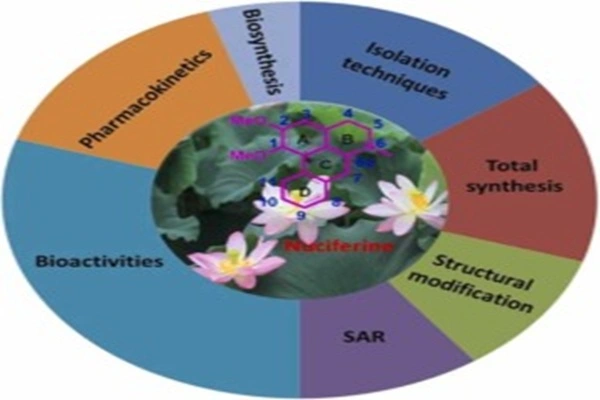
🌿The Molecular Code of Apophine Alkaloids
Nuciferine powder is chemically an apophene-type isoquinoline alkaloid, one of the most abundant characteristic components of lotus leaves. Its molecular formula is C₁₉H₂₁NO₂, with a relative molecular mass of 295.38 g/mol. Structurally, nuciferine possesses a tetracyclic fused core skeleton containing a chiral center. It contains a nitrogen atom, with methoxy groups substituted on rings A and D. This rigid and hydrophobic planar structure is the chemical basis for its interaction with various G protein-coupled receptors, ion channels, and intracellular kinases.
In terms of natural sources, Nuciferine powder is mainly found in the leaves of *Nelumbo nucifera* Gaertn. (lotus), and has also been found in other plants such as the blue water lily. In lotus leaves, nuciferine is one of the important indicator components for quality control. Nuciferine powder is primarily extracted and separated using its alkaline properties, employing steps such as acid-water extraction, alkaline precipitation, organic solvent extraction, and column chromatography purification to obtain a high-purity product.
Physically, high-purity Nuciferine powder typically appears as a white to off-white crystalline powder. It is readily soluble in organic solvents but has low solubility in water. Regarding stability, Nuciferine powder is relatively stable to light and heat, but as an isoquinoline alkaloid, prolonged exposure to strong acid or strong alkaline conditions may lead to structural transformation.
Pharmacokinetics-wise, Nuciferine powder is absorbed after oral administration and can cross the blood-brain barrier, a prerequisite for its central nervous system effects. Studies have shown that nuciferine undergoes extensive metabolic transformations in vivo, involving the catalysis of various CYPs, UGTs, and SULTs enzymes. Previous studies have identified 55 metabolites in mice, including various phase I and phase II metabolites, suggesting that its in vivo efficacy may be the result of the combined action of the parent drug and its active metabolites.
Industrial-scale preparation utilizes only the natural extraction route from lotus leaves, without any chemical total synthesis process. Using dried lotus leaves as raw material, pretreatment with cellulase disrupts plant cell walls, followed by low-temperature extraction with dilute hydrochloric acid to release bound alkaloids. Chloroform solvent extraction enriches the crude alkaloid components, neutral alumina chromatography removes lotus leaf flavonoids and polyphenol impurities, and multiple low-temperature recrystallizations with methanol purify the chiral R-type monomers. Vacuum low-temperature drying yields the crystalline powder product. The finished product maintains a stable HPLC purity of over 98%, and all heavy metal, organic solvent residue, and microbial limits meet both research-grade and dietary ingredient standards. It is suitable for various applications including cell incubation, in vitro adipose tissue culture, small animal metabolic modeling, and liquid chromatography calibration of traditional Chinese medicine.
The rigid apophene biaromatic ring, ortho-dimethoxy, and nitrogen-containing heterocyclic methyl groups work synergistically to exert physiological effects. The planar aromatic ring is responsible for transmembrane permeation and free radical neutralization, the methoxy group enhances the binding capacity of metabolic proteins, and the tertiary amine nitrogen atom targets and binds to nerve receptors. This natural chemical framework can act simultaneously on the central nervous system, liver fat cells, kidney tubules, and vascular smooth muscle without additional modification, making it a natural scientific research powder with outstanding potential in the field of metabolic disorders.
⚙️The Regulatory Logic of Multi-Target GPCRs and Energy Metabolism
The pharmacological activity of Nuciferine powder stems from its complex multi-target mechanism of action, which is particularly prominent in the fields of neuropsychiatric systems and metabolic regulation.
In the neuropsychiatric system, Nuciferine powder exhibits a unique receptor spectrum of action similar to that of "atypical antipsychotics." Studies have confirmed that nuciferine is a partial agonist of dopamine D₂ receptors and an antagonist of 5-HT₂A receptors. Specifically, nuciferine exhibits antagonistic effects when binding to 5-HT₂A, 5-HT₂C, and 5-HT₂B receptors; it acts as an inverse agonist on 5-HT₇ receptors; it is also a partial agonist of D₂, D₅, and 5-HT₆ receptors; it simultaneously stimulates 5-HT₁A and D₄ receptors and inhibits the function of dopamine transporter (DAT). This complex multi-target characteristic is highly similar to that of third-generation antipsychotics such as aripiprazole. In animal behavioral experiments, Nuciferine powder blocked head tics induced by 5-HT₂A agonists and reversed the anticipatory inhibition deficit induced by phencyclidine (PCP) without producing rigidity symptoms. Nuciferine powder also showed activity in a conditioned avoidance response model, replacing the discriminative stimulus effect of clozapine. These data suggest that nuciferine may have the potential to improve positive, negative, and cognitive symptoms of schizophrenia, with a low probability of inducing motor side effects.
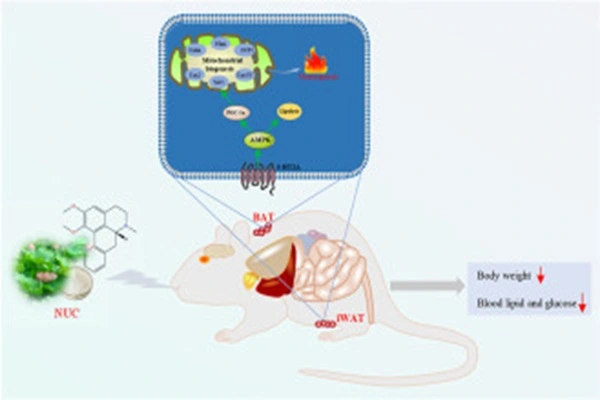
Regarding metabolic regulation and anti-obesity, the mechanism of action of Nuciferine powder is mainly concentrated in peripheral tissues. Recent research has found that Nuciferine powder enhances thermogenesis in brown adipose tissue and induces browning in white adipose tissue by activating the 5-HT₂A/AMPK signaling pathway.
The specific mechanisms are as follows:
- Activation of thermogenesis: In a high-fat diet-induced obese mouse model, Nuciferine Powder treatment significantly upregulated the expression of genes related to thermogenesis and mitochondrial biogenesis, such as Sirt1, PGC-1α, UCP1, Tfam, and Cox2, in brown adipose tissue. In in vitro cell experiments, Nuciferine also promoted the differentiation of C3H10T1/2 cells into brown adipocytes.
- Promoting white adipose tissue browning: In addition to acting on classic brown adipose tissue, Nuciferine Powder also induced the formation of "beige adipose tissue" in the white adipose tissue of the mouse groin, thereby increasing overall energy expenditure.
- Inhibition of lipogenesis: Further research showed that Nuciferine Powder can inhibit adipocyte differentiation, and its mechanism involves downregulating the expression of key transcription factors such as PPARγ, C/EBPα, and C/EBPβ.
At the overall level of metabolic regulation, Nuciferine Powder has also been shown to have lipid-lowering, blood glucose-lowering, and uric acid-lowering effects. It can comprehensively improve obesity-related metabolic disorders by regulating gut microbiota, reducing lipid absorption, and improving insulin resistance.
💊Cross-disciplinary application of lipid-lowering and weight loss with neuroprotection
In the field of metabolic syndrome, Nuciferine powder has attracted considerable attention due to its proven lipid-lowering and weight-loss activities. Traditional Chinese medicine has experience with "lotus leaf weight loss," and modern pharmacological research attributes this to the ability of lotus leaf alkaloids to regulate lipid metabolism. Nuciferine powder can lower serum total cholesterol, triglycerides, and low-density lipoprotein levels, while reducing lipid accumulation in the liver and preventing non-alcoholic fatty liver disease. Its mechanism of action involves the activation of the AMPK signaling pathway, thereby inhibiting hepatic de novo lipid synthesis and promoting the oxidative breakdown of fatty acids. Given that obesity is the root cause of many chronic diseases, nuciferine powder has significant development value as a dietary supplement or functional food ingredient.
Regarding blood sugar control, Nuciferine powder has been shown to stimulate insulin secretion and improve peripheral tissue sensitivity to insulin, thus helping to lower blood sugar levels. In terms of uric acid reduction, studies have found that nuciferine inhibits xanthine oxidase activity, reducing uric acid production, which also shows potential in the treatment of hyperuricemia and gout.
In the fields of anti-inflammation and anti-tumor activity, Nuciferine powder has demonstrated protective effects in various inflammatory models by inhibiting inflammatory signaling pathways such as NF-κB and reducing the release of pro-inflammatory factors such as TNF-α and IL-6. Simultaneously, in in vitro studies of various cancer cell lines, Nuciferine powder has also shown inhibitory activity against proliferation and apoptosis-inducing activity.
Regarding neuropsychiatric protection, based on its unique D₂/5-HT₂A receptor regulatory activity, nuciferine is considered a natural lead compound for developing novel antipsychotic drugs. Compared with existing drugs, its multi-target action may result in fewer side effects (such as metabolic disorders and extrapyramidal reactions). Furthermore, because Nuciferine powder can cross the blood-brain barrier and possesses antioxidant activity, it has also shown neuroprotective effects in cell models of Parkinson's disease and Alzheimer's disease, mitigating oxidative stress damage, which is of great significance for delaying the progression of neurodegenerative diseases.
🔭A New Frontier in Structural Optimization and Formulation Development
The core research and development focus is on synthesizing novel, highly water-soluble derivatives through hydrophilic chemical modification of the apophene skeleton. Natural nuciferine powder exhibits extremely poor water solubility, leaving significant room for improvement in its oral intestinal dissolution efficiency. The research team has conducted chemical modifications targeting two functional sites: the aromatic cyclomethoxy group and the nitrogen-containing heterocyclic tertiary amine group. This involves introducing hydrophilic carboxyl groups, amino acid fragments, and polyethylene glycol side chains to synthesize a series of nuciferine derivatives. Some of these modified products show a more than tenfold increase in water solubility, resulting in a significant reduction in dosage for the same lipid-lowering and weight-loss effects. This also reduces the slight cellular toxicity associated with DMSO organic solvent-assisted dissolution, while maintaining the stable natural R-type chiral configuration and further enhancing receptor binding affinity. This provides a complete chemical library for a new generation of highly efficient natural metabolic regulation ingredients.
The development of cyclodextrin inclusion complex and phospholipid complex nanodelivery formulations addresses the dissolution limitation, making them suitable for oral dietary formulations and small animal gavage trials. Free-state Nuciferine powder has extremely low water solubility, requiring large amounts of oil for dissolution during animal gavage, which can easily lead to intestinal oil accumulation. The industry has developed a β-cyclodextrin and hydroxypropyl cyclodextrin encapsulated powder, where molecules are encapsulated in cyclodextrin cavities, allowing for direct dilution with pure water for gavage administration. Simultaneously, a phospholipid complex carrier formulation is being developed, where phospholipids encapsulate powder molecules, preventing precipitation in the animal intestine, prolonging the bloodstream half-life, and increasing drug accumulation in the liver and brain tissues. This is being tested in long-term gavage intervention in obese mice and in fatty liver cell administration trials, expanding the application boundaries of oral administration.
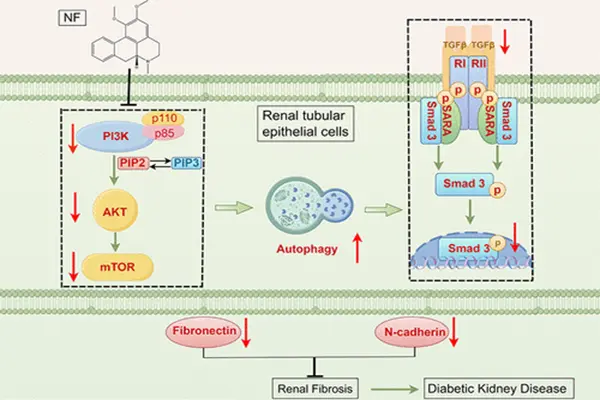
The indications for metabolic diseases continue to expand, exploring the potential of natural apophene for intervention in more organs. Traditional applications focus on obesity, non-alcoholic fatty liver disease, and hyperlipidemia. Currently, the research team is expanding into four pathological models: hyperuricemic nephropathy, diabetic insulin resistance, drug-induced kidney injury, and androgenetic alopecia, verifying the protective effects of this powder on the liver, kidneys, and hair follicle cells under different metabolic pathological conditions. In the field of metabolism, mouse studies on the regulatory mechanism of uric acid transporters are being conducted to explore its role in assisting in lowering blood uric acid and alleviating kidney and gout inflammation. In the skin and scalp field, topical gel formulations are being developed utilizing its antioxidant and follicle-shrinking-inhibiting properties to alleviate androgen-induced hair loss, continuously expanding the pathological research areas covered by Nuciferine Powder.
The development of multi-natural active ingredient blends and synergistic dietary formulations enhances the overall metabolic regulation effect. The single pathway of action of Nuciferine Powder has limitations; therefore, the industry is combining it with natural active substances such as resveratrol, green tea EGCG, curcumin, and L-carnitine to achieve synergistic effects through the different pathways of action of these components. Combining it with EGCG enhances fat breakdown and inhibits intestinal fat absorption; combining it with resveratrol adds antioxidant and anti-inflammatory activity; and combining it with L-carnitine optimizes mitochondrial fatty acid transport efficiency. This combination significantly reduces the dosage of single ingredients while addressing multiple needs such as weight loss, liver protection, and anti-oxidation. It is suitable for cell model experiments of complex metabolic disorders and also provides formulation ideas for the development of oral weight-loss dietary capsules and solid beverage products.
Conclusion
Nuciferine Powder, a signature apophene alkaloid active ingredient derived from lotus leaves, is a 98% high-purity, off-white crystalline powder with stable physicochemical properties. Utilizing a natural chemical framework of chiral biaromatic apophene combined with an ortho-dimethoxy group, it can penetrate the blood-brain barrier to target appetite receptors. Simultaneously, it reprograms liver lipid metabolism pathways, activates autophagy and antioxidant activity, blocks inflammatory and fibrotic signals, and dilates peripheral blood vessels. It also possesses multiple activities including weight loss and lipid reduction, liver protection and anti-fatty liver, uric acid reduction and kidney protection, soothing and sleep aid, and improved microcirculation.
Xi'an Faithful BioTech Co., Ltd. combines advanced manufacturing technology with a comprehensive quality assurance system to provide high-quality 99.0% Nuciferine Powder that meets international pharmaceutical standards. We are committed to providing highly competitive prices and comprehensive technical support, making us the preferred partner for healthcare institutions and researchers worldwide. Please contact our technical team (allen@faithfulbio.com) to learn how our products can improve your formulations.
References
- Farrell, M. S., McCorvy, J. D., Huang, X. P., & Roth, B. L. (2016). In vitro and in vivo characterization of the aporphine alkaloid nuciferine. PLOS ONE, 11(3), e0150602.
- Yan, C., Zhan, Y., Yuan, S., & Liu, H. (2024). Nuciferine prevents diet-induced obesity via activating brown adipose tissue thermogenesis. Food & Function, 15(3), 967–976.
- Li, T., Chen, H., Guo, Y., & Wang, L. (2025). Nuciferine restores autophagy through PI3K-AKT-mTOR pathway to alleviate diabetic renal fibrosis. Journal of Agricultural and Food Chemistry, 73(19), 5223–5235.
- Wang, M. X., Liu, Y. L., Yang, Y., & Zhang, H. (2015). Nuciferine alleviates hyperuricemia and renal inflammation in potassium oxonate induced mice. European Journal of Pharmacology, 747, 59–70.
- Li, D., Liu, B., Fan, Y., & Zhou, J. (2021). Nuciferine mitigates folic acid-triggered acute kidney injury via inhibiting ferroptosis signaling. British Journal of Pharmacology, 178(6), 1182–1199.
- Sharma, B. R., Gautam, L. N., Adhikari, D., & Karki, R. (2017). Comprehensive chemical profiling of Nelumbo nucifera for new drug development. Phytotherapy Research, 31(1), 3–26.
- Natural Plant Standard Lab. (2026). Nuciferine 98% Powder Research Grade Specification & Application Manual. Internal Phytochemical R&D Document.