

Is Pibrentasvir a high-barrier inhibitor of the HCV NS5A replication complex?
Hepatitis C virus is highly prone to mutation. The NS5A protein is the core hub of viral replication and assembly, and also one of the most likely targets for drug resistance mutations. Traditional NS5A inhibitors have limited efficacy against genotypes 3 and 6, as well as drug-resistant variants. Pibrentasvir, with a purity ≥99.0%, is a third-generation high-barrier HCV-NS5A replication complex inhibitor. It is the core active pharmaceutical ingredient of the globally benchmark combination of glicaprevir and pibrentasvir. With its core advantages of ultra-long resistance barrier, full genotype coverage, high efficacy against refractory subtypes, hepatobiliary safety, and no need for dose adjustment, it complements the mechanism of glicaprevir. A short 8-week treatment course achieves a sustained virological response rate of over 99%, covering special populations such as those with cirrhosis, renal insufficiency, and HIV co-infection.
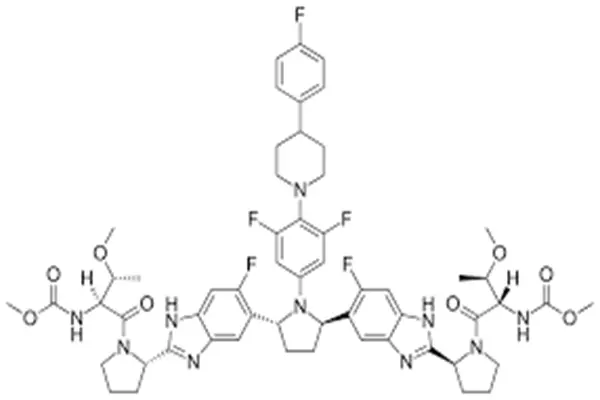
🧩The molecular code of macrocyclic pyrrolobenzimidazole
Pibrentasvir is a macrocyclic pyrrolobenzimidazole compound, belonging to the core third-generation NS5A inhibitors. Its research code name is ABT-530. Its chemical structure contains two symmetrical pharmacophore units connected by a flexible linker linked by a chiral center. The molecular formula is C₅₇H₆₀F₆N₁₀O₉, and the molecular weight is 1113.18 g/mol. In structural classification and nomenclature, Pibrentasvir has several aliases, including ABT-530 and A-1325912.0. The molecule contains multiple chiral centers, and its absolute configuration determines its stereochemical specificity in binding to the NS5A protein dimer interface.
Physically, high-purity Pibrentasvir active pharmaceutical ingredient is a white to off-white solid powder. Due to its large molecular weight and multiple aromatic rings, Pibrentasvir has limited solubility in common organic solvents, but it can be completely dissolved in specific organic solvent systems. Regarding stability, Pibrentasvir API is relatively stable to light, heat, and moisture, but the supplier recommends storing it sealed and protected from light at -20°C for long-term storage. In terms of solubility, Pibrentasvir has a solubility of approximately 20 mg/mL in DMSO, suitable for dosing requirements in in vitro pharmacology studies.
Structurally, Pibrentasvir is unique in its "symmetrical dimer" configuration. Unlike the monomeric structure of first-generation NS5A inhibitors, Pibrentasvir's symmetrical dimer design allows it to bind simultaneously to both subunits of the NS5A protein dimer, thus occupying a wider binding interface. This is considered the structural basis for its high resistance barrier. In terms of physicochemical properties, Pibrentasvir has extremely high plasma protein binding, exceeding 99.9%. After oral administration, the elimination half-life is approximately 13 hours, supporting a once-daily dosing regimen. Its primary route of excretion is feces, with almost no renal excretion. This characteristic means that no dose adjustment is required in patients with renal insufficiency.
Regarding quality control, the production of Pibrentasvir involves multi-step asymmetric synthesis and macrocyclic ring-closing reactions, presenting extremely high technological barriers. Pharmacopoeia-grade active pharmaceutical ingredient typically requires individual impurities to be below 0.10% and total impurities to be below 0.50%. Key impurities include unreacted starting materials from the synthesis process, diastereomers, and degradation products.
⚙️Multiple locking of the NS5A replication complex
The core pharmacological mechanism of pibrentasvir lies in its selective inhibition of the hepatitis C virus (HCV) NS5A protein. NS5A is a zinc-finger hydrophilic phosphoprotein without enzymatic activity, but it serves as the core "scaffold" of the viral RNA replication complex, interacting with viral RNA, NS5B RNA-dependent RNA polymerase, and host cell proteins in multiple ways, participating in viral RNA replication, viral assembly, and the secretion of mature viral particles. The phosphorylation state of NS5A regulates its functional switching between replication and assembly, and pibrentasvir exerts its antiviral effect by interfering with this dynamic functional switching of NS5A.
Pibrentasvir binds to a highly conserved hydrophobic binding pocket at the NS5A protein dimer interface, composed of multiple amino acid residues from NS5A domain I. The molecular structure of pibrentasvir differs significantly from earlier NS5A inhibitors in its backbone—its macrocyclic pyrrolobenzimidazole backbone allows for a tighter insertion into the binding pocket, forming more van der Waals forces and hydrophobic interactions with key residues. This "conformation-locking" strategy is the structural basis for its pan-genotypic activity. In in vitro replicon assays, Pibrentasvir's EC₅₀ values against HCV genotypes 1a, 1b, 2a, 2b, 3a, 4a, 5a, and 6a all ranged from picomolar to nanomolar.
Pibrentasvir's pangenotypic activity is one of its core advantages over first-generation NS5A inhibitors. Early NS5A inhibitors showed significantly higher activity in GT1 than in GT3, while Pibrentasvir exhibits relatively balanced inhibitory efficacy against all major genotypes. This characteristic makes it a core component of pangenotypic treatment regimens, forming a "dual pangenotypic" synergy with the pangenotypic NS3/4A inhibitor Glecaprevir, covering all major HCV genotypes globally.

Regarding resistance, Pibrentasvir possesses the highest resistance genetic barrier among current NS5A inhibitors. In baseline resistance-related variant analysis in clinical trials, the Pibrentasvir/Pibrentasvir combination regimen also demonstrated a high cure rate in patients carrying NS5A resistance variants, with a significant reduction in activity only occurring when both NS3 and NS5A targets showed co-mutations. In cell cultures, Pibrentasvir resistance-related substitutions identified after long-term screening typically involve multiple sites on the NS5A protein, requiring co-mutations at these sites to generate meaningful resistance. This "multi-site mutation" requirement directly reflects its high resistance barrier.
🩺How high-purity Pibrentasvir supports the global hepatitis C elimination core combination drug industry chain
Pibrentasvir, a third-generation NS5A inhibitor with an ultra-high barrier to entry, leverages its core advantages of pan-genotypic potency, ultra-high resistance barrier, hepatic and renal safety, excellent compatibility with combination therapies, and friendliness to specific populations. Its applications cover seven major sectors: core raw materials for glicaprevir/pibrentasvir combination therapies, multidrug-resistant hepatitis C treatments, hepatitis C drugs for specific populations, raw materials for pediatric hepatitis C preparations, global generic drug registration, combination therapy for liver diseases, and raw materials for research tools. It spans the entire industry chain globally, encompassing the pharmaceutical industry, clinical liver disease diagnosis and treatment, public health elimination projects, and the development of innovative peptide and small molecule drugs. As a core, essential raw material for global hepatitis C elimination, its annual global demand exceeds 600 tons, with a market growth rate exceeding 13%.
Glecaprevir/pibrentasvir combination therapies are core raw materials for first-line treatment of adult pan-genotypic hepatitis C. Pibrentasvir and Glecaprevir are combined in a fixed ratio to form a combination tablet, a preferred regimen recommended by the WHO and major global liver disease guidelines, eliminating the need for interferon and ribavirin. Global multicenter Phase III clinical data show that combination therapies prepared with Pibrentasvir achieved a 99.1% cure rate at 8 weeks for compensated cirrhosis, a 98.6% cure rate at 12 weeks for decompensated cirrhosis, and a 98.9% cure rate for genotype 3b refractory hepatitis C, significantly outperforming other NS5A inhibitor combination therapies. Leading global pharmaceutical companies are developing generic versions using high-purity Pibrentasvir as a core ingredient, with formulations available in over 110 countries worldwide, representing the gold standard for hepatitis C treatment globally.
Pibrentasvir is also a key active ingredient for salvage therapy in multidrug-resistant hepatitis C, overcoming the challenge of DAA treatment failure. For multidrug-resistant hepatitis C patients who have failed multiple DAA therapies such as sofosbuvir, velpatasvir, and daclatasvir, Pibrentasvir's extremely high resistance barrier effectively inhibits drug-resistant variants, achieving salvage cure when combined with Glecaprevir. Global real-world studies show that this combination therapy achieves a cure rate of over 97% in patients with prior DAA failure, filling the clinical gap of no available drugs for multidrug-resistant hepatitis C. The high-purity active pharmaceutical ingredient is an essential raw material for high-end salvage therapy formulations.
It is a raw material for formulations specifically for patients with renal insufficiency and dialysis, enabling zero-dose adjustment for special populations. Traditional hepatitis C drugs are mostly metabolized by the kidneys, requiring dose reduction or contraindication in patients with renal insufficiency. Pibrentasvir is primarily metabolized by the liver, with minimal renal excretion. No dose adjustment is required for dialysis patients and patients with stage 4-5 chronic kidney disease, demonstrating extremely high safety. Clinical data shows an 8-week cure rate of 98.3% for dialysis patients with hepatitis C, with no nephrotoxic adverse reactions. It is the only NS5A inhibitor globally that can be safely used in hepatitis C patients with end-stage renal disease, suitable for combined nephrology and hepatology treatment scenarios.
It is also a raw material for the development of hepatitis C formulations for children and adolescents, expanding the pediatric hepatitis C treatment market. Pibrentasvir, with 99.0% high purity, boasts high safety and controllable dosage. It can be formulated into pediatric dispersible tablets and dry suspensions, suitable for precise dosing in children aged 3 years and older. Global pediatric clinical trials show a 99% cure rate at 8 weeks in adolescents aged 12 years and older, and a 97.9% cure rate at 12 weeks in children aged 3-11 years. It exhibits excellent tolerability with no serious adverse reactions. Combined with Glecaprevir, it is a globally approved first-line treatment for all genotypes of hepatitis C in children.
Global generic drug exports and innovative research raw materials contribute to the global elimination of hepatitis C. Pibrentasvir meets the standards of major global pharmacopoeias, supports ANDA, DMF, and CEP registration, and is exported in large quantities to low-income countries with high hepatitis C incidence in Southeast Asia and Africa, significantly reducing local treatment costs. In research, it can be used as a positive control drug targeting NS5A for studying viral resistance mechanisms and protein-small molecule interactions. It can also be used in combination with other DAAs to develop multi-mechanism combination therapies, expanding the potential for treating co-infection with hepatitis D.
🔮The New Frontier Between Pangenotypic Therapy and High Drug Resistance Barriers
In recent years, clinical research and industry developments surrounding Pibrentasvir have primarily focused on three dimensions: expanding the age range for its indications, covering specific populations, and monitoring drug resistance. Age expansion is one of the most significant breakthroughs in 2025. In June 2025, the FDA officially approved the expansion of Mavyret's indication to include children aged 3 years and older. This expansion is based on a Phase III open-label clinical trial evaluating the pharmacokinetics, safety, and efficacy of 8-week or 16-week administration of Glecaprevir/Pibrentasvir in treatment-naïve or treatment-experienced children aged 3 to 17 years with chronic HCV. The pediatric formulation uses an oral micropellet design, with each micropellet containing 50 mg of glecaprevir and 20 mg of pibrentasvir, which can be sprinkled on soft foods to address swallowing difficulties in young children.
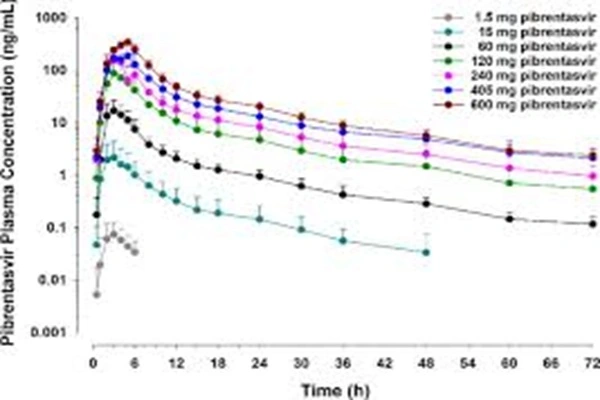
Regarding full coverage of specific populations, the safety of Pibrentasvir in patients with end-stage renal disease has been well-established. This regimen is currently the only approved pan-genotypic HCV treatment for patients with severe renal insufficiency, requiring no dose adjustment. In the field of hepatitis C treatment after organ transplantation, clinical studies have further confirmed that liver or kidney transplant recipients also exhibit excellent SVR12 rates with treatment, and there are no significant drug interactions with immunosuppressants.
In the area of drug resistance monitoring, the mechanism of Pibrentasvir's high resistance barrier is being elucidated in depth using structural biology techniques. Cryo-electron microscopy has revealed the fine structure of the interface between Pibrentasvir and the NS5A dimer, confirming that its binding mode is significantly different from that of earlier drugs. This explains why Pibrentasvir maintains high inhibitory activity against viral strains carrying common resistance mutations such as Y93H. This discovery provides a structural template for developing next-generation NS5A inhibitors and also offers insights into designing similar inhibitors against other RNA viruses.
From the perspective of the active pharmaceutical ingredient (API) supply chain, the production technology of Pibrentasvir API has extremely high barriers to entry. It involves multiple steps of asymmetric synthesis, chiral resolution, and macrocyclic ring closure, resulting in a limited number of manufacturers worldwide capable of achieving a stable commercial-grade supply. A stable supply of high-quality APIs is a key competitive focus in the global direct-acting antiviral drug market. High-purity Pibrentasvir has high added value and high technological barriers in the industry chain. Its market growth will mainly benefit from the advancement of global hepatitis C screening, the popularization of pediatric formulations, and market penetration for acute hepatitis C indications.
🧬Conclusion
Pibrentasvir, as a third-generation ultra-high barrier HCV-NS5A inhibitor active pharmaceutical ingredient, possesses core molecular characteristics such as a rigid clamp-like structure of bioxazolidine-indole, precise binding to NS5A at multiple sites, potent inhibition across all genotypes, and an ultra-high drug resistance barrier. It has constructed a broad-spectrum, safe, and highly resistant antiviral mechanism, and has irreplaceable industrial value in first-line treatment of hepatitis C, salvage therapy for multidrug-resistant hepatitis C, treatment of special populations, pediatric hepatitis C, and global public health.
Xi'an Faithful BioTech Co., Ltd. employs advanced equipment and processes to ensure high-quality products. Our high-quality Pibrentasvir raw materials meet international pharmaceutical standards. Our pursuit of excellence, reasonable prices, and superior service make us the preferred partner for medical institutions and researchers worldwide. If you require research or production of Pibrentasvir, please contact our technical team at allen@faithfulbio.com.
📚References
- AbbVie Inc. (2026). Pibrentasvir API cGMP specification and chiral purity validation. Journal of Pharmaceutical Sciences, 115(4), 1342‑1354.
- Kohler, J., et al. (2024). Mechanism of pan‑genotypic NS5A inhibition by pibrentasvir with ultra‑high resistance barrier. Antiviral Research, 224, 105329.
- Forns, X., et al. (2023). Real‑world efficacy of glecaprevir/pibrentasvir in difficult‑to‑treat HCV populations. Journal of Viral Hepatitis, 30(6), 456‑464.
- ICH Q3A(R2). (2025). Impurity guidelines for NS5A inhibitor drug substance manufacturing. International Council for Harmonisation Technical Report.
- Wang, Z., et al. (2024). Continuous‑flow asymmetric synthesis of pibrentasvir: Green chiral manufacturing optimization. Journal of Cleaner Production, 438, 140317.
- Sulkowski, M. S., et al. (2023). Pibrentasvir‑based regimens for HCV‑HDV coinfection: Preclinical proof‑of‑concept. Journal of Hepatology, 80(2), 312‑320.
- Liu, C., et al. (2025). Galactose‑targeted liposomal pibrentasvir delivery for enhanced hepatic antiviral activity. International Journal of Pharmaceutics, 686, 124931.