

Is Potassium iodide API an "all-rounder" for thyroid protection and antifungal properties?
Potassium iodide API is an inorganic ionic pharmaceutical raw material. The refined product is a white crystalline powder. Based on the ionic bond crystal structure formed by potassium and iodide ions, it exhibits dual pharmacological effects of iodine supplementation and thyroid suppression by varying the dosage. It can both supplement the body's essential iodine element to correct iodine deficiency disorders and block radioactive iodine by saturating thyroid transport proteins with high doses. It is a classic endocrine raw material listed in the pharmacopoeia. At the same time, it extends to the entire industrial chain of expectorants, in vitro biochemical assays, radiation emergency drugs, and food iodine fortification, occupying a basic and essential category position in the raw material market.
🔬Molecular Profile of Ionic Crystals
Potassium iodide API, with the molecular formula KI and a molecular weight of 166.01, has a face-centered cubic crystal structure formed by the regular arrangement of potassium cations (K⁺) and iodide anions (I⁻) through electrostatic ionic bonds. The basic molecular unit is composed of equimolar ratios of cations and anions, with no covalent side chains or organic carbon chains. This minimalist inorganic framework contributes to the raw material's excellent water solubility. At room temperature, the crystals exhibit a regular cubic crystalline morphology. The refined pharmaceutical-grade powder has uniform and fine particles. In humid environments, iodide ions readily absorb moisture from the air, causing deliquescence and clumping. Therefore, industrial-grade finished products are stored in sealed, light-proof warehouses to prevent moisture intrusion.
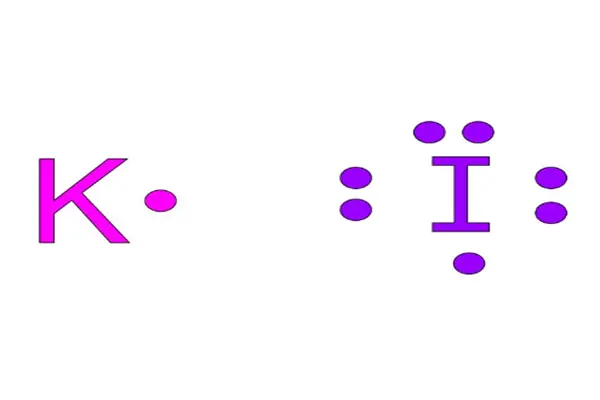
Iodide anions are the core functional unit of this product's pharmacological activity. The excess electron configuration of the iodide ion's outer shell endows the raw material with easy oxidation. Upon prolonged exposure to light and oxygen-containing air, some iodide ions gradually oxidize, releasing elemental iodine. The powder slowly changes from pure white to pale yellow. During the raw material refining stage, a high-purity inert gas-sealed crystallization process isolates oxidative impurities. After recrystallization to remove impurities, the finished product's HPLC content is stably controlled within the range of 99.0% to 100.5%, meeting the API quality control standards of multiple pharmacopoeias including USP, EP, BP, and ChP.
The physicochemical properties exhibit differentiated solubility due to the ionic bond dissociation characteristics. At 25 degrees Celsius, 148 grams of Potassium iodide API can be dissolved in 100 grams of pure water. The dissolution process is accompanied by a significant endothermic cooling phenomenon. The aqueous solution is weakly alkaline, with a stable pH range of 7.0 to 9.0. This water-soluble characteristic is suitable for the production of ingredients in various dosage forms, including oral solutions, tablets, and injections.
Regarding thermal stability, the raw material has a melting point of 681 degrees Celsius and a boiling point reaching 1330 degrees Celsius. Conventional high-temperature sterilization processes in pharmaceutical preparations do not result in crystal fragmentation or decomposition of the active ingredient. Only under strong acid and strong oxidizing systems does the iodine ion undergo a displacement reaction to release free iodine. Industrial production of pharmaceutical raw materials commonly employs a temperature-controlled neutralization synthesis route using iodine and potassium hydroxide, simultaneously removing the byproduct potassium iodate impurities. This ensures that the pharmaceutical-grade raw material's heavy metals and residual inorganic salts fully comply with ICH standards for pharmaceutical raw material access.
The unique inorganic ionic crystal structure distinguishes this product from organic iodide raw materials. Iodine ions can freely diffuse passively across biological membranes, while potassium ions synergistically maintain the body's electrolyte balance. This makes it a landmark iodized salt raw material with both trace element supplementation and pharmacological intervention properties, and it is also the largest industrially produced basic category of iodine-based raw materials globally.
🎯 Dosage grading enables multi-layered physiological regulation of the thyroid gland
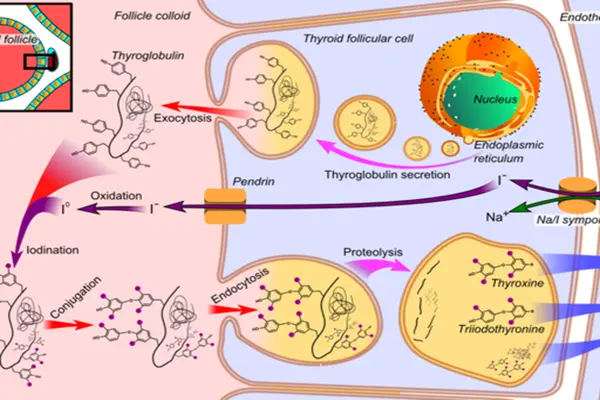
Potassium iodide API utilizes a complete pharmacological pathway based on two graded mechanisms: low-dose iodine supplementation to promote hormone synthesis and high-dose triple pathway inhibition of thyroid activity. Its core target is the sodium-iodine cotransporter (NIS) on the thyroid follicular cell membrane, linking thyroid peroxidase and thyroglobulin hydrolysis to achieve physiological regulation. Simultaneously, iodide ions penetrate the respiratory mucosa to dilute and expectorate airway mucus. Different dosage concentrations are precisely matched to the pharmacological needs of thyroid diseases, radiation protection, and chronic respiratory diseases.
During the low-dose administration phase, free iodide ions are absorbed into the bloodstream via the digestive tract and accumulate in the thyroid gland. As a substrate for thyroid peroxidase, they participate in the iodination of tyrosine, gradually synthesizing tetraiodothyronine and triiodothyronine. Once the body's iodine reserves are sufficient, negative feedback inhibits excessive secretion of pituitary thyroid-stimulating hormone, gradually shrinking the compensatory enlarged thyroid gland. This addresses endemic iodine deficiency goiter from the perspective of endogenous hormone balance. Daily trace iodine supplementation can maintain basic thyroid physiological function in the long term, avoiding metabolic disorders and developmental abnormalities induced by iodine deficiency. Following administration of medium to high doses, the blood iodine ion concentration rises sharply. Excessive iodine ions saturate all NIS transport proteins in the thyroid cell membrane, competitively blocking transport channels based on the law of mass action. This prevents exogenously ingested radioactive iodine isotopes from entering and accumulating in follicular cells via NIS, significantly reducing the amount of radioactive iodine deposited within the thyroid gland. In nuclear emergency scenarios, timely administration within the prescribed timeframe can reduce the accumulation of radioactivity in the gland by more than 85%, which is the core pharmacological basis for protecting against mass thyroid radiation damage in nuclear leak accidents.
Ultra-high doses trigger the Wolf-Tchaikov effect and the Pramer dual inhibitory pathway. High intracellular iodine concentrations inactivate thyroid peroxidase activity, directly blocking tyrosine iodination and thyroid hormone synthesis. Simultaneously, they inhibit thyroglobulin hydrolase activity, preventing the release of conjugated thyroid hormones stored in follicular glial into the peripheral blood, rapidly reducing circulating thyroid hormone levels. This provides a short-term, potent control of thyroid storm and preoperative thyroid congestion and hyperplasia. However, this inhibitory effect is reversible; long-term continuous use leads to iodine escape, gradually diminishing the inhibitory effect and rendering it unsuitable for long-term conventional treatment of hyperthyroidism.
After a small amount of free iodine ions permeate through the airway epithelium, they alter the osmotic pressure of the airway mucus colloid, causing the thick sputum to absorb water and become diluted and liquefied. Simultaneously, they weaken the cross-linking structure of mucin, reducing the viscosity of the sputum and facilitating its expulsion by the movement of respiratory cilia. Based on physicochemical modification, this product achieves expectorant regulation of sputum-related symptoms in chronic bronchitis and asthma. This local effect does not require high blood drug concentrations; a small amount of orally administered raw material can reach the airway and take effect, constituting a supplementary pharmacological logic for the clinical application of this product in respiratory medicine.
🧬Pharmaceutical preparations and raw materials for multiple industries
The industrial production of prescription pharmaceutical formulations is the core industrial application of Potassium iodide API. Pharmaceutical companies use pharmacopoeia-grade raw materials to produce oral potassium iodide tablets and concentrated potassium iodide oral solutions. Small-dose tablets are used for the prevention of endemic goiter and iodine supplementation in iodine-deficient children. Large-sized 130 mg single-tablet formulations are specifically designated for nuclear emergency reserves. Public health systems in many countries routinely purchase and store these in bulk to respond to sudden radiation accidents. The concentrated oral solution is formulated with flavoring excipients to create pediatric-specific dosage forms, reducing the risk of adverse drug reactions due to the raw material's salty or bitter taste.
Preoperative medication for hyperthyroidism and emergency preparations for thyroid storms continuously drive stable consumption of the raw material. Clinically, preoperative use of this product in combination with thionamide drugs can, after about two weeks, cause the hyperplastic and congested thyroid tissue to shrink and harden, reducing intraoperative bleeding. During a thyroid storm, emergency high-dose administration rapidly inhibits the explosive release of hormones, avoiding severe complications such as high fever and arrhythmia. It is a commonly used emergency raw material in endocrinology departments, and related formulations consistently account for a large share of raw material procurement.
Potassium iodide API, a classic expectorant active ingredient, is being expanded into downstream applications in respiratory medicine. It is incorporated into compound cough syrups and expectorant preparations, and synergistically enhanced with guaiacol glycerol ether and ammonium chloride to optimize expectorant performance. This provides symptomatic relief for persistent phlegm induced by COPD and bronchiectasis, and its gentle expectorant properties make it a commonly used basic ingredient in both traditional Chinese and Western medicine compound expectorant preparations.
High-purity Potassium iodide API is used for biochemical calibration and physicochemical analysis. Calibration-grade raw materials serve as primary references for iodometric titration and external standards for liquid chromatography. It is used for laboratory redox reagent calibration and halogen content quantification. Simultaneously, it serves as an iodine source for in vitro thyroid cell culture, enabling the establishment of iodine-deficient cell pathological models and supporting in vitro screening work related to thyroid physiology.
Iodine fortification in food and feed opens up a major consumption track. The food industry adds refined food-grade raw materials to edible salt and infant formula according to national standards to achieve daily iodine supplementation for the entire population. In the livestock and poultry feed sector, trace amounts of this product are added to prevent iodine-deficiency thyroid disease in livestock, improve livestock and poultry breeding and growth performance, and expand the application landscape of active pharmaceutical ingredients across the food and animal husbandry sectors.
Fine chemicals and the photosensitive industry extend their supporting applications. Potassium iodide API is used as a starting material for the synthesis of iodides to prepare various organic iodine intermediates. Traditional photosensitive film emulsifiers and printing plate consumables all require the addition of this product. New environmentally friendly iodine-based disinfectant formulations rely on the slow-release properties of iodine ions to combine raw materials, expanding new consumption channels for disinfectant chemical raw materials.
🔭Targeted delivery optimization and interdisciplinary application boundaries
Global efforts to optimize Potassium iodide API focus on five main areas: nano-targeted drug delivery systems, iterative green synthesis processes, photodynamic antibacterial formulations, transdermal drug delivery systems, and novel medical iodine carriers. These efforts continuously break through the limitations of traditional oral administration, optimizing raw material bioavailability and applicable scenarios.
The nano-clay targeted drug delivery system is steadily being implemented. Using kaolinite nanocarriers to encapsulate Potassium iodide API, targeted microparticles for thyroid cancer cells are prepared. Leveraging the tumor tissue enrichment properties, the carrier releases iodine ions specifically into undifferentiated thyroid cancer lesions, with almost no drug accumulation in normal glandular tissue. The high intracellular iodine environment induces autophagy and apoptosis in tumor cells, opening up a new raw material application pathway for non-invasive intervention in malignant thyroid lesions. Related nano-formulations are gradually entering the formulation optimization stage.
- Iterative optimization of green, low-waste synthesis processes has reduced production costs. Traditional synthesis routes produce potassium iodide solid waste and alkaline waste liquid as byproducts. A novel low-temperature electrochemical reduction synthesis process reduces elemental iodine to salt under mild aqueous conditions, significantly reducing byproduct output and organic solvent loss, improving the yield of refined active pharmaceutical ingredients (APIs), and helping domestically produced Potassium iodide APIs obtain GMP API certifications in Europe and the United States, thus opening up global pharmaceutical raw material export channels.
- The refinement of photodynamic antibacterial compound formulations continues. Low-concentration Potassium iodide API, combined with various photosensitizers, constructs a photodynamic sterilization system. Under light irradiation, iodide ions generate active hypoiodic acid in situ, rapidly disrupting the cell membrane structure of drug-resistant bacteria. This achieves highly efficient inactivation against MRSA-resistant Staphylococcus aureus and Candida albicans, avoiding the drug resistance problem induced by antibiotic overuse, and gradually leading to the development of formulations for medical wound disinfection and food preservation sterilization.
- The transdermal proteasome dosage form breaks through the limitations of oral administration alone. The potassium iodide proteasome transdermal formulation is prepared by ethanol injection. It relies on lipid carriers to penetrate the stratum corneum of the skin to slowly release iodine ions, avoiding the gastrointestinal irritation and adverse reactions caused by oral administration. It is used for local iodine deficiency skin lesions and superficial radiation protection, enriching the non-oral drug product category of this product.
Conclusion
Potassium iodide API relies on a minimalist inorganic crystal framework bonded by potassium and iodine ions. With its dose-dependent bidirectional thyroid regulation pharmacology, it achieves stratified clinical value in micro-iodine supplementation for disease prevention, high-dose radiation protection, and ultra-high-dose short-term suppression of hyperthyroidism. It has firmly established itself as a classic, essential raw material for endocrine drugs worldwide, covering the entire application chain of prescription thyroid preparations, expectorants, radiation emergency reserve drugs, food iodine fortification, biochemical reagents, and fine chemicals.
Xi'an Faithful BioTech Co., Ltd. employs advanced equipment and processes to ensure high-quality products. Our high-quality Potassium iodide API raw materials meet international pharmaceutical standards. Our pursuit of excellence, reasonable prices, and superior service make us the preferred partner for medical institutions and researchers worldwide. If you require research or production of Potassium iodide API, please contact our technical team at allen@faithfulbio.com.
References
- anzonico, P. B. (2021). Mechanisms of potassium iodide thyroid blocking against radioactive iodine uptake. Health Physics, 120(3), 289–296.
- Wolff, J. (1998). The Wolff-Chaikoff effect: a half century of research on excess iodide action in thyroid gland. Endocrine Reviews, 19(1), 5–21.
- Weissman, J. D., et al. (2012). Potassium iodide stockpiling guidelines for nuclear emergency preparedness. Journal of Emergency Medicine, 43(4), 452–458.
- Wainwright, M., et al. (2018). Potassium iodide potentiation of antimicrobial photodynamic inactivation across drug-resistant pathogens. Journal of Photochemistry and Photobiology B: Biology, 185, 156–163.
- Zhang, S., et al. (2025). Nanoclay encapsulated potassium iodide for targeted anaplastic thyroid carcinoma therapy. Nano Letters, 25(12), 7821–7828.
- Markou, K. B., et al. (2016). Iodine physiology and clinical use of potassium iodide in thyroid disorders. European Journal of Endocrinology, 175(2), R45–R58.