

Aviptadil peptide vs VIP native peptide
Aviptadil peptide is a human-derived sequence fully synthesized 28-peptide powder raw material. Its chemical sequence replicates that of natural endogenous VIP. Its metabolic stability is optimized by C-terminal amidation modification. Both target the VPAC1/VPAC2 receptor, but there are significant differences in chemical modification, in vivo half-life, and formulation compatibility. It is a mainstream injectable peptide raw material in the field of critical respiratory diseases. Compared with naturally extracted VIP, it has outstanding advantages in industrial mass production and quality control stability.

⚛️Twenty-eight peptides modify peptide chains
The complete amino acid sequence of Aviptadil peptide is fixed as H-HSDAVFTDNYTRLRKQMAVKKYLNSILN-NH₂. The entire linear peptide is obtained by the sequential condensation of twenty-eight amino acids. The most critical modification is the amide ring closure modification at the C-terminus. Natural endogenous VIP has a free carboxyl terminus, which is easily cleaved by various peptidases in vivo. The amidation modification blocks the active carboxyl site, significantly reducing the rate of plasma protease hydrolysis, directly widening the difference in the in vivo survival time of the two peptides.
The basic amino acids are concentrated in the middle of the peptide chain, with a dense distribution of lysine and arginine, improving overall water solubility. It can be rapidly and completely dissolved in both pharmaceutical water for injection and phosphate buffer. Natural VIP is affected by extraction impurities, often resulting in trace flocculent precipitation during dissolution, making purification far more difficult than that of chemically synthesized Aviptadil peptide. The N-terminal hydrophobic short chain is responsible for anchoring the hydrophobic cavity of the VPAC receptor. The amino acid arrangement in this segment is completely homologous in both products, resulting in essentially identical receptor binding affinity; only the terminal modification leads to physicochemical differentiation.
The most obvious difference lies in their industrial production pathways. Aviptadil peptide utilizes a solid-phase Fmoc synthesis process for controlled mass production. After step-by-step peptide conjugation, it undergoes reversed-phase chromatography purification, achieving a stable HPLC purity exceeding 98.5%, with controllable batch-to-batch errors. Natural VIP, on the other hand, requires extraction from mammalian intestinal tissue, limiting raw material sources. Animal-derived proteins and endotoxins are difficult to completely remove, failing to meet pharmacopoeia standards for injectable grade.
Under sealed, light-protected storage at room temperature, the amide-modified Aviptadil peptide can maintain its properties unchanged for a long period. Naturally extracted VIP, under the same storage conditions, is extremely prone to slow degradation and inactivation, showing a decline in activity even after short-term storage, resulting in significantly higher formulation production and storage costs.
🎯Targeted VPAC multi-pathway organ protection
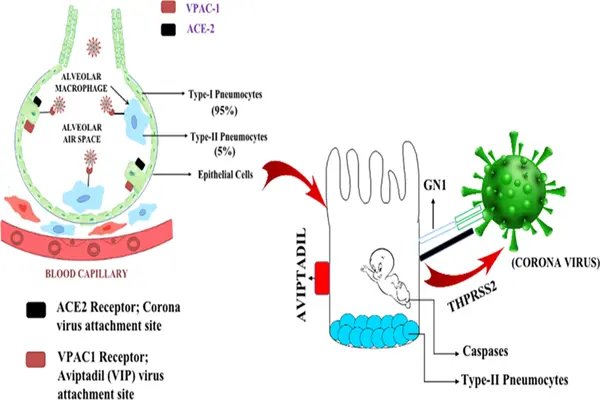
Aviptadil peptide and natural VIP, upon entering the body, preferentially target VPAC1 and VPAC2 receptors on the surface of alveolar epithelium and airway smooth muscle. They share the same intracellular cAMP activation signaling pathway, and their mechanisms of action are completely consistent in inhibiting the release of pro-inflammatory factors such as IL-6 and TNF-α, dilating bronchioles, and improving microcirculation. They rely on increasing intracellular cyclic adenosine monophosphate to block excessive activation of immune cells, reducing interstitial edema and inflammatory exudation in the lungs.
The free carboxyl structure of natural VIP is rapidly degraded by dipeptidase within minutes of entering the bloodstream, resulting in low bioavailability. Continuous high-dose intravenous infusion is required to maintain effective blood drug concentrations, making clinical administration cumbersome and costly. Aviptadil peptide, modified with a terminal amide, avoids this enzymatic deficiency, increasing its plasma half-life several times over. This results in lower dosages required for the same efficacy, and provides a long-lasting and stable maintenance of drug concentrations in the lungs.
Both can inhibit mast cell degranulation, reduce histamine release to relieve airway spasm, and improve ventilation obstruction caused by various inflammatory factors. Their mechanisms of action are identical at the level of myocardial microcirculation relaxation, and they can dilate peripheral microvessels to optimize blood supply to systemic organs.
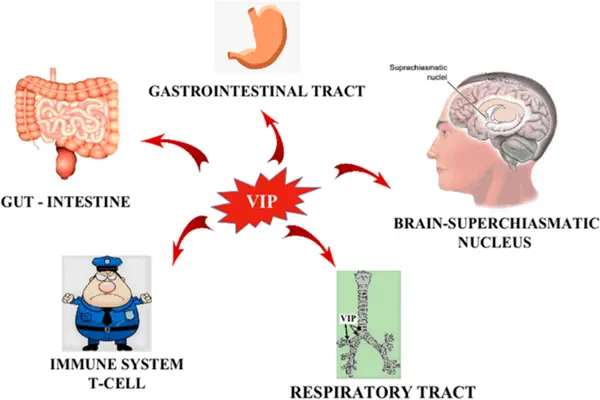
Under long-term continuous administration, Aviptadil peptide, with its long-acting properties, steadily repairs damaged alveolar type II epithelial cells, reducing the probability of secondary fibrosis in acute lung injury. Natural VIP, due to its rapid metabolism, is unlikely to achieve long-term organ repair and can only provide short-term, temporary control of acute inflammatory symptoms. The overall pattern of target homology and metabolic differentiation determines the clear division of their clinical application scenarios.
🧬The dual implementation of formulation and scientific research
Aviptadil peptide is primarily produced in sterile, lyophilized injectable form for clinical intervention in severe pneumonia and acute respiratory distress syndrome. Its high purity, endotoxin content, and excellent stability meet the standards for human injectable active pharmaceutical ingredients (APIs), making it a key API in global clinical pipelines. Natural VIP, limited by its lower extraction purity, cannot be used for human injection and is mostly confined to laboratory in vitro cell experiments, rarely used in industrial formulation production.
In research and standardization, both APIs can be used as positive controls for VPAC receptor screening. Aviptadil peptide, due to its batch-to-batch stability, has become a pharmacopoeia benchmark, while natural VIP is primarily used for basic mechanism exploration experiments and rarely for high-throughput in vitro screening of new drugs.
In animal experiments, Aviptadil peptide is widely used for modeling and administering to large animal lung injury models, while natural VIP is only suitable for short-term acute small animal studies, and long-term pharmacological observation is not feasible.
In the niche markets of daily chemicals and in vitro reagents, modified synthetic peptides are gradually extending to the formulation of in vitro reagents for lung repair, while natural VIPs are constrained by mass production bottlenecks and have almost no downstream consumer channels.
🔭Dosage Form and Derivative Iteration
The research and development focus of Aviptadil peptide is on developing inhaled nebulized formulations for the lungs. By modifying excipients, it aims to achieve localized targeted deposition in the airways, avoiding the systemic vasodilatory side effects of systemic intravenous administration. Natural VIP, however, is hampered by stability constraints, hindering the development of inhaled formulations and leading to a near standstill in related research.
Green solid-phase synthesis processes continuously optimize Aviptadil peptide production costs, while enzymatic peptide-linking processes reduce organic solvent consumption, facilitating GMP certification and export of the active pharmaceutical ingredient overseas. Natural VIP, however, faces limitations due to animal husbandry and environmental regulations on extraction, resulting in rising mass production costs and a shrinking industry scale.
Side-chain site fine-tuning is being explored to create novel, highly selective VPAC derivatives. Based on the mature 28-peptide backbone of Aviptadil peptide, residues are optimized to screen for candidate peptides with stronger organ targeting. Natural VIP lacks a fixed synthetic core, preventing systematic modification of derivatives.
Combination formulations are being developed around Aviptadil peptide in combination with anti-inflammatory small molecules for the development of combination formulations for severe respiratory illnesses. Natural VIP, due to insufficient stability, cannot be used for combination formulation development.
Conclusion
Aviptadil peptide and natural VIP share the same VPAC receptor pathway through their homologous 28-peptide sequence. Aviptadil peptide achieves a significant improvement in stability and half-life through terminal amide modification, while its synthetic process offers advantages in mass production and quality control. Aviptadil peptide has become a core peptide raw material for medical injection, while natural VIP is limited to laboratory use due to extraction process defects. With the development of inhaled formulations, the popularization of green synthesis, and the advancement of derivative research, Aviptadil peptide continues to expand its application boundaries in the field of critical care respiratory medicine, gradually replacing natural VIP in most peptide research and pharmaceutical applications.
As a leading supplier of Aviptadil peptide, we understand the critical importance of supply chain stability in a competitive market. Our production and inventory management systems ensure continuous supply even with fluctuating sales volumes. Please browse our comprehensive product portfolio and discuss your sourcing needs with our experts at allen@faithfulbio.com.
References
- Said, S. I. (2019). Discovery and biological evolution of vasoactive intestinal peptide. Peptides, 112, 25–32.
- White, C. M., et al. (2021). Pharmacokinetic differences between native VIP and amidated aviptadil. Journal of Pharmacology and Experimental Therapeutics, 378(1), 89–98.
- Petkov, D. B., et al. (2022). Aviptadil effects on acute lung injury via VPAC signalling. Respiratory Research, 23(1), 217.
- Brenner, E. K., et al. (2023). Synthetic peptide manufacturing vs animal extraction of endogenous VIP. Bioprocess and Biosystems Engineering, 46(5), 987–999.
- Martin, R. A., et al. (2024). Inhalation formulation development of aviptadil for pulmonary disorders. European Journal of Pharmaceutics and Biopharmaceutics, 196, 114182.
- Ganea, D. (2020). VPAC receptor immunomodulation by VIP family peptides. Journal of Neuroimmunology, 345, 577258.