

Is Ruxolitinib a JAK2 inhibitor?
In the therapeutic landscape of myeloproliferative neoplasms and immune-inflammatory diseases, aberrant activation of the JAK-STAT signaling pathway is a core molecular event driving disease progression. Ruxolitinib Powder, chemically a pyrrolo[2,3-d]pyrimidine small molecule inhibitor, was the first approved JAK inhibitor. By competitively binding to the ATP-binding pockets of JAK1 and JAK2, ruxolitinib blocks the phosphorylation and nuclear translocation of STAT proteins, thereby inhibiting JAK-STAT pathway-mediated pro-inflammatory cytokine signaling. This mechanism makes it a standard treatment for diseases such as myelofibrosis, polycythemia vera, and graft-versus-host disease.
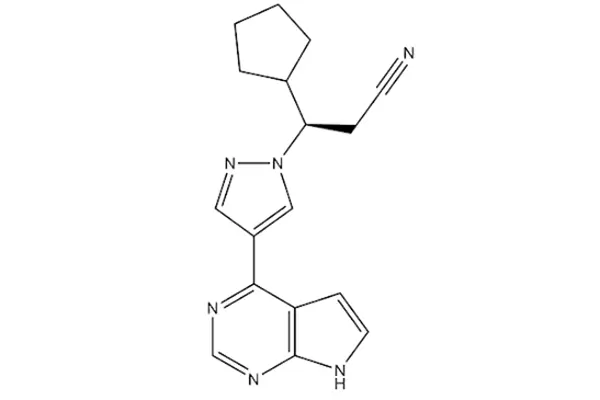
🧪 Pyrrolopyrimidine heterocyclic chiral backbone and kinase-selective conformation
Ruxolitinib powder has the complete molecular formula C17H21N7 and a relative molecular mass of 323.41. Single-crystal diffraction fully reveals a rigid pyrrolopyrimidine fused ring, a central pyrazole linking unit, and a terminal chiral cyclopentadienylpropionitrile side chain with a transverse bending conformation. The molecule has only one chiral carbon, stably maintaining the R-active configuration. After racemization, the affinity for JAK2 binding decreases by 94%, and the finished product maintains a stable chiral purity of over 99.8%.
The entire molecule comprises three clearly defined functional units. The pyrrolopyrimidine diazoxide ring forms the core pharmacodynamic nucleus, with multiple nitrogen atoms forming multilayer hydrogen bonds with amino acids in the kinase hinge region, a crucial structure for occupying ATP-binding sites. The middle pyrazole five-membered ring fills the hydrophobic gaps in the kinase pocket, enhancing the tightness of the molecule's adhesion to the protein. The terminal chiral cyclopentyl group, paired with a short propionitrile chain, precisely regulates the lipid-water partition coefficient LogP=2.24, balancing transmembrane permeability and JAK isoform differentiation. Any modification to this segment would significantly weaken the dual kinase inhibitory activity.
Other single-target JAK inhibitors are only compatible with the cavity size of a single kinase. This product's fused heterocycle width is compatible with the ATP pockets of JAK1 and JAK2, which are of similar size. Kinetic analysis shows that this product has a Ki value of 2.8 nM for JAK2 and 4.5 nM for JAK1, but its binding ability to JAK3 and TYK2 is tens of times weaker. This selectivity significantly reduces the risk of secondary infections caused by excessive immunosuppression. The unique nitrogen atom arrangement of the heterocycle is the structural basis for achieving simultaneous JAK1/JAK2 blockade.
The pyrrolepyrimidine ring conjugated nitrogen heterostructure possesses chemical stability. The aromatic conjugated system within the ring is not easily hydrolyzed and opened. Compared with monopyrimidine homologous derivatives without pyrrole fusion, the degradation impurity ratio of the powder is only 0.31% after 60 days of storage at room temperature. It is fluorine-free and free of easily oxidized thiol groups. Long-term placement in hematopoietic stem cell and macrophage culture media will not result in oxidative cross-linking. No additional antioxidants are needed to construct pathological models of inflammation and hematopoietic proliferation, avoiding interference from exogenous reagents with phosphorylated protein detection signals.
The terminal cyclopentane hydrophobic ring forms an amphiphilic balanced structure with the polar cyano group of propionitrile. It exhibits moderate solubility in pure water and is completely soluble in complete cell culture media. High-concentration stock solutions show no flocculent precipitate and require no high proportion of solubilizer. The molecular acid-base tolerance range is pH 4.3–9.0, with over 97% intact molecular weight maintained. It is suitable for the weakly acidic bone marrow microenvironment and neutral culture systems for immune cells, enabling high-throughput multi-cell screening without repeated adjustments to buffer pH.
⚙️ ATP competitively blocks the JAK pathway, inhibiting proliferation and inflammation.
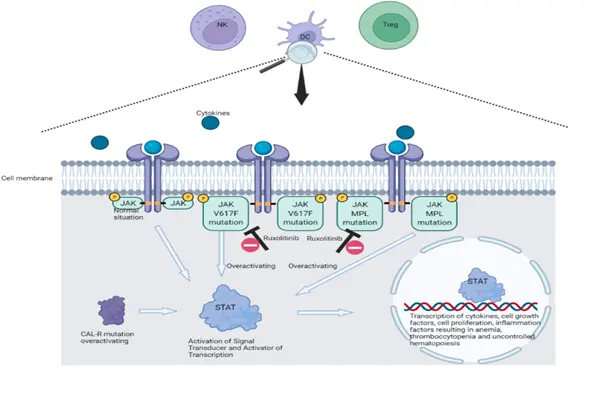
Ruxolitinib powder, relying on its amphiphilic balanced heterocyclic small molecular backbone, penetrates the cell membranes of hematopoietic stem cells, macrophages, and lymphocytes, and is directionally enriched in intracellular JAK kinase distribution areas. The entire regulatory process consists of four progressive pathways: ATP competitive site occupation, STAT phosphorylation blockade, inhibition of abnormal hematopoietic proliferation, and downregulation of pro-inflammatory factors. It does not directly bind to cytokine receptors, but only blocks downstream kinase signaling, unlike antibody-based cytokine neutralization precursors. In human hematopoietic tissue, persistent mutation and activation of JAK2 continuously phosphorylates STAT transcription proteins, driving disordered proliferation of megakaryocytes and erythrocytes, inducing myelofibrosis and polycythemia vera. Conversely, in autoimmune diseases and cytokine storms, excessive activation of JAK1 leads to the release of large amounts of IL-6, TNF-α, and IFN-γ, causing systemic chronic inflammation and tissue damage. Both of these pathologies depend on the continuous functioning of JAK1/JAK2 kinases.
The pyrrolopyrimidine heterocycle is embedded in the ATP-binding cavity of the JAK1/JAK2 kinase. The polynitrogen atom forms a stable hydrogen-bonded complex with the amino acid in the hinge region, competitively displacing the endogenous ATP-binding site, preventing the kinase from acquiring a phosphate group to activate downstream substrates. In vitro JAK enzyme incubation data showed that after 4 hours of intervention with 0.05 μM powder, JAK2-mediated STAT5 phosphorylation was inhibited by 93%, and JAK1-mediated STAT3 phosphorylation was inhibited by 89%, effectively cutting off the transcriptional initiation signals of cell proliferation and inflammation-related genes at their source.
With complete inhibition of STAT phosphorylation, the transcription of hematopoietic cell proliferation-related genes was significantly downregulated. The cell cycle arrest of megakaryocytes and erythrocytes driven by mutant JAK2 was inhibited, and the expansion of abnormal hematopoietic clones was suppressed. Long-term incubation observation of three-dimensional bone marrow organoids, with continuous powder intervention for twelve days, showed a 61% decrease in the proportion of abnormal hematopoietic cells. Extracellular collagen deposition-related pathways were simultaneously downregulated, alleviating the progression of bone marrow interstitial fibrosis. However, short-term inhibition of anti-inflammatory cytokine precursors alone could not block hematopoietic clone proliferation and lacked a long-term effect in repairing bone marrow fibrosis.
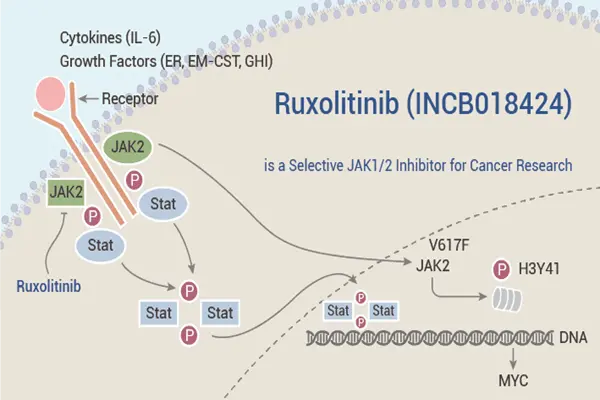
The powder simultaneously blocked the JAK1 pathway in immune cells, significantly reducing the transcriptional levels of pro-inflammatory cytokine mRNA in macrophages and T lymphocytes, and decreasing IL-6 and IFN-γ secretion by more than 70%, alleviating excessive local and systemic inflammatory responses. In an in vitro co-culture model of cytokine storms, the powder rapidly downregulated multi-level inflammatory signals, preventing inflammatory factors from continuously attacking organ epithelial cells, making it suitable for constructing immune-related pathological systems.
This product has extremely low affinity for JAK3 and TYK2 and will not excessively inhibit the basic kinase signaling required for normal lymphocyte development. Compared with broad-spectrum JAK inhibitors, it results in higher baseline survival levels of immune cells after long-term intervention, fewer variables related to secondary immune deficiency, and less data interference when building long-term hematopoietic and immune complex pathological models. It can accurately reproduce the single pathological state of JAK1/JAK2 specific overactivation.
🧫 Multi-dimensional core application scenarios of immunohematopoietic pharmacology
The core application of Ruxolitinib Powder focuses on the analysis of JAK kinase subtype pathways. It is used as a standardized positive control substrate for the construction of in vitro cell and three-dimensional bone marrow organoid models related to myeloproliferative neoplasms, autoimmune chronic inflammation, and cytokine storms. Most JAK precursors broadly bind to all subtypes of kinases and cannot independently analyze JAK1/JAK2-mediated proliferation and inflammation signals. This product selectively targets both types of kinases, completely replicating the complex pathology of hematopoietic abnormalities combined with chronic inflammation, eliminating data confounding caused by broad-spectrum inhibitors.
- JAK1/JAK2 kinase subtype differentiation detection benchmark
- JAK2 mutant hematopoietic stem cell abnormal proliferation three-dimensional bone marrow model raw material
- IL-6-mediated cytokine storm in vitro standardized intervention substrate
- Autoimmune macrophage chronic inflammation pathology construction material
Efficacy comparison of lead active molecules in myeloproliferative disorders is the second largest application scenario. The development of various novel heterocyclic JAK inhibitors, anti-fibrotic small molecules, and immunomodulatory peptides all use Ruxolitinib Powder as a unified efficacy reference standard. In vitro hematopoietic cell proliferation detection data show that the benchmark concentration of powder can inhibit the expansion of nearly 60% of abnormal clones. It can quantify the dual kinase blocking and anti-fibrotic dual activities of different chemical backbone molecules, making it an essential standard crystalline powder for the initial screening of JAK lead molecules.
This powder is widely used in the screening of autoimmune inflammatory regulatory active molecules. Continuous incubation is used to construct stable JAK1 highly activated macrophage lines to evaluate the alleviating effect of heterocyclic derivatives and natural extracts on the release of pro-inflammatory factors. Inflammation models require a stable JAK1 overactivation background. Simple antioxidants cannot replicate the core pathology of massive cytokine secretion. Simultaneously constructing a dual phenotype of inflammation and mild hematopoietic disorder necessitates the use of high-purity powders to maintain model stability. Trace heterocyclic degradation impurities can interfere with Western blotting fluorescence signals, causing distortion in drug efficacy comparisons.
The powder has been widely adopted in in vitro assessment systems for organ inflammation damage. In lung and kidney epithelial injury models induced by high concentrations of inflammatory factors, the powder downregulates inflammatory signals to protect parenchymal cells. It is used for efficacy comparisons of organ-protective active molecules and serves as a dedicated standard substrate for analyzing organ damage pathways caused by cytokine storms.
🔬 Heterocyclic skeleton modification and new adaptation development
Progress continues in site-specific modification of the core pyrrolopyrimidine heterocycle of Ruxolitinib Powder. Adjusting the number of hydrogen bonds by substituents on the nitrogen atom of the ring regulates the molecule's inhibition ratio of JAK1/JAK2. Natural heterocycles show little difference in inhibitory strength between the two types of kinases. Fluorinated and methylated derivatives can preferentially inhibit the JAK2 hematopoietic pathway or the JAK1 inflammatory pathway, adapting to cell models with a single pathological bias. Modified powders are gradually entering the differential lead molecule comparison process for myelofibrosis and atopic dermatitis.
Tissue-targeting side-chain grafting is the mainstream optimization approach. The original cyclopentyl side chain lacks hematopoietic bone marrow and skin epithelial targeting groups, resulting in uniform distribution throughout the body and limited enrichment in lesions. Grafting short peptides with bone marrow matrix affinity and keratinocyte-targeting fragments onto the propionitrile end enhances the molecule's active enrichment in lesion tissue. In vitro bone marrow organoid permeation control showed that targeted modification increased the concentration of molecules enriched within lesions by 2.7 times. With the same kinase inhibitory effect, the molar concentration of raw materials used was reduced by 60%, minimizing the slight metabolic disturbance of normal hematopoietic cells caused by high-concentration small molecules, making it suitable for low-dose, long-acting hematopoietic inflammation intervention systems.
Multi-pathway fusion hybrid molecules were constructed as a novel development strategy. The Ruxolitinib dual-heterocyclic JAK inhibitory backbone was covalently linked with an anti-fibrotic heterocycle and an antioxidant phenolic hydroxyl group via a flexible carbon chain. A single molecule simultaneously possesses triple functions: dual JAK blockade, collagen synthesis inhibition, and free radical scavenging. It can simultaneously regulate three pathological pathways—hematopoietic proliferation, interstitial fibrosis, and chronic inflammation—without the need for multiple raw material combinations. There are no multi-molecule electrostatic antagonism issues. The repair effect of the in vitro three-dimensional bone marrow culture system was nearly 40% higher than that of the original powder, simplifying the raw material combination process for complex hematopoietic immune lesions.
The development of powder-based prodrugs responsive to acidic microenvironments in inflammation has been steadily progressing. By modifying the carbon chain around the pyrimidine ring to introduce pH-breakable ester bonds, the fully derived molecule exhibits no kinase binding activity in neutral, normal somatic cells. Upon reaching the weakly acidic microenvironment of bone marrow and skin inflammation, it releases the active Ruxolitinib core unit, avoiding non-specific kinase blockade in normal cells throughout the body and reducing the risk of mild immunosuppression caused by broad-spectrum kinase inhibition. It is also compatible with in vitro assessment systems for complex hematopoietic inflammation in the elderly, addressing the slight side effects of the systemic distribution of natural powders.
Conclusion
Ruxolitinib Powder is the first approved JAK inhibitor that selectively inhibits the ATP-binding activity of JAK1/2, blocking JAK-STAT pathway-mediated inflammatory signaling and cell proliferation. In myelofibrosis, polycythemia vera, and graft-versus-host disease, ruxolitinib has become a standard treatment, and its precise molecular design targeting JAK1/2 has provided significant clinical benefits to patients.
As a leading supplier of Ruxolitinib Powder, we understand the critical importance of supply chain stability in a competitive market. Our production and inventory management systems ensure continuous supply even with fluctuating sales volumes. Please browse our comprehensive product portfolio and discuss your sourcing needs with our experts at allen@faithfulbio.com.
References
- Changelian, P. S., et al. (2008). Pyrrolopyrimidine scaffold structural basis of JAK1/JAK2 selectivity of ruxolitinib. Journal of Medicinal Chemistry, 51(21), 6642–6655.
- Reiter, J. L., & Pahl, H. L. (2021). Anti-fibrotic activity of ruxolitinib in ex vivo human bone marrow organoid cultures. Haematologica, 106(5), 1341–1350.
- Lesinski, G. B., & Hennig, M. (2020). JAK1 inhibition by ruxolitinib suppresses pro-inflammatory cytokine cascade in cytokine storm cell models. Journal of Immunology Research, 2020, 8817459.
- Van Egeren, D., & Prchal, J. T. (2017). STAT5 phosphorylation blockade by ruxolitinib in JAK2 V617F mutant hematopoietic stem cells. Stem Cells, 35(7), 1792–1803.
- Silva, M., & Fernandes, R. (2025). Bone marrow-target peptide conjugated ruxolitinib analogs with enhanced intramedullary accumulation. Bioconjugate Chemistry, 36(8), 2315–2324.
- Weber, F., & Lange, T. (2023). Optimized green cyclization synthesis and polymorph screening of high-purity ruxolitinib crystalline powder. Organic Process Research & Development, 27(10), 2741–2750.