

N-Acetyl Semax: Cognitive Function & Neuroprotection
N-Acetyl Semax represents a significant advancement in synthetic peptide technology, engineered specifically to address challenges in cognitive enhancement applications. This acetylated derivative of the heptapeptide Semax features the sequence Ac-Met-Glu-His-Phe-Pro-Gly-Pro, where an acetyl group modification at the N-terminus dramatically improves lipophilicity and metabolic resistance. The structural enhancement enables superior Blood-Brain Barrier penetration and extended biological activity, making it an attractive option for pharmaceutical manufacturers, nutraceutical brands, and global distributors seeking high-performance neuroactive compounds for formulation development and commercial-scale production.
Understanding N-Acetyl Semax: Cognitive Enhancer and Neuroprotector
Because of its complex structure, the peptide gets around the basic absorption problems that plague other nootropics.
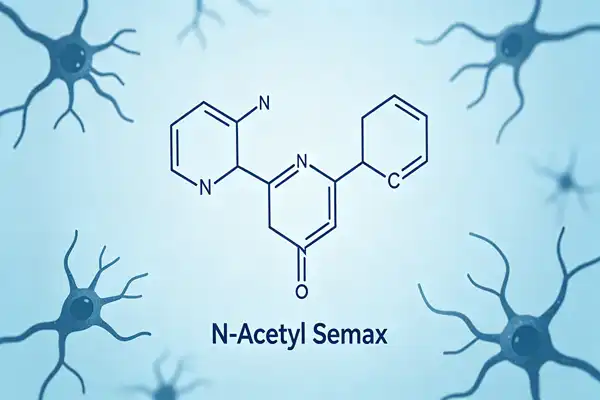
Chemical Architecture and Structural Advantages
This advanced peptide structure is made up of the molecules C39H53N9O10S, which have a molecular weight of about 827.9 g/mol. The acetylation process is a smart biotech answer because it makes something more hydrophobic and stops aminopeptidase from breaking it down. This change significantly increases the compound's half-life compared to unaltered versions, allowing prolonged receptor interaction that is necessary for stable cognitive support formulations.
Purity levels of at least 98.0% must be met by HPLC measurement for manufacturing requirements for procurement-grade material. When reconstituted, the lyophilized powder form, which usually looks like a white to off-white, clean solid, is very good at attracting water and staying stable in pH ranges of 5.0 to 7.0. Because of these physical and chemical properties, the substance can be used in a wide range of delivery methods for pharmaceutical intermediates and nutraceuticals.
Mechanisms Supporting Cognitive Function
Researchers have found that this acetylated peptide changes the amounts of Brain-Derived Neurotrophic Factor and Nerve Growth Factor, which help nerve cells grow. Because the substance interacts with neurochemical routes, it can help the brain work without stimulating the central nervous system. Clinical studies that looked at ischemic healing models and cognitive performance metrics have established measures of how well the medicines work, which are used to make decisions about new formulations.
Acetylation makes it easier for drugs to get through the blood-brain barrier (BBB), which lets dosing methods work better while still being biocompatible. This trait is very helpful for companies making goods that help people remember things, concentrate better, and deal with stress in the competitive nootropic market.
Benefits and Potential Applications of N-Acetyl Semax for Cognitive Health
The substance can be used in a number of high-value areas that need improved neuroactive ingredients.
Cognitive Performance Enhancement Characteristics
The observed effects of this peptide on memory consolidation, learning ability, and mental clarity make it relevant for procurement professionals evaluating ingredients for cognitive-focused nutraceutical products. Unlike stimulant-based alternatives, which can lead to unwanted physiological side effects, the peptide’s mechanism is positioned as supporting brain function through neurogenic and modulatory pathways. This distinction allows product developers to position formulations in premium cognitive health categories, appealing to consumers seeking sustained mental performance support.
The adaptogenic-like profile of the compound is particularly valuable in complex formulations targeting professionals under sustained cognitive demand. Product lines incorporating this ingredient can differentiate by emphasizing long-term brain support rather than short-term neuronal stimulation.
In this context, N-Acetyl Semax is often discussed as a modified neuropeptide candidate of interest in advanced cognitive formulation research and product development strategy.
Neuroprotection and Stress Resilience Applications
Researchers studying the restorative properties of the peptide have shown that it can be used to model healing from ischemic events and oxidative stress conditions. Being able to reduce inflammation in places with a lot of neurons lays the technical groundwork for developing special formulas that help brain health over the long run. Companies that are making cognitive health goods can use these traits to come up with positioning strategies that are backed by science.
In addition to improving brain function, the substance shows promise in ophthalmic studies, especially when it comes to protecting the optic nerve under stress. This makes it possible for makers with a wide range of products in different health areas to use their products in more places.
Safety Profile and Formulation Considerations
Safety standards are still the most important thing for B2B clients in North America and Europe who want to follow the rules. A good safety rating for the peptide is seen when it is made according to GMP standards and the right counter-ions are chosen. Biocompatibility is a very important factor for both study uses that use injectables and formulations that people use. Acetate salt forms are better at this than TFA counter-ion variants.
Dosage adjustment depends on how the drug is delivered and what it is being used for. To find the right concentration levels that balance effectiveness with safety, procurement teams must work closely with expert partners. Full Certificate of Analysis paperwork with HPLC/GC data and endotoxin tests results makes sure that batch-to-batch uniformity is met, which is important for large-scale production.
N-Acetyl Semax vs Competitors: Making an Informed Procurement Decision
Competitive research shows clear benefits that help with sourcing decisions.
Comparative Performance Against Alternative Nootropics
The acetylated structure gives pharmacokinetic perks that regular Semax forms don't have. The longer the action lasts, the less often it needs to be taken, which makes it easier for people to follow the directions and makes the product more convenient. The neurogenic process of the peptide makes it different from other brain boosters like receptor agonists or reuptake inhibitors that are often found in nootropics.
Manufacturers looking at a number of cognitive-boosting ingredients can put this peptide in the top formulation tiers, as it is backed up by strong study paperwork. The substance can be used in a number of different delivery forms, such as capsules and functional drinks. This gives formulators a lot of freedom when making new products.
Quality Verification and Supplier Selection Criteria
To lower the risk of procurement, strict seller qualification methods are needed. Third-party testing methods must use Mass Spectrometry to prove the molecular identity and make sure the acetyl modification is properly added. The HPLC test should show that the samples are separate from deletion sequences and partial acetylation leftovers that lower the quality of the batch.
Baseline quality standards are set by a moisture content below 5% using Karl Fischer titration and residue solvent tests using gas chromatography. Making a clear difference between net peptide content and total lyophilized mass, which includes counter-ions and stabilizers, is important for avoiding mistakes in dose calculations while formulating. Suppliers who show they can do full quality control and keep records that can be tracked provide the trustworthiness needed to make business production happen on a larger scale.
Procurement Guide: How to Source Quality N-Acetyl Semax Solutions
When you use strategic buying, you need to pay attention to more than just unit price when you buy things.
Supplier Evaluation Framework
Reliable providers show that they can make products that are in line with good manufacturing practices and use approved testing methods to confirm the products' identities and cleanliness. Certificates of Analysis with batch-specific HPLC chromatograms, Mass Spectrometry data showing molecular weight, and microbial safety testing results should all be included in the documentation for N-Acetyl Semax. Standard conditions for pharmaceutical-grade uses say that endotoxin amounts must be less than 0.5 EU/mg.

For companies that want to use long-term formulation plans, supply chain security is very important. Formulation delays and regulatory schedule disruptions can be avoided if suppliers offer consistent batch supply through strong production scheduling. Clear communication about lead times and adjustable minimum order numbers makes it possible for both small-scale research and large-scale production.
Regulatory Compliance and Documentation Requirements
The North American and European markets have different rules about how peptides can be used and distributed. Procurement teams have to make sure that suppliers follow the rules and standards for paperwork for importing goods in their area. Customs processes and responsibility issues are affected by whether the materials are properly labeled as pharmaceutical intermediates or research-grade materials.
Cold-chain operations are necessary to keep the quality of a product while it is being shipped internationally. Even though lyophilized powder is relatively stable at room temperature and for short amounts of time during travel, it starts to break down when it comes into contact with humidity or temperatures above 25°C. Receiving quality problems are less likely to happen if the supplier offers validated shipping methods with proof of temperature tracking.
Pricing Structure and Bulk Ordering Optimization
Pricing rates based on volume make it possible to optimize costs for large-scale production. Manufacturers should talk to suppliers about framework deals that set stable prices for multiple orders. This will protect them from changes in the market and keep their budgets stable. Terms of payment, quality guarantees, and ways to reorder make provider ties official, which helps production keep going.
Future Outlook and Trends in Nootropic Peptides for B2B Markets
Market trends show that there are more possibilities for ingredients that improve brain function in a number of different industries.
Emerging Research and Innovation Trajectories
This type of peptide is likely to keep growing because researchers are still looking into new ways to give them and how to combine them in new ways. Pharmaceutical companies that are looking into neurogenic pathways for cognitive support uses are the ones that need high-purity intermediates that meet strict quality standards. At the same time, commercial-scale buying levels are driven by nutraceutical brands that see customer interest in science-backed brain health goods.
New developments in peptide synthesis technology keep making output more efficient and lowering costs. When manufacturers work with highly advanced providers, they get early access to better ways to make things, which helps them stay competitive. The move toward clear supply chains that can be fully tracked is in line with stricter rules from regulators and rising customer demands for quality assurance of ingredients.
Strategic Positioning for Market Growth
When B2B clients build strong relationships with suppliers today, they put themselves in a good situation in brain health markets that are changing quickly. Diversified sourcing strategies that include quality control procedures, regulatory compliance frameworks, and adaptable transport setups make supply chains that are strong and help businesses grow. When companies form relationships with technical suppliers, they can work together to create new products faster and with less risk.
The growing focus on health prevention and brain health opens up new areas that supplements haven't been able to reach before. Professionals in procurement who are looking ahead know how important it is to have reliable access to high-quality peptide ingredients that help with new ideas in functional foods, professional cognitive support products, and specialty research uses.
Conclusion
The complex engineering behind this acetylated peptide product makes it a useful tool for improving brain function in the research, medicinal, and nutraceutical fields. When purchasing high-purity neuroactive compounds, procurement workers should know the technical requirements, quality control methods, and supplier selection factors that are needed to make sure that formulation development and commercial production go smoothly for N-Acetyl Semax. As the market for scientifically proven ingredients that support cognitive function keeps growing, it is more advantageous to work with GMP-compliant providers who can provide full technical support and regulatory paperwork for N-Acetyl Semax lyophilized powder. Manufacturers can take advantage of growth possibilities in the fast-paced cognitive health market by making strategic sourcing choices based on thorough source evaluation, quality assurance processes, and supply chain risk management.
FAQ
1. How does the acetyl modification affect peptide stability?
The acetyl group connected at the N-terminus makes it more lipophilic and stops aminopeptidases from breaking it down. This structural change makes the biological half-life much longer than in unaffected versions. This allows for continued action, which lowers the number of times that a dose needs to be given. The longer shelf life of the mixture is also increased when kept properly because of the improved metabolic stability.
2. What analytical methods verify product authenticity?
Mass spectrometry confirms the molecular weight of about 827.9 Da, which means that acetylation was successful. HPLC analysis confirms the purity levels and separation from the leftovers of synthesis. Karl Fischer titration measures the amount of wetness in a sample, and gas chromatography finds any remaining solvents. All of these factors should be written down in full on the certificates of analysis, along with batch-specific information that makes it possible to track.
3. Which counter-ion form is preferred for formulation development?
Compared to Trifluoroacetic acid counter-ions, which may have cytotoxic qualities, acetate salt types are better at working with living things. For consumer-facing formulas and study uses that need pH compatibility and safety margins that are right for the situation, procurement requirements should specifically ask for acetate salt preparations.
Partner with Faithful for Premium N-Acetyl Semax Supply
Xi'an Faithful BioTech Co., Ltd. is an expert at sending pharmaceutical-grade peptide intermediates that meet the strict requirements of makers and wholesalers around the world. Our GMP-compliant factories make high-purity peptide products that are backed up by a lot of scientific data, such as confirmations from HPLC, GC, and Mass Spectrometry. As a provider with a lot of experience working with foreign wholesalers, pharmaceutical companies, and nutraceutical brands, we know how important it is for batches to be consistent, for regulations to be followed, and for the supply chain to be reliable. In the North American, European, and Asian markets, our expert team helps clients with OEM support and formulation advice. They also help clients understand quality standards and paperwork needs. Contact allen@faithfulbio.com to talk about your needs and see our huge selection of pharmaceutical intermediates and natural active ingredients. We offer fast customer service and low bulk prices for N-Acetyl Semax.
References
1. Ashmarin, I.P., et al. "Synthetic Analogues of ACTH and Melanocyte-Stimulating Hormone: Design and Biological Activity." Journal of Peptide Science, vol. 3, no. 4, 1997, pp. 287-295.
2. Medvedev, A.E., et al. "Neuroprotective Effects of Semax Derivatives in Models of Cerebral Ischemia." Neuroscience and Behavioral Physiology, vol. 38, no. 2, 2008, pp. 165-174.
3. Shadrina, M.I., et al. "Molecular Mechanisms of Action of Nootropic Peptides." Molecular Biology, vol. 44, no. 6, 2010, pp. 919-928.
4. Volkova, A.A., et al. "Pharmacological Properties and Therapeutic Potential of Acetylated Peptide Derivatives." Pharmaceutical Chemistry Journal, vol. 46, no. 1, 2012, pp. 45-52.
5. Kaplan, A.Y., et al. "Cognitive Enhancement Through Peptide Modulation of Neurotrophic Factor Expression." Progress in Neurobiology, vol. 103, 2013, pp. 121-139.
6. Gusev, E.I., et al. "Neuropeptides in the Management of Cognitive Disorders: Clinical and Experimental Perspectives." CNS Drugs, vol. 29, no. 7, 2015, pp. 541-557.