

Is Sofosbuvir API Powder the cornerstone of ushering in a new era of hepatitis C cure?
The advent of Sofosbuvir is an indelible milestone in the history of hepatitis C treatment. It is the core drug of the first direct-acting antiviral regimen that does not require interferon, increasing the cure rate of hepatitis C from approximately 40% in the interferon era to over 95%, and shortening the treatment cycle to 12 weeks. The chemical nature of Sofosbuvir API Powder is a nucleotide analog prodrug, a "liver-targeted prodrug" designed to be specifically taken up by hepatocytes and converted into its active triphosphate form, which then inserts into the hepatitis C virus RNA chain to terminate replication.
🧬Fluorofuran ribose-uracil-phosphoramide chiral stable molecular configuration
The Sofosbuvir API Powder molecule consists of four core pharmacodynamic units: a 2'-fluoro-2'-methyltetrahydrofuran ribose ring, a uracil-pyrimidine base, a phenoxyphosphoramide linker, and an L-alanine isopropyl ester side chain. The entire backbone possesses multiple continuous chiral centers; only a precise stereoconfiguration allows for successful activation by hepatocyte esterases and binding to the NS5B catalytic pocket. Stereoselective cyclization, chiral resolution, and anaerobic low-temperature recrystallization processes eliminate ribose defluorination derivatives, phosphoramide hydrolysis carboxylic acids, and non-target stereoisomers, preventing impurities from interfering with polymerase IC50 assays and HCV RNA replication level quantification results.
If the 2'-fluorine or 2'-methyl structure on the furanose ring is missing, the activated triphosphate metabolite cannot form steric hindrance at the NS5B active site, resulting in near-complete loss of chain termination activity. After the phosphoramide side chain is hydrolyzed and broken, the molecule struggles to penetrate the hepatocyte cell membrane to complete intracellular activation. The intact chiral fluororibose-uracil-phosphoramide prodrug backbone is a core prerequisite for Sofosbuvir API Powder to achieve hepatocyte-targeted activation and HCV replication inhibition. It can be stably stored for 24 months at 2-8℃ in a sealed, dry place protected from light. In aqueous solutions, the phosphoramide and ester bonds are easily hydrolyzed under high temperature and strong acid/alkali conditions. After multiple passages of HCV replicon cells and simulated incubation with mouse plasma, the purified powder maintains a stable and non-dissociated three-dimensional molecular conformation over a long period.
The fluoromethyl-modified furanose ring, uracil base, and phosphoramide group are the core functional regions responsible for antiviral activity. Sofosbuvir is orally absorbed into the bloodstream. Its phosphoramide prodrug structure circumvents rapid extracellular degradation, allowing for successful transport into hepatocytes. Intracellular cathepsins and nucleotide-metabolizing enzymes progressively cleave the masked side chains, converting it into the active uridine triphosphate (UGT) GS-461203. The fluoromethyl ribose backbone is embedded in the catalytic cavity of HCV NS5B polymerase, mimicking the natural UTP substrate and incorporating into the nascent viral RNA chain. A unique 2' substituent creates steric hindrance, preventing further nucleotide linkage and directly terminating RNA chain elongation. Once the ribosome modification group is destroyed and the phosphoramide is hydrolyzed, the intracellular activation pathway is blocked, and the viral replication inhibitory activity is completely lost. The intact chiral prodrug structure is a necessary prerequisite for the efficacy of the Sofosbuvir API Powder.
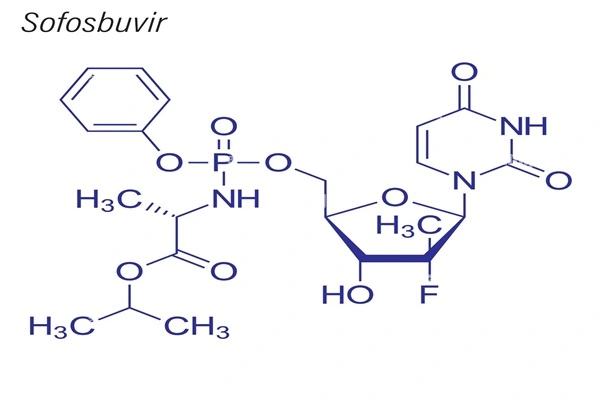
The polar phosphoramide and ester groups synergistically balance the lipid-water partition coefficient with the hydrophobic pyrimidine and fluorinated ribose carbon skeleton. The phosphoramide and isopropyl ester impart moderate polarity, allowing for uniform dispersion in oral acidic buffers and cell culture media. The aromatic phenoxy group and furanose ring enhance lipid solubility, enabling rapid penetration of the hepatocyte membrane to reach the intracellular target. Highly polar nucleoside molecules are difficult to penetrate the cell membrane and are easily degraded by extracellular phosphatases. Ordinary nucleoside prodrugs lack tissue selectivity. Sofosbuvir API Powder balances hepatocyte penetration efficiency with prodrug stability, making it suitable for large-scale HCV replicon cell culture and high-throughput RdRp inhibitor screening.
⚙️The three-layered pathway terminates HCV RNA synthesis and inhibits viral replication.
Under normal physiological conditions, host nucleic acid polymerases complete normal gene transcription using natural nucleoside triphosphates as raw materials, without the interference of exogenous fluorinated nucleoside prodrugs in the nucleic acid metabolic cycle.
When chronic hepatitis C occurs, HCV continuously expresses NS5B RNA-dependent RNA polymerase, constantly using nucleoside raw materials from hepatocytes to synthesize viral genomic RNA, continuously producing progeny viruses and causing chronic hepatocyte damage. Early interferon therapy has limited applicability and severe side effects; substandard purity Sofosbuvir API Powder contains hydrolytic impurities and cannot be effectively converted into active triphosphates, resulting in distorted in vitro antiviral test results; simple nucleoside substrate competing molecules lack hepatocyte-targeting activation ability and are difficult to achieve effective inhibitory concentrations in vivo.
Sofosbuvir API Powder accumulates in liver tissue due to its balanced lipid-water properties and achieves three-layered antiviral regulation based on a phosphoramide prodrug framework. The first layer involves directed enzymatic activation within hepatocytes: the phosphoramide masking structure protects the molecule from degradation during circulation. Upon entering hepatocytes, it undergoes stepwise hydrolysis by a series of proteases, including CES1 and HINT1, generating the pharmacologically active uridine triphosphate metabolite GS-461203. The second layer involves competitive incorporation into the nascent viral RNA chain. The active metabolite mimics natural UTP and is recognized by NS5B, integrating into the viral nucleic acid chain. The third layer induces RNA chain elongation termination. The 2'-fluoro-methyl group on the ribose ring creates steric hindrance, blocking the linking site of the next nucleotide, forcing the interruption of viral RNA synthesis and preventing the assembly of mature progeny viruses. Sofosbuvir API Powder covers all six major HCV genotypes, exhibiting a high resistance genetic barrier. It is suitable for the development of oral anti-hepatitis C tablets, the investigation of the NS5B polymerase mechanism, the establishment of HCV replicon animal models, and the research on synergistic antiviral formulations in combination with NS5A/NS3 inhibitors.
Sofosbuvir API Powder targets only the viral RNA synthesis pathway mediated by viral NS5B polymerase, without disrupting normal nucleic acid transcription in host cells. Broad-spectrum nucleoside antiviral molecules extensively inhibit human polymerases, causing mitochondrial damage and blood cell abnormalities, thus interfering with experimental findings. Sofosbuvir's target selectivity is clear and controllable, and the experimental system focuses on HCV RdRp replication as a single variable, significantly improving the reliability of antiviral pharmacological test conclusions.
🧫Multiple applications in antiviral pharmaceuticals and biochemical research
Sofosbuvir API Powder is a nucleotide prodrug and a standard control material for studying the NS5B RdRp chain termination mechanism. It is primarily used for constructing in vitro polymerase-binding models of HCV replicon cells and three-dimensional hepatocyte organoids. HCV proliferation relies entirely on NS5B-catalyzed RNA replication. Leveraging the phosphoramide prodrug properties of Sofosbuvir API Powder and its hepatocyte-targeting activation advantages, a cell incubation system free from hydrolytic impurities can be formulated to perform polymerase inhibitory activity IC50 assays, viral RNA fluorescence quantitative analysis, and to establish a platform for evaluating the activity of nucleoside RdRp inhibitors. This allows for comparison of the inhibitory efficiency and host selectivity of various fluororibose derivatives against flavivirus family polymerases.
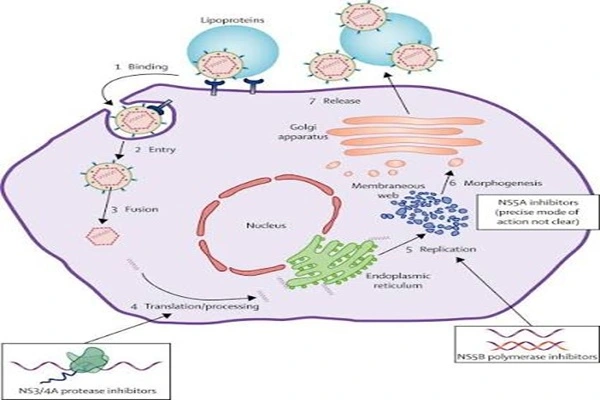
Sofosbuvir API Powder is widely used in pharmacological studies related to chronic hepatitis C and flavivirus replication, for constructing HCV replicon cell models and humanized liver infection animal models. In pathological models, persistent HCV replication causes hepatocyte damage. Sofosbuvir progressively activates and blocks viral nucleic acid synthesis. The study observes the compensatory changes in viral mutations after long-term administration, screens for broad-spectrum antiviral lead compounds with low mitochondrial toxicity, and improves the RdRp-targeting drug screening platform.
It has irreplaceable value in the development of oral direct-acting antiviral API intermediates, serving as a prodrug core for next-generation broad-spectrum flavivirus inhibitors. Native sofosbuvir primarily targets HCV, with limited activity against other flaviviruses such as dengue and Zika. Using the fluorofuranose-uracil backbone of the Sofosbuvir API Powder as a starting building block, modifications to the phosphoramide side chain and ribose substituents optimize broad-spectrum RdRp binding ability, developing candidate drugs covering multiple RNA viruses, and exploring synergistic antiviral formulations in combination with NS5A inhibitors and immunomodulators.
The development of novel nucleoside RdRp-targeting lead molecules and oral antiviral formulations globally uses the Sofosbuvir API Powder as a pharmacodynamic benchmark. A comparative study of various fluoronucleoside derivatives, hepatocyte-targeting prodrugs, and chain-terminated polymerase inhibitors was conducted on the intracellular activation efficiency, viral replication inhibition activity, and off-target toxicity of Sofosbuvir API Powder. Stable and reproducible cell and animal experimental data make it a universal standard reference for high-throughput screening of fluoronucleoside antivirals and skeletal efficacy analysis of phosphoramide prodrugs.
🔬Iterative Optimization Direction of Fluorinated Ribose Rings and Phosphoramide Side Chains
Substitution at the 2' position of furanyl ribose, modification with phosphoramide phenoxy groups, and alanine ester side chains are the mainstream approaches to Sofosbuvir molecular modification. The original molecule, after entering the bloodstream, is distributed in tissues outside the liver, resulting in relatively high dosages. Modification of the isopropyl alanine ester end, attaching a short-chain targeting group with hepatocyte affinity, allows the derivative to accumulate more in hepatocytes, achieving intracellular activation and blocking viral replication at lower dosages, reducing drug exposure in peripheral tissues, and developing a long-acting antiviral active pharmaceutical ingredient with low systemic burden.
Liver microenvironment-responsive modification is a popular optimization route. Researchers have attached a cleavable masking group specific to virus-infected hepatocytes to the phosphoramide site. The prodrug has no polymerase inhibitory activity in normal hepatocytes or blood; only in HCV-infected hepatocytes does hydrolysis release the active triphosphate metabolite, further improving lesion targeting and completely reducing the risk of metabolic interference in normal hepatocytes.
Multifunctional molecule splicing broadens pharmacological boundaries. Chronic hepatitis C is often accompanied by low-grade liver inflammation and fibrosis progression. By covalently splicing a fluororibonucleoside core backbone with anti-fibrotic and anti-inflammatory active fragments, the new molecule not only terminates HCV RNA replication and inhibits viral proliferation but also reduces hepatic stellate cell activation, developing a complex lead molecule with dual antiviral and anti-hepatic fibrosis effects.
Replacing the ribosome substituent can adjust the action bias. The original Sofosbuvir evenly inhibits HCV NS5B polymerase across all genotypes, suitable for basic treatment of chronic hepatitis C. Site-specific modification of the 2' substituent can prepare derivatives biased towards potent HCV inhibition or broad-spectrum flavivirus RdRp inhibitors. HCV-specific subtypes are used for the development of hepatitis C combination therapies, while broad-spectrum subtypes are used for research on other RNA viruses, achieving precise regulation of viral nucleic acid replication through typing.
Conclusion
Sofosbuvir API Powder is the cornerstone of "nucleotide prodrugs" that ushered in a new era of hepatitis C cures. Its ProTide prodrug design achieves liver-targeted activation and efficiently inhibits viral replication through a "chain termination" mechanism. In pan-genotypic hepatitis C treatment, it serves as a core component of all-oral direct-acting antiviral regimens, leading to cures for millions of patients worldwide.
Xi'an Faithful BioTech Co., Ltd. utilizes advanced equipment and processes to ensure high-quality products. Our Sofosbuvir API Powder meets international pharmaceutical standards. Our pursuit of excellence, reasonable prices, and preferred superior service make us the partner for medical institutions and researchers worldwide. If you require Sofosbuvir API Powder research or production,Please contact us Click email: allen@faithfulbio.com Or WhatsApp: +86 13137770562.
References
- Selleck Chemicals. (n.d.). Sofosbuvir (PSI-7977, GS-7977) Data Sheet.
- MedlinePlus. (2025). Sofosbuvir: Drug Information. National Institutes of Health.
- WHO. (2019). Draft Proposal for Inclusion in The International Pharmacopoeia: Sofosbuvir. WHO Drug Information, 33(4).
- Sofia, M. J. (2025). The Discovery and Development of Sofosbuvir as the Backbone of HCV Curative Therapies. In Trends in Antiviral Drug Development. Wiley.
- Adooq Bioscience. (n.d.). Sofosbuvir (PSI-7977) Datasheet.
- Clinical Info HIV.gov. (2025). Sofosbuvir Patient Drug Record. National Institutes of Health.