

Is tuliptin A the main sensitizing molecule in tulips?
Plants in nature contain a large number of small molecules with special reactive properties. These substances, relying on their unique chemical frameworks, can trigger abnormal responses in organisms during biological contact and can also act on signaling pathways within organisms, exhibiting medicinal regulatory value. Tulipalin A is commonly found naturally in tulips, almonds, and similar bulbous flowers. When the plant is intact, this substance is stably sealed in the form of a glycoside precursor. It is only gradually released as a free monomer after tissue damage occurs, playing a defensive role in the plant's own resistance to fungal infections and pest infestations.
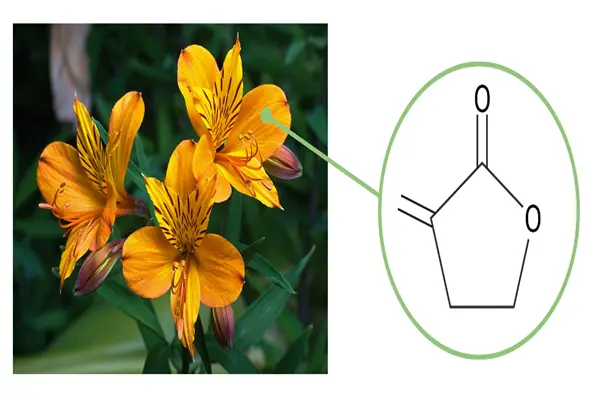
🔬The molecular code of α-methylene-γ-butyrolactone
Tulipalin A has a regular and simple molecular structure. Its basic chemical composition forms a stable five-membered lactone ring framework, with methylene structural units attached to the outer side of the ring, together forming a highly recognizable unsaturated lactone chemical form. The complete molecule lacks chiral isomers, has a compact spatial arrangement, and stable interatomic bonds, maintaining its basic chemical form under normal conditions at room temperature. However, prolonged static storage can lead to molecular aggregation, altering the original monomeric physicochemical state. In nature, this substance is mostly derived from the decomposition and transformation of its corresponding glycoside parent. Inert glycosides are stored within the vacuoles of flower and plant cells. When external forces such as mechanical scratches, harvesting, or squeezing disrupt the cell structure, endogenous catalytic enzymes rapidly break the chemical bonds, decomposing and generating biologically active Tulipalin A.
At room temperature, this substance is a transparent liquid with a very faint odor. It has a wide solubility and compatibility range, readily dissolving in alcohols and sulfoxide organic solvents, and also forming a dispersion in water, making it suitable for various experimental systems and application scenarios. Unsaturated double bonds within the molecule are the core structural region determining various biological functions. This site exhibits strong chemical reactivity, capable of undergoing addition reactions with amino and thiol groups distributed on the surface of protein molecules within organisms. Through chemical bonding, it alters the original spatial morphology and physiological function of the protein, thereby triggering a series of subsequent bodily responses.
Monomers obtained using mature synthetic methods have extremely low impurity content and uniform molecular structural integrity. Different batches of the substance do not show significant deviations in physicochemical properties. The cyclic lactone skeleton ensures the molecule's basic stability, while the outer active double bonds endow the molecule with flexible reactivity. The combination of these two structural characteristics allows the substance to exist stably in the natural environment and also to rapidly produce effects upon contact with biological tissues. This dual structural characteristic is the fundamental reason why Tulipalin A possesses both sensitizing and pharmaceutical activity.
The molecule's small overall size allows for strong penetration of biological surface tissues. It can easily cross the skin's stratum corneum barrier to enter subcutaneous tissues and can also penetrate cell membranes to reach intracellular regions, contacting various functional proteins and signal transduction carriers. At the structural level, there are no complex branched chains hindering its action, resulting in low spatial resistance and a high degree of binding affinity to its target site. This allows for precise targeting of protein-binding regions, thereby interfering with normal cellular physiological processes and exhibiting distinctly different biological manifestations such as sensitization, anti-inflammation, and antibacterial effects.
At the natural source level, its distribution is relatively concentrated. Besides ornamental bulbous flowers, trace amounts of this substance can be detected in some wild plants of the Liliaceae and Rosaceae families. The content varies significantly among different plant species. The content fluctuates during the plant's growth and development stages, reaching its peak during flowering and bulb maturation. This corresponds to the peak periods for allergic reactions upon contact with flowers. The patterns of structural and content changes also correspond to its various manifestations in natural environments and during human contact.
🧪The Chemical Logic of Electrophilic Sensitization
In everyday occupational exposure scenarios, Tulipalin A most commonly manifests as contact irritation. Those who work long hours in flower cultivation, flower pruning, and floral packaging experience repeated contact with flower sap and bulb epidermis. After the substance penetrates the skin's surface, a local immune response is gradually triggered, leading to redness and swelling, accompanied by itching and stinging. In severe cases, blisters and cracking may develop. Inadequate daily work-related protection can easily lead to frequent skin problems, making it a key occupational hazard that the flower industry needs to be aware of.
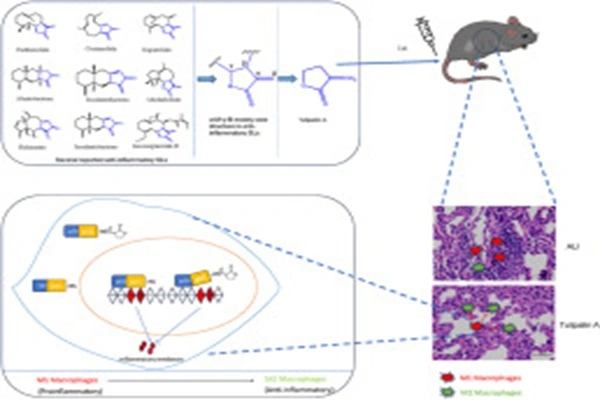
In the field of biopharmacology, this natural small molecule exhibits considerable value in regulating inflammation. When the body encounters external stimuli that trigger a large-scale inflammatory response, Tulipalin A can intervene in the inflammatory signal transduction process, weakening the efficiency of inflammatory signal transmission, reducing the production and release of inflammatory mediators in the body, and soothing the redness and swelling of local tissues. For various types of inflammation, including chronic joint inflammation, acute lung injury, and superficial skin inflammation, this substance can gradually regulate local cellular activity, alleviate discomfort in the affected area, and provide a natural reference for inflammation-related treatments.
In cardiovascular protection research, this substance can act on the myocardial cell system, reducing the oxidative damage caused by external factors, maintaining the integrity of myocardial cells, and reducing the probability of abnormal cell apoptosis. For myocardial tissue damage caused by the restoration of blood supply after ischemia, it can gradually optimize the local metabolic environment, slow down the development of abnormal myocardial fibrosis, and maintain the heart's basic contractile function, providing a natural research sample for the development of substances related to myocardial injury repair.
In terms of natural antibacterial protection, Tulipalin A can interfere with the basic growth and reproduction processes of fungi and bacteria, disrupt the cell wall synthesis process of microorganisms, and hinder normal cell division and proliferation, thereby inhibiting the spread of common pathogenic fungi and harmful bacteria in field crops and ornamental flowers. Based on its natural antibacterial properties, it can be used as a raw material for ecological protection in the field of plant disease prevention, reducing the use of chemical preservatives and aligning with the development direction of ecological plant protection.
In chemical synthesis and materials preparation, this substance, with its highly reactive double-bond structure, can serve as a basic synthetic intermediate, participating in the construction reactions of various complex organic molecules. Through addition, polymerization, and other chemical reactions, it can derive a variety of derivative structures with different functions. It can also be used in the preparation of polymer materials, leveraging its molecular polymerization properties to create functional lactone polymer materials, thus possessing fundamental application potential in the field of fine chemical materials research and development.
💊 Ecological positioning of defensive functions
In the struggle between plants and their environment, Tulipalin A is a "secret weapon" evolved over millions of years in tulips, serving a dual purpose: chemical defense and explant preservation. Tulip bulbs, buried underground for years, are highly susceptible to fungal infection. When the bulb epidermis is damaged, Tulipalin A is rapidly released. This highly active small molecule directly inhibits the growth of pathogens. Its mechanism relies on a Michael addition reaction with the sulfhydryl groups of key fungal enzymes or membrane proteins, leading to protein loss and cell structure damage. It is this highly efficient defense system that allows tulips to survive and reproduce in soil environments under immense disease pressure.
Regarding the distribution of precursor substances, the content of Tulipalin A precursors varies considerably among different tulip varieties and different organs. Analytical chemistry studies reveal that 6-tulipin A and 6-tulipin B are the main storage forms, with contents reaching up to 1.5% and 1.3% of fresh weight, respectively. The possibility of breeding and screening for low-allergenic tulip varieties not only concerns occupational health but also provides new insights into the development of natural plant-derived fungicides. In recent years, Dutch breeding companies have begun to focus on and screen cut flower varieties with low tulipalin content to reduce occupational health risks in the flower auction market.
Regarding induced defense mechanisms, the transformation system of Tulipalin A is extremely sensitive and can respond rapidly to mechanical damage. The enzyme encounters its substrate the instant the plant is cut or chewed, and the active substance is immediately generated. Based on advanced mass spectrometry detection technology, this release is almost "real-time": within seconds of sample homogenization, the concentration of Tulipalin A reaches its peak. This "instantaneous strike" capability effectively prevents pathogens from entering through wounds. This immediate release mechanism is particularly important for tulips grown in the field—the bitter substances released when insects gnaw on the leaves can repel pests.
In recent years, the development of metabolomics technology has helped scientists map the distribution of Tulipalin A in spring flowers. Besides Tulipa, Alternanthera is another known high-release group. Furthermore, varying levels of Tulipalin A release were detected in ornamental plants such as roses, buttercups, bluebells, and snowdrops. This indicates that the α-methylene-γ-butyrolactone skeleton, as a conserved defense metabolite, is distributed far more extensively in the plant kingdom than previously thought. In the cut flower preservation industry, although Tulipalin A itself can cause yellowing or petal drop, the role of its precursors or derivatives in regulating plant senescence signals is being studied. Understanding this metabolic pathway will help develop more environmentally friendly preservatives to extend flowering time.
🔭Research translation from allergens to anti-inflammatory drugs
Regarding its anti-inflammatory mechanism, this study demonstrates that Tulipalin A significantly inhibits lipopolysaccharide-induced macrophage inflammatory responses. It blocks the burst of inflammatory factors at the transcriptional level by directly targeting the p65 subunit of the nuclear transcription factor NF-κB, interfering with its DNA binding ability. Unlike traditional anti-inflammatory drugs that inhibit cyclooxygenase, Tulipalin A acts upstream in the inflammatory signaling pathway, thus possessing stronger "source-blocking" potential. In an animal model of acute lung injury, mice treated with Tulipalin A showed significantly reduced lung congestion and edema, and significantly decreased neutrophil counts and inflammatory protein concentrations in bronchoalveolar lavage fluid, confirming Tulipalin A's potent anti-inflammatory activity in vivo.
In structure-activity relationship analysis, researchers emphasized that Tulipalin A, as the "parent nucleus" or "pharmacophore" of a sesquiterpene lactone, has pharmacological activity entirely dependent on the α-methylene-γ-butyrolactone ring, which can undergo reversible covalent interactions with proteins. This explains the molecule's dual nature—it triggers dermatitis when binding to skin proteins, but exerts a therapeutic effect when binding to key enzymes in inflammatory pathways. This "dual identity" makes it an ideal model for studying the molecular mechanisms of covalent drugs and provides a lead structure for developing novel anti-inflammatory drugs.
In terms of research applications and raw material supply, Tulipalin A is gradually becoming a popular research tool. It is used as a specific inhibitor of the NF-κB signaling pathway to explore new targets for autoimmune diseases. Simultaneously, it is also a C3 building block in synthetic chemistry, used to construct more complex chiral drug molecules. Currently, high-purity Tulipalin A is mainly obtained through chemical synthesis because extraction from plants is costly and yields are unstable. Research-grade standards provided by suppliers typically have a purity of no less than 98%, primarily used for mechanism validation and cell experiments.
However, challenges remain regarding the future drug development of Tulipalin A. Current data mainly focus on the cellular and animal levels, and its clinical pharmacokinetic characteristics are not yet clear. Because the α-methylene-γ-butyrolactone structure readily binds non-target proteins in vivo, it may lead to off-target toxicity. Sustained-release drug delivery systems are likely a key technological direction for its clinical application. Future structural optimization based on the Tulipalin A scaffold will reduce sensitization while preserving its anti-inflammatory activity, which will be a key research focus in this field.
🌱 Conclusion
Tulipalin A, relying on its unique unsaturated lactone molecular structure, exhibits distinctive biological characteristics. It is both a natural allergen that easily causes skin irritation in the floriculture industry and a natural active small molecule with multiple potentials including anti-inflammatory, cardioprotective, antibacterial, and antiseptic properties. From its defensive role within natural plants to changes in the immune response after human contact, and multi-dimensional physiological regulatory effects at the pharmacological level, the reactive characteristics of its molecular structure permeate all its manifestations. With ongoing research and breakthroughs in structural modification and optimization, formulation adjustments, and expansion of applicable diseases, this natural substance, which previously posed potential contact risks, can gradually avoid adverse effects and fully release its medicinal and ecological application value. Its application potential continues to be explored in the treatment of inflammatory diseases, cardiovascular tissue protection, ecological plant protection, and fine chemicals, providing new reference directions for the development and utilization of natural active substances.
Xi'an Faithful BioTech Co., Ltd. combines advanced production technology with a comprehensive quality assurance system to provide high-quality Tulipalin A that meets international pharmaceutical standards. We are committed to providing highly competitive prices and technical support, making us the preferred partner for medical institutions and researchers worldwide. Please contact our technical team (allen@faithfulbio.com) to learn how our products can improve your formulations.
References
- Christensen, L. P. (1999). Direct release of the allergen tulipalin A from Alstroemeria cut flowers: A possible source of airborne contact dermatitis? Contact Dermatitis, 41(3), 140-144.
- Kim, J. H., Lee, S. Y., & Park, J. H. (2025). Tulipalin A suppressed the pro-inflammatory polarization of M1 macrophage and mitigated the acute lung injury in mice via interference DNA binding activity of NF-κB. International Journal of Molecular Sciences, 26(5), 2892.
- Wang, Y., Zhang, H., & Li, J. (2025). Tulipalin A protects against myocardial ischemia-reperfusion injury via enhancing glutathione synthesis. Pharmacological Research, 212, 106897.
- HandWiki. (2024). Chemistry: Tulipalin A.
- ChemicalBook. (2025). Tulipalin A: Allergenicity, Detection, and Anti-Inflammatory Mechanisms.
- DBpedia. (2024). About: Tulipalin A.
- Liu, M. (2024). Antifungal activity and action mechanism of tulipalin A against plant pathogenic fungi. Agricultural Biochemistry, 38, 72-78.