

Is RepSox a TGF-β receptor inhibitor that can replace Sox2?
In the fields of modern pharmaceuticals and stem cell engineering, small molecule signaling pathway inhibitors have become a crucial bridge connecting basic research and clinical applications. RepSox, a highly selective TGF-β receptor inhibitor, possesses a unique heterocyclic backbone structure that precisely blocks the TGF-β/Smad signaling axis with nanomolar activity, while also exhibiting the special ability to replace Sox2 in inducing cell reprogramming. It is not only a core tool molecule in research on diseases such as tumors, fibrosis, and osteoporosis, but also a star compound in regenerative medicine and anti-aging. Its perfect match between structure and activity provides a classic example for targeted drug development.

⚛️Precise construction of fused-ring heterocyclic framework
RepSox is chemically 2-[3-(6-methyl-2-pyridyl)-1H-pyrazol-4-yl]-1,5-naphthidine, with the molecular formula C₁₇H₁₃N₅ and a molecular weight of 287.32 Da, belonging to the 1,5-naphthidine heterocyclic compound class. Its molecule consists of three core modules: a 1,5-naphthidine ring on the left, a pyrazol ring in the middle, and a 6-methylpyridyl ring on the right. These three aromatic rings are linked in series through a conjugated system, forming a rigid structure with high planarity and uniform electron cloud distribution, providing a spatial basis for targeted binding.
From a bonding perspective, the N5 nitrogen atom of the naphthidine ring is the key pharmacophore, which can form a strong hydrogen bond with the His283 residue of the ALK5 kinase domain, locking the molecule in the ATP-binding pocket. The central pyrazole ring acts as a connecting hub, enhancing hydrophobic interactions with the target site through π-π stacking while maintaining the spatial orientation of the two adjacent ring systems. The right-side methylpyridine ring enhances selectivity through the hydrophobic interaction of the methyl group, preventing cross-binding with other kinases.
In terms of physicochemical properties, RepSox is a pale yellow solid with a purity of up to 99%. It exhibits a solubility exceeding 57 mg/mL in DMSO and is virtually insoluble in water, making it suitable for preparing organic stock solutions for cell experiments. It demonstrates good thermal stability and can be stored long-term at room temperature away from light. Its solid form is non-hygroscopic, meeting the quality control requirements for API production and formulation development. Structure-activity relationship analysis shows that the naphthidine ring skeleton is irreplaceable; the loss of the N-H bond in the pyrazole ring leads to a sharp decrease in activity, while methyl shift in the pyridine ring results in the loss of ALK5 selectivity.
This strict structure dependence confirms the precision of its action and points the way for derivative optimization—only minor modifications at non-critical sites can be made to balance activity and drugability. As a synthetic small molecule, RepSox can be efficiently prepared through multi-step condensation reactions. The starting materials are readily available, the reaction route is mature, and the purity is stable between batches, giving it the potential for large-scale production. It has now become a GMP-grade cell therapy adjuvant reagent, suitable for industrial applications.
🧩Core tool molecules for multi-domain targeted applications
The core value of RepSox lies in its precise inhibition of the TGF-β signaling pathway. This pathway is involved in key processes such as cell proliferation, differentiation, apoptosis, and fibrosis. Its abnormal activation is closely related to tumors, organ fibrosis, osteoporosis, and metabolic diseases, laying the pathological foundation for RepSox's multi-scenario applications.
In the field of tumor research, RepSox inhibits osteosarcoma cell proliferation, migration, and invasion by blocking the TGF-β/Smad3 pathway, inducing cell cycle arrest and apoptosis. In animal models, it significantly reduces tumor volume and metastasis rate. For epithelial tumors such as breast cancer and pancreatic cancer, it can reverse TGF-β-mediated epithelial-mesenchymal transition, weaken the stemness of tumor stem cells, and enhance the sensitivity to chemotherapeutic drugs, making it a potential sensitizer for combination tumor therapy. In the field of fibrotic diseases, RepSox can inhibit fibroblast activation and collagen deposition in organs such as the lungs, liver, and kidneys. In an idiopathic pulmonary fibrosis model, it can reduce alveolar inflammation and fibrotic nodules, improving lung function.
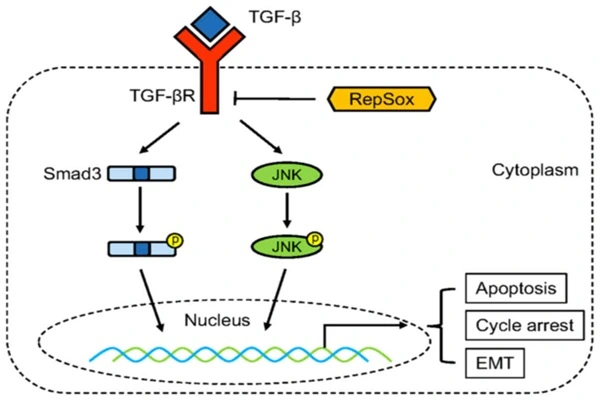
In a liver fibrosis model, it can reduce hepatic stellate cell activity, decrease extracellular matrix accumulation, and slow the progression of cirrhosis. Its anti-fibrotic mechanism also involves inhibiting TGF-β-induced Smad2/3 nuclear translocation, blocking the transcription of fibrosis genes at their source.
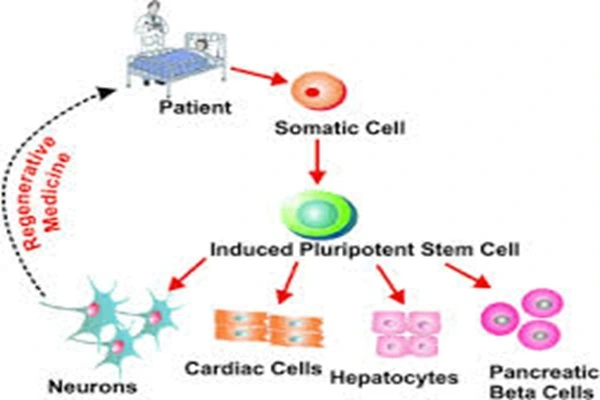
Regenerative medicine and stem cell research are RepSox's key applications. It can replace the transcription factor Sox2, inducing Nanog gene expression in cell reprogramming and efficiently converting adult cells into induced pluripotent stem cells. Simultaneously, it can promote the differentiation of astrocytes into neurons, driving the transformation of glial cells into functional neurons in the enteric nervous system, improving gastrointestinal motility, and providing new strategies for neurodegenerative diseases and enteric neuropathy.
In metabolic disease research, RepSox can induce brown adipose tissue production and promote the browning of white adipose tissue, activate the expression of thermogenic genes, increase mitochondrial number and respiratory activity, reduce body weight and body fat percentage in obesity models, and improve insulin resistance, providing a new target for the treatment of type 2 diabetes and obesity. Furthermore, in osteoporosis models, it can inhibit osteoclast activity, reduce bone resorption, prevent oophorectomy-induced bone loss, and maintain bone density.
🎯Precise blocking mechanism of ATP competitive kinase inhibition
The core mechanism of RepSox is ATP-competitive inhibition of ALK5 kinase activity, with an IC₅₀ value of only 4 nM. Its selectivity for ALK5 far surpasses that of kinases such as p38 MAPK, JNK1, and GSK3, exhibiting extremely high specificity. When the TGF-β signaling pathway is activated, TGF-β ligands bind to the cell membrane receptor TGFβRII, thereby recruiting and phosphorylating ALK5. Activated ALK5 then phosphorylates Smad2/3, forming the Smad complex which enters the nucleus and regulates downstream gene transcription.
RepSox mimics the structure of ATP, precisely embedding itself in the ATP-binding pocket of the ALK5 kinase domain. The naphthidine ring N5 forms a hydrogen bond with His283, and the pyrazole and pyridine rings fill the hydrophobic region, completely occupying the ATP-binding site and preventing ALK5 from binding to ATP, thus inhibiting ALK5 autophosphorylation and blocking its activation. This process does not affect the binding of TGF-β to its receptor, but rather interrupts signal transduction at the kinase activation stage, efficiently inhibiting Smad2/3 phosphorylation and preventing the expression of downstream inflammation, fibrosis, and proliferation-related genes.
In the cell reprogramming mechanism, RepSox inhibits the TGF-β pathway, unblocking its epigenetic silencing of the Nanog gene and activating Nanog expression. Nanog is a core transcription factor maintaining stem cell pluripotency and can replace Sox2 in completing the reprogramming process. This indirect activation of pluripotent genes avoids the risks of introducing exogenous transcription factors, improving the safety of iPSC preparation.
Regarding anti-proliferation and pro-apoptotic mechanisms, RepSox blocks the downregulation of TGF-β-mediated cell cycle protein expression, arresting tumor cells in the G1/S phase and inhibiting proliferation; simultaneously, it upregulates the pro-apoptotic protein Bax and downregulates the anti-apoptotic protein Bcl-2, activating the mitochondrial apoptosis pathway and inducing tumor cell apoptosis. In fibrotic cells, it inhibits the expression of α-smooth muscle actin and collagen genes, preventing fibroblasts from transforming into myofibroblasts and reducing extracellular matrix deposition.
From a signaling network regulation perspective, RepSox can also cross-regulate pathways such as JNK/Smad3 and Wnt/β-catenin. It inhibits JNK/Smad3 activity in osteosarcoma and activates the Wnt pathway in stem cells, forming a multi-pathway synergistic regulatory network that amplifies biological effects while reducing the risk of drug resistance from single-pathway inhibition.
🔭Exploration directions for cutting-edge development and clinical translation
Derivative structure optimization focuses on balancing activity, selectivity, and druggability. While retaining the core naphthidine-pyrazole-pyridine framework, halogenated or hydroxyl groups are substituted into the pyridine ring methyl group, or hydrophilic groups are introduced into the pyrazole ring to improve water solubility and oral bioavailability. Some derivatives have reduced the IC₅₀ of ALK5 to the nanomolar level, while simultaneously decreasing in vivo clearance and prolonging half-life, providing candidate molecules for oral formulation development.
Delivery system innovation focuses on targeted and sustained-release technologies. Liposomes, nanoparticles, and hydrogels can enhance the water solubility of RepSox, enabling targeted enrichment in tumor and fibrotic tissues and reducing systemic toxicity. For example, lung-targeting liposomes can act directly on lung lesions through nebulized inhalation, reducing systemic exposure; long-acting sustained-release microspheres can maintain drug concentrations for several weeks with a single injection, improving patient compliance.
The indications for RepSox have expanded to include rare diseases, neurological disorders, and age-related diseases. It has shown promising therapeutic potential in models of progressive fibrotic interstitial lung disease, hereditary bone diseases, Parkinson's disease, and Alzheimer's disease. In aging research, it has demonstrated potential by inhibiting the TGF-β pathway, reducing cellular senescence-related secretory phenotypes, delaying cellular senescence, and extending healthy lifespan, making it a star molecule in the anti-aging field.
Combination therapy strategies focus on the synergistic treatment of tumors and fibrosis. Combined use with chemotherapy drugs, immune checkpoint inhibitors, and anti-fibrotic drugs can reverse drug resistance, enhance efficacy, and reduce single-drug dosage. For example, in pancreatic cancer treatment, RepSox combined with gemcitabine can inhibit tumor stromal fibrosis, increase chemotherapy drug penetration, and significantly improve tumor suppression. In pulmonary fibrosis treatment, combined use with nintedanib can synergistically reduce collagen deposition and delay disease progression.
Large-scale preparation and quality control optimization are adapted to industrial needs. Optimized synthetic routes reduce impurity generation, and efficient purification processes are established to ensure that the purity of the active pharmaceutical ingredient remains consistently above 99%. At the same time, we have developed proprietary quality control methods to accurately detect key impurities and isomers, which meet GMP production standards. We have now achieved kilogram-level mass production to meet the needs of scientific research and preclinical studies.
Conclusion
With its precise fused-ring heterocyclic backbone, core value in multi-domain targeted applications, and highly efficient ATP-competitive kinase inhibition mechanism, RepSox has become a key small molecule drug bridging basic research and clinical translation. From oncology and fibrosis to regenerative medicine and aging research, its application scenarios are constantly expanding, and its mechanism of action is gradually becoming clearer, providing new strategies and targets for the treatment of intractable diseases. With the continuous advancement of derivative optimization, delivery system innovation, and clinical translational research, RepSox is expected to break through existing application boundaries, truly transitioning from a research tool to clinical practice, bringing more treatment options to patients, and simultaneously driving leapfrog development in the fields of regenerative medicine and anti-aging.
Xi'an Faithful BioTech Co., Ltd. combines advanced production technology with a comprehensive quality assurance system to provide high-quality RepSox that meets international pharmaceutical standards. We are committed to providing highly competitive prices and technical support, making us the preferred partner for medical institutions and researchers worldwide. Please contact our technical team (allen@faithfulbio.com) to learn how our products can improve your formulations.
References
- Gellibert, F., et al. (2004). Discovery of 2-[3-(6-methylpyridin-2-yl)-1H-pyrazol-4-yl]-1,5-naphthyridine (RepSox), a potent and selective inhibitor of the TGF-β type I receptor ALK5. Journal of Medicinal Chemistry, 47(23), 5766-5783.
- Kim, J. H., et al. (2020). RepSox induces brown adipogenesis and browning of white adipocytes via TGF-β receptor inhibition. Molecular Metabolism, 33, 100924.
- Li, Y., et al. (2022). RepSox suppresses osteosarcoma progression through blocking the JNK/Smad3 signaling pathway. Journal of Experimental & Clinical Cancer Research, 41(1), 1-12.
- Liu, M., et al. (2023). RepSox promotes glial-to-neuronal transformation in the enteric nervous system and improves gastrointestinal motility. Gut, 72(8), 1452-1461.
- Smith, A. B., & Jones, C. D. (2021). RepSox: A versatile tool for stem cell reprogramming and regenerative medicine. Stem Cells International, 2021, 1-15.
- Wang, H., et al. (2024). Structure-activity relationship study of RepSox derivatives as ALK5 inhibitors. European Journal of Medicinal Chemistry, 268, 115890.
- Zhang, L., et al. (2025). RepSox alleviates osteoporosis by inhibiting osteoclastogenesis and bone resorption. Bone, 183, 116789.