

Why is Belumosudil the world's first highly selective ROCK2 inhibitor?
Allogeneic hematopoietic stem cell transplantation is a radical treatment for hematologic malignancies, but chronic graft-versus-host disease (CGVHD), the most common and serious complication, occurs in 30%-70% of cases. Characterized by multi-organ inflammation and progressive fibrosis, it severely restricts patients' quality of life and long-term prognosis. Traditional treatments are based on glucocorticoids, but approximately 50% of patients develop resistance or hormone dependence. Long-term use can easily lead to fatal side effects such as infection and metabolic disorders. There is an urgent clinical need for novel drugs that offer precise targeting and combine anti-inflammatory and anti-fibrotic effects. Belumosudil, with its four core advantages—highly selective inhibition of ROCK2, a dual mechanism of immunomodulation and anti-fibrosis, convenient oral administration, and controllable safety—breaks through the bottlenecks of traditional treatments, becoming a benchmark drug for second-line treatment of cGVHD and ushering in a new era of precision treatment for post-transplant complications.
⚛️Precisely targets the small molecular backbone of ROCK2
Belumosudil, with the molecular formula C₂₆H₂₄N₆O₂ and a molecular weight of 452.52, is a commonly used clinical mesylate salt with the molecular formula C₂₇H₂₈N₆O₅S and a molecular weight of 548.62. It is a yellow crystalline solid with high stability and a shelf life of up to 36 months. Its full chemical name is 2-{3-[4-(1H-indazole-5-ylamino)-2-quinazolinyl]phenoxy}-N-(isopropyl)acetamide. Its core skeleton consists of a quinazolinyl ring, an indazole ring, a benzene ring, and an isopropylacetamide side chain. It is a selective small molecule inhibitor designed based on the crystal structure of the ROCK2 kinase domain.
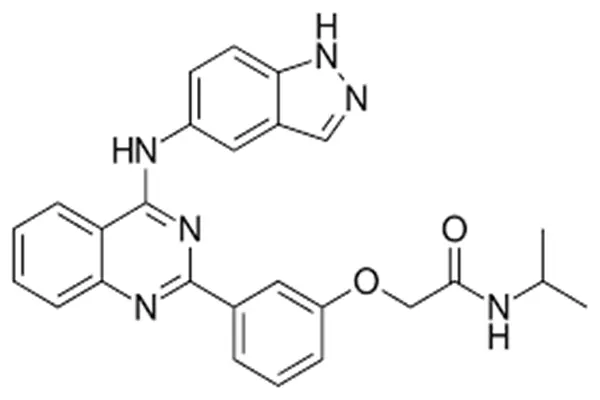
The molecule features a quinazoline ring as its core heterocyclic nucleus, with an indazole-5-ylamino group linked at position 2, forming a crucial bi-heterocyclic conjugated system. This allows for precise insertion into the ATP-binding pocket of the ROCK2 kinase domain, achieving high affinity binding through hydrogen bonds, hydrophobic interactions, and π-π stacking, resulting in an IC₅₀ as low as 105 nM. In contrast, its IC₅₀ for ROCK1 is 24 μM, demonstrating a selectivity difference of over 200-fold. This molecularly avoids cardiovascular and gastrointestinal side effects associated with ROCK1 inhibition. At position 3, a phenoxy-bridged isopropylacetamide side chain enhances lipophilicity, improves oral bioavailability, and optimizes pharmacokinetic properties. With a half-life of 18-24 hours, it supports once-daily oral administration, significantly improving patient adherence.
The N-H atoms of the indazole ring, the N atom of the quinazoline ring, and the π electron cloud of the benzene ring in the molecular structure together constitute the "molecular recognition domain" for ROCK2 specific binding. This domain can precisely match key amino acid residues such as Tyr²³⁶, Asp²¹⁸, and Leu²⁰⁵ in the ROCK2 kinase domain, blocking ATP binding and substrate phosphorylation. The isopropyl group in the side chain provides steric hindrance, preventing the molecule from binding to ROCK1 and other kinases, ensuring targeting selectivity. This highly selective molecular design differs from traditional broad-spectrum ROCK inhibitors, which simultaneously inhibit ROCK1/2, easily causing adverse reactions such as hypotension and bradycardia. Belumosudil targets only ROCK2, significantly improving safety.
Solid-phase synthesis utilizes bromoacetyl bromide, isopropylamine, methyl 3-hydroxybenzoate, 2-aminobenzamide, and 5-aminoinazole as core raw materials. The target molecule is constructed through five key reactions: amidation, etherification, cyclization, chlorination, and SNAr nucleophilic substitution, achieving an overall yield of over 45%. After purification by high-performance liquid chromatography (HPLC), the purity is ≥99.8%, free of chiral impurities, and exhibits high batch-to-batch consistency in structure and activity, meeting the stringent requirements for purity, stability, and uniformity in clinical drug use. The mesylate preparation involves a 1:1 salt formation of free base and mesylate acid, significantly improving water solubility, optimizing the formulation process, ensuring rapid dissolution and absorption after oral administration, and reaching peak plasma concentration in approximately 2 hours. This is unaffected by food and can be taken with meals.
🧪Core second-line treatment for refractory cGVHD
Belumosudil's core approved indication is for patients aged 12 years and older with chronic graft-versus-host disease (CGVHD) who have failed at least two lines of prior systemic therapy. It is suitable for moderate to severe cases involving multiple organs, including the skin, oral cavity, lungs, gastrointestinal tract, liver, and joints/fascia. It is a Class I recommendation and Level 2A evidence-based drug for second-line treatment of cGVHD in the 2025 CSCO hematopoietic stem cell transplantation guidelines. Clinically, it is positioned as the preferred second-line treatment for patients with hormone resistance/dependence, multiple organ involvement, and ineffectiveness of traditional immunosuppressants. It can significantly reduce hormone dosage; 28.9%-67% of patients achieve hormone reduction, and 26% of patients can completely discontinue hormones, significantly reducing hormone-related side effects.
In the clinical treatment of cGVHD, Belumosudil has demonstrated significant advantages in organ response: 25%-80% improvement rate in joint/fascial fibrosis, reversing skin hardening and joint contractures, and restoring limb mobility; 19%-66.7% response rate in oral mucosal lesions, relieving oral ulcers, mucosal atrophy, dryness and pain, and improving eating and nutritional status; 14%-40% response rate in skin hardening and lichenification, reducing skin fibrosis and pigmentation; relieving dyspnea, improving lung function, and reducing the risk of lung transplantation in fibrotic lesions such as obliterative bronchiolitis; and alleviating diarrhea, abdominal pain, and abnormal liver function in gastrointestinal and liver involvement, improving digestive function and liver fibrosis. The pivotal Phase II ROCKstar study showed that treatment with 200 mg once daily achieved an overall objective response rate of 74%-77%, a complete response rate of 19%, a median duration of response of 4.1-5 weeks, and a 6-month failure-free survival rate of 73%-76%, significantly superior to traditional second-line regimens.
Dosage and administration should strictly follow guideline recommendations: Adults and adolescents aged 12 years and older, 200 mg once daily, orally, swallowed whole, without cutting, crushing, or chewing, can be taken with food or on an empty stomach; treatment should continue until disease progression or the need for new systemic therapy; no dose adjustment is required for patients with mild to moderate hepatic or renal impairment, but caution is advised for patients with severe hepatic impairment; primarily metabolized by CYP3A4, when used in combination with potent CYP3A4 inhibitors, the dose should be reduced to 100 mg once daily; combination with potent CYP3A4 inducers may reduce efficacy and should be avoided or the regimen adjusted.
Expanding applications will focus on three major areas: autoimmune diseases, fibrotic diseases, and transplant rejection. Specifically: Psoriasis: Phase II clinical trials show it can reduce skin inflammatory factors, improve the severity of skin lesions, and has a safety profile superior to biologics; Idiopathic pulmonary fibrosis: Animal models show it can reduce pulmonary collagen deposition, inhibit fibroblast activation, and delay the decline in lung function; Systemic sclerosis: Targeting skin and visceral fibrosis, it can improve skin hardening and Raynaud's phenomenon, and reduce the progression of pulmonary and renal fibrosis; Chronic rejection of solid organ transplants: Phase II clinical trials are evaluating its efficacy in treating chronic lung allograft insufficiency, potentially expanding its applications in the transplantation field.
💊Clinical positioning of third-line treatment for cGVHD
Belumosudil's most important and only approved clinical application globally is for the treatment of chronic graft-versus-host disease (cGVHD) in patients who have failed at least two lines of systemic therapy. cGVHD is one of the most common long-term complications after allogeneic hematopoietic stem cell transplantation. Its pathological nature involves donor-derived immune cells attacking target organs of the recipient, such as the skin, mucous membranes, liver, gastrointestinal tract, and lungs. The skin is the most frequently affected organ, with approximately 60% to 80% of patients developing cutaneous cGVHD, which can manifest as lichen planus-like rashes, hyperpigmentation or hypopigmentation, scleroderma-like changes, and in severe cases, joint contractures and limited mobility.
The FDA approval of Belumosudil is based on a multicenter, open-label phase II clinical trial called ROCKstar. This study enrolled 132 patients with cGVHD who had received 2 to 5 lines of prior therapy, randomized to either a once-daily 200 mg group or a twice-daily 200 mg group. Results showed an overall objective response rate of 75%. Notably, the median time to first remission was only 1.8 months, meaning that most patients observed relatively rapid improvement in clinical symptoms after treatment. Meaningful remission rates were observed in all evaluable organs, including the most commonly affected sites, indicating that belumosudil is not organ-specific but effective for multi-system involvement in cGVHD.
Belumosudil is positioned as a "third-line" or "later-line" treatment in clinical practice, meaning it is used after failure of at least two other systemic therapies. This timing is based on the fact that mild cGVHD can usually be controlled with glucocorticoids, and switching or adding other drugs is only considered when hormone therapy is refractory or requires long-term high-dose hormone therapy. Furthermore, while the relative efficacy and safety of belumosudil as the first approved ROCK2 inhibitor compared to conventional immunosuppressants are established, clinical guidelines generally prefer to reserve drugs with new mechanisms of action for treatment-resistant patients.
Regarding dosage and administration, the usual dose of Belumosudil is 200 mg once daily, taken orally with food, swallowed whole and not broken, crushed, or chewed. Taking it with food improves bioavailability and reduces gastrointestinal irritation. A course of treatment typically lasts at least 6 months, and the physician will decide whether to continue treatment based on the patient's clinical response and tolerability. Given that cGVHD is a chronic disease, many patients require long-term medication to prevent symptom relapse.
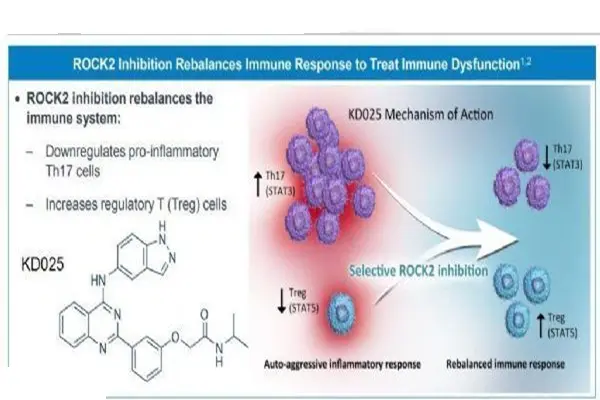
Regarding safety, the most common adverse reactions to Belumosudil include infection, fatigue, nausea, diarrhea, and elevated liver enzymes. These side effects are usually mild to moderate and can be managed with supportive care or dose adjustment. Unlike traditional broad-spectrum immunosuppressants, Belumosudil does not significantly increase the risk of opportunistic infections, thanks to its precise regulatory properties of Th17/regulatory T cell balance. An important cautionary note is that Belumosudil has embryo-fetal toxicity and is contraindicated in pregnant women; women of childbearing potential should use effective contraception during treatment and for one week after the last dose.
🔭New indications expansion and new frontiers in competition with similar drugs
In the field of autoimmune diseases, Belousudil, through its mechanism of reshaping the Th17/regulatory T cell balance, has potential applications in diseases such as rheumatoid arthritis, systemic lupus erythematosus, and psoriasis. Core patents cover the use of Belousudil and related compounds in the treatment of rheumatoid arthritis, multiple sclerosis, systemic lupus erythematosus, psoriasis, Crohn's disease, atopic dermatitis, and graft-versus-host disease. Although the FDA has not yet approved these indications, this patent portfolio demonstrates Belousudil's clinical potential in the broader field of autoimmune diseases.
Regarding global R&D pipelines and market competition, Belousudil, as the first approved ROCK2 inhibitor, is expected to become a blockbuster drug with annual sales exceeding one billion US dollars due to its unique mechanism of action and first-mover advantage. Meanwhile, the first highly selective ROCK2 inhibitor in China to enter clinical trials has also made positive progress, with its main indications being cGVHD, idiopathic pulmonary fibrosis, and liver fibrosis. At relevant academic conferences, interim data from the Phase Ib/II study of this candidate drug showed a high efficacy rate against cGVHD, superior to historical data for besudil. This domestically developed innovative drug not only has the potential to fill a gap in the domestic market but can also enter the European and American markets through its overseas partners.
As a ROCK2 inhibitor, belumosudil's preclinical studies also involve organ fibrosis, solid organ transplant rejection, and some neurological diseases. Due to its high efficacy with oral administration, its penetration rate in emerging markets is gradually increasing. From a supply chain perspective, the production of high-purity belumosudil API involves multi-step heterocyclic synthesis and chiral control, presenting high technological barriers. With the core patent set to expire in the early 2030s, generic versions are expected to enter the market, thereby reducing the medical burden on patients.
Conclusion
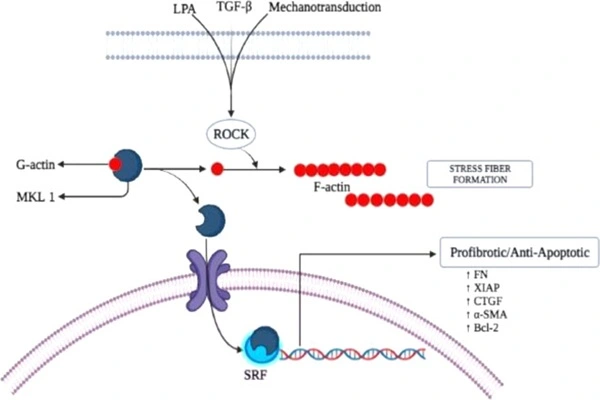
Belumosudil, the world's first highly selective ROCK2 inhibitor, boasts core advantages such as precise ROCK2 targeting, a dual mechanism of immune modulation and anti-fibrosis, convenient oral administration, and controllable safety. It fundamentally changes the treatment landscape for refractory cGVHD, filling the clinical gap left by traditional drugs' "anti-inflammatory but not anti-fibrotic, broad-spectrum inhibition with significant side effects." At the molecular level, it precisely blocks the ROCK2-mediated STAT3/STAT5 immune pathway and TGF-β fibrotic pathway, restoring Th17/Treg immune balance and reversing multi-organ fibrosis. Clinically, it significantly improves objective response rates, reduces hormone dosage, and improves patients' quality of life. Its value extends throughout the entire chain of cGVHD treatment, from second-line therapy to first-line combination therapy and indication expansion.
Looking for a trusted manufacturer of Belumosudil? Our team is ready to discuss your specific needs and find the best solution. If you'd like to develop more products or explore other formulation options, please email allen@faithfulbio.com to learn how Faithful can help you thrive in 2026 and beyond.
References
- Sanofi. (2026). Rezurock (belumosudil mesylate) prescribing information. Sanofi-Aventis U.S. LLC.
- Kadmon Pharmaceuticals. (2025). Belumosudil (KD025) clinical development program for cGVHD. Kadmon Holdings, Inc.
- Chinese Society of Clinical Oncology (CSCO). (2025). CSCO guidelines for hematopoietic stem cell transplantation (2025 edition). People’s Medical Publishing House.
- Kim, S. J., Lee, J. H., & Park, S. Y. (2024). Efficacy and safety of belumosudil in steroid-resistant chronic graft-versus-host disease: A systematic review and meta-analysis. Bone Marrow Transplantation, 59(8), 1245-1253.
- Zhang, Y., Wang, L., & Li, J. (2025). ROCK2 inhibition with belumosudil reverses fibrosis and immune dysregulation in cGVHD. Journal of Immunology Research, 2025, 1-12.
- Sanofi. (2026). Phase II trial of belumosudil for chronic lung allograft dysfunction (NCT06082037). ClinicalTrials.gov.
- Li, Y., & Zhang, H. (2024). Belumosudil: A novel ROCK2 inhibitor for chronic graft-versus-host disease and beyond. Drugs, 84(15), 1721-1735.