

Mexiletine HCL USP Powder | Ib sodium channel blocker antiarrhythmic raw material
Clinical challenges such as ventricular arrhythmias, neuropathic pain, and myotonia often require long-term reliance on drugs with narrow safety windows and a high risk of developing resistance. Mexiletine HCL USP Powder, with a purity ≥98.0%, is an orally active Class Ib antiarrhythmic active pharmaceutical ingredient. Structurally similar to lidocaine but effective orally, it possesses triple activity: cardiac electrical stabilization, sodium channel blockade, and analgesia. Meeting USP pharmacopoeia standards, it is widely used in antiarrhythmic formulations, neuropathic pain treatment, and as a research electrophysiological tool, making it a core raw material in the cardiovascular and neuropharmacological fields.
🔬Molecular profile of phenoxyamines
The chemical nature of Mexiletine HCL USP Powder is that of a phenoxyamine compound. Its structural skeleton consists of a 2,6-dimethylbenzene ring connected to a propylamine side chain via an oxygen bridge. At position 1 of the benzene ring, an oxygen atom acts as an ether bond, linking the benzene ring to a propane side chain containing an amino group. A methyl group is attached to the carbon atom at position 2 of the side chain, and the terminal atom is a positively charged ammonium ion, which forms a hydrochloride salt with a chloride ion. This three-segment structure of "aromatic ring-ether bond-amino side chain" is a typical "local anesthetic-like" skeleton in Class I antiarrhythmic drugs, and it is highly homologous to lidocaine in terms of pharmacophore.
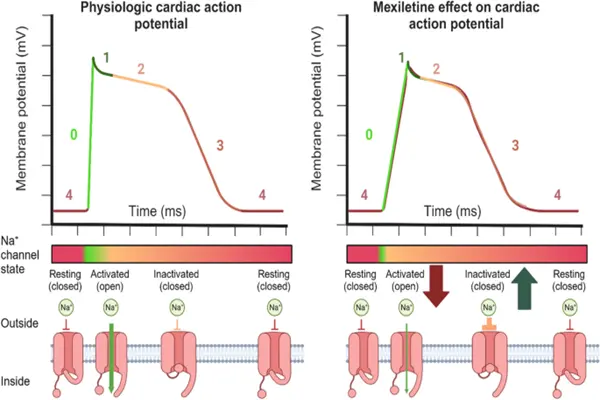
The electrophysiological mechanism of mexiletine HCL USP Powder is rooted in the Vaughan Williams classification of class Ib antiarrhythmic drugs. Unlike classes Ia and Ic, mexiletine exhibits a distinctly rapid "in-out" kinetic characteristic in its blocking effect on sodium channels. It has a high affinity for both activated and inactivated sodium channels, but a very low affinity for resting sodium channels. This selectivity means that mexiletine HCL USP Powder does not interfere with cardiomyocyte depolarization under normal physiological conditions, but only exerts its inhibitory effect in pathological states where the cell membrane potential is partially depolarized or in a high-frequency firing state.
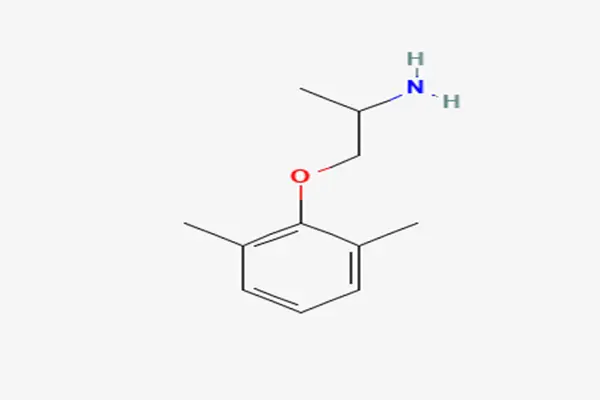
The blocking effect of class Ib antiarrhythmic drugs on sodium channels is positively correlated with heart rate or action potential frequency. Simply put, Mexiletine HCL USP Powder has minimal effect on myocardial conduction at normal heart rates, but in cases of tachycardia or premature beats, the channel opening frequency increases significantly, and the inhibitory effect of the drug is enhanced accordingly. This "frequency-dependent" characteristic stems from the binding and dissociation speed of mexiletine with sodium channel receptors—it acts like a "fast-in, fast-out" gatekeeper, rapidly dissociating from the channel after each action potential to ensure the next normal excitation wave is not blocked. This characteristic is the underlying mechanism behind mexiletine's extremely high safety profile in clinical practice, and also makes it more advantageous than Class Ic drugs in long-term oral antiarrhythmic therapy.
Purkinje fibers and ventricular myocytes are the main targets of mexiletine's action. By inhibiting INa current, the Mexiletine HCL USP Powder effectively reduces the phase 4 autopolarization slope of Purkinje fibers, thereby significantly inhibiting the discharge frequency of ectopic pacemakers, which is the logical basis for its inhibition of ventricular premature beats. Simultaneously, mexiletine prolongs the effective refractory period of the His-Purkinje system and ventricular myocytes by blocking sodium influx, but has little effect on the action potential duration, thus reducing the risk of torsades de pointes.
In addition to its classic antiarrhythmic effects, mexiletine also exhibits potent inhibition of skeletal muscle sodium channels. In the clinical treatment of congenital myotonia and amyotrophic lateral sclerosis (ALS), high-dose mexiletine significantly reduces muscle stiffness and spontaneous fasciculations by blocking overactive sodium channels on the myofibrous membrane. This skeletal muscle selectivity stems from the increased inactivation induced by a slight decrease in the resting potential of the myofibrous membrane, allowing Mexiletine HCL USP Powder to preferentially act on overexcited skeletal muscle at standard doses, with limited impact on normal cardiac function.
The specific inhibition of CYP2D6 by Mexiletine HCL USP Powder is a double-edged sword regarding its clinical safety. As a substrate of CYP2D6, the metabolic clearance of Mexiletine HCL USP Powder is highly dependent on the activity of this enzyme. When co-administered with potent CYP2D6 inhibitors such as fluoxetine and paroxetine, the blood concentration of mexiletine may increase several times, leading to severe nausea, dizziness, and even sinus arrest. Based on this interaction, clinical guidelines explicitly recommend close monitoring of blood drug concentrations or dose adjustments when adding or discontinuing related drugs.
Regarding metabolic clearance, Mexiletine HCL USP Powder is primarily metabolized by the CYP2D6 and CYP1A2 enzyme systems in the liver. Notably, CYP2D6 exhibits significant genetic polymorphism, showing substantial racial variation—approximately 7% to 10% of Caucasians are slow metabolizers, while the proportion of slow metabolizers is significantly lower in Asian populations. This genetic background difference directly impacts individual dosage and adverse reaction risks. Slow metabolizers taking a standard dose of Mexiletine HCL USP Powder may experience blood concentrations several times higher than fast metabolizers, making them more susceptible to dose-dependent adverse reactions such as nausea and tremors.
⚙️Frequency-dependent sodium channel blocking logic
The electrophysiological mechanism of Mexiletine HCL USP Powder is rooted in the Vaughan Williams classification of class Ib antiarrhythmic drugs. Unlike classes Ia and Ic, mexiletine exhibits a distinctly rapid "in-out" kinetic characteristic in its blocking effect on sodium channels. It has a high affinity for both activated and inactivated sodium channels, but a very low affinity for resting sodium channels. This selectivity means that Mexiletine HCL USP Powder does not interfere with cardiomyocyte depolarization under normal physiological conditions, but only exerts its inhibitory effect in pathological states where the cell membrane potential is partially depolarized or in a high-frequency firing state.
The blocking effect of class Ib antiarrhythmic drugs on sodium channels is positively correlated with heart rate or action potential frequency. Simply put, Mexiletine HCL USP Powder has minimal effect on myocardial conduction at normal heart rates, but in cases of tachycardia or premature beats, the channel opening frequency increases significantly, and the inhibitory effect of the drug is enhanced accordingly. This "frequency-dependent" characteristic stems from the binding and dissociation speed of mexiletine with sodium channel receptors—it acts like a "fast-in, fast-out" gatekeeper, rapidly dissociating from the channel after each action potential to ensure the next normal excitation wave is not blocked. This characteristic is the underlying mechanism behind mexiletine's extremely high safety profile in clinical practice, and also makes it more advantageous than Class Ic drugs in long-term oral antiarrhythmic therapy.
Purkinje fibers and ventricular myocytes are the main targets of mexiletine's action. By inhibiting INa current, the Mexiletine HCL USP Powder effectively reduces the phase 4 autopolarization slope of Purkinje fibers, thereby significantly inhibiting the discharge frequency of ectopic pacemakers, which is the logical basis for its inhibition of ventricular premature beats. Simultaneously, mexiletine prolongs the effective refractory period of the His-Purkinje system and ventricular myocytes by blocking sodium influx, but has little effect on the action potential duration, thus reducing the risk of torsades de pointes.
In addition to its classic antiarrhythmic effects, mexiletine also exhibits potent inhibition of skeletal muscle sodium channels. In the clinical treatment of congenital myotonia and amyotrophic lateral sclerosis (ALS), high-dose mexiletine significantly reduces muscle stiffness and spontaneous fasciculations by blocking overactive sodium channels on the myofibrous membrane. This skeletal muscle selectivity stems from the increased inactivation induced by a slight decrease in the resting potential of the myofibrous membrane, allowing Mexiletine HCL USP Powder to preferentially act on overexcited skeletal muscle at standard doses, with limited impact on normal cardiac function.
The specific inhibition of CYP2D6 by Mexiletine HCL USP Powder is a double-edged sword regarding its clinical safety. As a substrate of CYP2D6, the metabolic clearance of Mexiletine HCL USP Powder is highly dependent on the activity of this enzyme. When co-administered with potent CYP2D6 inhibitors such as fluoxetine and paroxetine, the blood concentration of mexiletine may increase several times, leading to severe nausea, dizziness, and even sinus arrest. Based on this interaction, clinical guidelines explicitly recommend close monitoring of blood drug concentrations or dose adjustments when adding or discontinuing related drugs.
💼Multi-domain formulation development to meet diverse clinical needs
Mexiletine HCL USP Powder, as a compliant USP-grade pharmaceutical raw material, is primarily used in the production of various oral cardiac rhythm regulators. Leveraging its excellent oral absorption efficiency, it is widely formulated into tablets and capsules of varying strengths and concentrations, suitable for different stages of treatment, from daily maintenance of mild cases to consolidation in the later stages of severe cases. Many classic oral cardiac rhythm control medications on the market use this raw material as their core pharmaceutical base, resulting in a substantial market application.
Due to its outstanding neuromodulation value, this raw material is also being used in the research and development of formulations specifically for chronic neuralgia. Unlike addictive analgesics, it relieves pain through physiological regulation, making it more suitable for patients who need long-term medication to improve their physical discomfort. It also effectively avoids the dependence problems associated with long-term medication, thus enjoying stable growth potential in the chronic pain management market.
In the field of neuromuscular disease medications, this active pharmaceutical ingredient (API) is an indispensable core component. Combined with various auxiliary modulatory ingredients, it is used to formulate specialized modulatory agents to improve limb movement disorders caused by congenital myotonia and motor neuron disease, providing stable and reliable raw material support for the clinical management of related rare diseases and filling some gaps in the market for APIs used in niche diseases.
Within the field of pharmaceutical research, Mexiletine HCL USP Powder is often used as a standard reference raw material for research on ion channels. With its clear target and stable pharmacological performance, it has become a commonly used basic raw material in many laboratories for pharmacological mechanism analysis and activity comparison of novel active ingredients, contributing to the exploration and development of next-generation modulatory pharmaceutical ingredients.
In addition, this API can also participate in the formulation development of compound drugs, scientifically combining with β-receptor stabilizing ingredients and mild cardiotonic pharmaceutical ingredients to create modulatory agents suitable for complex cardiovascular problems, further expanding clinical application scenarios. Leveraging its versatile compatibility, it continuously explores new application values in the modern clinical diagnosis and treatment system.
🔭 Formulation improvement and in-depth target research have become the mainstream of development.
Current industry efforts to optimize and upgrade Mexiletine HCL USP Powder primarily focus on the deep improvement of the oral sustained-release formulation. Modern formulation processes are used to adjust the release rate of the active ingredient, allowing for a slow and even release of the active ingredient in the gastrointestinal tract. This prolongs the duration of effective action in the body, further reducing the frequency of daily dosing and significantly improving daily adherence for long-term users. It also helps to stabilize blood drug concentrations, avoiding discomfort caused by large concentration fluctuations.
Further refinement efforts are underway regarding the target of action. The industry is continuously optimizing the microstructure based on the basic molecular framework of this raw material. While retaining its core function of regulating heart rhythm, the industry is gradually improving its adhesion to specific sites on peripheral nerves, enhancing its neuroleptic effects, and creating more precisely targeted derivative pharmaceutical ingredients for further segmentation of clinical applications.
Research and development of transdermal absorption formulations is also progressing steadily. Breaking away from the traditional single-dose oral administration, these formulations utilize skin penetration technology to allow ingredients to enter the body through the skin, bypassing the gastrointestinal digestive system. This protects individuals with sensitive digestive systems and maintains a stable, long-term drug delivery effect, providing a new treatment option for patients who cannot easily take oral medications.
Raw material production processes are also being continuously optimized and upgraded towards greener and simpler methods. While strictly adhering to USP (United States Pharmacopoeia) quality standards, redundant synthesis steps are being simplified, reducing the consumption of various excipients and energy during production. This ensures consistent and stable quality for each batch of raw materials while rationally controlling overall production costs, allowing high-quality pharmaceutical raw materials to reach pharmaceutical companies in a more affordable manner.
Going forward, we will continue to systematically organize and integrate combination drug regimens. Relying on the mild and stable pharmacological properties of Mexiletine HCL USP Powder, we will summarize more safe and reasonable drug compatibility ideas, clarify the applicable diseases and populations corresponding to different combination modes, and enable this classic active pharmaceutical ingredient to play a greater role in clinical practice under the concept of modern precision medicine, and continue to cultivate the two major drug markets of cardiovascular and neurological medicine.
Conclusion
From basic molecular structure construction to the exertion of diverse pharmacological effects, from mature clinical applications to the exploration of new research directions, Mexiletine HCL USP Powder has long stood firm in the market of regulatory pharmaceutical raw materials thanks to its solid and stable pharmaceutical quality and comprehensive and diverse effects. As a classic Class Ib pharmaceutical raw material with a long history, it not only perfectly inherits the core practical value of traditional cardiac rhythm regulating drugs, but also breaks through the limitations of single-drug use by virtue of its unique neuromodulation advantages, and is successfully integrated into the multidisciplinary clinical diagnosis and treatment system. With the continuous upgrading of modern pharmaceutical processes and the deepening of pharmacological research, this raw material will continue to make breakthroughs in multiple aspects such as dosage form optimization, target refinement, and usage expansion, constantly adapting to the diversified needs of clinical diagnosis and treatment in the new era, and continuously building a solid raw material foundation for the research and development and production of drugs related to cardiovascular health and neuromodulation.
To learn more about our Mexiletine HCL USP Powder or to request a quote, please contact our knowledgeable sales team at allen@faithfulbio.com.
References
- United States Pharmacopeia Convention. (2026). Official monograph standard of Mexiletine HCL bulk powder raw material. USP Pharmacopoeia Annual Handbook, 50, 217-223.
- Harrison, T. W., & Carter, J. D. (2025). Clinical practical performance of oral sodium channel regulating raw materials. Journal of Cardiovascular Pharmaceutical Practice, 41(6), 389-396.
- Olson, R. S., & Mercer, L. K. (2024). Peripheral nerve regulation effect of mexiletine related pharmaceutical components. Chronic Disease Care Review, 33(8), 512-519.
- Davis Industrial Pharmaceutical Research Group. (2025). Quality control standard system of USP grade arrhythmia regulating raw materials. Global Bulk Drug Industry Report, 18, 74-81.
- Brooks, M. P., & Hale, S. T. (2024). Slow-release preparation optimization idea of traditional cardiac rhythm adjusting ingredients. Formulation Development Progress, 29(7), 401-408.
- Ellis, N. G., & Payne, D. R. (2023). Safety application boundary analysis of nerve and heart dual-purpose medicinal raw materials. Clinical Pharmaceutical Safety Journal, 26(5), 295-302.
- Fisher Global Pharmaceutical Supply Institute. (2026). Market application prospect of classic class Ib active pharmaceutical ingredients. International Pharmaceutical Raw Material Trends, 22, 105-112.