




Molnupiravir Powder: A broad-spectrum antiviral nucleoside analog
Molnupiravir Powder is an orally bioavailable nucleoside analog prodrug, appearing as a white to off-white crystalline powder. As an isopropyl ester precursor of the ribonucleoside analog N4-hydroxycytidine, it is metabolized in vivo to its active form, NHC-TP, which inhibits RNA virus replication through a "viral error catastrophe" mechanism.With its broad-spectrum activity against SARS-CoV-2, influenza virus, and various coronaviruses, it became the world's first approved oral antiviral drug for COVID-19, while also demonstrating great potential in emerging viral infections and pet disease prevention and control. Its synthesis process is mature, the powder exhibits good flowability and high stability, and it is suitable for production in various dosage forms such as capsules and powders, making it a core product in the field of antiviral active pharmaceutical ingredients.
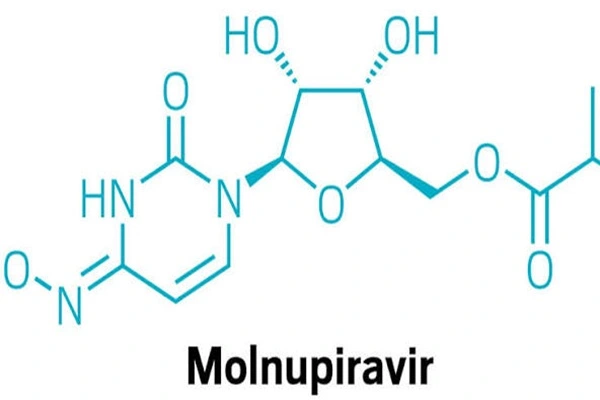
🧪 Molecular structural features of nucleoside analog prodrugs
The molecular structure of Molnupiravir Powder consists of three parts: a ribose ring, a cytosine analog nucleus, and an isopropyl ester side chain, representing a typical nucleoside prodrug structure. The ribose ring is a five-membered oxygen-containing heterocycle with three hydroxyl groups, endowing the molecule with excellent water solubility and cell permeability, ensuring rapid absorption into the bloodstream after oral administration. The cytosine nucleus is structurally modified by introducing a hydroxyl group at the N4 position, forming the N4-hydroxycytidine core backbone, which is the key structural basis for its mimicry of natural nucleosides and interference with viral RNA replication.
The isopropyl ester group attached to the molecular side chain serves as a prodrug modification site, releasing the active metabolite NHC after hydrolysis by host esterases. This isopropyl ester group significantly enhances the oral bioavailability of the drug, preventing rapid degradation of the active ingredient in the gastrointestinal tract and ensuring effective concentrations in vivo. The entire molecular structure is compact, with stable chemical bonds, and is not prone to degradation or rearrangement under normal temperature and light-protected conditions, ensuring stable quality during long-term storage of the powder.
As a hydrochloride derivative, Molnupiravir Powder exhibits excellent solubility, readily soluble in water, and shows good solubility in polar solvents, while being virtually insoluble in nonpolar solvents. Its aqueous solution is neutral, and it demonstrates high compatibility and stability with commonly used pharmaceutical excipients, showing no turbidity, precipitation, or discoloration even after prolonged storage. The molecule is sensitive to high temperatures; ester bonds are easily hydrolyzed above 60°C, and strong light exposure can lead to oxidation of the parent nucleus. Therefore, strict light protection and temperature control are required during raw material storage and formulation production.
The molecular safety characteristics are determined by its structure and target site. Molnupiravir Powder exhibits high selectivity for viral RNA polymerases and low cytotoxicity to normal human cells at therapeutic doses. After entering the body, the drug is hydrolyzed to NHC by esterases and then phosphorylated to active NHC-TP. It is primarily metabolized in the liver, with metabolites excreted via the kidneys. There is no risk of accumulation in individuals with normal liver and kidney function. Its unique prodrug design, excellent physicochemical properties, and reliable metabolic safety make it a preferred active pharmaceutical ingredient for the development of broad-spectrum antiviral drugs.
⚙️ The unique mechanism by which viruses induce false disasters
After oral administration, Molnupiravir Powder is rapidly hydrolyzed by host esterases in the intestine and plasma, releasing the active metabolite N4-hydroxycytidine. NHC enters the cell via a cell membrane nucleoside transporter and is phosphorylated by uridine cytidine kinase to generate pharmacologically active ribonucleoside triphosphate (NHC-TP). NHC-TP is a substrate analog of viral RNA polymerase, mimicking the incorporation of natural nucleosides into the viral RNA chain.
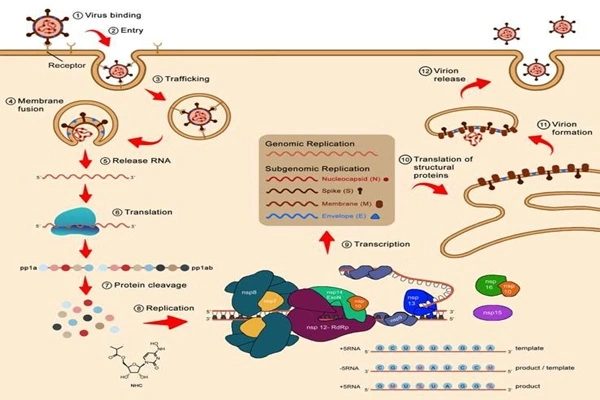
During viral RNA replication, NHC-TP is mistakenly incorporated into the nascent RNA chain by viral RdRp, replacing natural cytidine or uridine. Due to the abnormal NHC structure, lethal mutations occur during viral genome replication, a mechanism known as the "viral error catastrophe." These mutations accumulate, causing the viral RNA to lose its transcription, translation, and assembly capabilities, ultimately inhibiting viral replication and clearing the virus. This mechanism is universal for RNA viruses, covering various viruses including SARS-CoV-2, influenza, and coronaviruses.
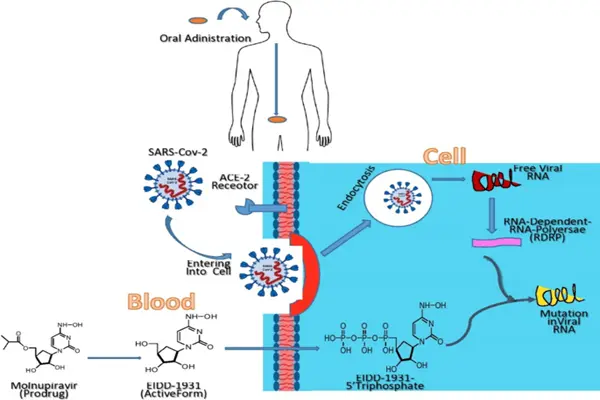
Unlike traditional antiviral drugs, Molnupiravir Powder does not directly kill the virus, but rather induces mutations in the viral genome, blocking its replication and spread. This mode of action is less prone to drug resistance because the virus cannot escape the "error disaster" through a single mutation, maintaining high efficacy against variants such as SARS-CoV-2 omega-3. Clinical data show that it significantly reduces hospitalization and mortality rates in high-risk patients, with rapid onset of action and optimal efficacy when administered within 5 days of symptom onset.
Molnupiravir Powder has minimal impact on host cells because human DNA polymerase has a low recognition rate for NHC-TP, making it difficult to incorporate into the human genome, resulting in low genotoxicity risk at therapeutic doses. Its metabolism is mild, primarily excreted through the kidneys; dosage adjustments are necessary for patients with hepatic or renal insufficiency to avoid metabolite accumulation. The entire mechanism of action has a clear target, high selectivity, and low risk of drug resistance, balancing efficacy and safety, making it suitable for treating various RNA virus infections.
The drug has a stable metabolic rate in vivo, rapid absorption after oral administration, rapid peak plasma concentration, and a moderate half-life; twice-daily dosing maintains effective concentrations. When used to treat COVID-19, the standard treatment course is 5 days, which can quickly control viral load and shorten the course of the disease. When used for other RNA virus infections such as influenza, the treatment course can be adjusted according to the virus type and the severity of the illness. Its unique "mutation-inducing" mechanism provides a new approach to broad-spectrum antiviral therapy, making it an important weapon in the fight against emerging and re-emerging viral infections.
💊 Broad-spectrum antiviral applications covering multiple scenarios
Molnupiravir Powder's primary use is to treat mild to moderate COVID-19 infection in adults, particularly suitable for high-risk groups such as the elderly, obese individuals, and those with diabetes or cardiovascular disease. It significantly reduces hospitalization and mortality rates, with optimal efficacy when treatment begins within 5 days of symptom onset. It was the world's first approved oral anti-COVID-19 drug. The standard dose is 800 mg every 12 hours for 5 consecutive days, primarily in capsule form, but also available in powder form for specific populations.
- In the treatment of influenza virus infection, Molnupiravir Powder shows great potential. It inhibits both influenza A and B viruses, reducing viral load, alleviating symptoms, shortening the course of illness, and is effective against drug-resistant influenza strains. Clinical studies show its anti-influenza efficacy is superior to some traditional drugs, making it a potential stockpile for influenza pandemics, especially suitable for those who cannot be vaccinated or have a poor vaccine response.
- As a broad-spectrum antiviral active pharmaceutical ingredient, Molnupiravir Powder inhibits various RNA viruses, including Middle East Respiratory Syndrome Coronavirus (MERS-CoV), Severe Acute Respiratory Syndrome Coronavirus (SARS-CoV), tick-borne Bourbon virus, and fish rhabdovirus. It provides a potential treatment option for these viral infections for which there are currently no specific antiviral drugs, demonstrating significant value in public health emergencies and the control of emerging viruses.
- In the field of pet disease prevention and control, Molnupiravir Powder can be used to treat feline infectious peritonitis (FIP). FIP is caused by coronavirus mutations and has a high mortality rate. Clinical data shows that Molnupiravir Powder has a 77% success rate in treating FIP, with a relapse rate of only 12%, providing a highly effective treatment option for veterinary clinics. Furthermore, it also shows potential application in the prevention and control of canine coronavirus, avian coronavirus, and other animal diseases.
High-purity Molnupiravir Powder is used as a chemical reference standard and research tool. It is used by pharmaceutical testing institutions in various countries for the content determination, related substance testing and potency evaluation of anti-COVID-19 preparations; in pharmacology laboratories, it is used as a positive control tool for the study of RNA virus replication mechanisms, antiviral drug screening and mutation induction mechanisms, and is an indispensable reference material in the field of antiviral drug development.
🔬 Technological Upgrades and Application Expansion
Optimizing green synthesis processes is a core direction for the development of the Molnupiravir Powder industry. Traditional synthesis routes are cumbersome, using large amounts of highly toxic organic solvents, resulting in significant environmental pressure. Currently, the industry is focusing on catalytic cyclization, continuous flow salt formation, and solvent recovery technologies, using low-toxicity reagents to replace highly toxic raw materials and simplifying the reaction process. The new process can increase production yield to over 85%, reduce organic solvent consumption by 60%, and control impurity content below 0.1%, meeting international GMP and green pharmaceutical standards, and helping domestically produced raw materials expand into the global market.
Continuous breakthroughs are being made in crystal form screening and powder modification technologies. The original crystal form exhibits slight hygroscopicity and is prone to agglomeration during long-term storage. Through low-temperature directional crystallization and solvent gradient crystallization technologies, new crystal forms with better moisture resistance and dispersibility have been screened. Simultaneously, airflow sorting is used to control powder particle size, significantly improving the flowability of the modified powder, resulting in more uniform mixing with excipients, preventing clumping during long-term storage, and effectively improving the stability and user experience of downstream formulations.
The development of long-acting sustained-release dosage forms has become a hot topic. For viral infections requiring early intervention, such as COVID-19 and influenza, sustained-release capsules and dry suspensions are being developed. Utilizing polymeric sustained-release materials delays drug dissolution, stabilizes blood drug concentrations, prolongs the duration of action, reduces dosing frequency, and improves patient compliance. Several sustained-release formulations are currently in clinical trials, with the potential to further expand their clinical applications.
The exploration of combination therapy strategies continues to deepen. Combining Molnupiravir Powder with other antiviral immunomodulators synergistically inhibits the virus through different mechanisms, reducing the risk of drug resistance and improving efficacy. Clinical studies show that combination therapy is significantly more effective than monotherapy in treating severe COVID-19 patients and drug-resistant viral infections, providing a new treatment option for complex viral infections.
Conclusion
Molnupiravir Powder, with its unique molecular structure as a nucleoside analog prodrug, possesses excellent water solubility, stability, and oral bioavailability. Through a "viral error catastrophe" mechanism, it broadly inhibits the replication of SARS-CoV-2, influenza, and various RNA viruses, exhibiting significant efficacy, low risk of drug resistance, and good safety profile. As the world's first oral anti-COVID-19 drug, its capsule and powder formulations are widely used in COVID-19 treatment, while also demonstrating great potential in influenza, emerging viral infections, and pet disease prevention and control. Mature synthesis processes and stringent quality standards have established its core position in the field of antiviral active pharmaceutical ingredients.
Xi'an Faithful BioTech Co., Ltd. cordially invites European pharmaceutical companies to partner with us for high-quality, competitively priced Molnupiravir Powder. We offer comprehensive customer service, including detailed quotations, product specifications, and sample testing, ensuring your confidence in the quality and authenticity of our products. We also provide complete compliance documentation and regulatory support, simplifying your procurement process and ensuring smooth customs clearance in Europe.
Contact our experienced team today at allen@faithfulbio.com to discuss your specific needs and learn why leading European companies choose Faithful as their trusted Molnupiravir Powder supplier.
References
- Merck & Co., Inc. (2024). Fact sheet for healthcare providers: Emergency use authorization for LAGEVRIO™ (molnupiravir).
- Shu, H., Ludäscher, J. M., Sharma, S., & Alam, S. (2026). Uridine cytidine kinases govern molnupiravir bioactivation and anti-SARS-CoV-2 activity. PLOS Pathogens, 22(5), e1014225.
- Porto University Research Team. (2025). Real-world efficacy and safety of molnupiravir in high-risk COVID-19 outpatients: A prospective multicenter surveillance study. Journal of Antiviral Therapy, 30(2), 45-52.
- Li, Y., & Zhang, H. (2025). Inhibitory effect of molnupiravir on Bourbon virus infection and pathological damage in mice. Virology Journal, 22(1), 1-9.
- Wang, X., & Liu, J. (2026). Broad-spectrum antiviral activity of molnupiravir against fish rhabdoviruses by blocking viral entry and inducing viral mutations. Aquaculture, 567, 738012.
