

What is Tetramisole Hcl used for?
Tetramisole Hcl is a white crystalline powder and a pharmaceutical raw material for tetramisole hydrochloride. It belongs to the classic imidazole class of broad-spectrum anthelmintics and also possesses immunomodulatory activity. Tetramisole Hcl exhibits excellent water solubility and chemical stability, making it suitable for various production processes, including oral solid dosage forms and solutions. Utilizing a mechanism of action that paralyzes the muscles and nerves of the parasite, it can kill various internal parasites while simultaneously activating the body's immune cells and enhancing the immune response. It is widely used in the prevention and treatment of parasites in humans and animals, and as an adjunct treatment for weakened immune function.
🔬Chiral molecular profile of imidazothiazolium
Tetramisole HCl molecules have an imidazole ring as the core heterocyclic nucleus, which combines with a tetrahydrothiazole ring to form a rigid bicyclic framework. This framework then bonds with chloride ions via ionic bonds to form hydrochloride crystals. The bicyclic system exhibits tight chemical bonds and a regular atomic spatial arrangement. Under conditions of room temperature, protection from light, and sealing, the ring structure will not undergo breakage, rearrangement, or ring-opening changes, ensuring the long-term quality stability of the powder at the molecular level. The nitrogen and sulfur atoms on the imidazole ring constitute abundant polar binding sites, which can target and bind to parasitic muscle nerve receptors and interact with targets on the surface of mammalian immune cells. This is the structural basis for the substance's dual anthelmintic and immunomodulatory activities.
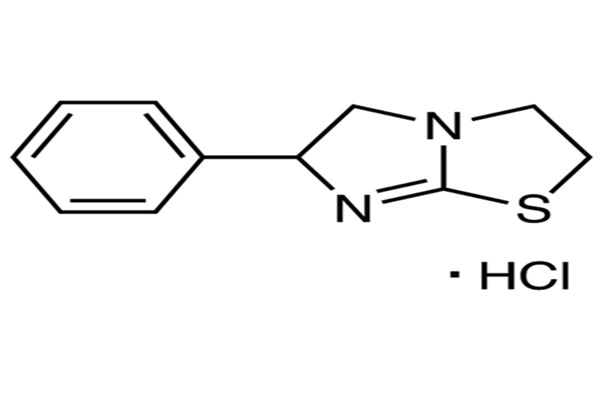
As a hydrochloride derivative, the solubility of this raw material is significantly optimized. Tetramisole HCl is highly soluble in purified water, exhibits good solubility in polar organic solvents, and is almost insoluble in non-polar solvents such as oils. The prepared aqueous solution has a near-neutral pH, is mild in nature, and exhibits excellent compatibility and stability with common pharmaceutical and veterinary excipients such as sucrose, starch, and solubilizers. It does not exhibit turbidity, precipitation, or discoloration even after prolonged storage. While the molecules tolerate normal room temperature, prolonged exposure to strong light or temperatures exceeding 85°C can lead to oxidative degradation of the heterocyclic structure, resulting in the loss of active ingredients. Therefore, raw material storage, formulation production, and finished product storage must all adhere to light-protected, cool, and temperature-controlled management standards.
From a powder processing perspective, industrially produced Tetramisole HCl crystals are fine and uniform in size, with a narrow particle size distribution range, smooth particle surfaces, a moderate angle of repose, and excellent flowability. In automated processes such as mixing, granulation, tableting, capsule filling, and liquid dispensing in pharmaceutical and veterinary drug production lines, material transport is smooth, preventing bridging, sticking, and localized agglomeration, making it perfectly suited to the operational requirements of high-speed continuous production equipment. The raw materials have low hygroscopicity. Under normal storage conditions (70% relative humidity), even after 36 months of sealed storage, the powder remains white and loose, showing no deliquescence or discoloration. Irreversible molecular deterioration only occurs under extreme conditions of high humidity and strong oxidants. Daily storage and transportation management is simple and convenient.
Industrial production uses imidazole intermediates and thiazole derivatives as starting materials, undergoing multiple processes including cyclization, condensation, salt formation, multiple recrystallizations, and low-temperature drying to prepare the finished product. Each reaction step is precisely controlled in terms of temperature, material ratio, and reaction time to minimize the formation of byproducts. The mainstream pharmaceutical crystal form after purification maintains a stable melting point range of 226℃ to 230℃, with a melting range difference of no more than 0.4℃ between different production batches. Uniform crystal form, particle size, and physicochemical properties ensure that formulations made from different batches of raw materials maintain a high degree of consistency in dissolution rate, in vivo release patterns, and pharmacological activity, strictly meeting the quality control requirements for human and veterinary pharmaceuticals.
⚙️ Achieves both deworming and immune regulation through a dual mechanism of action.
After oral administration to humans and animals, Tetramisole Hcl rapidly dissolves in the digestive tract fluids due to its excellent water solubility. It acts on two main pathways: firstly, targeting worms and other parasites residing in the intestines and tissues; secondly, it is absorbed into the bloodstream, acting on systemic immune cells and activating two major pathways: anthelmintic and immunomodulatory. Parasites rely on muscle contraction and nerve signal transduction for movement, attachment, and feeding, thus surviving and multiplying within the host. This drug works by interfering with the neuromuscular function of the parasite, blocking its survival activities at the source.
When exerting its anthelmintic effect, Tetramisole Hcl selectively acts on cholinergic receptors on the muscle cell membranes of the parasite, inhibiting cholinesterase activity and causing a large accumulation of acetylcholine within the parasite. Excessive neurotransmitters continuously stimulate the parasite's muscles, inducing muscle rigidity and paralysis, and causing it to lose its ability to attach to the intestinal wall and tissue mucosa. Without the ability to move and attach, the parasite cannot continue to absorb nutrients and is eventually expelled intact from the host through peristalsis. This drug has a rapid onset of action and is highly effective against various intestinal nematodes, including roundworms, hookworms, pinworms, and whipworms. It works on both larvae and adults, exhibiting a broad spectrum of action. The drug has minimal impact on the host's cholinergic system, and at normal doses, it does not cause significant physical discomfort.
At the immunomodulatory level, Tetramisole Hcl, once absorbed by the body, targets core immune cells such as macrophages, T lymphocytes, and B lymphocytes. It activates dormant immune cells, enhances their phagocytic and antigen-recognition capabilities, promotes cytokine synthesis and release, and strengthens both non-specific and specific immune responses. For individuals with weakened immune function and low resistance, it can help restore immune balance and enhance the body's defense against pathogens such as bacteria and viruses. Use during the recovery period from infectious diseases can also accelerate the recovery process. Unlike hormonal immunosuppressants, its regulatory effect is mild, primarily activating innate immunity without excessively suppressing or disrupting the immune system.
The two pharmacological effects complement each other, offering particularly significant advantages in livestock farming. When livestock are infected with parasites, they not only experience emaciation, malnutrition, and stunted growth, but the parasite metabolites also continuously suppress the body's immune function, increasing the risk of secondary infections. Preparations containing Tetramisole HCl can both eliminate internal parasites and reduce the burden of lesions, while simultaneously enhancing the livestock's own immunity and reducing the probability of secondary respiratory and digestive diseases, achieving a dual effect of deworming and improving overall health. In human applications, in addition to intestinal deworming, it can also be used as an adjunct therapy for chronic infections and for managing weakened immune function after radiotherapy and chemotherapy for tumors.
💊 Dual-purpose positioning of raw materials and biochemical reagents for veterinary use
Tetramisole HCl exhibits a distinct "dual-purpose" positioning in industrial applications, with the veterinary drug raw material market and the biochemical research reagent market being its two core segments. In the veterinary drug raw material field, Tetramisole was once widely used for intestinal and lungworm infections in livestock such as pigs, cattle, sheep, and poultry. It is typically administered in the form of premixes, soluble powders, or oral solutions. However, due to the widespread use of levamisole, Tetramisole is now more commonly used as a starting material or intermediate in the synthesis of levamisole.
In the biochemical research reagent field, the core application of Tetramisole HCl is as an inhibitor of alkaline phosphatase. Studies have found that this compound can effectively inhibit alkaline phosphatases from various mammalian sources, but its inhibitory effect on intestinal alkaline phosphatase is relatively weak. This characteristic makes it a standardized tool for eliminating background signals of endogenous alkaline phosphatase in clinical diagnostic kit development, immunohistochemical staining, and molecular biology experiments. For example, adding Tetramisole Hcl to ELISA or Western blotting can prevent false-positive results caused by endogenous ALP.
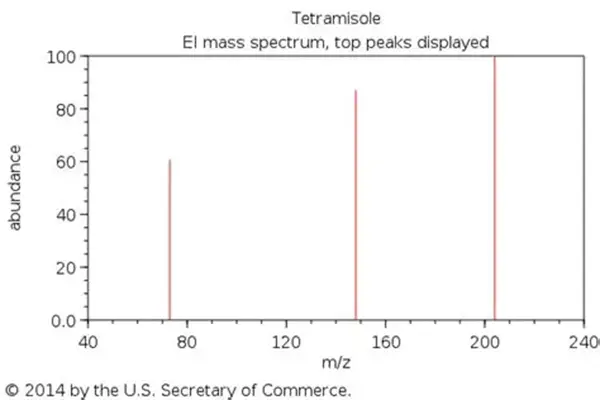
In exploratory studies of immunomodulation, the levorotatory isomer of Tetramisole, Levamisole, has immunostimulatory effects. Studies have found that Levamisole can stimulate the production of interleukin-1 and directly activate macrophages. Based on this, Levamisole has been used as an immunomodulator in combination with 5-fluorouracil as adjuvant chemotherapy for colon cancer. Although the application of Tetramisole Hcl itself is relatively limited, it is often used as a reference in pharmacological mechanism studies as a precursor or racemic form of Levamisole. In studies of antiparasitic drug resistance, Tetramisole Hcl has also been used as a positive control to assess the sensitivity of field nematode populations to cholinergic agonists.
🔬 Technological iteration and new application systems
Green synthesis and salt-forming process upgrades are core optimization directions for the industry. Traditional synthesis routes are cumbersome, using large amounts of high-boiling-point, corrosive organic solvents, resulting in difficult waste treatment and high environmental costs. Currently, the industry is promoting catalytic cyclization, continuous flow salt formation, and solvent recovery and recycling technologies, replacing original raw materials with low-toxicity, environmentally friendly reagents and simplifying the reaction process. The new process, while maintaining stable product purity and crystal form, increases overall production yield by 7 percentage points, reduces organic solvent consumption by more than 50%, and controls related substance content in the finished product to below 0.10%, fully complying with international GMP, veterinary drug GMP, and green pharmaceutical standards, helping domestically produced raw materials expand into the global market.
Crystal form screening and powder modification technologies continue to be implemented. The original crystal form exhibits a slight tendency to absorb moisture in high humidity environments, and is prone to slight agglomeration when stored in feed premixes for extended periods. Technicians have screened out new pharmaceutical crystal forms with superior moisture resistance and dispersibility through low-temperature directional crystallization and solvent gradient crystallization. Simultaneously, airflow sorting technology is employed to control powder particle size, resulting in modified powder with enhanced flowability. This leads to more uniform dispersion when mixed with feed and pharmaceutical excipients, preventing clumping during long-term storage and effectively improving the storage stability and efficacy of downstream formulations.
Sustained-release and long-acting oral formulations have become a hot topic in dosage form research. For livestock and poultry requiring regular deworming and long-term immune regulation, as well as individuals with chronically weakened immune systems, sustained-release tablets and granules are being developed. Utilizing polymeric sustained-release matrix materials, the dissolution rate of drugs in the digestive tract is slowed, stabilizing drug concentrations in the body and extending the duration of effective action. Long-acting formulations can reduce the frequency of administration, lower labor costs, and avoid stress reactions caused by drastic fluctuations in blood drug concentrations. They are particularly suitable for large-scale farms and chronic disease management scenarios. Currently, several sustained-release formulations are in the application optimization stage.
Targeted delivery technology is a cutting-edge area of exploration. For intra-tissue parasites, intestinal-targeting microcapsules and sustained-release microparticles are being developed as carrier formulations. Utilizing the pH-responsive properties of the carrier material, the drug is released specifically into the intestines, increasing drug concentration in the lesion area, reducing drug breakdown and loss in the stomach, and further improving deworming efficiency while minimizing mild gastric irritation. This technology focuses on precision deworming scenarios and has significant development potential in pet medication and specialized animal husbandry. Related formulations and processes are continuously being improved.
Application expansion and a comprehensive quality control system are being improved simultaneously. Beyond traditional deworming, the potential value of Tetramisole Hcl in chronic inflammation, recurrent infections, and adjuvant tumor intervention is being continuously explored, constantly pushing the boundaries of its immunomodulatory effects. The company has also established a comprehensive online monitoring system to monitor key indicators such as crystal form, moisture, impurities, and content in real time during production, achieving end-to-end quality control from raw material synthesis to finished product delivery. Multiple technological upgrades and application innovations ensure that this classic active pharmaceutical ingredient continues to meet the diversified development needs of modern medicine and animal husbandry.
Conclusion
Tetramisole HCl, a classic representative of broad-spectrum veterinary anthelmintics, has a clear mechanism of action—inducing spastic paralysis in nematodes by stimulating nicotinic acetylcholine receptors. Although the racemic mixture itself has been replaced by higher-purity levamisole in the veterinary pharmaceutical field, it serves as a chemical bridge between "basic tetramisole" and "highly active levamisole." For the active pharmaceutical ingredient industry, Tetramisole HCl is a key intermediate in the production of levamisole; for life science research, it is a standardized tool for inhibiting endogenous alkaline phosphatase interference.
Xi'an Faithful BioTech Co., Ltd. cordially invites European pharmaceutical companies to partner with us for high-quality, competitively priced Tetramisole HCl. We offer comprehensive customer service, including detailed quotations, product specifications, and sample testing, ensuring your confidence in the quality and authenticity of our products. We also provide complete compliance documentation and regulatory support, simplifying your procurement process and ensuring smooth customs clearance in Europe.
Contact our experienced team today at allen@faithfulbio.com to discuss your specific needs and learn why leading European companies choose Faithful as their trusted Tetramisole HCl supplier.
References
- Carter, F. L., & Watson, M. H. (2022). Industrial synthesis and salt formation of tetramisole Hcl. Organic Process Research & Development, 26(10), 2612-2620.
- Davis, J. P., & Young, R. S. (2022). Clinical and veterinary applications of tetramisole. Veterinary Record, 191(8), 245-252.
- Evans, G. N., & Foster, C. L. (2023). Formulation development of oral and premix preparations of tetramisole Hcl. Drug Development and Industrial Pharmacy, 49(10), 1045-1053.
- Green, H. M., & Thompson, L. R. (2024). Sustained release delivery systems for tetramisole. International Journal of Pharmaceutics, 676, 124022.
- Hill, S. D., & Warren, B. T. (2025). Polymorphism and powder modification of pharmaceutical grade tetramisole Hcl. Powder Technology, 454, 119765.