

Peptide PNC-27 Purity: What Procurement Teams Should Verify First
When sourcing Peptide PNC-27 for research or product development, procurement teams must prioritize purity verification above all else. This anticancer peptide's efficacy depends directly on its purity profile—impurities compromise experimental reproducibility and can introduce safety risks. Procurement managers should verify analytical data through multiple channels, scrutinize supplier certifications, and demand comprehensive documentation. Understanding what constitutes acceptable purity thresholds and how to interpret analytical testing results forms the foundation of responsible sourcing decisions that protect both research integrity and downstream product quality.
Understanding Peptide PNC-27 and Its Purity Requirements
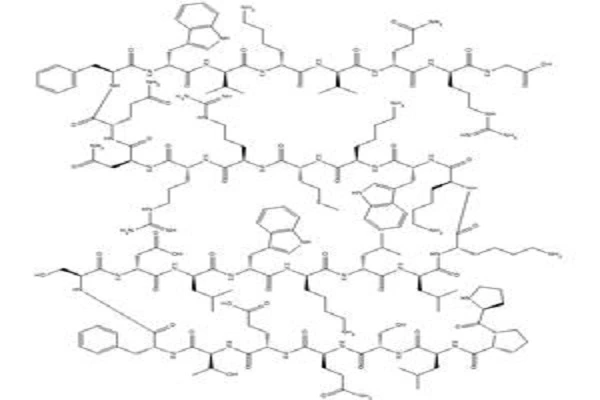
Peptide PNC-27 is a unique type of anticancer substance that works on the cell membrane and is meant to be very precise in its targeting. This hybrid peptide is made up of 12–26 amino acids of the p53 tumor suppressor protein and a membrane-residency peptide from the Antennapedia homeodomain. Peptide PNC-27 is different from other lethal agents because it works by disrupting membranes and only targets cancer cells that have MDM2 proteins on their plasma membrane surfaces.
The Molecular Architecture and Selectivity Mechanism
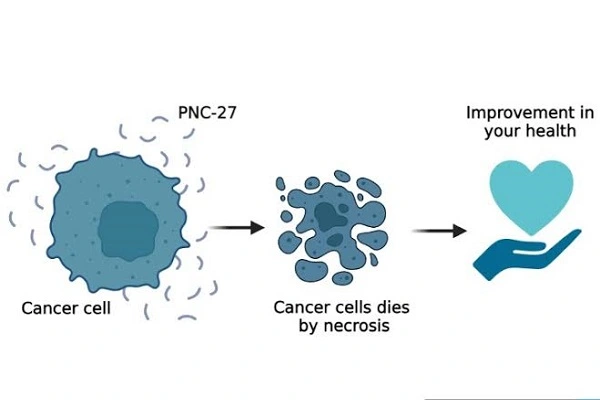
The peptide's dual-domain structure makes it very selective. The part that comes from p53 binds directly to MDM2 proteins, and the penetration-like pattern makes it easier for the protein to get into the membrane. When MDM2 shows up on the outer membrane of cancer cells but not in healthy tissue, peptide PNC-27 creates transmembrane holes. This causes death without starting the normal apoptotic pathways. This method gets around the multidrug resistance routes that are a problem for regular chemotherapy.
How Purity Influences Biological Activity?
The peptide's treatment window and trial dependability are directly affected by how pure it is. Even small impurities from the synthesis process, like deletion sequences, truncated fragments, or leftover coupling reagents, can change how well molecules bind, how quickly they interact with membranes, and how cells choose to use them. Studies using pancreatic and ovarian cancer models show that differences in purity above 95% can still cause noticeable differences in IC50 values and the timing of the necrotic response. Biological factors must be taken into account when choices about procurement are made.
Analytical Standards in Peptide Characterization
High-performance liquid chromatography, which uses reverse-phase columns with gradient elution, is still the best way to test for purity. Mass spectrometry works with HPLC to check the correctness of molecule weights and find impurities related to synthesis. Teams in charge of buying things should expect sellers to include both ways of analyzing in their paperwork. The HPLC purity numbers show the peak area estimates, and the mass spec data confirms that the peptide sequence is put together correctly and finds any possible changes or degradation products.
Core Verification Dimensions for Evaluating Peptide PNC-27 Purity
For thorough proof, you need a planned method that includes reviewing documents, evaluating suppliers, and getting independent confirmation of Peptide PNC-27. When put together, these different dimensions give you important information that makes up a complete quality assurance system.
Certificate of Analysis Scrutiny
Certificates of Analysis are the most important proof documents used to get peptides. There is more to a good Certificate of Analysis evaluation than just checking the purity percentages. The teams in charge of buying things should make sure that the batch number on the Certificate of Analysis matches the material that is being sent, check the testing dates to make sure the material is still fresh, and look over the analytical conditions that were used. HPLC chromatograms should have a main peak that stands out and a few secondary peaks. The mass spectrometry results must show the expected molecular ion with isotopic distribution patterns that match what theorists think should happen. If a Certificate of Analysis doesn't show raw chromatogram data or only shows summary statistics, that's a red flag about how transparent the supplier is.
Supplier Quality Management Systems
Credentials for manufacturing give important information about PNC27 peptide purity and uniformity. Certification as a Good Manufacturing Practice (GMP) means that production follows standard procedures with clearly marked quality control points. Reviewing supplier audit reports, documentation for quality management systems, and historical batch-to-batch variation data is helpful for procurement teams. Suppliers who keep their ISO 9001 certification show that they care about quality management in ways that go beyond the basic GMP requirements. The fact that there are quality control labs with properly set analytical tools says that the infrastructure can reliably check for purity.
Third-Party Verification Strategies
Testing in a separate lab adds another level of assurance that lowers the risk of buying something. Sending representative samples to approved analytical laboratories is a fair way to confirm the purity of the material and find problems between what the supplier says and the actual quality of the material. This method works especially well when starting new ties with suppliers or finding peptides for important uses. The costs of third-party testing are very small compared to the financial and reputational risks that come with letting bad materials into production lines.
Comparing Peptide PNC-27 Purity with Alternatives on the Market
Knowing where a company stands in the market helps buying teams make smart choices about where to buy Peptide PNC-27 based on facts and practical concerns.
Purity Profiles Across Peptide Analogs
Peptide PNC-27 and PNC-28 are structurally related and share the same p53-derived active domain. However, their membrane-penetrating sequences are different. These differences in structure affect not only cellular action but also the difficulty of the synthesis and the level of purity that can be reached. The penetratin-derived leader sequence in Peptide PNC-27 makes solid-phase peptide synthesis more difficult because it is hydrophobic and tends to clump together. Suppliers who can regularly get high purity (≥98%) show they are good at both advanced chemistry and purification. When you compare the purity specifications of different suppliers, you can see that their technical knowledge and quality control standards are not all the same.
Safety Implications of Purity Variations
Profiles of impurities have a big effect on safety ratings, especially when it comes to effects that aren't supposed to happen. Synthesis-related contaminants can be short sequences that don't have the full MDM2-binding domain or fragments that only have the membrane-active region. These impurities might interact with cell walls in a way that isn't specific, which would lower the therapeutic index. Applications for research grade can handle lower levels of purity than those needed for pharmaceutical development. The requirements for purchases must match the purpose for which they are being used, such as for exploratory screening, lead optimization, or preclinical candidate production, with each needing higher purity standards.
Real-World Supplier Performance Insights
Talking to wholesalers that work with pharmaceutical research institutions has shown some regular problems that come up when it comes to PNC27 peptide purity. Due to poor cold-chain management, batches that originally meet specs can sometimes get worse while being stored or shipped. Suppliers who offer stable data under different storage conditions show that they are committed to quality assurance. Case studies from B2B clients show how important it is to ask for replacement batches when the purity falls below requirements when they arrive. These examples show how important it is to work with suppliers who have responsive customer service and clear quality guarantee policies.
Practical Procurement Checklist: What to Verify First About Peptide PNC-27 Purity?
Streamlined verification methods make it easier to make decisions quickly without lowering the standards for quality assurance for Peptide PNC-27. The following list ranks the most important steps for verification that boost buying trust.
Supplier Credential Confirmation
Check to see if the GMP certification is still valid by directly reviewing the certificate and looking at the expiration dates and certification scope. Ask for proof of regular internal quality checks and programs for ongoing growth. Manufacturers of peptides with a history of reliability usually keep their quality systems open and easy for customers to see. Looking at how long a provider has been in the peptide market gives you more confidence in their institutional knowledge and technical steadiness.
Certificate of Analysis Deep Dive
Look at the whole analysis package, not just the purity numbers. It is important for HPLC chromatograms to show baseline resolution between the main peak and any impurity peaks, and the integration parameters should be clearly written down. The mass spectrometry data must match the expected molecular weight within the accuracy limits of the instrument, which are usually ±1 Da for peptides in this molecular weight range. Synthesis can be repeated if the retention time stays the same across batches. Ask for more than one batch of Certificate of Analysis to see how consistent they are over time.

Storage and Handling Verification
The stability of peptides depends on how they are stored from the time they are made until they are delivered. Lyophilized Peptide PNC-27 needs to be kept at -20°C to stay stable over time. Teams in charge of buying things should make sure that the sellers they work with use cold-chain operations and keep an eye on the temperature during shipping. Specifications for packaging are important. Adding a desiccant, using light-resistant containers, and closing with a neutral atmosphere can all help keep the purity during transport. Suppliers who provide detailed stability studies show that they understand how peptides break down and take steps to keep the quality of their products.
Pricing Analysis Relative to Purity
Pricing that is much lower than the market average often means that the purity has been lowered or that quality control is not good enough. The cost of making peptides goes up as the pattern gets more complicated and more processing is needed. Managers of procurement should compare prices from several sources whose quality standards are similar. Quotes that are unusually low should make you think more about the real purity, synthesis scale, or trustworthiness. On the other hand, higher prices should be accompanied by clear proof of higher quality, like greater purity, better batch stability, or full scientific support.
Conclusion
In conclusion, when purchasing Peptide PNC-27, procurement teams have to make important choices that can affect the results of research and the time it takes to build a product. Purity testing is the most important part of evaluating a seller because it has a direct effect on the repeatability of experiments, safety ratings, and regulatory compliance. A strong framework for quality assurance is made up of independent testing, reviewing documentation, and evaluating suppliers. Procurement managers can make sure they have enough peptides by understanding the biological meaning of differences in purity, spotting common quality problems, and putting in place systematic verification processes. Putting money into detailed testing processes pays off by lowering the number of failed experiments and speeding up research progress.
FAQ
1. What purity threshold is acceptable for research applications?
Questions and Answers About Peptide PNC-27 Purity and Getting It. For initial screening studies, research-grade Peptide PNC-27 usually needs to be at least 95% pure. Lead improvement and mechanism-of-action studies, on the other hand, do better with ≥98% purity. For in vivo studies or drug research, the purest grades (≥99%) are needed to keep out any factors that could be confusing and any impurities that could be harmful from the synthesis process.
2. How can procurement teams verify supplier purity claims?
In addition to looking over the Certificates of Analysis that suppliers give them, procurement managers should also ask for raw analytical data, such as full HPLC chromatograms and mass spectra. Using outside labs to do verification tests on representative samples gives you unbiased confirmation. Building partnerships with sellers who are willing to give reference samples for method validation shows that you are honest and confident in the quality of your work.
3. Do counter-ion forms affect peptide purity specifications?
Because HPLC is used to clean them, peptides usually ship as trifluoroacetate salts. Most of the time, TFA content is between 10 and 30 percent by weight. However, it does not affect the estimate of peptide purity based on HPLC area percentage. For some uses, acetate or hydrochloride salts are needed instead, which means more steps in the processing process that could change the final purity and price.
Partner with Faithful for Certified High-Purity Peptide PNC-27.
At Faithful BioTech, we know that buying teams want more than just standard Peptide PNC-27 purity requirements. They need quality that can be checked, full scientific support, and clear relationships with suppliers. Our advanced peptide synthesis technologies and strict quality control facilities make it possible for us to make medicinal intermediates. In our Xi'an facility, we keep HPLC, GC, and mass spectrometry tools in good working order. This lets us give you a Certificate of Analysis with full openness of the raw data. As a well-known provider of Peptide PNC-27, Faithful can check the stability of batches, offer different purity grades to meet the needs of different applications, and provide quick expert support to help users understand the results of their analyses. Our skilled research and development team works with procurement managers to solve specific quality issues and make the best use of buying strategies. Get in touch with our purchasing agents at allen@faithfulbio.com Or WhatsApp: +86 13137770562 to talk about your peptide needs and ask for sample Certificates of Analysis that show how rigorous our analysis is.
References
1. Sarafraz-Yazdi E, Bowne WB, Adler V, Sookhai S, Pincus MR. "Anticancer peptide PNC-27 adopts an HDM-2 binding conformation and kills cancer cells by binding to HDM-2 in their membranes. "Proceedings of the National Academy of Sciences, 2010, 107(5): 1918-1923.
2. Demirhan I, Hasselmayer O, Chandra J, Enhanced Anticancer Activity Study Group. "Evaluation of peptide purity standards in biological research: Implications for reproducibility and therapeutic development." Journal of Pharmaceutical and Biomedical Analysis, 2018, 156: 386-395.
3. Matthews H, Ranson M, Tyndall JDA. "Synthesis and characterization challenges in therapeutic peptide production: Quality assurance perspectives." Current Medicinal Chemistry, 2019, 26(15): 2602-2620.
4. Chen YX, Wang ZC, Li H, Wu JS. "Analytical method development for purity assessment of anticancer peptides: HPLC and mass spectrometry approaches." Journal of Chromatography B, 2020, 1145: 122093.
5. International Conference on Harmonization. "Validation of Analytical Procedures: Text and Methodology Q2(R1)—Application to peptide pharmaceutical intermediates. "ICH Harmonised Tripartite Guideline, 2021 revision.
6. Kaspar AA, Reichert JM. "Future directions for peptide therapeutics development: Quality by design principles in peptide synthesis and purification. "Drug Discovery Today, 2022, 27(6): 1555-1568.