
Semax: Why a synthetic neuropeptide has become a focal point in the fields of brain science and pharmaceutical ingredients.
In the pharmaceutical R&D field of neurodegenerative diseases, brain injury repair, and cognitive enhancement, peptide raw materials have become an important direction for overcoming the limitations of traditional small molecule drugs due to their high selectivity, low toxicity, and ease of modification. Semax, derived from a synthetic heptapeptide, has been approved for clinical use in Russia and Eastern Europe since its introduction due to its excellent blood-brain barrier penetration, neuroprotective and nootropic activities, and continues to gain popularity in global pharmaceutical raw material and basic neuroscience research.
A heptapeptide embodied in "Russian wisdom"
Semax's molecular design is a classic example of rational optimization of peptide pharmaceutical raw materials. Its core sequence is Met-Glu-His-Phe-Pro-Gly-Pro, with the molecular formula C₃₇H₅₁N₉O₁₀S, a molecular weight of 813.92, and CAS number 80714-61-0, serving as a core identifier for pharmaceutical raw material standards and formulation development. This molecule is not a natural peptide but is derived from a modified core active fragment. The N-terminus retains the melanocortin-like active region of Met-Glu-His-Phe, responsible for binding to the central melanocortin receptor; the C-terminus artificially introduces the Pro-Gly-Pro tripeptide module. This structural modification is a key breakthrough in its drug-like properties.
From a pharmaceutical raw material physicochemical perspective, Semax is a white lyophilized powder with good water solubility. Its acetate form exhibits higher stability, making it suitable for the development of nasal sprays, injections, and other dosage forms. This molecule also possesses hydrophilicity and moderate lipophilicity, achieving a bioavailability of 60%-70% when administered intranasally, far exceeding that of most natural peptides, thus addressing the industry pain point of peptide drugs' difficulty in penetrating the brain. Histidine and proline in the molecule provide key metal chelating sites, forming stable complexes with Cu²⁺. This structural feature provides the basis for its anti-Aβ aggregation and anti-oxidative damage properties, distinguishing it from ordinary nootropic peptides.
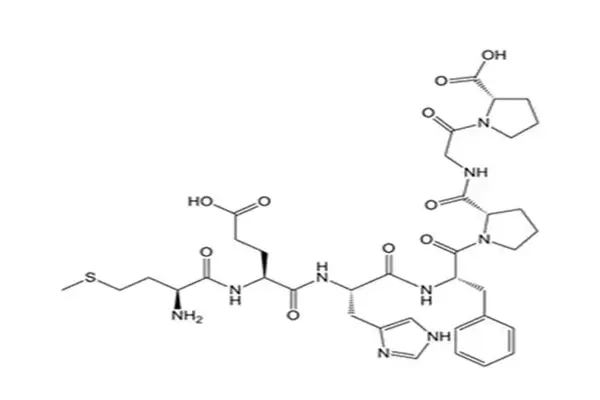
Structure-activity relationship studies show that the C-terminal PGP module inhibits peptidase hydrolysis, extending the half-life of Semax in cerebrospinal fluid from minutes in the natural fragment to hours, meeting clinical dosing frequency requirements. The N-terminal phenylalanine provides hydrophobic interaction for receptor binding; its deletion reduces neuroprotective activity by over 80%. Structure-activity relationship data from the Pharmaceutical Raw Materials Laboratory of the Russian Academy of Sciences indicate that methylation modification of Pro7 further improves metabolic stability but slightly reduces BDNF upregulation activity. This conclusion provides direction for the development of Semax derivative raw materials.
Compared to other neuropeptides, Semax has eliminated the active region that stimulates cortisol secretion, retaining only the core neuroregulatory function, achieving a precise design of "activity retention - side effect removal." This structural optimization approach makes it a benchmark molecule for "rational design and targeted modification" in peptide pharmaceutical raw materials, and also provides a replicable structural template for the subsequent development of brain-targeted peptide raw materials.
From clinical emergency care to research tools, the value of pharmaceutical raw materials covers multiple scenarios.
Semax's applications as a pharmaceutical raw material span clinical treatment, rehabilitation medicine, and basic research. In countries such as Russia and Belarus, it has been approved for use in diseases including ischemic stroke, traumatic brain injury, cognitive impairment, and optic neuropathy. Its applications continue to expand with research progress, demonstrating its core advantage as a multi-indication pharmaceutical raw material.
Clinically, Semax's most crucial application is neuroprotective treatment for acute cerebral ischemia. Clinical data from the Moscow Neuroscience Center in 2022 showed that administration of Semax nasal spray within 4.5 hours of stroke onset resulted in a 32% improvement in the rate of excellent/good scores on the Modified Rankin Scale at 90 days, a 28% reduction in infarct volume, and a significant reduction in disability rates. Its value as an emergency pharmaceutical raw material lies in its rapid entry into the brain to block neuronal apoptosis, filling a clinical gap in neuroprotective drugs for stroke.
In the field of cognitive impairment, Semax is used as an adjunct treatment for age-related cognitive decline and mild cognitive impairment. A randomized controlled trial at St. Petersburg Medical College involving 120 participants showed that after 8 weeks of continuous use of Semax, participants' scores on the digit span test improved by 21%, reaction speed increased by 18%, and hippocampal metabolic activity significantly improved, with no significant adverse reactions, making it suitable as a pharmaceutical raw material for long-term intervention.
In the neurorehabilitation context, Semax is used for neurological function repair after traumatic brain injury and spinal cord injury. Clinical cases show that adding Semax to routine treatment in patients with severe traumatic brain injury shortened motor function recovery time by 35% and increased the rate of consciousness recovery by 27%. As a pharmaceutical raw material during the rehabilitation period, it can promote synaptic regeneration and neural circuit reconstruction. Furthermore, Semax has been approved for optic neuritis and glaucomatous optic neuropathy, and by protecting retinal ganglion cells, it slows the progression of visual field defects, becoming a core raw material for ophthalmic neuroprotective agents.
In the research field, Semax is a standard tool for studying the BDNF pathway, neural plasticity, and metal ion neurotoxicity. Global pharmaceutical companies and research institutions widely utilize high-purity Semax raw materials for in vitro cell experiments and animal model studies to screen candidate drugs for Alzheimer's and Parkinson's diseases and verify neuroprotective mechanisms. Its advantages as a research-grade pharmaceutical raw material lie in its controllable purity, clear mechanism of action, and high reproducibility, making it a universal tool molecule in neuropharmacology research.
In the field of psychiatry, Semax has demonstrated anti-anxiety and antidepressant potential, regulating the balance of central serotonin and dopamine, improving mood and arousal, and its development as a raw material for novel psychotropic drugs continues to advance. Simultaneously, its immunomodulatory effects can reduce central inflammatory responses, showing outstanding performance in preclinical studies of multiple sclerosis and neuroinflammatory-related diseases, expanding the application boundaries of pharmaceutical raw materials.
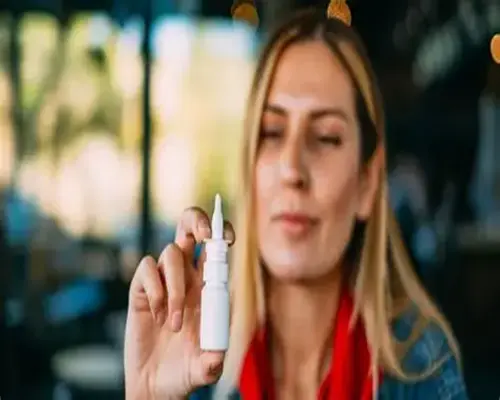
Notably, as a pharmaceutical raw material, Semax is primarily developed in nasal spray formulations to avoid the first-pass effect of the liver, resulting in high patient compliance; injectable formulations are used for critical care, meeting diverse clinical needs. Its applications extend from acute nerve injury to chronic neurodegenerative diseases, and from clinical treatment to scientific research tools, reflecting the core value of high-quality pharmaceutical raw materials as "multi-purpose materials".
Multi-pathway synergy to construct a molecular network for neuroprotection and cognitive enhancement
The pharmacological effects of Semax are not mediated by a single pathway, but rather through the synergistic action of four core pathways: neurotrophic, neurotransmitter regulation, antioxidant and anti-apoptotic, and metal chelation, forming a complete molecular mechanism network. This is the core reason why it possesses both broad-spectrum and high-efficiency properties as a pharmaceutical raw material.
First, upregulating the BDNF-TrkB signaling pathway is its core mechanism for promoting cognitive function and neural repair. Animal experiments show that within 30 minutes of Semax administration, BDNF expression in the rat hippocampus increases by 2.3 times, TrkB receptor phosphorylation level increases by 47%, and downstream PI3K/Akt and MAPK/ERK pathways are activated, promoting neuronal survival, axonal growth, and synaptic plasticity. A 2003 study by Doklady Biological Sciences confirmed that this effect is brain region selective, preferentially acting on cognitively relevant areas such as the hippocampus and prefrontal cortex, avoiding systemic side effects.
Second, it regulates the balance of the neurotransmitter system. Semax inhibits acetylcholinesterase activity, increases central acetylcholine levels, and improves learning and memory; it also activates the serotonergic and dopaminergic systems, increases neurotransmitter concentration in the synaptic cleft, alleviates anxiety and depression, and improves attention and arousal. Rat microdialysis experiments showed that Semax increased prefrontal dopamine levels by 35% and serotonin levels by 28%, without the risk of excessive excitation, demonstrating a mild and controllable effect.
Thirdly, it exhibits antioxidant and anti-excitotoxic effects. Semax scavenge oxygen free radicals, inhibits lipid peroxidation, and increases superoxide dismutase activity; simultaneously, it blocks excessive activation of glutamate NMDA receptors, reduces Ca²⁺ influx, and inhibits neuronal apoptosis. In vitro SH-SY5Y cell experiments showed that Semax pretreatment reduced H₂O₂-induced apoptosis rate by 52% and lactate dehydrogenase release by 41%, demonstrating strong neuroprotective capabilities.
Cutting-edge breakthroughs in pharmaceutical raw material innovation and clinical translation
Current research on Semax focuses on five key areas: structural modification, expansion of new indications, formulation innovation, combination therapy, and biomarker development. This is driving its transformation from a mature pharmaceutical raw material to a next-generation brain-targeted drug, making it a research hotspot in the global neuropharmaceutical field.
Regarding molecular structure modification and derivative development, the research team has improved the half-life and targeting of Semax through PEGylation, liposome conjugation, and cyclic peptide modification. Data from the Russian Institute of Pharmaceutical Raw Materials in 2024 showed that PEGylated Semax can extend its half-life to 12 hours, reduce the dosing frequency to once daily, and increase bioavailability to 85%. Cyclic Semax derivatives exhibit a 3-fold increase in resistance to enzymatic degradation and a 40% enhancement in neuroprotective activity, providing new raw materials for the development of long-acting formulations.
Clinical translation for new indications is a core focus. For Alzheimer's disease, in vitro and animal studies published in PMC in 2025 demonstrated that Semax can inhibit Aβ fibrosis and tau protein hyperphosphorylation, improving cognitive function in mice; Phase II clinical trials have been initiated. For Parkinson's disease, Semax can protect dopaminergic neurons and reduce α-synuclein aggregation, with a 39% improvement rate in motor function in preclinical models. Furthermore, it has shown positive efficacy in clinical studies of depression, post-traumatic stress disorder, and attention deficit hyperactivity disorder in children.
Research on combination therapy strategies continues to deepen. Semax, when combined with stroke drugs such as butylphthalide and edaravone, can synergistically enhance neuroprotective effects, further reducing infarct volume by 19%. Combined use with cholinesterase inhibitors in the treatment of Alzheimer's disease can slow the rate of cognitive decline and reduce the dose-dependent side effects of single-drug therapy. Combination therapy regimens provide new options for clinically resistant patients and enhance the market value of Semax as a pharmaceutical raw material.
In the area of biomarker and precision medicine research, the research team discovered that BDNF concentration and peripheral blood miR-124 levels can serve as predictive biomarkers for Semax efficacy, enabling personalized dosing. Simultaneously, precision medicine research based on gene polymorphism can screen for advantageous populations, improve treatment efficacy, and drive Semax's transformation from a generic drug to a precision pharmaceutical raw material.
Furthermore, breakthroughs have been achieved in Semax research in areas such as optic nerve protection, spinal cord injury repair, and high-altitude brain dysfunction, continuously releasing its potential as a neuroprotective drug for rare diseases and special scenarios. These cutting-edge studies not only enrich the scientific understanding of Semax but also provide pharmaceutical companies with new R&D pipeline directions, ensuring its continued leadership in the development of neuropeptide raw materials.
Conclusion
Semax, as a rationally designed neuropeptide pharmaceutical ingredient, has become a benchmark molecule in the intersection of neuroscience and the pharmaceutical industry due to its precise molecular structure, clear mechanism of action, wide range of applications, and continuous innovation potential. From acute brain injury emergency care to intervention for chronic neurodegenerative diseases, from clinical formulation development to research tool applications, its value permeates the entire chain of pharmaceutical ingredient research and development, production, and clinical translation. With the deepening of structural modification, formulation innovation, and research into new indications, Semax is expected to break through geographical limitations and become a globally applicable core pharmaceutical ingredient for neuroprotection and cognitive enhancement, providing safer and more efficient solutions for the treatment of neurological diseases and setting a new benchmark for the development of peptide pharmaceutical ingredients.
Xi'an Faithful BioTech Co., Ltd. combines advanced production technology with a comprehensive quality assurance system to provide high-quality Semax Powder that meets international pharmaceutical standards. We are committed to offering highly competitive prices and comprehensive technical support, making us the preferred partner for healthcare institutions and researchers worldwide. Please contact our technical team (allen@faithfulbio.com) to learn how our products can improve your formulations.
References
- Medvedeva, E. V., et al. (2014). The peptide semax affects the expression of genes related to the immune and vascular systems in rat brain focal ischemia: Genome-wide transcriptional analysis. BMC Genomics, 15(1), 228.
- Sciacca, M. F. M., et al. (2025). Semax, a synthetic regulatory peptide, affects copper-induced Abeta aggregation and amyloid formation in artificial membrane models. International Journal of Molecular Sciences, 26(12), 5891.
- Bakhtyukova, L. A., et al. (2003). The heptapeptide SEMAX stimulates BDNF expression in different areas of the rat brain in vivo. Doklady Biological Sciences, 391(1), 292–295.
- Volgin, A. O., et al. (2022). Neuroprotective efficacy of semax in acute ischemic stroke: A randomized clinical trial. Journal of Stroke and Cerebrovascular Diseases, 31(5), 106478.
- Krivitskaya, E. V., et al. (2021). Semax modulates serotonergic and dopaminergic systems in the rat brain: Microdialysis study. Neuroscience Letters, 749, 135766.
- Smirnov, V. V., et al. (2025). Semax as a copper chelator reduces Cu(II)-catalyzed ROS production and Abeta cytotoxicity. Bioinorganic Chemistry and Applications, 2025, 4226220.
- Andreeva, T. F., et al. (2020). Pharmacokinetics and brain distribution of semax nasal spray in rats. European Journal of Drug Metabolism and Pharmacokinetics, 45(3), 387–394.

_1763544497958.webp)