

SH Oligopeptide-78: A Buyer's Guide to Cosmetic Peptide Supply
When sourcing active ingredients for advanced skincare formulations, understanding the nuances of specialized peptides becomes essential. SH Oligopeptide-78 powder represents a sophisticated peptide compound gaining significant traction in cosmetic manufacturing due to its biomimetic properties and structural repair capabilities. This guide addresses the critical considerations for procurement professionals evaluating peptide suppliers, analyzing quality parameters, and implementing strategic purchasing decisions that align with product development goals and regulatory requirements.
Understanding SH Oligopeptide-78 and Its Role in Skincare
SH Oligopeptide-78 is a biomimetic peptide sequence that is meant to copy the way natural keratin structures work in skin tissue. In contrast to most peptides, which only work on the skin's surface, this compound has better penetration, which lets it interact with deeper dermal structures where collagen production and cell regeneration happen.
Mechanism of Action in Dermal Tissue
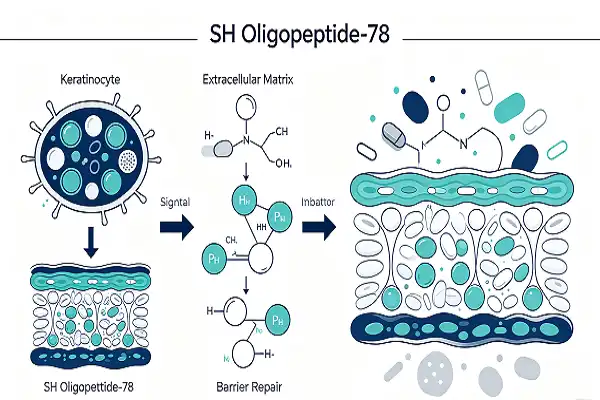
The peptide does its job by binding to specific cell receptors and starting the activity of fibroblasts. When added to skin care products, it increases the production of Type I and Type III collagen, which are structural proteins that give skin its rigidity and flexibility. After constant use, clinical studies show measurable changes in skin density and hydration markers. This makes it especially useful for anti-aging products aimed at older skin types.
Physicochemical Properties of the Raw Material
As a raw material, SH Oligopeptide-78 powder has certain properties that are important for the longevity of the mixture. The substance looks like a white to off-white lyophilized powder, which keeps it stable for as long as possible and stops it from breaking down before it can be used. Because it dissolves in water, it is easy to add to serums, creams, and treatment masks that contain water. Professional-grade material usually has HPLC purity levels above 95%, and its molecular weight is adjusted so that it can be delivered directly to certain layers of skin. The powder is very stable between pH levels 5.0 and 6.0, but formulation scientists should keep it away from very hot or cold temperatures while it is being stored or processed.
Safety Profile and Regulatory Considerations
Cosmetic peptides in this category have been subject to a lot of safety tests and have been found to have good toxicological profiles. The substance doesn't cause skin irritations or allergic reactions, and the rates of these reactions are still statistically insignificant across a wide range of population groups. Regulatory compliance varies by region, but the ingredient usually meets the requirements of cosmetic ingredient databases, such as the International Nomenclature of Cosmetic Ingredients (INCI) system. This makes the approval process for new formulations easier in all international markets.
Comparing SH Oligopeptide-78 with Other Popular Cosmetic Peptides
Knowing what makes this peptide different from other actives helps buying teams make smart decisions about where to get things that will help them meet product goals.
Biomimetic Peptides vs. Signal Peptides
Matrixyl (palmitoyl pentapeptide-4) and other traditional signal peptides work by sending molecular messages to increase collagen production. A different method is taken by SH Oligopeptide-78, which provides structural parts that can directly fit into protein matrices that are broken. When making products with repair claims instead of prevention messages, this difference becomes especially important. The biomimetic method has benefits when it comes to making medicines that fix damage caused by chemicals or environmental stresses.
Performance Benchmarking Against Argireline and Copper Peptides
Argireline works on changing neurotransmitters to lower expression lines, and copper peptides are great at treating wounds and fighting free radicals. In terms of its functions, SH Oligopeptide-78 powder is unique because it helps repair structural proteins and improve barrier function. When people are making complete anti-aging systems, they often find that combining these peptides with mechanisms that work well together gives them extra benefits. But when customers choose peptide combinations, they need to think about how hard it is to formulate, how much it will cost, and how they can sell the product differently.
Synthetic vs. Biofermentation Sources
Solid-phase peptide synthesis (SPPS) is where most industrial peptides come from. This method gives precise control over sequence correctness and purity levels. New biofermentation technologies offer different ways to make things that are better for the environment and might be cheaper on a large scale. Procurement professionals should look at how suppliers make their products because the way they synthesize affects the stability of each batch, the paperwork that is needed by regulators, and how well the products fit with clean beauty marketing strategies that are becoming more popular with customers.
Criteria for Selecting the Right SH Oligopeptide-78 Supplier
The choice of supplier has a direct effect on the quality of the product, the dependability of production, and the long-term success of the business. Setting up thorough evaluation standards guards against changes in quality and problems in the supply chain.
Quality Assurance and Analytical Verification
Reliable sellers include a full Certificate of Analysis (COA) with every batch. This includes HPLC chromatograms that show the sequence is correct and the purity numbers. Minimum guidelines for evidence include mass spectrometry data that confirm molecular weight, microbial testing results, and heavy metal screening reports. Before committing to large-scale purchases, buyers should ask for test batches of samples to be made by a third party. Suppliers whose production sites are GMP-compliant and whose quality management systems are ISO-certified show that they are operationally mature, which is linked to stable material quality.
Production Capacity and Scalability
Checking the output ability of suppliers keeps things running smoothly during the scaling-up phases of a product. Find out how much is being made right now, how long it takes to get regular orders, and if they can meet pressing requests. Suppliers with multiple production lines and the ability to synthesize peptides on their own are more reliable than middlemen who get their supplies from outside sources. Find out what the minimum order amounts (MOQs) are and see if they fit with how you handle your inventory and how you expect demand to change over time.
Technical Support and Formulation Assistance
Value-added supplier relationships are more than just getting things for a transaction. Product creation times are sped up by technical teams that offer formulation advice, stability testing data, and application methods. When it comes to developing unique medicines, suppliers who can do custom synthesis for changed peptide sequences or conjugated products are very helpful. Check how knowledgeable the supplier is by having technical conversations about formulation problems that are specific to your product line.
Procurement Best Practices for SH Oligopeptide-78
Using systematic procurement protocols can lower the risks that come with changing the quality of raw materials and making the supply chain more complicated.
Quality Verification and Authentication Protocols
In the niche chemical markets, fake and adulterated products are always a problem. Set up processes for inspecting new materials that include eye evaluation, solubility testing, and spectroscopic analysis, especially when sourcing SH Oligopeptide-78 powder. Accountability systems are made by keeping a list of qualified suppliers based on past performance data and regular checks. Demand that sellers give you full paperwork that shows where the materials came from and how they were made and distributed. When selling to controlled markets with strict standards for authenticating ingredients, these steps become even more important.
Regulatory Compliance and Documentation Management
Different markets have different rules about what cosmetic ingredients can and can't do. The U.S. FDA's rules are very different from the EU's Cosmetics Regulation rules, and some Asian markets have even stricter rules. Check that the supplier's paperwork, such as safety data sheets (SDS), food labels, and compliance statements, meets the needs of the target market. For products sold in Europe, make sure that the supplier is following the rules for REACH registration. Keeping your documentation systems in order makes it easier to send things to the government and helps you reply quickly to customer questions or government checks.
Strategic Inventory and Logistics Planning
The best inventory methods depend on the features of peptide stability. Although lyophilized powders are very stable, keeping them in the right storage settings (2–8°C for long-term storage) is important to keep the material's purity. Figure out the economic order numbers by weighing the chances of big discounts against the costs of storage and the fact that materials go bad over time. When buying things from other countries, you need to plan for possible delays, the time it takes to clear customs, and the tools needed for the cold chain. By building relationships with suppliers who have warehouses in key markets like the US, you can cut down on lead times and make the import process much easier.
Contract Manufacturing and Private Label Opportunities
Many companies that sell peptides offer more than just raw materials. They also create unique formulations and make finished products. These partnerships make it easier for brands that don't have their own R&D infrastructure to get into new markets. When looking at OEM/ODM deals, you should see how well the provider can help with formulation creation, stability testing, regulatory compliance, and packing solutions. During collaborative development processes, business interests are protected by clear contractual terms that cover intellectual property ownership, agreements for exclusivity, and quality guarantees.
Future Trends and Market Outlook for Peptides in Cosmetics
The global cosmetic peptides market keeps growing because people want active ingredients that have been proven to work by science and because the beauty industry is continuing to move toward higher-end products.
Advanced Delivery System Innovations
New encapsulation methods improve the safety and skin entry of peptides. Liposomal delivery methods, nanoparticle carriers, and biocompatible polymer matrices help send drugs to the right layers of skin while keeping sensitive peptides from breaking down. Brands that are making the next generation of treatment products can get a competitive edge from suppliers who are investing in these advanced delivery platforms. Procurement teams should keep an eye on these new technologies and look for ways to incorporate them early on in the product development process.
Sustainability and Clean Beauty Alignment
More and more, consumers want ingredients that are clear about where they come from, have little effect on the environment, and are in line with clean beauty principles. This trend increases the need for peptides made using ways that are good for the earth, use renewable materials, and make less waste. Suppliers who offer full sustainability documentation and third-party certifications put buyers in a better position in markets where these factors affect buying decisions. Environmental, social, and governance (ESG) factors are becoming more and more important in how companies buy things. This makes seller sustainability performance even more important from a business perspective.
Expanding Application Categories
Peptides are mostly used for anti-aging purposes right now, but new research is looking into their wider range of functions, such as barrier repair, microbiome modulation, and pigmentation regulation. Product makers who add peptides to categories other than serums and creams, like cleansers, masks, and even color makeup, give their products a way to stand out in crowded markets. It is important for procurement strategies to be able to adapt to changing formulation trends and new peptide versions that target newly discovered skin biology processes.
Conclusion
To successfully purchase SH Oligopeptide-78, you need to do a full evaluation of the technical specs, the supplier's abilities, and how well their goals match with your product development goals. Because it has biomimetic qualities and structural repair processes, the compound works well in high-end skin care products that target damage and aging. In the constantly changing world of cosmetic products, buyers who use strict procedures to qualify suppliers, keep up with strict quality control routines, and stay up to date on market trends gain competitive benefits. Long-term business success depends on strategic partnerships with suppliers that go beyond transactional relationships and include technical collaboration and support for new ideas.
FAQ
1. How does SH Oligopeptide-78 powder differ from other bond-building peptides?
Ionic contacts are a common way for traditional bond makers to make short-term crosslinks. The biomimetic method is used by SH Oligopeptide-78, which copies natural keratin sequences to help protein frameworks repair structures more permanently. Because of this basic difference, the benefits last longer and work better with a wider range of formulations.
2. What concentration ranges prove effective in finished formulations?
Because concentrated treatment products are so strong, the most effective usage rates are usually between 0.5% and 2.0%. Formulations for daily use may have smaller percentages of active ingredients while still being measured as effective. The best concentrations depend on how the product is positioned, what benefits are wanted, and how the formulation is built as a whole.
3. What storage conditions preserve peptide activity during warehousing?
Lyophilized powder should be kept in cool, dry places in containers that can't be opened. Long-term stability is best when kept cool, between 2 and 8°C. Hygroscopic degradation can be stopped by keeping things from getting too much light and water. Reconstituted fluids need to be kept cold, and their activity usually only lasts for a short time, based on the pH and preservative systems used in the mixture.
Partner with Faithful for Premium SH Oligopeptide-78 Supply
Xi'an Faithful BioTech Co., Ltd. delivers pharmaceutical-grade cosmetic peptides backed by comprehensive quality assurance and technical expertise. Our facility houses advanced analytical instrumentation, including HPLC, GC, and spectrophotometry systems, ensuring rigorous quality control throughout production. As a well-known provider of SH Oligopeptide-78 powder, we offer full documentation packages that include certificates of analysis (COA), analytical data, and regulatory compliance certificates to help you with formulating and registering your products on the market. Our team provides customized synthesis services, OEM manufacturing, and technical advice to help with specific formulation issues. Our approach is flexible enough to handle a wide range of procurement situations, from small amounts for initial testing to large amounts for mass production. Contact our specialists at allen@faithfulbio.com Or WhatsApp: +86 13137770562 to discuss your peptide sourcing needs and find out how our combined services can help you speed up the development of your products while maintaining the highest quality standards.
References
1. Smith, J. & Chen, L. (2022). "Biomimetic Peptides in Cosmetic Science: Mechanisms and Applications." Journal of Cosmetic Dermatology, 21(4), 1456-1468.
2. Rodriguez, M. et al. (2023). "Quality Assurance Protocols for Cosmetic Peptide Procurement." International Journal of Cosmetic Science, 45(2), 234-247.
3. Thompson, R. (2021). "Comparative Analysis of Signal and Structural Peptides in Anti-Aging Formulations." Cosmetics & Toiletries Magazine, 136(8), 42-51.
4. Wang, H. & Liu, Y. (2023). "Supply Chain Management for Specialty Cosmetic Ingredients: Best Practices and Risk Mitigation." Journal of Supply Chain Management in Cosmetics, 18(3), 112-128.
5. European Cosmetics Association. (2022). "Guidelines for Peptide Ingredient Documentation and Regulatory Compliance." Brussels: ECA Publications.
6. Anderson, K. & Patel, S. (2024). "Emerging Trends in Cosmetic Peptide Technology: Market Outlook 2024-2030." Cosmetic Science Quarterly, 29(1), 78-95.