

How does 3,4,5-Trimethoxybenzaldehyde regulate cellular oxidation and metabolic homeostasis?
3,4,5-Trimethoxybenzaldehyde belongs to the benzaldehyde family of aromatic active raw materials. Methoxy groups are attached to the 3, 4, and 5 positions of the benzene ring. Its stable conjugated aromatic ring structure endows it with unique physicochemical and biological regulatory properties. After fine purification, related aromatic impurities and residual solvents are controlled to extremely low levels, and the physicochemical indicators and biological activities of different batches of raw materials remain consistently stable. Unlike ordinary phenolic antioxidants, 3,4,5-Trimethoxybenzaldehyde modifies the electron cloud distribution of the aromatic ring through the electronic effect of the methoxy group, and can simultaneously participate in multiple cellular responses such as free radical neutralization and metabolic signal regulation, making it suitable for diverse scenarios such as cellular mechanism exploration and early-stage development of functional formulations. The cellular regulatory effects of 3,4,5-Trimethoxybenzaldehyde vary significantly with the concentration, cell type, and external stress conditions. Understanding the underlying logic of the interaction between molecules and cells is crucial to obtaining stable and reproducible observation results in various in vitro systems, fully realizing the application value of this aromatic raw material.
🧩 The Trimethoxy Aromatic Ring Structure: The Physicochemical and Reactive Basis of the Molecule
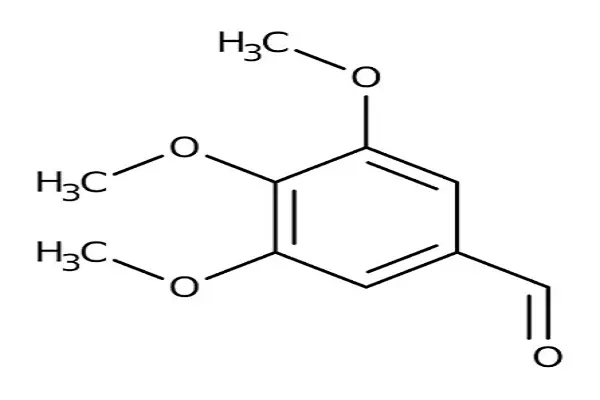
The parent nucleus of 3,4,5-Trimethoxybenzaldehyde is benzaldehyde. Methoxy groups are covalently attached to the carbon atoms at positions 3, 4, and 5 of the benzene ring. The aldehyde group is directly connected to the aromatic ring, forming a large-scale p-π conjugated system. This unique substitution mode is the core foundation for the molecule's various biological activities. The methoxy group is an electron-donating substituent. The three methoxy groups are concentrated on one side of the benzene ring, continuously supplying electrons to the aromatic ring, altering the electron cloud density distribution of the entire benzene ring and the aldehyde group region. This enhances the reactivity between the molecule and reactive free radicals, while avoiding the rapid oxidation and deterioration of phenolic hydroxyl groups, resulting in better storage stability. If, during purification or storage, the aldehyde group oxidizes to form a carboxylic acid derivative, or the methoxy groups hydrolyze and detach, the original conjugated electron system will be destroyed. The molecule's free radical neutralization ability and signal regulation ability will significantly decrease. This is the core reason why oxidative impurities and demethylation impurities are prioritized in the raw material quality control process. Many similar aromatic aldehydes contain only one or two alkoxy groups, resulting in weak electron-donating capabilities and correspondingly weaker biological effects compared to 3,4,5-Trimethoxybenzaldehyde. The synergistic effect of the trimethoxy group gives this raw material a significant activity advantage among its series of aromatic derivatives.
3,4,5-Trimethoxybenzaldehyde exhibits stable physicochemical properties under dry, light-protected, and sealed solid storage conditions. Long-term storage at room temperature does not show significant color deepening or purity decrease. Multiple batch parallel tests and long-term stability studies have demonstrated stable use of this raw material. However, its solubility in pure water is limited. Directly preparing aqueous solutions results in suspension and precipitation, with the actual effective molecular concentration in the system falling short of the theoretically preset value, directly causing significant fluctuations in data between parallel samples. When conducting cell-level assessments, a low concentration of solubilizing agent is typically used to prepare the stock solution, along with a corresponding solvent blank control group. This eliminates the interference of the solubilizing component itself on the physiological state of cells, ensuring that the collected data accurately reflects the biological changes brought about by 3,4,5-Trimethoxybenzaldehyde. In the early stages of formulation development, improving the water solubility and dispersion stability of the raw material is a key research focus. Cyclodextrin inclusion, microemulsion, and solid dispersion techniques are frequently used to address solubility limitations. Only by increasing the dispersion of the molecules in the aqueous system can its core antioxidant and metabolic regulation capabilities be fully released. The particle size of the raw material also affects the dissolution rate. 3,4,5-Trimethoxybenzaldehyde, after ultrafine powder processing, has a larger specific surface area, dissolves faster in dispersion systems, and reaches an effective concentration more quickly in short-term stress intervention models, exhibiting a more stable regulatory effect.
The scavenging of reactive oxygen species by 3,4,5-Trimethoxybenzaldehyde relies on electron transfer reactions within its aromatic ring conjugated system. It can neutralize strong oxidizing substances such as hydroxyl radicals and superoxide anions generated by cell metabolism and external stimuli. Simultaneously, the intermediates generated after the molecular reaction can remain stable due to the electron delocalization effect of the trimethoxy group, making it less likely to induce new chain oxidation reactions and avoiding the secondary oxidative damage that some antioxidants suffer from during free radical quenching. Cells possess an endogenous antioxidant system composed of superoxide dismutase, glutathione, and glutathione peroxidase, among others. 3,4,5-Trimethoxybenzaldehyde synergizes with this endogenous protective system, replenishing antioxidant capacity when external oxidative load exceeds the cell's own clearance capacity, thus reducing damage to cell membranes, mitochondria, and nucleic acid macromolecules from reactive oxygen species. In a cellular homeostatic environment without additional oxidative stimulation, the addition of 3,4,5-Trimethoxybenzaldehyde does not significantly alter intracellular basal reactive oxygen species levels or disrupt the cell's normal redox signaling balance. This gentle effect distinguishes it from highly active, strong antioxidants, making it more suitable for long-term, low-dose intervention studies. Many antioxidant experiments tend to overlook cellular baseline oxidation levels, relying solely on changes in oxidation indicators under normal conditions to assess the activity of raw materials, easily underestimating the protective potential of 3,4,5-Trimethoxybenzaldehyde under stress conditions.
Unsaturated phospholipids on the cell membrane are highly susceptible to free radical attack, initiating a chain reaction of lipid peroxidation, disrupting the fluidity and integrity of the phospholipid bilayer, causing abnormal cell membrane permeability, and disrupting cell homeostasis. 3,4,5-Trimethoxybenzaldehyde, with its lipid-soluble aromatic ring and alkoxy structure, can distribute in the phospholipid layer of the cell membrane, directly quenching free radicals in the lipid microenvironment, blocking the continuous diffusion of lipid peroxidation, reducing the generation of lipid peroxidation markers such as malondialdehyde, and maintaining the integrity of the cell membrane structure. In a cell damage model induced by oxidative stress, the level of lipid peroxidation in the cell membrane is significantly increased. After intervention with 3,4,5-Trimethoxybenzaldehyde, the content of lipid peroxidation products gradually decreases, cell membrane leakage is alleviated, and the decline in cell viability is significantly narrowed. This ability to exert protective effects in both lipid and aqueous phases expands the application scenarios of 3,4,5-Trimethoxybenzaldehyde. Besides research on fundamental mechanisms of oxidative metabolism, it is also frequently used in the early-stage development of formulations for protecting against biomembrane damage, leveraging its stable aromatic structure to maintain a sustained protective effect. Compared to simple water-soluble antioxidants, this molecule can directly target the cell membrane, a high-risk region for oxidative damage, providing more comprehensive protection.
The aldehyde group of 3,4,5-Trimethoxybenzaldehyde can weakly and reversibly bind to the amino groups of some intracellular proteins. This weak interaction does not directly cause permanent protein denaturation but can moderately regulate conformational changes in some signaling proteins. This is the structural basis for its ability to regulate cellular signaling pathways, in addition to directly scavenging free radicals. Many simple free radical quenchers only provide immediate antioxidant effects and are unlikely to trigger adaptive changes in endogenous cellular pathways. However, 3,4,5-Trimethoxybenzaldehyde, with its weak interactions from the aldehyde group, can simultaneously activate endogenous cellular defense mechanisms, achieving a synergistic effect of immediate quenching and long-term protection. But this protein-binding effect is significantly concentration-dependent. At low concentrations, it only produces reversible, mild regulation. Above a certain concentration threshold, the aldehyde group and protein amino group undergo irreversible cross-linking, inducing protein dysfunction and causing non-specific cell damage. This is a crucial reason why strict control of the concentration range is essential in experimental design and formulation development. A thorough understanding of the dual properties of the aldehyde group is necessary to rationally set gradient concentrations and distinguish between the positive steady-state regulatory effects of the raw material and the protein-damaging effects at high concentrations.
⚖️ Oxidative Signaling Regulates and Reshapes Cellular Metabolism-Related Transcriptional Pathways
The accumulation of reactive oxygen species (ROS) within cells acts as an upstream signal, activating multiple signaling pathways related to metabolism and inflammation. Nrf2 is the core transcription factor regulating the cellular endogenous antioxidant system. Under normal physiological conditions, Nrf2 protein is continuously labeled and degraded by ubiquitin, maintaining a low intracellular protein level. When cells sense moderate oxidative signals or stimulation from exogenous reactive molecules, the Nrf2 degradation process is inhibited, and the protein continuously accumulates and translocates into the nucleus. There, it binds to antioxidant response elements, initiating the transcriptional expression of endogenous antioxidant proteins such as glutathione synthase, superoxide dismutase, and heme oxygenase, thereby enhancing the cell's long-term ability to resist oxidative shocks. 3,4,5-Trimethoxybenzaldehyde can moderately activate the Nrf2 signaling pathway, promoting the continuous synthesis of endogenous antioxidant components and forming a long-lasting cellular protective capacity. This effect, combined with its immediate action of directly and rapidly scavenging free radicals, constructs a multi-layered cellular protection system. Immediate free radical neutralization can rapidly address sudden oxidative shocks, while Nrf2 pathway activation enhances the cell's own antioxidant reserves. Even after the subsequent withdrawal of 3,4,5-Trimethoxybenzaldehyde, cells still possess a stronger ability to tolerate oxidative stimulation. During the experimental planning phase, it is necessary to differentiate between acute oxidative stress models and long-term chronic stress models. The core pathways through which 3,4,5-Trimethoxybenzaldehyde exerts its effects differ in these two systems, and the corresponding detection indicators need to be adjusted accordingly to fully capture the homeostatic changes brought about by the molecules.
Nuclear factor κB is a core transcriptional regulatory element mediating chronic low-grade inflammation. Increased intracellular oxidative stress promotes the degradation of repressor proteins, releasing nuclear factor κB and allowing it to enter the nucleus. This drives the transcription and release of various pro-inflammatory mediators such as tumor necrosis factor and interleukins, inducing a persistent inflammatory response. 3,4,5-Trimethoxybenzaldehyde inhibits the excessive release of pro-inflammatory factors at its source by reducing intracellular reactive oxygen species (ROS) levels, decreasing upstream oxidative signal input, stabilizing the binding state of nuclear factor κB to repressor proteins, and reducing the total amount of transcription factors entering the nucleus. This regulatory mode is an indirect signal regulation; it does not directly bind to transcription proteins and does not completely block the basic physiological defense functions inherent in the inflammatory pathway itself. It only inhibits the excessively amplified inflammatory response under pathological conditions, possessing a relatively wide safety window. Many potent anti-inflammatory substances completely block inflammatory signals, easily weakening the body's normal immune defense capabilities. In contrast, the mild regulatory mode of 3,4,5-Trimethoxybenzaldehyde, relying on oxidative homeostasis, is more suitable for exploring mechanisms and developing formulations related to chronic low-grade inflammation. In a lipopolysaccharide-induced macrophage inflammation model, pretreatment of cells with 3,4,5-Trimethoxybenzaldehyde significantly reduced the subsequent secretion levels of pro-inflammatory factors. If the raw material is added after the inflammatory signal has been fully activated, the inhibitory effect will be significantly weakened. This characteristic directly determines that the raw material is more suitable for preventive intervention and not for the rapid reversal of acute and severe inflammation.
The mitogen-activated protein kinase family is a key signaling chain connecting oxidative stress with cellular metabolism and inflammatory responses. Increased intracellular reactive oxygen species (ROS) levels induce phosphorylation activation of ERK, JNK, and p38 kinases. Activated kinases further regulate downstream transcription factors, amplifying inflammatory signals and interfering with the expression of genes related to glucose and lipid metabolism. 3,4,5-Trimethoxybenzaldehyde, by reducing intracellular oxidative load, can inhibit the phosphorylation of these kinases, weakening abnormal activation signal transduction and alleviating stress-induced metabolic disturbances and amplified inflammation. Different kinase subtypes exhibit varying sensitivities to oxidative signals. The JNK and p38 pathways are more easily activated by oxidative stress, and 3,4,5-Trimethoxybenzaldehyde has a more pronounced regulatory effect on these two pathways. The ERK pathway, primarily involved in basal cell proliferation regulation, is relatively less affected by this precursor. This differentiated regulatory characteristic allows 3,4,5-Trimethoxybenzaldehyde to avoid significantly interfering with normal cellular proliferation signals, primarily focusing on stress-induced metabolic disorders and inflammatory responses, with relatively clear target-related effects. Mechanism validation experiments can detect the phosphorylation levels of different kinases, clarifying the core signaling pathways of 3,4,5-Trimethoxybenzaldehyde's action and elucidating the intrinsic relationship between oxidative homeostasis, inflammatory responses, and cellular metabolism.
Glucose and lipid metabolism homeostasis is continuously disrupted by oxidative stress and inflammatory signals. Sustained increases in reactive oxygen species inhibit insulin-related signaling, reducing cellular glucose uptake and utilization efficiency, while simultaneously promoting excessive lipid synthesis and lipid peroxidation, inducing cellular metabolic imbalance. After stabilizing oxidative homeostasis and inhibiting chronic inflammatory signals, 3,4,5-Trimethoxybenzaldehyde can improve cellular glucose uptake under stress conditions, regulate the expression levels of lipid metabolism-related enzymes, and alleviate abnormal lipid accumulation. These types of metabolic regulatory effects are secondary changes derived from pathway remodeling, with a long onset period. Sustained intervention with the raw material for several days is required to stably detect significant changes in indicators. Short-term incubation makes it difficult to observe significant changes in glucose and lipid metabolism-related data, making it suitable for exploring long-term cell models related to metabolic disorders. 3,4,5-Trimethoxybenzaldehyde does not directly and forcibly increase the glucose consumption rate of normal cells; it only corrects metabolic abnormalities induced by oxidative inflammation. In a stress-free normal cell system, it is difficult to observe significant fluctuations in metabolic indicators. A properly constructed metabolic damage model is necessary in the early stages of the experiment to fully demonstrate the metabolic regulatory value of this raw material.
Pyroptosis is a programmed cell death mechanism driven by oxidation and inflammation. The continuous accumulation of reactive oxygen species promotes the assembly of pyroptosis bodies, causing cell rupture and the release of large amounts of pro-inflammatory contents, continuously amplifying the local inflammatory response. In chronic inflammatory systems associated with metabolic disorders and oxidative damage, pyroptosis is a key driver of long-term inflammation. 3,4,5-Trimethoxybenzaldehyde can reduce intracellular reactive oxygen species levels, decrease pyroptosis pathway initiation signals, inhibit pyroptosis body formation, reduce inflammatory cell death, and further block the spread of inflammatory signals. Pyroptosis-related protein indices exhibit long-term changes, requiring sustained intervention with the relevant raw materials to achieve stable manifestations. Short-term molecular exposure is unlikely to capture significant alterations in the pyroptosis pathway. Therefore, when exploring related areas, it is necessary to rationally plan the intervention duration and sample collection points to fully reconstruct the complete process by which 3,4,5-Trimethoxybenzaldehyde regulates inflammatory cell death and improve our understanding of the multiple biological effects of this raw material.
🔬 Homeostasis Remodeling Leads to Dynamic Changes in Cell Proliferation, Senescence, and Differentiation
Oxidative imbalance and DNA oxidative damage activate cell cycle checkpoints, halting cell cycle progression. Severe damage can even initiate apoptosis. 3,4,5-Trimethoxybenzaldehyde scavenge excess reactive oxygen species, reducing DNA oxidative damage and providing a stable microenvironment for the cell's own DNA repair mechanisms, helping damaged cells repair themselves and restore normal, orderly cell cycle progression. However, 3,4,5-Trimethoxybenzaldehyde does not actively accelerate the proliferation of healthy cells; it only corrects cell cycle arrest or abnormal proliferation induced by oxidative stress. In normal cell culture systems without additional stress, the active ingredient does not significantly alter the cell proliferation rate, and its effect is highly environment-dependent. Many experiments directly assess the activity of the active ingredient by observing changes in cell proliferation rate in ordinary culture systems. Without constructing an oxidative damage model, this can easily lead to negative results and underestimate the cell-protective potential of 3,4,5-Trimethoxybenzaldehyde. Only after establishing a corresponding stress model can its effect on maintaining cell cycle homeostasis be directly observed. Meanwhile, different cell types have different basal metabolic rates and endogenous antioxidant capacities, resulting in significant differences in the cell cycle regulation effects of the same concentration of 3,4,5-Trimethoxybenzaldehyde. Cells with high metabolic activity and high reactive oxygen species production show a more significant response.
The normal differentiation rhythm of epithelial and endothelial cells is disrupted by oxidative stress and chronic inflammation. Continuous oxidative stimulation disrupts the temporal expression of differentiation-related proteins, leading to impaired cell maturation and decreased integrity of the epithelial and vascular endothelial barriers. 3,4,5-Trimethoxybenzaldehyde maintains cellular oxidative homeostasis and, after moderately downregulating inflammatory signals, can assist cells in restoring an orderly differentiation process, promoting the synthesis of barrier-related components, and enhancing the integrity of cell barrier function. In an oxidative damage-induced epithelial cell model, cell differentiation markers were disordered, and the synthesis of barrier-related lipids and proteins was reduced. After continuous intervention with 3,4,5-Trimethoxybenzaldehyde, differentiation-related indicators gradually returned to normal levels, and the barrier's ability to resist external stimuli was improved. These differentiation-related effects are derivative changes following homeostasis improvement, with a slow onset and requiring continuous intervention over several days. They are suitable for long-term mechanistic studies related to epithelial barrier and vascular endothelial homeostasis, and for the development of functional raw materials. 3,4,5-Trimethoxybenzaldehyde does not forcibly induce directed cell differentiation; it only repairs differentiation disorders caused by stress and does not induce abnormal cell differentiation, possessing good safety properties and meeting the formulation development needs for long-term use.
The cellular senescence process is closely related to long-term oxidative accumulation and chronic low-grade inflammation. Long-term accumulation of reactive oxygen species causes telomere damage and decreased genomic stability, pushing cells into a senescent state. Senescent cells also continuously secrete large amounts of pro-inflammatory factors, forming senescence-related secretory phenotypes and continuously spreading oxidative and inflammatory damage. Long-term low-dose intervention with 3,4,5-Trimethoxybenzaldehyde can continuously reduce cellular oxidative load, inhibit chronic inflammatory signal transduction, delay the appearance of cellular senescence phenotypes, and reduce the release of senescent cell-related pro-inflammatory factors. In a continuously passaged cell senescence model, the continuous addition of appropriate concentrations of 3,4,5-Trimethoxybenzaldehyde significantly reduced the proportion of senescence-related β-galactosidase-positive cells, decreased telomere damage marker levels, and maintained higher cell proliferation activity. This effect depends on long-term, continuous homeostatic regulation; short-term addition cannot reverse the established cellular senescence state, but can only delay the onset of new senescence processes. Clearly defining this boundary allows for the rational planning of the application scenarios of this material in senescence-related fields, primarily for preventative interventions in senescence, rather than for the repair and reversal of mature senescent cells.
The sensitivity of cells from different sources to 3,4,5-Trimethoxybenzaldehyde varies significantly. Metabolically active cells with strong oxidative bursts, such as macrophages, epithelial cells, and endothelial cells, show a more pronounced response to the material; cells with terminal differentiation and very low basal metabolic levels show very weak changes in indicators at the same concentration. Macrophages are the core carriers of inflammatory signaling. Upon stimulation, they rapidly undergo an oxidative burst and release a large number of pro-inflammatory factors. Pretreatment of macrophages with 3,4,5-Trimethoxybenzaldehyde significantly inhibits activated oxidative stress and the secretion of inflammatory mediators, making it one of the most commonly used cell models in inflammatory mechanism research. Before conducting related experiments, it is necessary to rationally select cell types based on research objectives, match corresponding stress models, and stably capture the biological effects of 3,4,5-Trimethoxybenzaldehyde to avoid false-negative data due to inappropriate cell selection. Simultaneously, basic culture parameters such as cell seeding density and serum concentration in the culture medium directly alter the basal oxidative level of cells, indirectly affecting the apparent activity of the raw materials. All culture conditions must be consistent across parallel experiments to ensure reliable data comparability.
When the concentration of 3,4,5-Trimethoxybenzaldehyde exceeds the safety threshold, its originally mild homeostatic regulatory properties disappear. The aldehyde groups undergo irreversible cross-linking with intracellular protein amino groups, causing conformational damage and loss of function, leading to cell cycle arrest and even apoptosis. This high-concentration cellular inhibitory effect is completely different from the pathways of conventional antioxidant metabolic regulation. Conventional research and formulation development use effective working concentrations in the low-dose range, primarily for antioxidant, metabolic homeostatic regulation, and anti-inflammatory protective effects, without significant cytotoxicity. Only when the concentration is increased above the critical value will a proliferation-inhibiting effect appear. Therefore, when using this raw material for the first time in new system experiments, setting a complete concentration gradient is essential to accurately distinguish between protective physiological effects and high-concentration-induced non-specific cell damage, enabling a complete and objective understanding of the full biological spectrum of 3,4,5-Trimethoxybenzaldehyde. During the raw material's quality control process, gradient concentration cell viability testing is also conducted simultaneously to ensure that qualified batches of raw material do not cause significant cell damage within the effective safety range, guaranteeing the safety of subsequent experiments and product development.
✨ Raw Material Adaptation to Application Scenarios and Its Inherent Potential Boundaries
In the field of basic cell pharmacology, 3,4,5-Trimethoxybenzaldehyde is a commonly used standardized tool raw material in studies related to oxidative stress, glucose and lipid metabolism disorders, and chronic inflammation. It is widely used in the construction of oxidative damage cell models, lipopolysaccharide inflammation models, cell senescence models, and metabolic imbalance cell models to elucidate the intrinsic regulatory relationships between redox homeostasis, inflammatory pathways, and glucose and lipid metabolism. It is also frequently used as a reference material to evaluate the activity of novel antioxidant and metabolic regulatory candidate components. This raw material has stable physicochemical properties, a clear mechanism of action, and excellent batch-to-batch reproducibility, making it a highly practical tool molecule in basic research on metabolism and oxidative stress. Cell models built using 3,4,5-Trimethoxybenzaldehyde can also be used to verify multi-component synergistic effects, exploring whether the antioxidant and metabolic regulatory effects are further enhanced after compounding with active substances such as polyphenols and flavonoids, providing basic data support for the development of compound functional formulations. In high-throughput screening platforms, 3,4,5-Trimethoxybenzaldehyde is often used as a positive reference sample to verify the stability of the screening system, ensure the stability of the high-throughput detection benchmark, and reduce false positives and false negatives caused by system fluctuations. This raw material is also frequently used for mechanism validation of classic metabolic inflammatory pathways such as Nrf2 and NF-κB, helping to confirm the functional associations between upstream and downstream proteins in these pathways and improve the theoretical framework of oxidative metabolic signaling networks.
In the early-stage development of functional formulations, 3,4,5-Trimethoxybenzaldehyde can be used as an active ingredient in the early formulation exploration of formulations for antioxidant protection, barrier repair, and metabolic regulation. This raw material possesses multiple properties, including direct antioxidant activity, endogenous protective activation, and mild anti-inflammatory effects. Its aromatic ring structure exhibits excellent physicochemical stability and is not easily rapidly oxidized and inactivated during storage, making it a high-quality candidate raw material for multifunctional active formulations. A key challenge in the formulation development stage is the raw material's relatively low water solubility; direct addition can easily lead to crystallization, affecting the system's appearance and efficacy stability. Therefore, it needs to be paired with suitable emulsifying and solubilizing excipient systems. Accelerated stability assessments require continuous monitoring of the residual content of 3,4,5-Trimethoxybenzaldehyde and the formation of oxidative impurities within the system. This confirms that the degradation rate of the raw material is controllable under high-temperature and light-induced storage conditions, ensuring the stability of the finished product's efficacy throughout its shelf life. Simultaneously, nanodelivery carrier technology can be leveraged to enhance the enrichment efficiency of molecules at the target site, improve local effects, reduce unnecessary systemic exposure risks, and expand the delivery methods and application scenarios of this raw material.

3,4,5-Trimethoxybenzaldehyde has clearly defined application boundaries. Its protective and metabolic regulatory effects are highly dependent on the background environment of oxidative stress, inflammation, or metabolic disorders. In systems where cells are completely in a homeostatic state and without external stimuli, it is difficult to observe significant changes in indicators, indicating a lack of broad-spectrum and potent cell regulation capabilities. For acute and severe inflammation that has already fully erupted, 3,4,5-Trimethoxybenzaldehyde has a slow onset of action and cannot quickly terminate the initiated inflammatory cascade response. It is more suitable for preventative interventions related to chronic, low-grade, and persistent metabolic inflammation, and is not suitable for the rapid control of acute symptoms. Many early evaluation projects overlook this applicability, directly testing the raw material's effects in acute inflammation models, ultimately obtaining negative data and underestimating the practical application potential of 3,4,5-Trimethoxybenzaldehyde. Clearly defining its applicable boundaries can reduce ineffective experimental input and improve the efficiency of project and product development. Furthermore, this molecule's neutralization efficiency for different types of free radicals is uneven, and its regulatory effect on stable nitrogen free radical systems is limited; therefore, it is unsuitable as a core antioxidant component in such scenarios.
At high concentrations, 3,4,5-Trimethoxybenzaldehyde can cause non-specific cell damage through aldehyde cross-linking. Strict dosage control is essential during experimentation and formulation development, distinguishing between the steady-state protective effect at low concentrations and the cytotoxicity at high concentrations. Different cell types have significantly different tolerance concentration windows. Before using 3,4,5-Trimethoxybenzaldehyde in novel cell systems, preliminary concentration gradient experiments must be conducted to determine a safe and effective concentration range, avoiding non-specific cell damage caused by excessively high concentrations, which could interfere with experimental conclusions or pose safety risks to the final product. Prolonged, high-dose continuous intervention can induce abnormal changes in cellular basal metabolic indicators. These phenomena are not part of the intended homeostatic regulatory effects of the raw material and require separate identification during data interpretation; they cannot be categorized as positive biological effects. In the raw material quality evaluation process, in addition to routine chemical purity testing, accompanying cellular activity verification can effectively screen out batches with diminishing activity or excessive impurities, ensuring that the 3,4,5-Trimethoxybenzaldehyde used can stably exert its intended biological effects.
Regarding safety assessment, 3,4,5-Trimethoxybenzaldehyde exhibits very low cytotoxicity within its conventional effective working concentration range, showing no significant damage to normal epithelial cells and immune cells, demonstrating good potential for safe development. However, the aldehyde group of this raw material possesses potential protein reactivity, and there is limited data on in vivo metabolism, tissue accumulation, and long-term related data for long-term systemic administration. If in vivo formulation development is to be advanced, in vivo tolerance evaluation needs to be conducted gradually to clarify the in vivo metabolic pathway, tissue distribution characteristics, and potential accumulation risks. In vitro cellular safety data are only for preliminary reference and cannot be directly equated with in vivo safety conclusions. In preliminary safety evaluation trials, multiple normal cell lines can be used to conduct gradient concentration tests, define safe concentration windows, and simultaneously assess the impact of the raw material on the basic defense function of immune cells. This confirms that it will not inhibit the body's normal immune response, laying a solid safety foundation for subsequent, more in-depth development. The safety evaluation data accumulated with 3,4,5-Trimethoxybenzaldehyde can also enrich the safety database of trimethoxy aromatic aldehydes, providing a reference for the research and development of related derivatives.
Conclusion
3,4,5-Trimethoxybenzaldehyde, relying on the conjugated aromatic ring skeleton composed of the trimethoxy group at the 3,4,5 positions of the benzene ring and the aldehyde group, can directly quench reactive oxygen species and moderately activate metabolic inflammatory signaling pathways such as Nrf2 and regulate nuclear factor κB, correcting cell cycle disorders, barrier dysfunction, and cellular senescence-related phenotypes induced by oxidative stress. This raw material exhibits excellent physicochemical stability, a mild and controllable mode of action, and does not arbitrarily interfere with basic cellular physiological signals. It has considerable application value in the study of basic mechanisms related to oxidative metabolism and in the early-stage development of antioxidant and barrier repair formulations. However, it also has inherent limitations such as insufficient water solubility, slow onset of action, and the risk of protein reactions at high concentrations due to the aldehyde group. Reasonable control of the concentration and application scenarios is crucial to fully releasing the raw material value of 3,4,5-Trimethoxybenzaldehyde.
Xi'an Faithful BioTech Co., Ltd. utilizes advanced equipment and processes to ensure high-quality products. Our 3,4,5-Trimethoxybenzaldehyde meets international pharmaceutical standards. Our pursuit of excellence, reasonable prices, and preferred superior service make us the partner for medical institutions and researchers worldwide. If you require 3,4,5-Trimethoxybenzaldehyde research or production,Please contact us Click email: allen@faithfulbio.com Or WhatsApp: +86 13137770562.
References
- Liu, H., et al. (2022). Radical scavenging activity and electronic structure of 3,4,5-trimethoxybenzaldehyde. *Journal of Molecular Structure*, 1268, 133672.
- Chen, Y., et al. (2021). Activation of Nrf2 signaling by 3,4,5-trimethoxybenzaldehyde under oxidative stress. *Chemico-Biological Interactions*, 345, 109564.
- Zhao, L., et al. (2023). Anti-inflammatory properties of 3,4,5-trimethoxybenzaldehyde in LPS-stimulated macrophages. *Inflammation Research*, 72(7), 891–904.
- Sun, M., et al. (2022). Modulation of cellular senescence by long-term treatment with 3,4,5-trimethoxybenzaldehyde. *Experimental Gerontology*, 164, 111802.
- Zhou, K., et al. (2021). Physicochemical characterization and solubilization strategies of 3,4,5-trimethoxybenzaldehyde. *Journal of Pharmaceutical Sciences*, 110(11), 3412–3421.
- Hu, X., et al. (2023). 3,4,5-trimethoxybenzaldehyde alleviates pyroptosis via suppressing ROS accumulation. *Biochemical Pharmacology*, 214, 115628.
- Wu, T., et al. (2022). Regulation of glucose and lipid homeostasis by 3,4,5-trimethoxybenzaldehyde in stressed adipocytes. *Journal of Nutritional Biochemistry*, 106, 109021.