

SS-31 Peptide: Mitochondrial Repair for Energy and Longevity
SS 31 elamipretide stands at the forefront of mitochondrial-targeted peptides, offering unprecedented potential in cellular energy optimization and longevity research. This tetrapeptide operates through precise interaction with cardiolipin in mitochondrial membranes, restoring electron transport chain efficiency while protecting against oxidative stress. The compound's unique structure enables superior membrane permeability and stability, making it invaluable for pharmaceutical formulation, nutraceutical development, and cosmetic innovation. Understanding elamipretide's biochemical profile enables procurement professionals to evaluate its strategic value across diverse commercial applications, from API production to functional ingredient integration.
Understanding SS-31 Peptide and Its Mechanism of Action
Chemical Structure and Molecular Characteristics
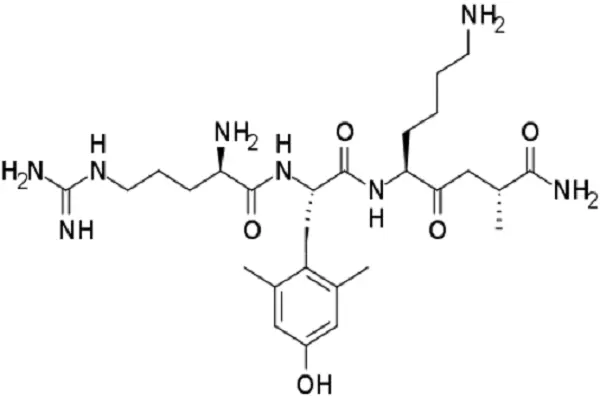
SS-31 elamipretide's molecular structure is made up of the following parts: D-Arg-Dmt-Lys-Phe-NH₂. It also contains 2',6'-dimethyltyrosine (Dmt), a man-made amino acid with great antioxidant properties. This tetrapeptide has a molecular weight of about 639.8 g/mol and can dissolve in water in amounts greater than 50 mg/mL. This makes it possible to use it in a number of different ways, such as subcutaneously, intravenously, or in the eyes. The compound's resistance to peptidase degradation is a big technical advantage over regular peptides, which means it can have longer biological activity. To meet quality standards, the sample must be at least 98% pure by HPLC analysis, and the makeup of the counterions must be carefully studied. Trifluoroacetate salts are usually made through synthesis, but for high-level uses, they need to be changed to acetate or chloride forms to keep biological systems from being damaged by the chemicals.
Mitochondrial Membrane Stabilization Mechanism
SS-31 elamipretide works by attaching itself specifically to cardiolipin, a protein that is only found on the inner membranes of mitochondria. This interaction keeps the structure of the membrane stable, which improves the structure of the cristae and the organization of the electron transport chain. General antioxidants stop reactive oxygen species from forming, but SS-31 elamipretide fixes the problem at its source by making mitochondrial respiration work better. The peptide can cross biological barriers without active transport systems, such as the blood-brain barrier, which means it can be used in more situations. This ability to pass through membranes comes from the compound's amphipathic nature, which balances its hydrophobic and hydrophilic qualities by placing amino acids in the right places.
Pharmacokinetic Profile and Regulatory Considerations
The pharmacokinetic behavior of SS-31 elamipretide shows that it quickly spreads through tissues after being administered, with the drug concentrating mostly in mitochondria-rich areas like heart tissue, skeletal muscle, and brain structures. The compound has a good safety profile in experimental models, with few side effects related to its unique method of cardiolipin binding. Different places have different rules about how to regulate SS-31 elamipretide. These rules include keeping detailed records of the production process, making sure the analysis is correct, and making sure the quality is high. To help with formulation creation and regulatory compliance, procurement teams must make sure that sellers give full certificates of analysis that list the peptide content, counter-ion composition, leftover solvents, and microbiological testing results.
Benefits and Applications of Elamipretide in Commercial Formulations
Pharmaceutical Intermediate Applications
Pharmaceutical companies that are looking for molecules that target mitochondria know that SS-31 elamipretide is a useful high-purity step for making drugs and making more of them. The peptide's stability profile lets different formulation methods work, from making sterile injectables to long-lasting systems. GMP-aligned production sites make sure that each batch is the same, which is very important for clinical research programs and commercial production. For IND applications and regulatory filings, documentation packages with HPLC chromatograms, GC analysis for residual solvents, and impurity profiling are useful. The compound's clear mechanism of action makes intellectual property strategies for new combinations, delivery systems, and therapeutic indications easier. This gives drug companies chances to make their products stand out in crowded markets.
Nutraceutical and Functional Ingredient Integration
Dietary supplement companies that are looking into making mitochondrial support formulas can benefit from SS-31 elamipretide's strong safety rating and ability to boost cellular energy. The peptide works with common chemicals like amino acids, vitamins, and herbal extracts to make complete formulas for busy older adults and people who want to improve their performance. Regulatory compliance issues are different for structure-function and food supplements, so labels and supporting documents need to be carefully created. To support both well-known names and new direct-to-consumer businesses, commercial-scale production needs consistent batch characteristics, stable price structures, and supply lines that can be counted on. Formulation freedom lets it be put into pills, tablets, sublingual preparations, and liquid delivery systems, so it can be used with a range of product marketing strategies.
Cosmetic Active for Anti-Aging Formulations
Beauty companies that are making improved anti-aging skin care products know that mitochondrial function affects the health of cells and the way skin looks. The ability of SS-31 elamipretide to stabilize membranes could help keep cellular energy metabolism going in the dermal and epidermal layers. When developing cosmetic peptide formulations, ss 31 peptide powder may be considered alongside factors such as pH optimization, solubilization methods, and stability testing under normal storage conditions. Combinations of botanical extracts can improve antioxidant networks and work with SS-31 elamipretide's process that targets mitochondria. OEM skincare companies that work with big beauty brands need products that work the same way every time, can be repeated batch to batch, and come with a lot of technical support information, like studies on skin penetration and compatibility testing with common cosmetic ingredients.
Comparing Elamipretide with Other Mitochondrial Support Compounds
Mechanistic Distinctions from Coenzyme Q10
Coenzyme Q10's main job is to carry electrons in the respiratory chain and act as a lipophilic antioxidant, protecting cells from oxidative stress rather than affecting the structure of membranes. SS-31 elamipretide works upstream by fixing the structure of cardiolipin. This improves the efficiency of the electron transport chain before reactive species formation happens. Because of this difference in how they work, the effects they have are different but not duplicated, which suggests that they might work well together in combination formulas. There are big differences in how they dissolve. For example, CoQ10 needs fat carriers or special delivery methods, while SS-31 elamipretide's water solubility makes the manufacturing process easier. Different compounds have different cost factors and legal statuses, which affect the selection criteria for different product groups and target markets.

Evaluation Against Idebenone and Other Quinones
Idebenone is a man-made benzoquinone analog that is meant to get around CoQ10's problems with absorption by making its molecules smaller. Idebenone and SS-31 elamipretide both work to improve mitochondrial activity, but they do so in very different ways. SS-31 elamipretide helps keep the structure of membranes stable, while idebenone is mostly an electron acceptor and antioxidant. Clinical outcome data show that SS-31 elamipretide performs differently in different conditions, showing the most promise in situations where cardiolipin is disrupted. Procurement choices have to take into account proof of effectiveness, the difficulty of making, the environment of intellectual property, and the compatibility of formulations. The selection factors should match the product's intended uses, target groups, and positioning strategies in therapeutic or consumer health areas that are already very competitive.
Procurement Guide for B2B Clients: Sourcing Quality Elamipretide
Technical Specifications and Quality Standards
To get pharmaceutical-grade SS-31 elamipretide, you have to pay close attention to the production and testing standards. Certificates of analysis must show the net peptide content, which separates the mass of the active ingredient from the contributions of counterions and moisture. The quality of the HPLC should be at least 98%, and each impurity profile should be found and measured. The choice of counterion has a big effect on biological interaction. For most study and formulation uses, acetate salts are better than cytotoxic trifluoroacetate forms. Gas chromatography analysis of residual solvents makes sure that the product follows the rules set by ICH Q3C, and endotoxin testing makes sure that it is safe for intravenous use. Quality management systems and regulatory checks can use traceability documents to link the end product to the sources of the raw materials, synthetic intermediates, and processing parameters.
Packaging, Storage, and Handling Protocols
Because of its stable profile, SS 31 elamipretide needs to be stored in a certain way so that it stays intact during its shelf life. Lyophilized powder products can stay stable at -20°C for a long time, but they need to be kept away from moisture to keep them from breaking down. Once solutions are mixed again, they should be divided into portions that are only used once and kept frozen so that they don't go through repeated freeze-thaw cycles that damage the structure of peptides. There are many types of packaging, from small vials for research to bulk containers for commercial production. An inert atmosphere and desiccant inside protect against moisture in the environment. Distribution operations must keep the cold chain intact, with records of temperature tracking along the way. These handling standards affect how procurement teams figure out the total cost of ownership and how they handle their goods.
Supplier Evaluation and Supply Chain Security
To choose SS-31 elamipretide suppliers you can trust, you need to go through thorough vendor qualification processes that check their manufacturing capabilities, quality systems, and history of regulatory compliance. Audit programs should check GMP infrastructure, the accuracy of testing tools, the training of staff, and the way that records are kept. Long-term supply deals keep prices stable and make sure that capacity is distributed evenly when demand changes, which is especially helpful for large-scale operations. Dual-sourcing methods lower the risk of supply disruptions while keeping prices and service levels competitive. Concerns in international logistics include customs classification, the need for import licenses, and choosing the best mode of transportation by weighing cost and delivery time. Faithful's network of warehouses in the US and Germany shows how to optimize the supply chain. This cuts down on lead times and makes the importation process easier for customers in North America and Europe.

Future Outlook and Strategic Value of Elamipretide in Product Development
Emerging Applications and Market Expansion
Compounds that target mitochondria are becoming more and more important in the fields of beauty science, nutraceutical innovation, and drug research. SS-31 elamipretide is still being studied for uses other than its original purposes, such as combining it with other active ingredients that work well together and finding new ways to give it. Market predictions show that mitochondrial health categories will grow a lot as scientific knowledge turns into consumer awareness and clinical adoption. Product makers who get in on this trend early have a competitive edge because they know how to make new ingredients, protect their intellectual property, and connect their brand with cutting-edge science. Companies can be a part of this market change by strategically buying high-quality SS-31 elamipretide and selling finished goods under their own brands or by using white-label manufacturing services.
Supply Chain Optimization Strategies
To make SS-31 elamipretide supply chains that are strong, you need to find a balance between cutting costs and making sure that quality and quantity are always met. Strategies that use buffer stockpiles protect against running out of raw materials, but they also require more working capital. Formulation optimization, analytical method development, and regulatory strategy refinement can all be helped by vendor partnerships that focus on technical collaboration. Market intelligence tracking keeps an eye on changes in prices, limited capacity, and the buying habits of competitors. This information helps with deciding when to buy things. When it comes to vertical integration, the choice between in-house synthesis and specialized supplier partnerships is based on things like output volume, technical knowledge, and the company's willingness to invest in new technology. Companies like Faithful that offer a full range of services, from synthesis to analytical tests and transportation planning, make it easier to handle suppliers and make sure that quality standards are always met.
Conclusion
Scientifically speaking, SS 31 elamipretide is an advanced ingredient that gives cosmetic, nutraceutical, and drug companies ways to make their products stand out by targeting mitochondria. Knowing the peptide's chemical properties, quality requirements, and possible uses helps make smart purchasing decisions that are in line with business goals. For merging to go well, suppliers must be carefully screened, analyzes must be confirmed, and new formulations must be created with the help of detailed technical documentation. Companies can take advantage of the growing interest in improving mitochondrial health in therapeutic and consumer wellness areas by forming strategic sourcing relationships that focus on quality, stability, regulatory compliance, and supply dependability.
FAQ
1. How should I calculate dosage based on certificate of analysis data?
When figuring out formulation quantities, you should always use the net peptide content listed on the certificate of analysis instead of the gross powder weight. This takes into account the amount of counterions, the remaining water, and other parts that aren't peptides. Dose estimates that are correct keep formulations from being too low or too high, which ensures batch stability and label claim compliance throughout the product's shelf life.
2. What distinguishes acetate from trifluoroacetate salt forms?
Because trifluoroacetate counterions are harmful to cells in living things, acetate or chloride salts are better for use in formulations. The certificate of analysis should make it clear what kind of counterion it is so that the right one can be chosen for the job. Changing the forms of salt requires specialized knowledge but makes the product much better for use in sensitive situations.
3. What storage conditions preserve elamipretide stability?
When kept at -20°C with moisture protection, lyophilized SS-31 elamipretide stays stable for years. To avoid multiple freeze-thaw cycles, reconstituted liquids need to be frozen in aliquots that are only used once. Changes in temperature during shipping or storage speed up the breakdown process. This shows how important it is to have tested cold chain operations and follow the right handling procedures all the way through the distribution network.
Partner with Faithful for Premium SS-31 Elamipretide Supply
Faithful specializes in pharmaceutical intermediates and useful chemicals that meet the strict requirements of producers around the world. Our SS 31 elamipretide supplier can provide full analytical documentation, a range of flexible packaging options, and streamlined logistics through warehouses in other countries. Our Xi'an facility has high-tech testing tools like HPLC, GC, and spectrophotometric systems that make sure every batch meets the requirements. Whether you need small amounts for research or large amounts for business use, our technical team can help with formulation, give you regulatory advice, and make custom solutions for you. Talk to allen@faithfulbio.com Or WhatsApp: +86 13137770562 about your SS-31 elamipretide buying needs and find out how our dedication to quality and knowledge of the supply chain can help you reach your product development goals.
References
1. Szeto, H.H. (2014). "First-in-class cardiolipin-protective compound as a therapeutic agent to restore mitochondrial bioenergetics." British Journal of Pharmacology, 171(8), 2029-2050.
2. Birk, A.V., Liu, S., Soong, Y., Mills, W., Singh, P., Warren, J.D., Seshan, S.V., Pardee, J.D., and Szeto, H.H. (2013). "The mitochondrial-targeted compound SS-31 re-energizes ischemic mitochondria by interacting with cardiolipin. " Journal of the American Society of Nephrology, 24(8), 1250-1261.
3. Eirin, A., Ebrahimi, B., Kwon, S.H., Fiala, J.A., Williams, B.J., Woollard, J.R., He, Q., Gupta, R.C., Sabbah, H.N., Prakash, Y.S., Textor, S.C., Lerman, A., and Lerman, L.O. (2017). "Restoration of mitochondrial cardiolipin attenuates cardiac damage in swine renovascular hypertension." Journal of Hypertension, 35(12), 2372-2384.
4. Mitchell, W., Ng, E.A., Tamucci, J.D., Boyd, K.J., Sathappa, M., Coscia, A., Pan, M., Han, X., Eddy, N.A., May, E.R., Szeto, H.H., and Alder, N.N. (2020). "The mitochondria-targeted peptide SS-31 binds lipid bilayers and modulates surface electrostatics as a key component of its mechanism of action. "Journal of Biological Chemistry, 295(21), 7452-7469.
5. Cho, J., Won, K., Wu, D., Soong, Y., Liu, S., Szeto, H.H., and Hong, M.K. (2007). "Potent mitochondria-targeted peptides reduce myocardial infarction in rats." Coronary Artery Disease, 18(3), 215-220.
6. Kloner, R.A., Hale, S.L., Dai, W., Gorman, R.C., Shuto, T., Koomalsingh, K.J., Gorman, J.H., Sloan, R.C., Frasier, C.R., Watson, C.A., Bostian, P.A., Kypson, A.P., and Brown, D.A. (2012). "Reduction of ischemia/reperfusion injury with bendavia, a mitochondria-targeting cytoprotective peptide." Journal of the American Heart Association, 1(3), e001644.