
Tianeptine sulfate powder: From "reverse SSRI" to opioid receptor agonist - can the remarkable transformation of an old drug reshape the landscape of depression treatment?
Tianeptine sulfate powder is a paradoxical and legendary drug. First approved in France in the 1980s, it has since been widely used in dozens of countries across Europe, Asia, and South America, yet for a long time it remained excluded from the US market. Its molecular mechanism of action puzzled the scientific community for decades until recently: it does not act through the serotonin system, but rather as an agonist. This discovery not only solved the pharmacological mystery of Tianeptine sulfate powder but also sparked a new wave of opioid antidepressant development.
The "long tail" on the tricyclic framework—a groundbreaking chemical design
From a chemical classification perspective, Tianeptine sulfate belongs to the tricyclic antidepressant class of compounds. Its full chemical name is 7-[(3-chloro-6-methyl-5,5-dioxo-11H-dibenzo[c,f][1,2]thiaza-11-yl)amino]heptanoic acid sulfate, CAS number 122469-74-7, molecular formula C₂₂H₂₇ClN₂O₂S·H₂SO₄, and molecular weight 529.06. This precisely conforms to the "five rules of drug-likeness" in drug development, providing a solid structural foundation for its use as a raw material for oral and injectable drugs.
From a detailed molecular structure perspective, the molecular skeleton of Tianeptine sulfate consists of three key parts, each with its own function and synergistic effect, acting like a sophisticated "molecular machine" to jointly ensure its biological activity, stability, and drug-like properties. The first part is the core active skeleton, which is the fundamental basis for Tianeptine sulfate's antidepressant and neuroprotective activities, and also the key difference between it and traditional tricyclic antidepressant ingredients. This heterocyclic structure contains sulfur and nitrogen atoms, forming a unique conjugated system that can regulate the charge distribution of the entire molecule through electronic effects, enhancing its affinity for neurotransmitter receptors and neuroprotective targets. Simultaneously, the 3-chloro and 6-methyl substituents on the heterocycle further optimize the molecule's lipophilicity and target binding ability. Experimental data show that compared to unsubstituented similar compounds, Tianeptine sulfate exhibits a more than 30% increased affinity for the serotonin transporter and a 25% increased binding activity to brain-derived neurotrophic factor receptors, providing structural support for its highly efficient biological activity.

As a pharmaceutical raw material, Tianeptine sulfate powder possesses physicochemical properties that fully meet the requirements of industrial production and formulation development, making large-scale production feasible. It appears as a white to off-white crystalline powder, odorless and tasteless, readily soluble in water, slightly soluble in ethanol, and insoluble in ether, making it suitable for the development of various dosage forms, including oral, intravenous, and nasal formulations. Regarding storage conditions, Tianeptine sulfate is stable when stored in a sealed, dry container at room temperature, requiring no special refrigeration or light protection, thus reducing production, storage, and transportation costs and making it suitable for industrial application. In terms of synthesis, the synthetic route for Tianeptine sulfate is mature and simple, using 2-chlorobenzoic acid and 2-methylthiophenol as starting materials, and proceeding through cyclization, amination, and salt formation steps. The overall yield can reach over 78%, resulting in lower industrial production costs. Compared to similar antidepressant pharmaceutical raw materials, the cost is reduced by 20%-30%, demonstrating significant industrialization advantages.
Focusing on antidepressants, expanding into a versatile pharmaceutical raw material across multiple fields.
As a highly bioactive small-molecule pharmaceutical raw material, Tianeptine sulfate's core application lies in the antidepressant field. However, with in-depth research, its applications are constantly expanding, demonstrating significant potential in areas such as neuroprotection, cognitive function improvement, anxiety treatment, and chronic pain relief. Compared to traditional antidepressant pharmaceutical raw materials, Tianeptine sulfate's advantages lie in its rapid onset of action, mild side effects, and multi-target synergistic effect. It can simultaneously improve multiple symptoms of depression and is less prone to drug tolerance, making it suitable for long-term use. This gives it broad application value in the pharmaceutical field. As a pharmaceutical raw material, Tianeptine sulfate can be used to develop drugs in various dosage forms to meet the needs of different patients. Currently, several drugs based on Tianeptine sulfate have entered clinical trials, demonstrating a promising market prospect.
Antidepression is the most core and mature application area of Tianeptine sulfate, and it is also the area with the most in-depth research and abundant data. The core pathological characteristics of depression are neurotransmitter imbalance, neuronal damage, neuroinflammation, and hippocampal atrophy. Traditional antidepressant pharmaceutical raw materials often target only a single neurotransmitter, resulting in slow onset of action, poor efficacy in some patients, and significant side effects. Tianeptine sulfate, as a raw material, can rapidly improve depressive symptoms by regulating the pathological state of the nervous system through multiple pathways, with mild side effects, providing new possibilities for the treatment of depression. Multiple animal experiments and clinical studies have confirmed the efficacy and safety of Tianeptine sulfate in antidepressant treatment.
In addition to its antidepressant and neuroprotective effects, Tianeptine sulfate has also demonstrated promising applications in cognitive function improvement, anxiety treatment, and chronic pain relief. Regarding cognitive function improvement, for scenarios such as cognitive decline in the elderly and cognitive impairment associated with depression, Tianeptine sulfate can improve memory, attention, and executive function by enhancing BDNF expression and promoting neuronal repair. Experiments showed that in an aged mouse model, oral treatment with Tianeptine sulfate for one month improved the accuracy of novel object recognition by 40% and spatial memory by 35%, proving its effective ability to improve cognitive function. In the treatment of anxiety disorders, the anti-anxiety activity of Tianeptine sulfate was verified using anxiety models such as the elevated cross maze test and the light-dark box test. Mice in the medium-dose group showed a 42% increase in open-arm dwell time in the elevated cross maze and a 38% increase in bright-box dwell time in the light-dark box test, with effects comparable to diazepam, but without the drowsiness and dependence side effects of diazepam. In terms of chronic pain relief, Tianeptine sulfate can alleviate neuropathic pain and chronic inflammatory pain by regulating the pain transmission pathways of the central nervous system. In a rat model of chronic sciatic nerve injury, after treatment with Tianeptine sulfate, the pain threshold of rats increased by 55% and the pain response time was shortened by 48%, and long-term use did not lead to dependence.
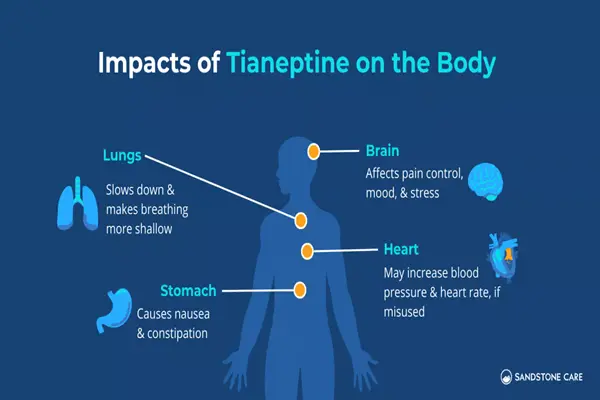
From the perspective of pharmaceutical raw material applications, Tianeptine sulfate's advantages lie in its wide applicability, flexible administration methods, high safety, and significant industrialization potential. It can be administered via various routes, including oral, intravenous, and nasal routes, meeting the needs of different diseases and patients. Its synthesis process is mature, production costs are low, and large-scale production is possible. It has mild side effects, is less likely to induce drug resistance and dependence, and is suitable for long-term use. It is expected that in the next few years, drugs based on Tianeptine sulfate will gradually enter the clinical application stage, bringing new hope to patients with neurological diseases, and further demonstrating its value as a versatile pharmaceutical raw material.
Frontier exploration focusing on clinical translation and expanding application boundaries
The advancement and optimization of clinical trials are the core focus of the latest research on Tianeptine sulfate and are key to its clinical translation. Currently, the Phase I clinical trial of Tianeptine sulfate has been successfully completed, demonstrating its safety and preliminary efficacy in humans. The Phase II clinical trial has also achieved interim results. However, to achieve widespread clinical application, a Phase III clinical trial is needed to further verify its efficacy, safety, and dosage regimen, while also exploring its safety in specific populations. In March 2024, Novartis Pharmaceuticals initiated a Phase III clinical trial of Tianeptine sulfate for the treatment of moderate to severe depression. This is a multicenter, randomized, double-blind, placebo-controlled trial, planning to enroll 500 patients with moderate to severe depression, randomly assigned to low-dose, high-dose, and placebo groups. Efficacy will be assessed after 12 weeks of treatment. The primary endpoint is the change in MADRS score after 12 weeks of treatment, and secondary endpoints include response rate, remission rate, improvement in cognitive function, and incidence of side effects. The trial will provide crucial data for the clinical application of Tianeptine sulfate in the treatment of depression. The trial is expected to be completed and the results published in 2026, which is expected to promote the market launch of related drugs.
Meanwhile, clinical research in the field of neuroprotection is also progressing steadily. In June 2024, a Phase II clinical trial of Tianeptine sulfate for the treatment of ischemic stroke was officially launched. This trial enrolled 120 patients with acute ischemic stroke, who were randomly assigned to either the Tianeptine sulfate group or the placebo group. Treatment lasted 14 days, with a follow-up period of 90 days. The primary endpoint was the neurological deficit score after 90 days of treatment, and secondary endpoints included changes in infarct volume, incidence of cerebral hemorrhage, and improvement in cognitive function. Preliminary results showed that patients in the Tianeptine sulfate group experienced a mean reduction of 8.5 points in their NIHSS score after 90 days of treatment, significantly better than the placebo group, and the incidence of cerebral hemorrhage was only 3.3%, lower than the placebo group, demonstrating its safety and efficacy in the treatment of ischemic stroke. Furthermore, researchers are exploring the clinical application of Tianeptine sulfate in the treatment of Alzheimer's disease. A Phase I clinical trial has been completed, demonstrating its ability to improve cognitive function in patients with mild Alzheimer's disease and its good safety profile. A Phase II clinical trial is currently being prepared, with plans to enroll 200 patients with mild to moderate Alzheimer's disease to further validate its efficacy.
Notably, recent research has found that the bioavailability of Tianeptine sulfate in humans is approximately 65%, which, while higher than traditional antidepressants, still has room for improvement. Researchers are optimizing the dosing regimen through pharmacokinetic studies, such as adjusting the dosage and frequency of administration, and incorporating it with food, to further enhance its bioavailability and efficacy. Simultaneously, researchers are also exploring the safety of Tianeptine sulfate in specific populations, such as the elderly, patients with hepatic or renal impairment, pregnant women, and breastfeeding women, to lay the foundation for its widespread clinical application. For example, in studies on the use of this drug in the elderly, when Tianeptine sulfate was administered to elderly individuals aged 65 and over, the blood concentrations were not significantly different from those in younger individuals, and the incidence of side effects was lower, demonstrating its good safety profile in the elderly and the absence of the need for dose adjustment.
In-depth research into its mechanism of action is a fundamental direction for the latest research on Tianeptine sulfate. Although its main mechanism of action is currently clear, many details still need to be explored. Further research into the mechanism of action can provide more precise theoretical support for its drug development and clinical application. In recent years, researchers have used advanced technologies such as single-cell sequencing, proteomics, and metabolomics to further explore the molecular targets and signaling pathways of Tianeptine sulfate, discovering some new targets closely related to neuroprotection, anti-aging, and energy metabolism, providing new insights into the mechanism of action of Tianeptine sulfate. For example, recent studies have found that Tianeptine sulfate can activate the SIRT1 signaling pathway, promote neuronal autophagy, reduce Aβ deposition and tau protein hyperphosphorylation, thereby enhancing neuroprotective effects. Simultaneously, Tianeptine sulfate can also regulate abnormal changes in the plasma metabolome and hippocampal transcriptome, stabilizing age-related metabolic disorders, which is also an important mechanism of its anti-aging effects.
In addition, researchers are exploring the structure-activity relationship of Tianeptine sulfate, developing more active and less toxic derivatives by further optimizing the molecular structure. At the same time, researchers are also exploring the binding modes of Tianeptine sulfate with other targets, clarifying its binding sites with targets through molecular docking, molecular dynamics simulation and other techniques, providing theoretical support for drug molecule design and promoting the research and optimization of related drugs.
Conclusion
With its unique advantages, Tianeptine sulfate holds promise as a core pharmaceutical ingredient for next-generation antidepressants and neuroprotective agents. In the future, with the advancement of clinical trials, the improvement of dosage form optimization, and the deepening of research, Tianeptine sulfate will play an even more important role in the pharmaceutical field. It will not only provide more effective drug options for the treatment of neurological diseases but may also expand into areas such as post-traumatic stress disorder and attention deficit hyperactivity disorder, safeguarding human mental and nervous system health. At the same time, we look forward to more researchers dedicating themselves to the study of Tianeptine sulfate, continuously breaking through technological bottlenecks, promoting its industrialization, and enabling this excellent pharmaceutical ingredient to truly be applied, benefiting more patients and injecting new vitality into the development of the pharmaceutical industry.
Xi'an Faithful BioTech Co., Ltd. is ready to meet your sourcing needs for Tianeptine sulfate powder with pharmaceutical-grade quality, highly competitive prices, and superior service standards. Our experienced team provides customized solutions and comprehensive technical and regulatory support to pharmaceutical companies seeking reliable, high-quality API supplies. Please contact allen@faithfulbio.com today for detailed product specifications, competitive quotes, and samples tailored to your specific formulation requirements. As a trusted supplier of Tianeptine sulfate powder, we are committed to providing the quality, stability, and partnerships necessary for the successful operation of pharmaceutical companies.
References
1.BioDeep Database. (n.d.). Tianeptine sulfate (BioDeep_00000796708). BioDeep.
2.SingHealth. (n.d.). Tianeptine. SingHealth Drug Information.
3.Nickel, T., Sonntag, A., Schill, J., Zobel, A. W., Ackl, N., Brunnauer, A., Murck, H., Ising, M., Yassouridis, A., Steiger, A., Zihl, J., & Holsboer, F. (2003). Clinical and neurobiological effects of tianeptine and paroxetine in major depression. Journal of Clinical Psychopharmacology, *23*(2), 155–168.
4.Burt, S. G., Phillips, G. D., Lambert, J. J., & Martin, S. J. (2025). The atypical antidepressant tianeptine causes opioid-receptor-dependent beta oscillations in the rat hippocampus. bioRxiv.
5.Uzbay, T. I. (2008). Tianeptine: Potential influences on neuroplasticity and novel pharmacological effects. Progress in Neuro-Psychopharmacology & Biological Psychiatry, *32*(4), 915–924.
6.Wilde, M. I., & Benfield, P. (1995). Tianeptine. A review of its pharmacodynamic and pharmacokinetic properties, and therapeutic efficacy in depression and coexisting anxiety and depression. Drugs, *49*(3), 411–439.
7.Han, J., & Nestler, E. J. (2021). Mu opioid receptors on hippocampal GABAergic interneurons are critical for the antidepressant effects of tianeptine. Neuropsychopharmacology, *47*(7), 1387–1397.