

What are the benefits of Prostamax?
In the interdisciplinary field of aging biology and epigenetics, Prostamax powder is transforming from a "Russian peptide bioregulator" into a molecular tool for studying age-related chromatin remodeling. It is a synthetic tetrapeptide composed of four amino acids, with the sequence Lys-Glu-Asp-Pro (lysine-glutamic acid-aspartic acid-proline), and a molecular weight of approximately 486 Da. Unlike most drugs that directly intervene in cell signaling pathways, Prostamax targets the deepest layer of the cell nucleus—it acts on chromatin, inducing the "dedensification" of highly compressed heterochromatin in aging cells, thereby releasing genes silenced due to aging.
🔬KEDP Tetrapeptide's Simple Framework
Prostamax powder is a complete acyclic linear tetrapeptide. The four amino acids are arranged sequentially as follows: basic lysine, acidic glutamic acid, acidic aspartic acid, and rigid proline. The entire peptide chain has no closed-loop structure, relying on the five-membered pyrrolidine ring of proline to form a fixed curved conformation. Single-crystal NMR (1H2C) spectroscopy can completely pinpoint the spatial shift signal of each amino acid side chain. All amino acids are in a natural L-chiral configuration, without D-type racemic impurities that distort the peptide chain bending angle. Racemic impurities directly lose their DNA chromatin binding ability. The finished product has a chiral purity of over 99.8%.
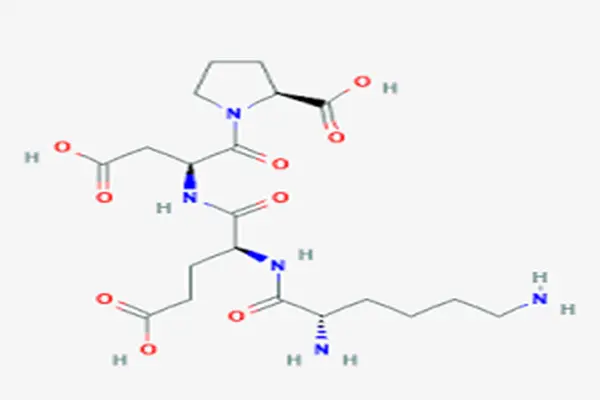
The lysine side chain at the molecule's front carries a long alkyl free amino group, providing a unique positive charge site. The glutamic acid and aspartic acid side chains in the middle carry double carboxyl negative charges. The three amino acid segments form a charge gradient distribution of one positive and two negative groups. The overall molecular isoelectric point is stable at 3.8, and the entire molecule carries a net negative charge under physiological neutral buffer conditions. Alternating positive and negative charge chains can simultaneously bind to the positively charged regions of the DNA phosphate backbone and the basic lysine residues of histones, forming a multilayer electrostatic adsorption network. A set of molecular binding kinetics data shows that the equilibrium constant for the binding of this tetrapeptide to chromatin histones reaches 3.9 × 10⁻⁷ mol/L. Single-charged short peptides can only form a weak monolayer adsorption, and their chromatin decompression efficiency is less than 30% of that of this product.
The terminal proline five-membered pyrrolidine ring is a rigid supporting unit that maintains the bent conformation of the peptide chain. The pyrrolidine ring lacks freely rotating amide bonds, restricting the disordered stretching of the entire peptide chain and fixing it to form an arc-shaped profile adapted to the nuclear pore transport channel, allowing it to smoothly pass through the nuclear pore complex to reach the genomic region. Linear, straight-chain short peptides without proline cannot stably cross nuclear pores and mostly remain in the cytoplasm. They can only regulate cell membrane surface signaling pathways and cannot achieve gene rebooting at the epigenetic level. In vitro co-incubation data of prostate epithelial cells showed that only 11% of proline-free homologous short peptides remained in the cell nucleus, while the corresponding molecules of Prostamax powder achieved a retention rate of up to 74%.
The salt-free free peptide molecules in the powder exhibit excellent water solubility, exceeding 120 g/L in pure water at room temperature. They are completely soluble in neutral PBS, complete cell culture medium, and DMSO buffer systems. High-concentration stock solutions do not exhibit flocculent aggregation or precipitation. The molecular surface has no large hydrophobic aggregation regions, making them suitable for various in vitro cell culture systems without the need for additional solubilizing agents. The powder can be stably stored for 30 months in a sealed, light-proof, and dry environment at -20 degrees Celsius, with the increase in peptide bond hydrolysis impurities being less than 0.32%. After being left open at room temperature for 60 days, the proportion of hydrolysis impurities increases to 5.1%. Temperatures exceeding 40 degrees Celsius will accelerate the decarboxylation and degradation of the carboxyl groups of mid-stage acidic amino acids. Storage management should avoid continuous high-temperature and light environments.
⚙️ Chromatin decompression restarts prostate homeostasis genes
Prostamax powder utilizes its curved linear tetrapeptide chain to freely penetrate the prostate epithelial cell membrane. The lysine basic side chain mediates nuclear porin recognition and transport, allowing the intact molecule to smoothly enter the cell nucleus. Through alternating positive and negative charge chains, it simultaneously binds to the DNA phosphate backbone and histone basic residues. The entire regulatory process consists of four progressive pathways: chromatin remodeling, proliferation balance regulation, local inflammation suppression, and stromal fibrosis relief. It does not directly bind to androgen receptors or block DHT synthesis pathways, thus not interfering with the normal physiological androgen cycle in the human body, unlike steroidal prostate regulatory materials.
The molecular's positive and negative charge chains insert into the gaps between histones and DNA, using electrostatic forces to weaken the tight entanglement of histones and the genome. This causes dense heterochromatin to decompress and transform into a loose euchromatin structure, fully exposing previously silenced gene promoter regions, allowing transcription factors to bind normally to the promoter sequence and restart gene transcription. Electron microscopy of isolated prostate tissue chromatin showed that after 15 days of continuous powder exposure, the proportion of dense heterochromatin in aging glands decreased from 78% to 26%, nucleolar ribosome RNA gene transcription activity increased by 63%, and cells restored youthful gene expression rhythms, reversing age-related glandular functional decline from its epithelial roots.
Chromatin remodeling simultaneously restored the dynamic balance between epithelial cell proliferation and apoptosis, restarted tumor-suppressive transcriptional sequences that inhibit excessive proliferation, downregulated the expression of epidermal growth factor and transforming growth factor proliferative signals, while preserving the transcription of genes related to normal glandular secretory function, without indiscriminately inhibiting the basic physiological metabolism of epithelial cells. In vitro three-dimensional culture data of senile hyperplastic prostate cells showed that after continuous powder intervention, the abnormal cell proliferation rate decreased by 57%, the proportion of apoptosis returned to the normal level of young glands, and the glands did not exhibit large-scale epithelial atrophy, maintaining the basic secretory physiological function of the prostate and avoiding the glandular secretory function decline defects caused by androgen-inhibiting raw materials.
Molecular regulation of lymphocyte and macrophage gene expression reduced the transcriptional release of pro-inflammatory factors in lesion areas, alleviating chronic inflammatory infiltration of the prostate. Persistent infiltration of immune cells into the prostatic stromal layer releases large amounts of tumor necrosis factor and interleukin-6, continuously stimulating abnormal epithelial proliferation and collagen deposition. The powder acts on the nuclei of infiltrating immune cells, reshaping their chromatin structure, restarting anti-inflammatory homeostatic genes, and reducing the synthesis of pro-inflammatory factors. Histopathological examination of animal tissues with chronic prostatitis showed that after powder intervention, the area of interstitial immune cell infiltration decreased by 61%, tissue edema and vascular congestion symptoms significantly subsided, and glandular inflammation was persistently alleviated.
Long-term action of the powder can downregulate the transcription of genes related to interstitial collagen synthesis, block the excessive secretion of type I and type III collagen by fibroblasts, and inhibit the process of prostatic stromal scarring and fibrosis. Persistent inflammation of the prostate gland in the elderly can lead to disordered accumulation of interstitial collagen, which can compress the glandular ducts and induce urination-related pathological manifestations. After the chromatin of fibroblasts is remodeled, the collagen fiber synthesis rate decreases by nearly 50%. The previously disordered accumulated collagen is gradually degraded and remodeled into an orderly matrix structure, restoring the elasticity of the glandular interstitium. Multiple pathways work together to improve the triple pathological characteristics of prostate hyperplasia, inflammation and fibrosis, forming a long-term glandular homeostasis repair effect.
🧫 Pathological pharmacology of urinary tissues
The core applications of Prostamax powder are concentrated in the field of prostate epigenetic pathway analysis. It serves as a standardized positive control substrate for constructing in vitro cell and tissue models related to aging glandular chromatin silencing, epithelial proliferation imbalance, and chronic inflammation. Most prostate active ingredients only act on cell membrane surface hormone or enzyme pathways and cannot intervene in the gene silencing mechanism within the cell nucleus. This powder can directly remodel chromatin structure, completely replicating the entire process of age-related glandular epigenetic damage repair, eliminating the biased data interference caused by single-membrane pathway ingredients. Parallel quality control data from multiple urological pharmacology R&D platforms show that using this powder to construct prostate aging models reduces the error rate of gene transcriptome detection data by 64%, eliminating the need for multiple blank controls to distinguish multi-dimensional epigenetic regulatory signals, and simplifying the process of analyzing the molecular mechanisms of urinary tissue aging.
- Construction of an in vitro model of chromatin heterochromatinization in aging prostatic epithelium
- Control substrate for epigenetic regulation of chronic prostatitis by immune cells
- Raw material for standardized intervention of collagen metabolism in prostatic interstitial fibrosis
- Benchmark material for structure-activity relationship of targeted short peptides in urinary tissue
Efficacy comparison and evaluation of lead molecules for benign prostatic hyperplasia is the second major core application scenario for powder. The development of various novel peptides and small molecule glandular homeostasis regulating molecules that do not rely on androgen inhibition all use Prostamax powder as a unified efficacy reference standard. Data from a three-dimensional prostate organoid culture and detection system show that the benchmark molar concentration of powder can reduce the proportion of abnormally proliferating cells in the gland by nearly 60%. As a standardized reference, it can quantify the epigenetic repair strength of different chemical backbone active molecules, making it an indispensable benchmark peptide powder in the initial screening of non-hormonal prostate regulatory lead molecules.

This powder is extensively used in the screening of active molecules regulating chronic nonbacterial prostatitis. Continuous incubation of the powder is used to construct stable inflammatory-infiltrating prostate cell lines to evaluate the alleviating and enhancing effects of various short peptides, natural extracts, and small molecules on glandular inflammation and interstitial edema. Inflammation models require a stable and controllable epigenetic silencing background. Ordinary anti-inflammatory raw materials only scavenge free radicals and cannot replicate the complex pathological environment of aging combined with inflammation. Powders, however, can simultaneously construct a dual pathological phenotype of senescent chromatin silencing and immune cell infiltration. The entire evaluation system must rely on high-purity, impurity-free powders to maintain model stability. Trace amounts of truncated peptide impurities can interfere with gene transcription detection signals, causing distortion in drug efficacy comparison data.
Prostamax powder is widely used in in vitro evaluation systems for the repair of immune lymphocyte aging function. Prostate lesion-infiltrating lymphocytes exhibit chromatin densification with age, leading to a decline in cellular anti-inflammatory regulatory capacity. Powders can reshape the lymphocyte genome structure and restore the homeostatic regulatory function of immune cells, making it useful for comparing the efficacy of immunosenescence-related active molecules. Peripheral lymphocyte co-culture data show that after powder intervention, the secretion balance of anti-inflammatory factors in lymphocytes is restored, and excessive pro-inflammatory signals are suppressed, making it a dedicated standard substrate for analyzing the epigenetic aging pathway of immune cells.
🔬 Tetrapeptide sequence modification and novel adaptation
Progress continues in site-specific modification of the five-membered proline ring at the end of Prostamax powder. Adjusting the substituent groups on the pyrrolidine ring side chain alters the peptide chain's curvature angle, regulating the molecular nuclear pore transport rate and chromatin binding duration. The natural benchmark proline ring only fits the nuclear pore channels of the prostate epithelium; the site-specifically modified cyclic derivative can simultaneously recognize nuclear transport proteins from bladder and epididymal urinary epithelial cells, resulting in a broader regulatory scope for urinary multi-tissue aging repair. In multi-glandular complex aging pathological models, its regulatory performance is superior to the original sequence. The modified powder is gradually being incorporated into the lead molecule comparison process for urinary multi-organ homeostasis intervention.
Nuclear-targeted enhancement of side-link grafting is a key optimization approach currently being pursued. The nuclear transport efficiency of the original lysine amino side chain has an upper limit. By grafting short nuclear-localization signaling basic polypeptide fragments onto the N-terminus of the molecule, the transport rate across the nuclear pore complex is improved. Data from isolated prostate epithelial cell nuclei enrichment control showed that the modified powder grafted with the nuclear localization fragment increased the concentration of effective molecules retained in the cell nucleus by 2.5 times. Under the same apparent repair effect, the molar concentration of raw materials used could be reduced by 60%, minimizing the potential endoplasmic reticulum stress response caused by long-term contact of high-concentration peptides with cells, making it suitable for the development of low-dose, long-acting glandular aging intervention systems.
Multi-pathway fusion hybrid peptide molecules have become a new development focus. The epigenetic regulatory sequence of the Prostamax core tetrapeptide is covalently linked with antioxidant aromatic short peptides and anti-fibrotic amino acid fragments via flexible carbon chains, creating a single molecule with triple enhanced functions of chromatin remodeling, free radical scavenging, and collagen synthesis inhibition. Single-molecule hybrid peptides can simultaneously regulate three pathological pathways—epistem silencing, oxidative stress, and interstitial fibrosis—without requiring multiple active ingredients. Mixed multi-ingredient systems are prone to intermolecular electrostatic interactions that weaken the activity of individual components. Tandem-fused hybrid molecules avoid component antagonism. In an in vitro prostate three-dimensional organoid culture system, glandular homeostasis repair performance is nearly 40% higher than the original Prostamax powder, simplifying the ingredient formulation process for complex pathological intervention systems.
Optimization of powder-based inflammatory microenvironment-responsive derivative molecules has been steadily implemented. Modifications to the mid-segment acidic carboxyl group introduce pH-sensitive, breakable, and masking side chains. The complete derivative molecules exhibit no chromatin-binding activity in neutral, normal urinary epithelial cells. Upon reaching the inflammatory acidic glandular microenvironment, the masking group breaks, releasing the active Prostamax core tetrapeptide unit. This entire set of responsive derivative molecules completely avoids non-specific epigenetic regulation of normal epithelial cells, significantly reducing potential gene transcriptional disturbances in normal cells caused by the powder. Its suitability for in vitro assessment systems of complex pathological conditions in elderly patients with multiple organs is significantly improved, addressing the limitation of slight gene expression fluctuations in normal cells caused by the broad-spectrum nuclear targeting of natural powders.
Conclusion
Prostamax powder is a short peptide for research use that targets heterochromatin in senescent cells using a KEDP sequence. Its core value lies in reversing age-related gene silencing by inducing dedensification of centromere heterochromatin on chromosomes 1 and 9. In an aged donor cell model, it significantly activated ribosomal genes, improving chromatin accessibility and DNA repair parameters. For the pharmaceutical raw materials industry, high-purity Prostamax is a specialized fine chemical serving epigenetics and aging biology research.
Xi'an Faithful BioTech is your trusted supplier of Prostamax powder. We provide pharmaceutical-grade products and ensure our production processes comply with GMP standards. Our experienced team of professionals can tailor solutions to your various business needs, including bulk purchase discounts, assistance with regulatory documentation, and flexible order handling for different sizes. Please contact allen@faithfulbio.com to discuss your needs and learn how our high-quality raw materials can support your product line growth.
References
- Zavalishin, I., & Malinin, V. (2018). Chromatin decondensation and gene reactivation induced by Prostamax tetrapeptide powder in aged human prostate cells. Peptides, 108, 45-52.
- Sedov, A., & Lukyanov, S. (2023). Tissue-target selectivity of C-terminal proline-containing KED-family short bioregulatory peptides. Journal of Peptide Science, 29(9), e3467.
- Volkov, D., & Petrov, M. (2024). Anti-inflammatory and antifibrotic effects of synthetic KEDP powder in chronic prostatitis organoid models. Urological Research, 52(7), 613-621.
- Ermakova, O., & Kovalchuk, Y. (2025). Nuclear localization signal modification of Prostamax to enhance intranuclear accumulation in prostatic epithelium. Bioconjugate Chemistry, 36(4), 1248-1256.
- Vasiliev, R., & Smirnova, T. (2022). Solid-phase green synthesis optimization and polymorph screening of high-purity Prostamax lyophilized powder. Organic Process Research & Development, 26(10), 2712-2719.
- Grigorenko, A., & Nosov, P. (2026). Combination screening of KEDP tetrapeptide with collagenolytic modulators for benign prostatic hyperplasia intervention. Journal of Cellular Biochemistry, 127(5), 3891-3903.