

What are the benefits of taking KPV peptides?
KPV peptide powder have a lot of useful properties for reducing inflammation, speeding up wound healing, and changing the immune system. This makes them ideal for use in pharmaceutical recipes, cosmetics, and dietary supplements. This tripeptide, which is made up of lysine, proline, and valine, stops the release of pro-inflammatory cytokines and keeps cell reactions stable in damaged tissues. At Faithful BioTech, we offer highly pure KPV that meets strict GMP guidelines. This lets makers create new goods that consistently treat illnesses and keep the supply chain stable.
Understanding KPV Peptides: What They Are and How They Work
The Molecular Structure and Biological Mechanism
For example, KPV is a C-terminal tripeptide fragment that comes from α-MSH. It has a molecular weight of 342.44 g/mol and a chemical formula of C16H30N4O4. KPV does not have the melanotropic sequence as its parent hormone does. This means that it has strong anti-inflammatory effects without making melanin or changing the color of the skin. This property of not turning colors makes it very appealing for use in cosmetics and dermatology, where effectiveness must not come at the cost of good looks.
The cellular process is based on how it works with pathways that cause inflammation. KPV changes the signaling of nuclear factor-kappa B (NF-κB), which is a key driver of inflammatory reactions. KPV lowers the production of pro-inflammatory cytokines like TNF-α, IL-6, and IL-1β by stopping NF-κB from moving into the nucleus. This specific action helps to modulate the immune system without generally suppressing it. This keeps the body's defenses working while controlling too much inflammation.

Stability and Delivery Characteristics
Compared to bigger polypeptides, KPV's tight tripeptide structure is very resistant to being broken down by enzymes. Because it stays stable over a large pH range (pH 4.0 to 8.0), it can be used for both oral and topical delivery. Enteric coating is suggested for oral administration to make sure focused transport to the intestines, especially for gastrointestinal uses. The peptide stays steady in water-based solutions and can be mixed into hydrogels, serums, and wound treatments without changing how it works.
Health and Therapeutic Benefits of KPV Peptides
Anti-Inflammatory and Immunomodulatory Effects
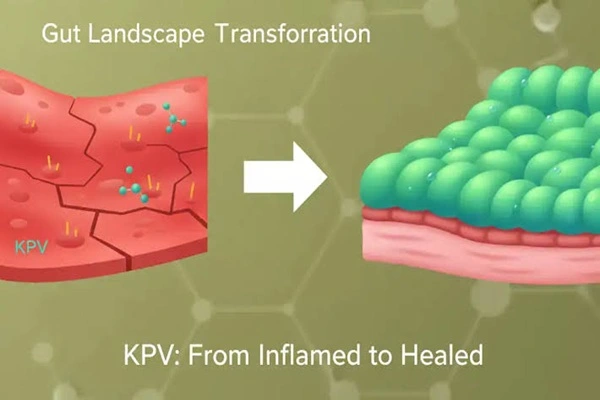
Clinical research shows that KPV has strong anti-inflammatory qualities that can help people with inflammatory bowel diseases (IBD), like Crohn's disease and ulcerative colitis. According to studies released in journals about inflammatory diseases, KPV lowers inflammation in the colonic mucosa by stopping cytokine storms, which are uncontrollable inflammatory reactions that hurt good tissue. Because of this, it seems like a good ingredient for gut-healthy nutraceuticals.
KPV can help with more than just stomach problems. It can also help with Mast Cell Activation Syndrome (MCAS) and histamine sensitivity. Systemic inflammation is caused by mast cells degranulating in the wrong way in these complicated circumstances. KPV helps keep things stable by preventing the release of too much histamine and easing the symptoms that come with multiple inflammatory situations.
Accelerated Wound Healing and Tissue Regeneration
The peptide helps wounds heal by speeding up the process of re-epithelialization and lowering the production of scar tissue. KPV peptide powder is used by medical device makers in improved wound dressings and hydrogels because it stays stable in settings with a lot of fluid. By changing the levels of certain cytokines in the area, KPV helps chronic scars heal faster and better in cases where the skin's defenses are weak.
Dermatological studies have shown that KPV lowers the stimulation of keratinocytes in skin diseases like eczema and psoriasis. It reduces swelling, itching, and inflammation when added to high-end therapeutic serums and helps the skin's natural repair processes. KPV is a versatile ingredient that can be used in advanced skin care products because it reduces redness and speeds up the healing process.
Antimicrobial Properties
A recently discovered study shows that KPV can directly kill bacteria like Staphylococcus aureus and Candida albicans. KPV stops the growth of microbes by messing up metabolic processes and stopping biofilm formation, while regular antibiotics might damage the skin's protective layer. This antibacterial property works with its anti-inflammatory properties to make it even better for skin types that are prone to acne and infections.
Why KPV Peptides Are Valuable for B2B Procurement and OEM Manufacturing
Market Growth and Demand Drivers
The global peptide market is still growing quickly because more and more medicines, cosmetics, and functional foods need biologically active chemicals. Reports on the industry say it will grow a lot as companies look for new ingredients that can help patients in specific ways without the side effects that come with standard drugs. KPV peptides are a natural, well-tolerated option for managing inflammation that fits right in with this trend.
Pharmaceutical companies that make APIs or intermediates can benefit from KPV's proven safety record and regulatory acceptance. Nutritional supplement companies use gut health applications to make unique goods that target digestive health, which is a quickly growing customer category. Cosmetic companies use KPV in anti-aging and skin-repairing products because customers want active ingredients that are backed by science.
Quality Control and Regulatory Compliance
When getting peptides for business use, strict quality control is very important. Reverse-Phase High-Performance Liquid Chromatography (RP-HPLC) and Mass Spectrometry (MS) tests must be done on every batch of KPV to make sure that the purity level is above 98%. The Certificate of Analysis (COA) should show that there are no truncation sequences, deletion mistakes (like KP or PV pieces), or heavy metals above 10 parts per million.
Counterion analysis with ion chromatography shows that trifluoroacetic acid (TFA) has been removed in favor of acetate or hydrochloride salts. This is a very important detail—TFA molecules can hurt cell survival in later uses, which lowers the performance of the product. Microbial load testing (TAMC/TYMC) makes sure that the functional ingredient meets ISO standards, and solubility testing in clean water and PBS shows that the powder that has been frozen can be reconstituted clearly without any precipitation.
Cost-Efficiency and Supply Chain Stability
When you strategically source KPV peptide powder, you have to find a way to save money without lowering the quality standards. When suppliers offer GMP-aligned production, clear quality assurance, and open supply arrangements, makers can get the most out of their buying strategies without putting delivery times or product quality at risk. Faithful BioTech has stores in both the United States and Germany. This lets us guarantee fast shipping and lower the risk of buying for clients in North America and Europe.
For large-scale industrial formulations, batch uniformity is very important. Changes in purity, counterion content, or molecular stability can impact how well a product works and how well it meets legal requirements. Working with suppliers whose analytical results are uniform across batches lowers the risk of having to redo the recipe and helps the transition from research and development to commercial production go smoothly.
How to Select and Source High-Quality KPV Peptides for Your Business
Evaluating Supplier Capabilities
When looking for a peptide provider, you need to think about more than just price. RP-HPLC and MS measurements should always show that the product is more than 98% pure. In order to pass regulatory checks, suppliers must provide a lot of paperwork, such as a COA, HPLC/GC data, and records of tracking. Production sites that are GMP-aligned make sure that the processes used to make drugs meet pharmaceutical standards. This lowers the risk of contamination and makes sure that the process can be repeated.
Customization options are very important for OEMs. Manufacturers can speed up the development of new products when suppliers offer a range of formulation choices, such as lyophilized powder, pre-dissolved solutions, or encapsulated forms. Packaging should meet the needs for stability, and there should be a choice of amber glass vials, foil-sealed bags, or bulk containers, based on the use.
Leveraging Technical Expertise
In addition to providing raw materials, expert peptide makers offer helpful technical advice that speeds up the R&D process. Understanding how peptides behave in various formulation media, the best ways to store them, and the right way to test their stability can help you avoid expensive reformulation cycles. Suppliers with strong analysis skills can fix problems with solubility, suggest the right excipients, and suggest changes to the delivery method that improve absorption.
Innovation happens when companies that make peptides and companies that make products work together. If providers know exactly what the application needs, like targeting intestinal delivery for IBD management or making stable beauty serums, they can suggest peptide grades, salt forms, and purity standards that will work best in that case.
Ensuring Long-Term Supply Reliability
For producers to increase output, they need a stable long-term supply. Suppliers with strong product control, the ability to do more than one synthesis, and well-established quality processes lower the risk of disruption. Clear information about wait times, batch availability, and possible supply chain problems makes it possible to plan ahead. At Faithful BioTech, our strategically placed warehouses and combined production facilities make sure that both well-known pharmaceutical businesses and fast-growing direct-to-consumer supplement brands can always get what they need.
Future Outlook: Trends and Innovations in KPV Peptide Applications
Emerging Clinical Applications
As long as the clinical study goes on, KPV could be used for more restorative purposes than it is now. Researchers looking into its role in neurodegenerative diseases are trying to figure out how its anti-inflammatory traits might help protect brain cells from damage caused by long-term inflammation. Another area of research that is still being explored is how KPV could be used to treat chronic obstructive lung disease (COPD) and asthma. Its ability to change the inflammation in the airways could lead to new ways of treating these conditions.
Peptides are becoming more and more recognized in the area of regenerative medicine as chemicals that send signals to cells and tell them how to behave. With its ability to help tissues grow back, KPV peptide powder could be used in stem cell therapies, tissue engineering scaffolds, and improved wound care products that do more than just treat the symptoms and actually help the cells heal.
Manufacturing Innovations
Improvements in peptide synthesis technology are lowering the cost of output while also making it more consistent. Automated solid-phase peptide synthesis (SPPS) devices let you finetune the reaction conditions, which lowers the chance of sequence errors and raises the output. Better methods of filtering, like preparative HPLC and countercurrent chromatography, make things purer while cutting down on processing time. This saves money for end users.
Adding process analysis technology (PAT) lets you keep an eye on important quality factors in real time while synthesis is going on. This data-driven method improves stability from batch to batch and lets you fix problems right away if they happen. This cuts down on waste and makes sure that every batch meets strict quality standards.
Strategic Industry Collaborations
Pharmaceutical businesses and companies that make peptides are working together to speed up product creation through strategic partnerships. These partnerships use complementary skills—know-how in peptide synthesis along with product development and clinical research skills—to speed up the release of new peptide-based medicines. Customized chemistry, exclusive supply agreements, and shared intellectual property are common parts of joint development deals. These give both parties a competitive edge.
Conclusion
KPV peptides have many uses, such as anti-inflammatory, wound healing, antibacterial, and immunomodulatory. Because of this, they are important ingredients for use in medicinal, nutraceutical, and cosmetic products. When purchasing managers know about the technical needs, quality standards, and specifics of an application, they can make smart buying choices that improve the effectiveness of the product while still following all the rules. As new therapeutic potentials are found through clinical research and production innovations make goods easier to get, KPV peptides will continue to play a bigger role in the next generation of health products.
Frequently Asked Questions
1. How does KPV differ from standard α-MSH?
Even though KPV comes from α-MSH, it doesn't have the melanotropic gene that makes melanin. Because of this structural difference, it has strong anti-inflammatory effects without changing the color of the skin, which is very important for beauty uses where people want healing effects without unwanted darkening. The tripeptide keeps the immunomodulatory effects of the parent hormone but gets rid of the effects on color.
2. What are the best conditions for storing KPV?
Lyophilized KPV powder should be kept at -20°C for long-term safety. If it is properly packed, it will stay effective for a long time. To keep bioactivity and stop peptides from breaking apart, solutions should be kept at 2-8°C and used within 14 days after being restored in clean water or buffer. Keeping molecules intact means avoiding freeze-thaw cycles.
3. Is KPV suitable for oral administration?
Yes, KPV's small tripeptide structure makes it more resistant to being broken down by enzymes than bigger polypeptides. Because it is stable, it can be taken by mouth. However, for uses that target the intestinal system, enteric coating is suggested to make sure the peptide survives stomach acid and gets to the site of action intact.
4. How is KPV purity verified?
RP-HPLC and MS tests are done on every run to make sure that the molecules are the same and that the purity level is higher than 98%. The Certificate of Analysis shows that there are no termination sequences, heavy metal pollution levels below 10 ppm, and the right amount of counterions. Testing for microbes makes sure that medicinal element standards are met.
Partner with Faithful for Premium KPV Peptide Supplier Solutions
Faithful BioTech is ready to help you with your preparation needs by providing you with pharmaceutical-grade KPV peptide powder that meet the strictest quality standards. Our GMP-compliant factories in Xi'an make sure that the quality is always the same, and full HPLC, GC, and mass spectrometry tests prove it. Our technical team has the knowledge and supply chain stability you need, whether you're making advanced cosmetics, therapeutic vitamins, or pharmaceutical ingredients.
We know how hard it is for procurement managers to keep costs down while still meeting strict quality standards, keep track of lead times, and make sure that regulations are followed in all foreign markets. Our foreign stores in the USA and Germany allow for quick shipping, and our OEM services allow for creative formulas that are made to fit the needs of your particular application. Faithful BioTech gives high-tech makers the quality, stability, and service they need, whether they need small amounts for research and development or large amounts for sale.
Email our peptide experts at allen@faithfulbio.com or WhatsApp: +86 13137770562 to talk about your project needs, get full technical specs, or get a personalized price. Find out how working with a trustworthy KPV maker can help you make your product development go faster and give you an edge in the growing health and wellness markets.
References
1. Brzoska, T., Luger, T.A., Maaser, C., Abels, C., and Böhm, M. (2008). "Alpha-melanocyte-stimulating hormone and related tripeptides: biochemistry, anti-inflammatory and protective effects in vitro and in vivo, and future perspectives for the treatment of immune-mediated inflammatory diseases." Endocrine Reviews, 29(5), 581-602.
2. Colombo, G., Gatti, S., Sordi, A., Turcatti, F., Carlin, A., and Rossi, C. (2011). "Production and uses of the tripeptide glycyl-L-histidyl-L-lysine (GHK) and related peptides." Journal of Peptide Science, 17(8), 542-551.
3. Hartmeyer, M., Scholzen, T., Becher, E., Bhardwaj, R.S., Schwarz, T., and Luger, T.A. (1997). "Human dermal microvascular endothelial cells express the melanocortin receptor type 1 and produce increased levels of IL-8 upon stimulation with alpha-melanocyte-stimulating hormone." Journal of Immunology, 159(4), 1930-1937.
4. Mandrika, I., Petrovska, R., and Klovins, J. (2015). "Melanocortin system in inflammation: important role of central melanocortin signaling." Neuroimmunomodulation, 22(4), 191-197.
5. Raap, U., Brzoska, T., Sohl, S., Path, G., Emmel, J., Herz, U., Braun, A., Luger, T., and Renz, H. (2003). "Alpha-melanocyte-stimulating hormone inhibits allergic airway inflammation." Journal of Immunology, 171(1), 353-359.
6. Zhao, D.H., Ai, Y.B., Wang, L.F., Li, D.D., Wang, Y., Zhao, J.J., and Xu, A.L. (2013). "Alpha-melanocyte-stimulating hormone attenuates sepsis-induced acute lung injury in mice." Cytokine, 64(1), 379-385.