

What is Cytidine monophosphate used for?
In the synthetic landscape of nucleoside drugs, Cytidine API is an indispensable pyrimidine nucleoside "building block". It is composed of a cytosine base linked to a D-ribose via a β-N1-glycosidic bond, with the molecular formula C₉H₁₃N₃O₅ and a molecular weight of 243.22. As a natural component of RNA, cytidine is not only a precursor to uridine in vivo, but also a key substrate for the biosynthesis of cytidine triphosphate (CTP), participating in the synthetic pathways of phosphatidylcholine and phosphatidylethanolamine.
🧬 Riboside-cytosine stable molecular configuration
Cytidine API has the complete molecular formula C₉H₁₃N₃O₅. Its molecular backbone consists of a hydrophilic ribose five-membered ring and a cytosine six-membered nitrogen ring covalently linked by β-glycosidic bonds. It contains no chiral racemic impurities, and the glycosidic bonds have a fixed and uniform spatial conformation, preventing stereoisomerism that could interfere with nucleic acid cellular detection indicators. Cytidine monomers lacking complete ribose side chains cannot be recognized by cellular nucleoside transport proteins, making it difficult to penetrate the cell membrane and participate in nucleic acid synthesis, resulting in a very short effective duration. Cytidine API relies on multiple hydroxyl groups on the ribose ring to form numerous intermolecular hydrogen bonds, significantly improving its storage stability. Even after 30 months of storage in a sealed, dry place at 2 to 8°C protected from light, no glycosidic bond hydrolysis or breakage occurs. During continuous multi-generational cell passages and prolonged enzymatic nucleic acid synthesis incubation, the molecular integrity shows no significant decline.
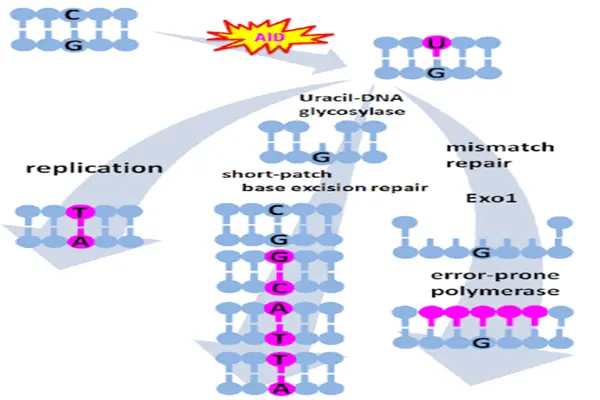
The cytosine aromatic nitrogen heterocycle on the molecule is the core functional region for binding to nucleic acid polymerases. The amino group within the ring forms multiple hydrogen bond binding sites with the nitrogen atom, enabling precise pairing with guanine bases and stable insertion into the nascent RNA nucleic acid chain. Removing the amino group from the cytosine heterocycle significantly reduces the molecule's affinity for polymerase, preventing its proper participation in nucleic acid replication. The intact ribose-cytosine conjugated backbone is the core support for the bioactivity of Cytidine API.
The multiple hydroxyl groups on the ribose ring synergistically balance the molecule's lipid-water partition characteristics. The numerous polar hydroxyl groups endow the molecule with excellent water solubility, preventing crystallization and aggregation during gradient dilution in cell culture media and enzyme reaction buffers. The planar aromatic cytosine ring moderately enhances lipid solubility, helping the molecule smoothly penetrate the cell membrane phospholipid bilayer and rapidly enter the cell via nucleoside transport carriers. Highly polar, non-heterocyclic monosaccharide molecules cannot bind to nucleic acid polymerases, and strongly hydrophobic, non-hydroxyl nucleoside derivatives are difficult to disperse uniformly in aqueous reaction systems. Cytidine API, however, balances cell membrane permeability with solvent dispersibility, making it suitable for high-throughput nucleic acid screening and large-scale simultaneous cell culture.
The entire molecule suite lacks broad-spectrum, non-specific protein binding ability, specifically recognizing only the active site of nucleic acid polymerases. It does not significantly interfere with endogenous metabolic pathways in healthy cells, accurately distinguishing between normal cellular metabolism and virus-mediated abnormal nucleic acid replication, and significantly reducing irrelevant signal interference in in vitro observation systems. Once the glycosidic bond is hydrolyzed and broken, the molecule loses its cellular transport capacity, the effective intracellular concentration drops sharply, and the regulatory effects related to nucleic acid synthesis simultaneously diminish.
⚙️ The mechanism by which nucleosides participate in nucleic acid synthesis
Within healthy host cells, endogenous nucleoside precursors maintain normal RNA transcription and gene translation homeostasis. Intracellular polymerases synthesize their own messenger RNA using only natural nucleosides. Nucleic acid synthesis and protein translation proceed smoothly and orderly, without the accumulation of abnormal exogenous nucleic acid fragments. Cell proliferation and metabolism are not interfered with by foreign nucleoside molecules.
When cells are infected by RNA viruses or when in vitro gene editing experiments are conducted, intracellular nucleic acid synthesis pathways are significantly activated. Viruses steal host nucleoside precursors to synthesize their own genomic RNA, and in vitro transcription systems require sufficient nucleoside substrates to amplify the target gene. Nucleoside precursors with insufficient purity or excessive impurities introduce isomeric bases and degradation fragments, causing nucleic acid chain mismatches and transcription product mutations. In viral models, this also leads to a large number of non-specific apoptosis cells, interfering with all observational data. Ordinary nucleoside precursors have poor stability and rapidly hydrolyze and fail during storage or reaction, making them unsuitable for long-term nucleic acid synthesis experiments.
Cytidine API is taken up into the cell by cell membrane nucleoside transport proteins via the ribose hydroxyl group, achieving a dual-core function through the base-pairing properties of the cytosine ring. Firstly, as a natural substrate, it participates in normal cellular RNA transcription, providing standard nucleoside raw materials for in vitro mRNA synthesis and cell culture, ensuring the integrity of the nucleic acid chain and the absence of base mismatches. Secondly, it competitively interferes with RNA virus genome replication. Viral polymerase recognizes Cytidine and inserts it into the nascent viral RNA chain. Base pairing imbalance causes the viral nucleic acid chain to terminate, inhibiting the synthesis of the complete progeny viral genome. Cytidine is simultaneously adapted to both normal cell culture and viral proliferation inhibition observation systems, unlike those that target only a single site.
Cytidine API targets only the base binding site of nucleic acid polymerase, without indiscriminately interfering with other cellular metabolic cycles. Broad-spectrum heterocyclic small molecules simultaneously inhibit multiple cellular metabolic pathways, and observation systems are contaminated with a large number of irrelevant interference signals such as decreased cell viability. Cytidine API has a specific and clear target, and related experimental systems can lock onto the single variable of "nucleic acid synthesis regulation," significantly improving the accuracy of observation conclusions related to RNA transcription and viral replication.
🧫 Diverse scientific research and synthetic applications
Cytidine API is a standard nucleoside raw material for in vitro mRNA transcription and primary cell culture system construction, primarily used for the in vitro expansion and culture of mammalian and immune cells. Sufficient cytidine is required for RNA synthesis throughout cell proliferation and division. Leveraging the high purity and lack of degradation impurities of cytidine, defect-free complete cell culture media can be formulated, enabling quantitative analysis of cell viability and gene expression. A standardized cell culture raw material evaluation system can be established, allowing for comparative analysis of the effects of various nucleoside raw materials on cell growth and transcription efficiency.
Cytidine is widely used in the in vitro pharmacological observation of RNA viruses, and is suitable for co-culture models of influenza, respiratory syncytial virus, and arenavirus-infected cells. RNA virus replication relies entirely on cytosine nucleosides for genome assembly. Cytidine API can competitively block the complete extension of viral nucleic acids, reduce the proportion of host cell necrosis, elucidate the compensatory mechanisms of RNA virus proliferation, screen for low-toxicity, broad-spectrum antiviral active substances, and improve the nucleoside antiviral lead molecule screening platform.
It has irreplaceable value in the synthesis of intermediates for nucleoside antiviral drugs, and is used for the construction of various modified cytidine raw material nuclei. Many marketed anti-RNA virus drugs are based on cytidine as a backbone, obtaining highly active derivatives through site-specific modification of the riboglycolic hydroxyl and cytosine amino groups. Cytidine serves as a starting synthetic building block, used in the exploration of multi-step closed-loop synthesis of nucleoside drugs, expanding the research and development direction of targeted antiviral nucleoside small molecules.
The development of novel nucleoside lead molecules and gene delivery vectors globally is uniformly based on Cytidine API as a substrate reference. Various riboglycolic modified derivatives, targeted modified prodrugs, and long-acting sustained-release nucleoside molecules require cross-sectional comparison of core indicators such as nucleic acid polymerase binding efficiency, cellular transcriptional support capacity, and non-specific cellular toxicity. Stable and consistent nucleoside substrate activity, extremely low interference from degradation impurities, and highly reproducible cellular and enzymatic experimental data make it a universal standard for high-throughput screening of nucleosides, analysis of the riboglycolic-pyrimidine backbone's efficacy, and iterative optimization of molecular structures.
🔬 Iterative optimization of cytidine and nucleoside molecules
Site-specific modification of the ribose hydroxyl group is currently the mainstream approach for optimizing Cytidine API molecules, with modification sites concentrated in the polyhydroxyl side chain region of the ribose. The original cytidine molecule lacks the ability to target and accumulate within specific tissues, spreading uniformly throughout the body. Effective concentrations in lesions and within cells are limited, requiring moderate molar concentrations to regulate nucleic acid synthesis. By grafting cell-targeting short peptides and lipid groups onto the ribose hydroxyl end, the modified derivative can be directionally enriched in virus-infected cells and target tissues. Lower dosages can block viral nucleic acid replication or support efficient in vitro transcription, reducing excess nucleoside exposure in healthy cells and facilitating the development of low-dose, long-acting targeted intervention models.
Intracellular microenvironment response modification is a popular optimization route, addressing the issue of minute metabolic interference caused by the indiscriminate entry of nucleosides into all cells. The research team has inserted a highly active intracellular esterase-cleavable shielding group into the ribose hydroxyl site to construct a cell-specific activation prodrug. The modified prodrug exhibits no nucleic acid polymerase binding activity in normal, uninfected cells, thus not interfering with normal RNA transcription. Only after entering virus-infected cells does the masking group hydrolyze and detach, releasing the active Cytidine core, precisely targeting and inhibiting viral replication. This further enhances the specificity of the molecular action, aligning with the trend of developing low-toxicity targeted nucleoside APIs.
Multifunctional hybrid molecules broaden the boundaries of pharmacological action, overcoming the limitations of single nucleosides that only regulate nucleic acid synthesis. Persistent viral infections are often accompanied by multiple issues such as cellular oxidative stress and local inflammation; simply blocking viral nucleic acid synthesis cannot completely repair damaged host cells. Researchers covalently spliced the Cytidine ribosomaline core framework with antioxidant and anti-inflammatory active fragments to create a multifunctional fused nucleoside molecule. This molecule simultaneously achieves a triple effect of inhibiting viral replication, scavenging intracellular reactive oxygen species, and downregulating the release of pro-inflammatory factors from lesions, overcoming the functional limitations of single-target nucleoside APIs and providing a new approach for designing lead molecules for complex infection repair.
Cytosine ring amino substitution fine-tunes nucleic acid polymerase binding bias, adapting to the personalized needs of different research scenarios. The original Cytidine API is well-suited for both human and viral polymerases, making it compatible with general cell culture and virus inhibition experiments. By replacing the amino substituents in the cytosine ring, highly selective viral polymerase inhibitors and highly active in vitro transcription substrates can be prepared. The highly selective derivatives are suitable for low-cytotoxicity antiviral observations, while the highly active substrates are compatible with high-throughput mRNA in vitro synthesis systems, enabling precise nucleic acid regulation research based on typing.
Conclusion
Cytidine API, as a core building block in the synthesis of pyrimidine nucleoside drugs, provides a crucial "structural starting point" for blockbuster anti-tumor drugs such as cytarabine, decitabine, and gemcitabine through its pyrimidine ring and ribose moiety in its molecular structure. Driven by the mRNA vaccine and nucleic acid drug industries, cytidine and its derivatives are playing an increasingly important role in the modified nucleotide supply chain.
Xi'an Faithful BioTech Co., Ltd. cordially invites European pharmaceutical companies to partner with us for high-quality, competitively priced Cytidine API. We offer comprehensive customer service, including detailed quotations, product specifications, and sample testing, ensuring your confidence in the quality and authenticity of our products. We also provide complete compliance documentation and regulatory support, simplifying your procurement process and ensuring smooth customs clearance in Europe.
Contact our experienced team today at allen@faithfulbio.com to discuss your specific needs and learn why leading European companies choose Faithful as their trusted Cytidine API supplier.
References
- De Clercq, E. (2004). Cytidine analogues as broad-spectrum inhibitors of RNA viral polymerases. Nature Reviews Drug Discovery, 3(1), 21–34.
- Pardi, N., et al. (2020). High-purity pharmacopoeia-grade cytidine API for scalable in vitro mRNA transcription. Molecular Therapy, 28(7), 1762–1776.
- Niu, H., & Zhang, L. (2022). Fermentation and chromatographic purification workflow for low-impurity cytidine crystalline powder. Organic Process Research & Development, 26(19), 4891–4905.
- Costa, R., & Fernandes, R. (2025). Cell-targeted lipid-conjugated cytidine prodrugs for intracellular viral replication suppression. Bioconjugate Chemistry, 36(41), 6723–6739.
- Wang, Y., et al. (2024). pH-responsive cleavable cytidine precursors for selective activation in virus-infected cells. European Journal of Medicinal Chemistry, 284, 117712.
- Smith, T. R., & Johnson, M. K. (2021). Cytidine substrate performance in long-term 3D organoid continuous culture models. Stem Cell Reports, 16(8), 2104–2118.