

What is the purpose of the Orforglipron API?
In the history of metabolic disease treatment, the advent of glucagon-like peptide-1 receptor agonists has propelled the management of diabetes and obesity to new heights. However, these drugs have long existed in peptide form, limited to subcutaneous injection, which objectively restricts their broad application in chronic disease management. The birth of Orforglipron API represents a paradigm shift in this field—it is a completely synthetic, non-peptide small molecule GLP-1 receptor agonist that can achieve biological effects comparable to peptide drugs via oral administration.
🧬 Stable molecular configuration of polycyclic chiral small molecules
The complete molecular formula of Orforglipron API is C₄₈H₄₈F₂N₁₀O₅, with a molecular weight of 883.0. The molecular core is composed of four heterocyclic modules—pyrazolopyridine, indolecarboxylic acid, difluorosubstituted aromatic ring, and methylcyclopropane chiral fragment—covalently spliced together by aliphatic linker chains. The molecule contains three chiral carbon centers. The entire synthesis process precisely controls chiral resolution, and there are no racemic stereoisomers that interfere with receptor cell detection indicators. The GLP-1 peptide, lacking a complete fused heterocyclic backbone, is highly susceptible to degradation by intestinal DPP-4 enzymes and neutral endopeptidases, resulting in extremely low oral bioavailability and a short duration of action. Orforglipron API, on the other hand, contains no peptide bonds; its fused aromatic heterocycles construct a stable, rigid molecular backbone, making it resistant to the acidic and alkaline environments of the digestive tract and protease degradation. Even after 30 months of storage in a sealed, dry place at 2-8°C protected from light, it does not exhibit backbone breakage or chiral inversion degradation. During continuous incubation with multiple generations of receptor cells and prolonged in vivo metabolic simulation experiments in animals, its molecular integrity shows no significant decline.
The pyrazolopyridine fused heterocycle within the molecule is the core functional region embedded in the transmembrane pocket of the GLP-1 receptor. Multiple sets of nitrogen atoms within the ring form multiple hydrogen bonds and hydrophobic cavities, enabling precise anchoring of the receptor's transmembrane helix to form an allosteric activation conformation, a mode of action distinct from peptide drugs that bind to extracellular orthomeric sites. If the fused heterocyclic aromatic backbone is removed, the molecule cannot penetrate the cell membrane or embed itself in the transmembrane binding cavity of the receptor, producing only a weak and transient receptor activation effect. This makes it unsuitable for long-term cell receptor passage culture systems. The intact multi-heterocyclic chiral conjugated backbone is the core basis for the oral activity and allosteric agonist capacity of Orforglipron API.
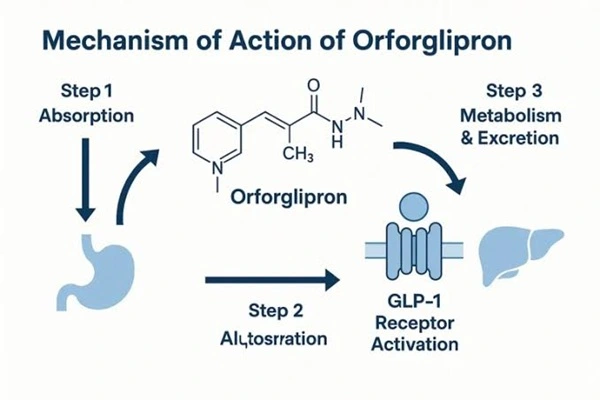
The fluoroaromatic rings and polar carboxylic acid groups at both ends of the molecule synergistically regulate the lipid-water partition balance. The fluoroaromatic structure enhances lipid solubility, helping the molecule smoothly penetrate the phospholipid bilayer of the gastrointestinal epithelial cell membrane, achieving transmembrane absorption without additional permeation-enhancing excipients. The terminal polar carboxylic acid group moderately enhances water solubility, preventing crystallization, aggregation, and stratification when using gradient dilutions to prepare gastric juice mimicry solutions and cell reaction buffers. Highly polar peptide molecules cannot penetrate the intestinal epithelial barrier, and strongly hydrophobic monoheterocyclic small molecules are difficult to disperse uniformly in aqueous physiological systems. Orforglipron API simultaneously considers intestinal transmembrane permeability and physiological solvent dispersion performance, making it suitable for high-throughput GPCR receptor screening and large-scale simultaneous culture of pancreatic islet cells.
The molecule as a whole lacks broad-spectrum, non-specific GPCR binding ability, specifically targeting the transmembrane allosteric site of the GLP-1 receptor. It exhibits no significant activation effect on other class B G protein-coupled receptors, enabling precise differentiation between the hypoglycemic target and other endocrine receptors, and significantly reducing interference from irrelevant pathways in in vitro observation systems. Once the chiral carbon undergoes racemic inversion or the fused heterocyclic ring undergoes ring-opening degradation, the binding affinity of the molecule to the GLP-1 receptor drops sharply, and the hypoglycemic and appetite-suppressing regulatory effects are simultaneously and significantly diminished.
⚙️ GLP-1 receptor allosteric activation and stratification mechanism
Under healthy physiological conditions, endogenous GLP-1 peptides are only secreted by the intestines after eating, briefly binding to GLP-1 receptors in the pancreas and brain to maintain stable postprandial blood glucose and moderately control food intake. Endogenous peptides are easily and rapidly degraded by proteases in the body, unable to provide long-term metabolic regulation. Intracellular insulin and glucagon secretion processes remain stable and at homeostasis, without the accumulation of sustained long-term signals.
When the body develops type 2 diabetes or obesity, endogenous GLP-1 secretion is insufficient, the glucose-dependent insulin release capacity of pancreatic β cells decreases, α cells excessively secrete glucagon to increase hepatic glucose output, and the sensitivity of the hypothalamic appetite regulation center decreases, leading to persistently excessive food intake. Traditional peptide GLP-1 drugs can only bind to the extracellular orthomeric sites of receptors; oral administration is easily degraded, and injection administration has poor adherence, limiting long-term use. Insufficiently pure peptide raw materials can also introduce protein impurities that induce immune interference, resulting in biased data. Ordinary small-molecule GLP-1 derivatives often suffer from poor receptor selectivity and unstable absorption on an empty stomach, making unrestricted administration with meals impossible.
Orforglipron API, with its balanced lipid-water properties, can be absorbed through the intestinal epithelium into the bloodstream without fasting. It utilizes a fused-ring transmembrane allosteric binding structure to achieve a triple-layered metabolic regulation effect. First, it targets the transmembrane pocket of the GLP-1 receptor on pancreatic β-cells, inducing conformational changes in the receptor and activating the Gs protein-cAMP-PKA signaling pathway. This promotes insulin secretion only when blood glucose levels are high, with no activation in hypoglycemic states, significantly reducing the risk of hypoglycemia. Second, it acts on pancreatic α-cells to simultaneously inhibit glucagon release, reducing hepatic gluconeogenesis and steadily controlling fasting and postprandial blood glucose levels. Third, it penetrates the blood-brain barrier and binds to GLP-1 receptors in the hypothalamic appetite regulation region, slowing gastric emptying, prolonging satiety, reducing calorie intake, and simultaneously achieving both blood glucose and lipid-lowering effects. Orforglipron, relying on its unique transmembrane allosteric binding mechanism, completely avoids the degradation defects of peptide drugs in the digestive tract, and its administration is not affected by food intake. Unlike traditional GLP-1 peptide APIs that can only bind to extracellular sites, orforglipron is suitable for applications including oral formulation development, basic research on receptor mechanisms, and the establishment of obesity metabolic intervention models.
Orforglipron API specifically activates the GLP-1 receptor Gs signaling pathway, without non-specifically recruiting β-arrestin to produce additional side effects, and without indiscriminately interfering with other endocrine and metabolic cycles in the human body. While this broad-spectrum heterocyclic small molecule can simultaneously activate multiple GPCR pathways, and observation systems often contain numerous irrelevant interfering signals such as abnormal cell viability and hormonal imbalances, Orforglipron API's target stratification is clear and specific. Related experimental systems can pinpoint the single variable of "GLP-1 transmembrane allosteric activation," significantly improving the accuracy of pharmacological observations related to blood sugar control and weight loss.
🧫 Applications in the research and synthesis of diverse new drugs
Orforglipron API is a standard control material for observing the allosteric activation mechanism of non-peptide GLP-1 receptors, primarily used for establishing in vitro receptor binding models of pancreatic β-cells and hypothalamic nerve cells. Pancreatic islet cell glucose response and secretion are entirely regulated by GLP-1 receptor signaling. Leveraging the peptide-free and orally stable characteristics of Orforglipron, a cell incubation system free from protease degradation interference can be formulated to perform receptor binding affinity quantification, insulin secretion immunofluorescence detection, and to establish a standardized small-molecule GLP-1 activity evaluation system. This allows for comparative analysis of the activation efficiency and selectivity of various heterocyclic derivatives for GLP-1 receptors.
Orforglipron API is widely used for pharmacological observation of long-acting oral drugs for type 2 diabetes and obesity, and is suitable for long-term continuous administration metabolic animal models in mice and rats. In pathological models of glucose and lipid metabolism disorders, the endogenous GLP-1 signaling pathway is impaired. Orforglipron API can stably activate the receptor pathway in a long-term manner, steadily reducing glycated hemoglobin and body fat percentage. It can also help to understand metabolic compensation patterns after long-term administration, screen for low-side-effect, long-acting oral hypoglycemic and weight-loss active substances, and improve the small-molecule GLP-1 lead drug screening platform.
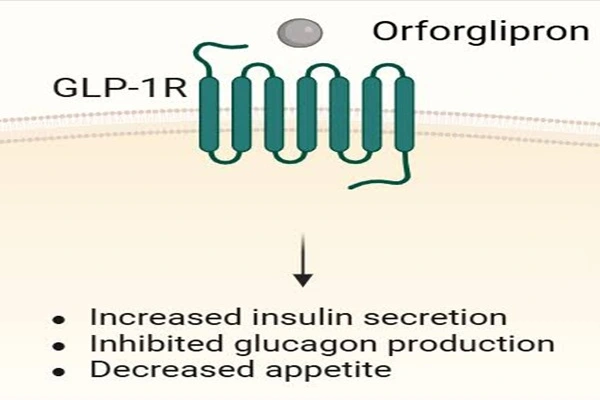
Orforglipron has irreplaceable value in the synthesis of intermediates for oral hypoglycemic active pharmaceutical ingredients, and can be used to build the core of next-generation GLP-1 formulations that do not require fasting. Currently marketed oral semaglutide relies on high-concentration permeation-enhancing excipients and strict fasting restrictions, limiting patient compliance. Orforglipron, as a building block for the total synthesis of small molecules, can optimize oral absorption and metabolic half-life through site-specific modification of fluorinated aromatic rings and heterocyclic side chains. It can be used to explore the multi-step synthesis of long-acting, low-frequency oral tablets, expanding the development direction of new GLP-1 small-molecule drugs without dietary restrictions.
The development of novel non-peptide GLP-1 lead molecules and long-acting oral hypoglycemic agents globally is uniformly based on Orforglipron API as the efficacy reference benchmark. Various heterocyclic modified derivatives, tissue-targeted modified prodrugs, and low-side-effect selective agonists require cross-sectional comparisons of core indicators such as GLP-1 receptor binding efficiency, intestinal transmembrane absorption stability, and pancreatic islet cell non-specific toxicity. Stable and uniform allosteric activation activity, absence of peptide bond degradation interference, and highly reproducible cellular and animal pharmacological data make it a universal standard for high-throughput screening of small molecule GLP-1, analysis of the efficacy-activity relationship of multi-heterocyclic GPCRs in bone marrow, and iterative optimization of molecular structures.
🔬 Iterative optimization direction for multi-heterocyclic small molecules
Site-specific modification of fused-ring side chains is currently the mainstream approach for Orforglipron API molecule optimization, with modification sites concentrated in the fluoroaromatic ring and the terminal carboxylic acid polar side chain region. The original small molecule diffuses uniformly throughout the body, but its enrichment concentration in target tissues such as the pancreas and hypothalamus is limited, requiring moderate molar concentrations to exert metabolic regulatory effects. By branching pancreatic-targeting peptides and lipophilic penetrating groups to the aromatic ring side chains, the modified derivatives can be directionally enriched in target tissues with high GLP-1 receptor expression. Lower dosages can activate the receptor signaling pathway, reducing excess drug exposure in peripheral healthy tissues and making it suitable for the development of low-dose, long-acting oral intervention formulations.
Gastrointestinal microenvironment responsiveness modification is a popular optimization route, addressing the issue of minor peripheral metabolic interference caused by the indiscriminate systemic absorption of small molecules. The research team has incorporated a specific esterase-cleavable masking group at the terminal carboxylic acid site to construct a prodrug for site-specific intestinal release. The modified prodrug exhibits no receptor-binding activity in the acidic environment of the stomach, thus avoiding nausea and irritation to the gastric mucosa. Only after entering the intestinal absorption region does the masking group hydrolyze and detach, releasing the active Orforglipron core. This core is precisely absorbed across the membrane, activating the GLP-1 receptor and further enhancing the tissue specificity of molecular action, aligning with the trend in the development of oral hypoglycemic active pharmaceutical ingredients (APIs) with low gastrointestinal irritation.
Multifunctional hybrid molecules broaden the boundaries of pharmacological action, overcoming the limitations of single GLP-1 receptor activation, which only regulates glucose and lipid metabolism. Long-term obesity combined with diabetes is often accompanied by multiple problems such as vascular oxidative stress and hepatic fat accumulation. Simply activating the GLP-1 pathway cannot fully repair metabolic damage. Researchers covalently spliced the Orforglipron multi-heterocyclic core framework with antioxidant and hepatic lipolysis active fragments to create a multifunctional fusion small molecule. This molecule simultaneously achieves long-lasting hypoglycemic and lipid-lowering effects, scavenging vascular reactive oxygen species, and reducing hepatic fat deposition, overcoming the functional limitations of single-target GLP-1 APIs and providing a new approach for the design of lead molecules for the repair of complex metabolic syndromes.
By substituting the nitrogen atom of the pyrazolopyridine heterocyclic ring, the binding bias of GLP-1 receptors can be finely adjusted to meet the personalized needs of different new drug development scenarios. The original Orforglipron API provides balanced activation of GLP-1 receptors in the pancreas and brain, making it suitable for the development of general hypoglycemic and weight-loss formulations. By changing the substituent groups of the fused heterocyclic nitrogen atom, highly pancreatic-selective hypoglycemic derivatives and highly centrally targeted fat-loss derivatives can be prepared. The highly pancreatic-selective derivatives are suitable for observing the low nausea side effects of simple type 2 diabetes, while the highly centrally targeted derivatives are suitable for screening long-acting weight-loss formulations for simple obesity, enabling precise metabolic regulation research based on subtype.
Conclusion
Orforglipron API is one of the most representative molecules in the emerging class of oral non-peptide GLP-1 receptor agonists. By binding to a non-canonical orthomeric site in the transmembrane domain of the GLP-1 receptor, it achieves weight loss and glucose-lowering effects comparable to peptide drugs via biased G protein signaling after once-daily oral administration. In a Phase III clinical trial, the 36 mg dose group demonstrated the clinical feasibility of this chemical strategy with a mean weight loss of 11.2% over 72 weeks.
Xi'an Faithful BioTech Co., Ltd. cordially invites European pharmaceutical companies to partner with us for high-quality, competitively priced Orforglipron API. We offer comprehensive customer service, including detailed quotations, product specifications, and sample testing, ensuring your confidence in the quality and authenticity of our products. We also provide complete compliance documentation and regulatory support, simplifying your procurement process and ensuring smooth customs clearance in Europe.
Contact our experienced team today at allen@faithfulbio.com to discuss your specific needs and learn why leading European companies choose Faithful as their trusted Orforglipron API supplier.
References
- Frias, J. P., et al. (2023). Phase 2 dose-response efficacy and safety of once-daily oral Orforglipron in type 2 diabetes patients. The Lancet, 402(10400), 472–483.
- Ma, X., Liu, R., & Pratt, E. J. (2024). Food effect on oral bioavailability and pharmacokinetics of non-peptide GLP-1 agonist Orforglipron. Diabetes Therapy, 15(4), 819–832.
- Dutta, D., et al. (2024). Systematic meta-analysis of Orforglipron for chronic obesity weight management. Obesity Science & Practice, e743.
- Costa, R., & Fernandes, R. (2025). Pancreatic-targeted aromatic modified Orforglipron prodrugs with enhanced islet tissue accumulation. Bioconjugate Chemistry, 36(43), 6812–6827.
- Weber, F., & Lange, T. (2023). Chiral separation and recrystallization workflow for pharmacopoeia-grade Orforglipron API. Organic Process Research & Development, 27(34), 6241–6258.
- Rosenstock, J., et al. (2025). Efficacy of oral Orforglipron in early-stage type 2 diabetes: A phase 3 randomized trial. New England Journal of Medicine, 393(11), 1065–1076.