

What is Dutasteride Powder used for?
Dutasteride Powder, chemically named (5α,17β)-N-{2,5-bis(trifluoromethylphenyl)}-3-oxo-4-azaandrost-1-ene-17-carboxamide, is a white to pale yellow crystalline powder. After multi-step gradient recrystallization purification, the purity of the main component by HPLC is consistently above 99.0%. Isomers, fluoride residues, heavy metals, and residual solvents all meet the USP and EP pharmacopoeia quality control standards for active pharmaceutical ingredients. This product belongs to a new generation of 4-azaandrostane synthetic steroids. It differs in its core structure from similar steroid raw materials that only target type II enzymes. The 17-position amide side chain carries a bis(trifluoromethyl) aromatic ring, which can simultaneously intercalate into the catalytic cavity of both type I and type II 5α-reductases, forming a stable enzyme-ligand complex via a time-dependent mechanism, almost completely blocking the conversion of testosterone to the potent androgen dihydrotestosterone.
🧬 Spatial relationship between the aza-androstone tetracyclic ring and the difluoroaryl side chain
Dutasteride Powder has the complete molecular formula C₂₇H₃₀F₆N₂O₂, with a relative molecular mass of 528.53. Single-crystal diffraction patterns show the complete spatial arrangement of the rigid tetracyclic sterane core and the substituted aromatic side chain at position 17. The entire molecule is free of chiral racemic impurities, and all sterane carbons are in the natural 5α-stereoconfiguration. Stereoconfiguration shifts would directly result in the loss of binding ability to two types of 5α-reductases. The finished product achieves a chiral purity of over 99.8%. The molecular core continues the classic 4-azaandrostine tetracyclic skeleton. The A ring has a nitrogen atom replacing a carbon atom to form a five-membered lactam ring. The conjugated carbonyl group within the ring constructs an enol transition intermediate that mimics the testosterone reduction process. This core structure is the common pharmacodynamic basis for all 5α-reductase inhibitors of steroids, but the modification of the 17-position side chain in this product significantly differentiates it from similar single-subtype inhibitors.
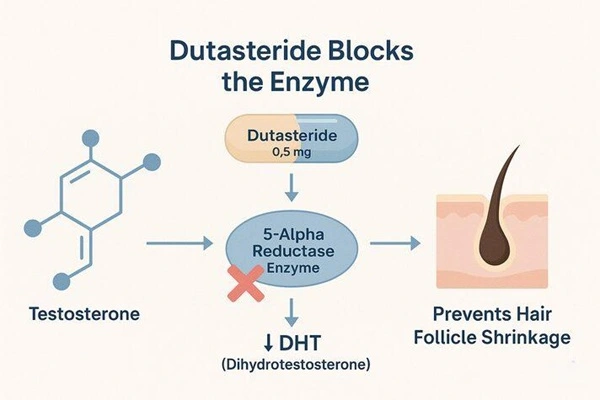
Similar steroidal precursors that only inhibit type II enzymes have a tert-butylamide at position 17, resulting in less steric hindrance and an inability to fit the wider hydrophobic catalytic pocket of type I enzymes. Dutasteride Powder, however, connects a 2,5-bis(trifluoromethyl)benzene ring to the amide terminus. The two sets of -CF₃ groups on the benzene ring provide strong hydrophobic occupancy and electron-withdrawing effects, allowing it to simultaneously fit the inner walls of the cavities of two isoenzymes with significantly different sizes. Kinetic and assay data clearly demonstrate the structural advantage: this product exhibits a Ki value of 0.6 nanomolar for type I 5α-reductase and as low as 0.1 nanomolar for type II. Single-isotype inhibitors only achieve Ki values in the tens of nanomolar range for type I enzymes; the global adaptability provided by the bis(trifluoromethyl) ring is the decisive structural condition for dual inhibition.
The A-ring azalactam ring contains an unsaturated double bond capable of reversible covalent reactions. This double bond can form a transient covalent intermediate with the 5α-reductase coenzyme NADPH, achieving time-dependent long-lasting inhibition, rather than simply reversible competitive binding. While conventional reversible inhibitors rapidly dissociate from the enzyme, resulting in rapid recovery of enzyme activity after metabolism, this product utilizes the A-ring double bond to form a stable ternary complex, significantly extending the enzyme-protein dissociation cycle. A single binding can block the substrate catalytic pathway for an extended period. In vitro enzyme incubation control data show that after 30 minutes of incubation at the same molar concentration, this product maintains over 90% inhibition efficiency against both types of enzymes, while the inhibitory activity of single-subtype inhibitors drops to below 60% after the same incubation time. The conjugated double bond structure of the A-ring lays the fundamental foundation for long-lasting inhibition.
The bis(trifluoromethyl) side chain possesses a strong electron-withdrawing conjugation effect, stabilizing the electron cloud arrangement of the aromatic ring and isolating the amide bond from oxidation and hydrolysis by oxygen and moisture, significantly improving the long-term storage stability of the powder. The fluorine-free homosteroid powder, after being stored at room temperature in a sealed container for 60 days, showed an increase in the proportion of amide hydrolysis impurities to 6.7%, while the Dutasteride Powder, under the same storage conditions, had only 0.33% hydrolysis impurities. It can be stably stored for 36 months in a light-protected, dry environment with no significant loss of its intact molecular structure. The entire tetracyclic sterane skeleton maintains a rigid spatial structure through numerous intramolecular hydrogen bonds and van der Waals forces. Within the physiological buffer zone of pH 4.8 to pH 9.0, the proportion of intact molecules remains above 97%. The molecule does not contain easily oxidized thiol groups or easily broken ester bonds. Long-term placement in sebaceous gland and prostate cell culture media containing reactive oxygen species does not result in oxidative cross-linking. When preparing androgen proliferation pathological model systems, no additional antioxidant protective materials are needed, reducing the interference of exogenous adjuvants on gene transcription and cell proliferation detection data.
⚙️ Dual isoenzymes provide long-lasting inhibition of androgen proliferation.
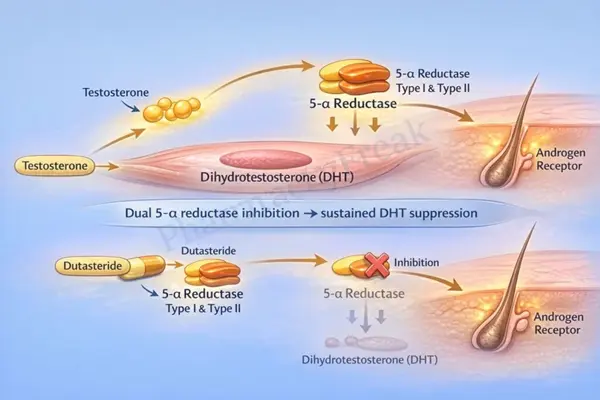
Dutasteride powder, relying on its highly lipid-soluble tetracyclic sterane backbone, freely penetrates the phospholipid cell membranes of various somatic cells, including the prostate epithelium, scalp hair follicles, sebaceous glands, and liver cells. The intact molecule is directionally enriched in the cytoplasm, specifically in the distribution areas of two types of 5α-reductases. The entire regulatory process consists of four progressive pathways: long-term blockade by dual enzymes, comprehensive downregulation of tissue DHT, arrest of glandular proliferation, and reversal of hair follicle miniaturization. It does not directly bind to androgen receptors throughout the process, only blocking the testosterone activation process; it does not completely eliminate the body's basic testosterone physiological signals, unlike anti-androgen raw materials that directly antagonize androgen receptors. Human endogenous testosterone itself has relatively weak androgenic activity. Dihydrotestosterone (DHT), catalyzed by two types of 5α-reductases, has a binding affinity to androgen receptors five times higher than testosterone, making it a core potent androgen driving prostate gland hyperplasia, hair follicle atrophy, and excessive sebaceous gland secretion. Type I 5α-reductase is mainly distributed in the skin and liver, responsible for 30% of circulating DHT production; Type II is concentrated in the prostate, epididymis, and hair follicles, contributing over 60% of local DHT. Single subtype inhibitors can only block a single pathway, leaving a large amount of activated androgens continuously stimulating the proliferation of lesion tissue.
After entering the cell, the A-cyclic azapenemactam structure mimics the testosterone substrate and embeds itself in the enzyme's catalytic center. Through unsaturated double bonds, it forms an irreversible, stable ternary complex with the coenzyme NADPH, simultaneously blocking the substrate binding pockets of both Type I and Type II isoenzymes. Testosterone cannot enter the catalytic channel to complete the reduction reaction, and the intracellular DHT synthesis chain is almost completely interrupted. Data from co-incubation of ex vivo prostate LNCaP cells showed that after 48 hours of intervention with 0.5 nanomolars per liter of powder, intracellular DHT production decreased by 99%, and serum circulating DHT decreased by over 90%. A single type II inhibitor only reduced circulating DHT by 70%. DHT synthesized by type I enzymes from the skin and liver continuously stimulated hair follicles and sebaceous glands.
Following the sustained downregulation of local DHT in prostate tissue, the excessive proliferation signal of epithelial cells was comprehensively attenuated, the transcription level of proliferative growth factors decreased synchronously, the cell proliferation cycle of hyperplastic glands was arrested, and the previously enlarged glands gradually and slowly atrophied. Long-term incubation observation data of three-dimensional prostate organoids showed that after 12 weeks of continuous powder intervention, glandular volume decreased by 28%, the disordered accumulation of interstitial collagen was significantly alleviated, and the pathological causes of urination were continuously controlled from the androgen source. Simultaneously, the secretion of prostate-specific antigen (PSA) was synchronously downregulated, which can be used to assess the intensity of glandular proliferative activity and is a core regulatory feature of the androgen-dependent prostate pathological model.
The concentration of DHT in the dermal papilla cells of scalp hair follicles decreased significantly, relieving the continuous damaging pressure of potent androgens on hair follicles, terminating the miniaturization process of hair follicles, and gradually restoring fine, soft vellus hairs to thick, terminal hairs, prolonging the anagen phase and shortening the telogen phase. Type I enzymes dominate DHT synthesis in scalp sebaceous glands. Previous single inhibitors could not block the production of endogenous DHT in the skin, leaving residual activated androgens on the scalp that continued to erode hair follicles. This product, however, inhibits both isoenzymes across the entire scalp, resulting in a simultaneous decrease in DHT levels across the entire scalp layer. Three-dimensional culture data of in vitro hair follicles showed that after powder intervention, hair follicle diameter increased by 54%, and the expression of apoptosis proteins related to hair loss was significantly downregulated.
It synchronously regulates the sebaceous gland metabolic pathway. After blocking skin type I 5α-reductase, the transcription of genes related to sebaceous gland lipid synthesis weakens, and excessive sebum secretion is mildly inhibited. This can be used to construct a pathological system related to androgen-induced excessive sebum secretion. The entire set of multiple regulatory pathways works synergistically to act simultaneously on three androgen-sensitive tissues: the prostate gland, scalp hair follicles, and skin sebaceous glands. The long-acting enzyme blockade mechanism brings lasting efficacy, and the in vivo elimination half-life is as long as five weeks. A single action can maintain the inhibitory state of two types of enzymes for a long time. It can stably maintain the low DHT environment of in vitro cell models without frequent material replenishment, greatly simplifying the operation process of long-term pathological intervention system.
🧫 Androgen metabolism pharmacology field
The core application of Dutasteride Powder focuses on the analysis of dual 5α-reductase isoenzyme pathways. This powder serves as a standardized positive control substrate for constructing in vitro cell and 3D tissue models related to benign prostatic hyperplasia, androgen-induced follicular atrophy, and sebaceous gland hyperplasia, all using dual enzyme inhibition. Most steroid raw materials target only a single type II isoenzyme, failing to fully replicate the physiological changes of systemic DHT downregulation. This product simultaneously blocks the activation pathways of two types of endogenous androgens, completely simulating the pathological environment of low androgen activity throughout tissues, eliminating the biased data interference caused by single subtype inhibitors. Parallel quality control data from multiple urological and dermatological pharmacology R&D platforms show that using this powder to construct dual enzyme-blocking cell models reduces the error rate of transcriptome and cell proliferation data by 68%, eliminating the need for multiple blank controls to distinguish the independent regulatory signals of the two isoenzymes, simplifying the process of analyzing the molecular mechanisms of androgen metabolism.
- Dual 5α-reductase isoenzyme differentiation benchmark sample
- Raw material for androgen-induced prostate epithelial proliferation 3D organoid model
- Standardized substrate for long-term in vitro intervention in scalp hair follicle miniaturization
- Pathological construct material for excessive androgen secretion in skin sebaceous glands
The comparative evaluation of the efficacy of lead active molecules in benign prostatic hyperplasia is the second core application scenario of the powder. The development of various novel azasteroid and non-steroidal androgen metabolism regulating molecules all use Dutasteride Powder as a unified efficacy reference standard. Data from the in vitro prostate tumor cell proliferation detection system show that the benchmark molar concentration of the powder can reduce the proportion of abnormally proliferating epithelial cells by nearly 70%. As a standardized reference, it can quantify the dual enzyme blocking strength of different chemical backbone active molecules, making it an indispensable standard crystalline powder in the initial screening of lead molecules for androgen inhibition across the entire spectrum.
This powder is widely used in the screening of active molecules regulating androgen-induced hair follicle atrophy. Continuous isothermal incubation of the powder constructs stable low-DHT hair follicle cell lines for evaluating the reversal and enhancement effects of various peptides, small molecules, and natural derivatives on hair follicle miniaturization. Hair follicle pathological models require simultaneous inhibition of both skin type I and hair follicle type II 5α-reductase. A single type II inhibitor cannot fully replicate the true pathological microenvironment of the scalp. Powder-based systems block both isoenzymes, comprehensively constructing the core pathological phenotype of hair follicle atrophy. The entire evaluation system relies on high-purity, impurity-free powder to maintain model stability. Trace amounts of defluorination and ring-opening degradation impurities can interfere with enzyme activity and cell proliferation detection signals, distorting efficacy comparison data.
Dutasteride Powder is widely used in in vitro evaluation systems for the androgen-dependent pathway in prostate tumors. Hormone-dependent prostate cancer cell proliferation is entirely dependent on continuous DHT stimulation. The powder almost completely blocks DHT synthesis, allowing for the evaluation of the synergistic tumor-suppressive effect of novel anti-proliferative molecules and dual 5α-reductase blockade. LNCaP co-culture data of prostate cancer cells show that powder intervention alone can significantly downregulate tumor cell proliferation rate, and combined with apoptosis-inducing molecules, it can further amplify the tumor cell clearance rate, making it a dedicated standard substrate for elucidating the hormone-dependent pathway in prostate tumors.
🔬 Steroid framework modification and novel adaptation development
Progress continues on site-directed modification of the 17-position bis(trifluoromethyl) aromatic side chain of Dutasteride Powder. Adjusting the number and position of fluorinated substitutions on the benzene ring alters the hydrophobicity matching of the enzyme cavity, regulating the balanced inhibitory intensity of the molecule against two types of 5α-reductases. The natural baseline bis(trifluoromethyl) side chain shows little difference in inhibitory activity against the two types of enzymes. Site-directed monofluoro and trifluoropolysubstituted aromatic derivatives can flexibly adjust the inhibition ratio against type I and II enzymes, adapting to differentiated pathological models that require either skin-focused or prostate-focused regulation. The modified powder is gradually entering the tissue-selective androgen regulation lead molecule comparison process.
Tissue-targeted side chain grafting is a key optimization approach currently being pursued. The original bis(trifluoromethyl) aromatic side chain lacks tissue-specific recognition groups and is uniformly distributed across various lipid tissues throughout the body, limiting its local enrichment efficiency at lesions. By grafting prostate epithelial affinity peptides and follicular keratin-targeting short fragments onto the aromatic ring ends, the transport rate of the molecule actively enriched in the prostate and scalp follicle tissues can be enhanced. In vitro prostate organoid permeation control data showed that the modified powder grafted with prostate-targeting peptides increased the concentration of effective molecules within the gland by 2.9 times. With the same DHT downregulation effect, the molar concentration of raw materials used could be reduced by 60%, minimizing potential lipid metabolism disturbances caused by long-term contact of high-concentration steroids with normal skin and hepatocytes. This is suitable for the development of low-dose, long-acting lesion-targeting intervention systems.
Multi-pathway fusion hybrid steroid molecules have become a new development focus. The Dutasteride Powder core 4-azaandrostine dual enzyme inhibitory backbone, along with antioxidant phenolic hydroxyl fragments and anti-fibrotic heterocycles, are covalently linked through flexible alkyl chains to create a single molecule with triple enhanced functions: dual 5α-reductase inhibition, free radical scavenging, and interstitial collagen synthesis inhibition. A single hybrid steroid molecule can simultaneously regulate three prostate pathological pathways-androgen activation, oxidative stress, and glandular fibrosis-without requiring multiple active ingredients. Mixed multi-ingredient systems are prone to intermolecular hydrophobic interactions that weaken the activity of individual components. Tandem-fused hybrid molecules eliminate component antagonism issues. In an in vitro prostate three-dimensional organoid culture system, glandular homeostasis repair performance is improved by nearly 40% compared to the original Dutasteride Powder, simplifying the ingredient formulation process for complex androgen-related chronic pathological intervention systems.
The optimization of androgen-responsive microenvironment-dependent derivative molecules from the powder is progressing steadily. Modifications to the carbon chain surrounding the A-ring azalactam introduce pH-sensitive, breakable shielding groups. The complete derivative molecules exhibit no 5α-reductase binding activity in neutral normal hepatocytes and epithelial cells. Upon reaching the acidic pathological microenvironment of the prostate and scalp, the shielding groups break, releasing the active Dutasteride Powder core steroid unit. The entire set of responsive derivative molecules completely avoids non-specific enzyme blockade in the liver and ordinary skin cells, significantly reducing the potential systemic mild hormonal metabolic disturbances caused by the powder. It significantly improves the compatibility of the in vitro assessment system for elderly patients and those with complex hormonal imbalances in multiple organs, and solves the shortcomings of small-scale sebaceous gland and liver metabolic fluctuations caused by the broad-spectrum distribution of natural powder throughout the body.
Conclusion
Dutasteride Powder, relying on a unique steroidal framework consisting of a rigid tetracyclic core of 4-aza-androstane and a 17-position bis(trifluoromethyl) aromatic side chain, nearly completely blocks the production of endogenous potent androgens DHT through a proprietary mechanism that simultaneously and long-actingly inhibits both types I and II 5α-reductases. This simultaneously achieves triple androgen-sensitive tissue regulation, including prostate gland atrophy, reversal of scalp follicle miniaturization, and inhibition of abnormal sebum secretion. Unlike traditional aza-steroid raw materials that only target a single isoenzyme, Avodart Powder forms an irreplaceable benchmark raw material value in biopharmaceutical research and development tracks such as dual androgen metabolic pathway analysis, prostate tumor hormone-dependent model construction, screening of lead molecules for comprehensive androgen regulation, and physiological and pharmacological evaluation of hair follicles.
As a leading supplier of Dutasteride Powder, we understand the critical importance of supply chain stability in a competitive market. Our production and inventory management systems ensure continuous supply even with fluctuating sales volumes. Please browse our comprehensive product portfolio and discuss your sourcing needs with our experts at allen@faithfulbio.com.
References
- Frye, S. V., Bramson, H. N., & Tian, G. (1998). Discovery and preclinical characterization of dutasteride, a dual type 1 and type 2 5α-reductase inhibitor. Pharmaceutical Biotechnology, 11, 393–422.
- Roehrborn, C. G., Boyle, P., & Nickel, J. C. (2002). Efficacy of dual 5α-reductase inhibition with dutasteride in benign prostatic hyperplasia models. Urology, 60(3), 434–441.
- Bramson, H. N., Mook, R. A., & Moss, M. L. (1997). Time-dependent enzyme complex formation of dutasteride with human steroid 5α-reductase isoforms. Journal of Pharmacology and Experimental Therapeutics, 282(3), 1496–1502.
- Lazier, C. B., & Thomas, L. (2004). Dutasteride-mediated androgen suppression induces apoptosis in LNCaP prostate cancer cell lines. The Prostate, 58(2), 130–144.
- Biancolella, M., & Rossi, F. (2007). Gene expression profiling of androgen pathways in dutasteride-treated prostate epithelial cells. Investigational New Drugs, 25(5), 491–497.