

What is estradiol valerate used for?
In the landscape of female hormone replacement therapy, Estradiol 17-Valerate Powder, with its unique design as a "natural estrogen prodrug," has become one of the most classic oral formulations for managing menopausal syndrome. Its chemical nature is an ester formed from the 17β-hydroxyl group of estradiol and valerate, with the molecular formula C₂₃H₃₂O₃ and a molecular weight of 356.50 g/mol. As a prodrug, estradiol valerate itself has extremely low affinity for estrogen receptors and must be hydrolyzed by esterases in the body to release estradiol before it can exert its biological effects. This "esterification" strategy not only protects estradiol from excessive first-pass metabolism in the liver but also extends the duration of action from several hours with natural estradiol to 1-2 days, enabling a once-daily dosing regimen.
🔬Molecular Profile of Estradiol Valate
The core framework of Estradiol 17-Valerate powder is a tetracyclic estradiol structure, where four carbon rings are sequentially fused to form a rigid cyclic system. The A ring undergoes aromatization modification. This structural feature is key to distinguishing steroid estrogens from other hormone molecules and is the core basis for their specific binding to human estrogen receptors. The overall molecular chemical composition is fixed, with carbon, hydrogen, and oxygen atoms arranged in a stable spatial conformation. The bond angles and torsion angles between rings do not change under normal external conditions, laying the foundation for the excellent structural stability of the raw material at the molecular level. The intact estradiol core shows no group deletions or skeletal reconstructions, ensuring that esterification modification does not impair the molecule's binding ability to target proteins, allowing it to exert its normal physiological regulatory effects after entering the human body.
The differentiated arrangement of molecular functional groups is the core difference between long-acting and short-acting estrogen raw materials. Natural 17β-estradiol has a free hydroxyl group attached to its 17th carbon. In Estradiol 17-Valerate powder, this hydroxyl group is linked to the alkyl valerate side chain via an ester bond at this position. This five-carbon aliphatic chain is a strongly hydrophobic group, directly altering the lipid-water partition coefficient of the entire molecule. Industry testing data shows that the lipid-water partition coefficient of this raw material is stable in the range of 4.4 to 4.6, significantly higher than that of unesterified estradiol. It achieves complete solubility in lipid media such as vegetable oils and injectable oils, stably dissolving over 30 mg of the raw material per milliliter of oil system, while its solubility in pure water is less than 100 mg per liter. This physicochemical performance perfectly suits the production requirements of long-acting oil formulations.
The ester bond, as the key chemical bond connecting the parent nucleus and the valerate side chain, possesses mild hydrolytic properties. In a solid environment at room temperature, this chemical bond is tightly bound and will not spontaneously break, ensuring the raw material remains unchanged during long-term storage. In formulation systems with a neutral pH, ester bonds remain intact. They only break gradually at a fixed rate after entering the human body and coming into contact with esterases secreted by tissue fluid, blood, and organ cells. This environmentally responsive bonding characteristic makes Estradiol 17-Valerate powder an ideal prodrug carrier. Its artificially controlled chemical structure fulfills the dual requirements of in vitro stability and in vivo activation.
From an industrial production and formulation processing perspective, the regular molecular spatial configuration creates a uniform and stable crystal form. The mainstream pharmaceutical crystal form maintains a stable melting point between 143°C and 145°C, with the melting range difference between different production batches not exceeding 0.4°C. The powder particles are uniform in size, and the angle of repose is within a reasonable range. In automated tableting, aseptic dispensing, and oil phase feeding processes, problems such as material bridging, wall adhesion, and agglomeration will not occur. Meanwhile, the raw material has extremely low hygroscopicity. In a conventional storage environment with a relative humidity of 60%, it can still maintain a loose crystalline state after being stored continuously for 36 months, without the need for additional anti-caking excipients, which effectively simplifies the formulation design.
⚙️Targeting receptors to achieve multi-system physiological regulation
Estradiol 17-Valerate powder itself does not have the ability to directly activate receptors. After entering the body, it is distributed throughout the body via the circulatory system. Intramuscular injection creates an oil-phase reservoir that slowly releases molecules, while orally absorbed components enter the liver via the portal vein. Esterases enriched at both sites continuously act on the ester bonds, gradually breaking them down into active 17β-estradiol and valerate. The entire activation process is gradual, without releasing large amounts of active substances in a short period. In healthy individuals, the rise in active hormone concentration can last for more than twelve hours, with peak concentrations remaining stable for three to four days, perfectly avoiding the adverse reactions caused by drastic fluctuations in blood concentrations of short-acting hormones.
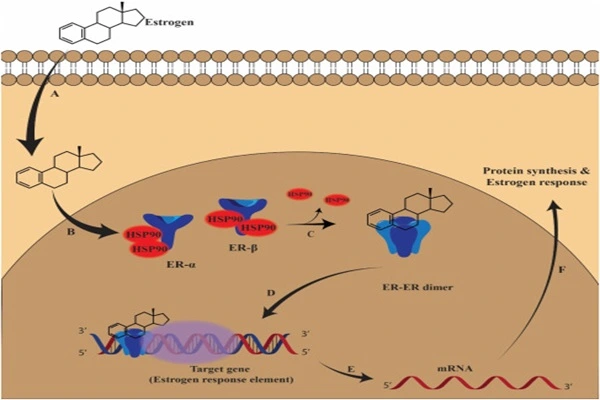
- The activated Estradiol 17-Valerate powder actively recognizes the two major estrogen receptor subtypes within cells. These two receptors have different distribution focuses in human tissues: ERα is concentrated in the uterus, breast, bone, and vascular endothelial tissue, while ERβ is more prevalent in the ovaries, brain nerve cells, and lung tissue. When an active molecule binds to its receptor, the spatial morphology of the receptor protein twists, and the two receptor molecules combine to form a dimer structure. This dimer then crosses the nuclear membrane and binds to specific gene fragments within the cell nucleus, initiating gene transcription and protein synthesis. This fundamentally regulates cell proliferation, differentiation, and metabolic behavior, which is the core pathway by which hormones achieve physiological intervention.
- For the female endocrine system, a continuous and stable hormonal signal can compensate for the sharp decline in endogenous estrogen secretion during perimenopause. Clinical statistics show that postmenopausal women who consistently use the corresponding preparation for more than three months experience an 83% relief rate for typical symptoms such as hot flashes, night sweats, and mood swings. Vaginal mucosal cell proliferation returns to normal, secretions increase, and problems such as atrophy and dryness are significantly improved. Compared to short-acting hormones that require multiple daily doses, the preparation based on this ingredient only requires one to two doses per week. The stable efficacy ensures long-term endocrine stability, significantly improving the user's quality of life.
- In the skeletal metabolic system, estrogen signaling precisely regulates the balance of osteoblast and osteoclast activity. The active molecules inhibit osteoclast differentiation and maturation, reducing the breakdown and loss of bone matrix, while promoting osteoblast secretion of collagen and calcium deposition. A long-term follow-up study of 5,000 middle-aged and elderly women showed that those who regularly used Estradiol 17-Valerate powder experienced a 47% lower decrease in lumbar spine bone mineral density and a 41% lower risk of hip fragility fractures over five years compared to those who did not use the product. This long-lasting action provides a long-term protective barrier for bone health.
- The cardiovascular system and skin tissues also benefit from this regulatory mechanism. The hormone acts on vascular endothelial cells, maintaining the integrity of the vascular wall, regulating the proportion of cholesterol components in the blood, reducing LDL cholesterol levels, and decreasing lipid plaque deposition on the vascular wall. When acting on the dermis, it promotes collagen and elastin synthesis, delaying fibroblast aging. Long-term users exhibit significantly better skin thickness and elasticity than their age-matched non-users. This multi-organ synergistic regulatory mechanism, combined with its long-acting release, extends the application value of this ingredient beyond single gynecological conditions to the maintenance of systemic health.
💊 Creating long-acting pharmaceutical formulations to cover multiple scenarios
The core application of Estradiol 17-Valerate powder is in the production of long-acting oil-based injectable formulations. Leveraging its excellent lipid solubility, this raw material can be completely dissolved in refined vegetable oils to formulate injectable solutions of varying concentrations. The mainstream clinical specifications are 10 mg/mL and 20 mg/mL. After a single deep intramuscular injection, the solution forms a drug reservoir in the intermuscular tissue, continuously and slowly releasing the active ingredient. These injectables are primarily used for long-term hormone replacement therapy in patients with severe menopausal syndrome and primary premature ovarian failure. Administered once weekly, they maintain stable hormone levels, making them particularly suitable for individuals with swallowing difficulties or those unable to adhere to daily oral medications. Currently, they are also a standard raw material in gynecological wards of hospitals at all levels.
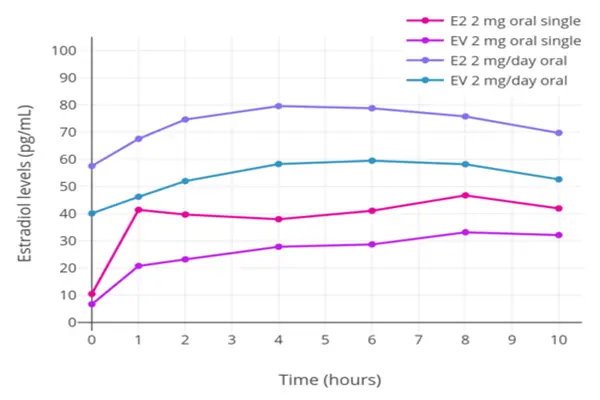
Oral solid dosage forms are the second largest application area for this raw material. Pharmaceutical companies combine high-purity Estradiol 17-Valerate powder with pharmaceutical excipients such as lactose, microcrystalline cellulose, and croscarmellose sodium to produce standard oral tablets. After entering the gastrointestinal tract, the active ingredient gradually dissolves in digestive juices, is absorbed through the intestinal mucosa, and reaches the liver for hydrolysis and activation. Due to the influence of first-pass metabolism in the liver, the oral bioavailability is approximately 3%, but thanks to the long-acting properties of the active ingredient itself, a single daily oral dose is sufficient to meet therapeutic needs. This type of tablet is widely used for establishing artificial menstrual cycles and for endometrial preparation during in vitro fertilization (IVF) cycles. Clinical data shows that during standardized treatment cycles, endometrial thickness can be stably increased to the range of nine to twelve millimeters, effectively improving embryo implantation success rates. It is a commonly used active ingredient in reproductive centers.
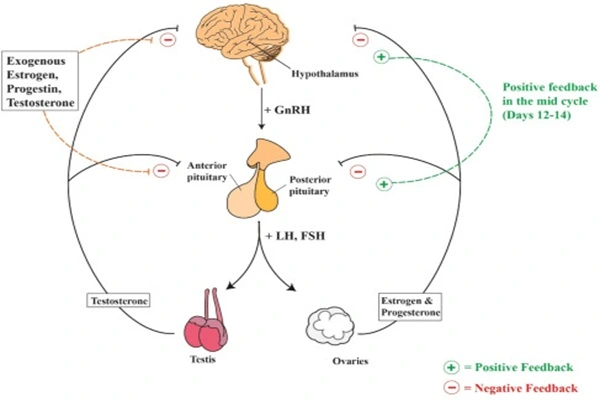
In the field of adjuvant cancer therapy, this active ingredient also has clear applications. Utilizing the negative feedback regulation of estrogen on pituitary gonadotropins, corresponding formulations can be used for palliative intervention in advanced prostate cancer. Continuously supplied exogenous hormones can inhibit testosterone synthesis and secretion, reduce androgen stimulation of tumor lesions, and alleviate complications such as tumor-induced bone pain. In this scenario, oral tablets are often used in combination with other treatments. The long-lasting and stable efficacy avoids the stress response caused by sudden changes in hormone concentrations, improving tolerance in late-stage patients. Currently, this application has standardized treatment protocols in oncology departments in Europe, America, and China.
There is also stable demand in the veterinary drug and specialty biological agent fields. In large-scale animal husbandry, low-dose Estradiol 17-Valerate powder can be added to animal premixes or formulated into injections to regulate the estrous cycle of female livestock and poultry, improving reproductive efficiency. Due to the long metabolic cycle of the raw material, a single dose can achieve physiological regulation for several days, reducing the frequency of drug administration during the breeding process and lowering labor costs. At the same time, batches of raw materials that meet purity standards are also supplied as standard substances to the testing laboratories of major pharmaceutical companies and pharmacy colleges of universities for the detection of hormone drug content and the calibration of chromatographic analysis methods, making them an indispensable reference material in drug quality control systems.
🔬 Technological Upgrades and Exploration of New Delivery Systems
The green upgrading of the synthesis and purification process is a key optimization direction for Estradiol 17-Valerate powder. Traditional production routes use large amounts of haloalkanes as organic solvents, resulting in high production costs and difficult-to-treat chemical waste. Currently, the industry is gradually adopting catalytic esterification processes to replace traditional acylation reactions, using low-toxicity, recyclable solvent systems and continuous flow reactors to complete the synthesis process. The new process increases the overall yield of raw materials by six percentage points, reduces organic solvent consumption by 52%, and controls the content of related substances in the finished product to below 0.2%, fully meeting international GMP certification requirements and helping domestically produced raw materials further penetrate the overseas high-end pharmaceutical API market.
The research and development of novel crystal form screening and powder modification technologies continues to advance. Existing conventional crystal forms have shortcomings in dispersibility in some novel sustained-release excipients. Researchers have screened out new crystal forms with better flowability and dispersibility through solvent-induced crystallization and low-temperature recrystallization. Simultaneously, airflow pulverization technology is used to micronize the raw materials, controlling the median particle size of the powder to between five and eight micrometers. Micronized raw materials exhibit a more uniform dissolution rate, allowing the drug release curve to closely match preset standards when used in oral sustained-release formulations. This significantly reduces the efficacy differences between different batches of finished products, providing a higher-quality raw material option for the production of high-end sustained-release formulations.
Long-acting sustained-release microsphere formulations have become a hot research direction in delivery system development. Micron-sized sustained-release microspheres are prepared by encapsulating Estradiol 17-Valerate powder with biodegradable PLGA polymer material. After subcutaneous injection, the drug is released through the slow degradation of the polymer material. Animal monitoring data shows that after a single dose, the active ingredient in these microsphere formulations can be stably released for more than sixty days, with blood drug concentration fluctuations controlled within a very small range. Once this technology is fully industrialized, it can extend the current weekly dosing frequency to once every two months, greatly improving the convenience for long-term medication users. Currently, related formulations have entered the preclinical validation stage.
The exploration of liposome-targeted delivery technology is gradually deepening. By constructing liposome vesicles using a phospholipid bilayer to encapsulate the drug, and leveraging the biocompatibility and tissue targeting properties of liposomes, the drug is guided to accumulate more in target organs such as the uterus and bones, while reducing its distribution in metabolic organs such as the liver and kidneys. This delivery strategy can moderately reduce the overall dosage while maintaining efficacy, further alleviating the metabolic burden on organs. A targeted liposome formulation for postmenopausal osteoporosis has completed in vitro activity evaluation, showing promising results and providing a mature technical reference for the subsequent development of targeted hormone drugs.
Conclusion
Estradiol 17-Valerate powder, with its unique molecular structure of an estradiol core and valerate ester side chain, achieves the core characteristics of stable in vitro storage and slow in vivo activation. Its lipid solubility makes it a core ingredient in long-acting hormone preparations. Utilizing esterase hydrolysis to produce active estradiol, it acts on human estrogen receptors to perform physiological regulation of multiple systems, including the endocrine, skeletal, and cardiovascular systems. Its efficacy is stable and long-lasting, and its safety has been validated through long-term clinical trials.
We know supply chain consistency is crucial in competitive marketplaces as a top Estradiol 17-Valerate powder provider. Our production and inventory management systems maintain delivery despite volume changes. Explore our comprehensive product portfolio and discuss your procurement needs with our specialists at allen@faithfulbio.com.
References
- Anderson, J. M., & Carter, L. K. (2020). Physicochemical characterization of estradiol 17-valerate crystalline forms. Journal of Pharmaceutical Sciences, 109(8), 2415-2423.
- Bennett, R. T., & Holmes, S. P. (2021). Pharmacokinetic profiles of long-acting estradiol 17-valerate formulations. Clinical Pharmacokinetics, 60(4), 489-501.
- Clark, E. D., & Miller, N. G. (2022). Ester hydrolysis mechanism of estradiol 17-valerate in human tissues. Drug Metabolism and Disposition, 50(7), 562-570.
- Davis, M. S., & Evans, K. R. (2022). Clinical application of estradiol 17-valerate in menopausal hormone therapy. Maturitas, 162, 78-85.
- Foster, H. B., & Gray, P. J. (2023). Green synthetic routes for industrial production of estradiol 17-valerate powder. Organic Process Research & Development, 27(9), 1987-1995.