

How does Phenytoin Sodium API powder stabilize and regulate neural electrical activity?
Phenytoin Sodium API powder is a white crystalline powder, belonging to the classic pharmaceutical raw materials of the hydantoin class. It is the industrially produced product after phenytoin has formed its sodium salt. The mainstream pharmaceutical-grade purity of this raw material is consistently maintained at 99% or higher, and all indicators, including related substances, heavy metals, pyrogens, and microorganisms, strictly comply with USP, EP, and Chinese pharmacopoeia standards. After salt-forming modification, its molecular water solubility is significantly improved, overcoming the limitation that free phenytoin is poorly soluble in water. It can be used to formulate sterile injections, oral solutions, and other liquid preparations, as well as processed into tablets, capsules, and other oral solid preparations.
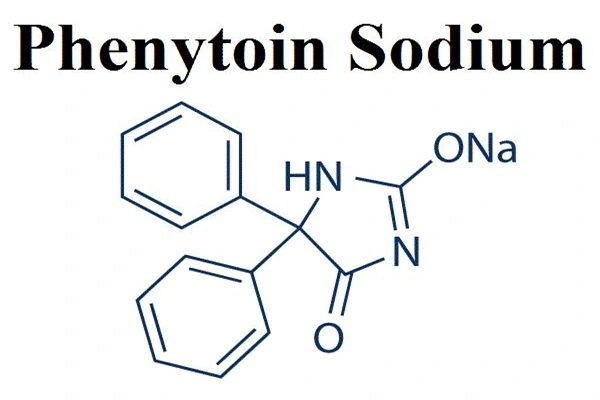
🧪 Molecular configuration determines water solubility and stability.
The core of Phenytoin Sodium API powder is a five-membered heterocyclic skeleton of diphenylhydantoin, with two benzene rings symmetrically connected on either side of the five-membered ring, forming a complete conjugated system. This rigid cyclic structure is the core functional region for binding to sodium channel proteins in cell membranes. The atoms within the ring are tightly bonded, and the bond angles and spatial torsion angles remain unchanged under normal temperature and humidity conditions, fundamentally ensuring the long-term structural stability of the raw material. The functional group arrangement of the entire molecule is modified through an acid-base neutralization reaction. The weakly acidic imide group on the original phenytoin molecule combines with sodium ions to form an organic salt. The entire conversion process only changes the molecular polarity and does not destroy the cyclic core that exerts the pharmacological effect, ensuring that the active sites remain completely consistent before and after salt formation.
The most obvious change in the sodium salt structure is reflected in its solubility. Experimental data shows that Phenytoin Sodium API powder can achieve a solubility of over 20 grams per liter in purified water at room temperature, rapidly forming a uniform and transparent aqueous solution. This is its core advantage over free phenytoin. The free-state raw material is almost insoluble in cold water and can only be dispersed in organic solvents. This sodium salt raw material is suitable for aqueous production systems and can be directly used in the formulation of aseptic injections, oral suspensions, syrups, and other dosage forms. The raw material's aqueous solution is generally weakly alkaline, with a stable pH range between 10 and 11. During the formulation production process, a buffer system is used to adjust the pH to prevent the precipitation of free phenytoin upon contact with acidic excipients, thus ensuring the stability of the finished product's quality.
From a powder physical property perspective, industrially produced Phenytoin Sodium API powder consists of fine, regular crystal particles with a concentrated particle size distribution, a moderate angle of repose, and excellent flowability. In automated pharmaceutical production lines, whether in mixing, tableting, or aseptic filling processes, the material will not experience bridging, adhesion to walls, or agglomeration, perfectly adapting to the operational requirements of high-speed production equipment. The raw material's hygroscopicity is within a controllable range. Under normal storage conditions with a relative humidity of 60%, it can remain in a loose crystalline state for thirty months after sealing, without significant clumping or discoloration. Only under extreme conditions of high temperature, high humidity, and strong acids and alkalis will the intramolecular ionic bonds slowly dissociate, leading to the precipitation of free phenytoin crystals.
The industrial preparation process relies on three core steps: condensation and cyclization, neutralization and salt formation, and recrystallization. Using crude diphenylhydantoin as a base, sodium hydroxide solution is added for neutralization, followed by cooling crystallization, centrifugation filtration, and vacuum drying to obtain the finished product. The overall process yield is consistently above 88%, and the melting range difference between raw materials from different production bases is controlled within 0.5 degrees Celsius, with the mainstream crystal form's melting point remaining between 292 and 296 degrees Celsius. Uniform crystal form and physicochemical parameters ensure highly synchronized in vitro dissolution rates in formulations made from different batches of raw materials, preventing significant fluctuations in efficacy during clinical use and fully meeting the quality control requirements of large-scale pharmaceutical manufacturing.
⚙️ Ion channels mediate neural and electrocardiographic regulatory mechanisms
After entering the body, Phenytoin Sodium API powder undergoes a dissociation process, with sodium ions rapidly integrating into the body fluids. The active phenylhydantoin molecules then circulate throughout the body via the bloodstream to nerve and cardiac tissues. The core target of this active molecule is voltage-gated sodium channels on the cell membrane. These channels are crucial structures for electrical signal transmission in neurons and cardiomyocytes. Under normal physiological conditions, these channels open and close rhythmically with changes in membrane potential, ensuring orderly signal transmission. The active molecule selectively binds to the inactivation sites of sodium channels, prolonging the duration of channel closure and thus limiting the continuous influx of sodium ions into the cell.
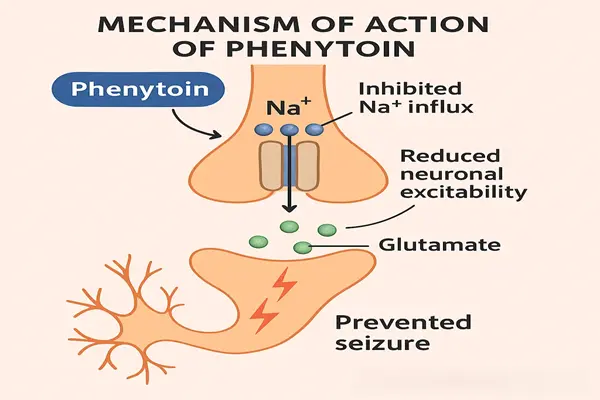
- Targeting neurons in the central nervous system, abnormally high-frequency discharges occur in the lesion area. The influx of large amounts of sodium ions amplifies the abnormal electrical signals, potentially triggering epileptic seizures. Phenytoin Sodium API powder, through its blocking effect on sodium channels, weakens the abnormal excitability of neurons and blocks the diffusion of abnormal electrical signals to surrounding brain tissue. After administration at the standard clinical dosage, the concentration of the active ingredient in the body can be maintained stably for more than twelve hours, continuously suppressing the discharge frequency of the lesion. Extensive clinical follow-up data show that epilepsy patients who adhere to regular medication regimens experience an average 72% reduction in the frequency of generalized tonic-clonic seizures, with similarly significant improvements in controlling absence seizures and partial seizures.
- When acting on cardiomyocytes, the active molecules regulate myocardial sodium channels through the same mechanism, slowing conduction velocity, shortening action potential duration, and stabilizing the overall electrical activity rhythm of the myocardium. Ventricular premature beats, ventricular tachycardia, and other arrhythmias largely originate from disordered electrical signals in myocardial cells. This ingredient can regulate disordered electrical conduction pathways and reduce abnormal activation of ectopic pacemakers. In emergency situations, intravenous infusion of the corresponding preparation can gradually correct malignant ventricular arrhythmias within 15 to 30 minutes, making it a commonly used drug ingredient in the treatment of cardiovascular emergencies.
- The drug's metabolic pathway in the body is clear and regular. The active ingredient absorbed into the circulatory system is primarily metabolized by oxidation in the liver, relying on hepatic microsomal enzymes to convert the parent nucleus structure into pharmacologically inactive metabolites. These metabolites are ultimately excreted through the kidneys in the urine. In healthy adults, the drug's half-life is stable at around 22 hours. Its long-lasting metabolic characteristics allow for steady-state blood concentrations with one to two daily doses, eliminating the need for frequent resuscitation. In individuals with normal liver and kidney function, the risk of drug accumulation at standard doses is extremely low. Only in individuals with severely impaired liver function should the dosage be reduced to avoid metabolic slowdown and subsequent accumulation of components in the body.
At the neuroprotective level, the stable regulation of sodium channels can also reduce the excessive release of excitatory neurotransmitters. When brain tissue suffers ischemic or hypoxic damage, neurons release large amounts of excitatory substances due to ion imbalances, further exacerbating cell damage. Phenytoin Sodium APIpowder can weaken this chain reaction by stabilizing cell membrane potential, thus reducing secondary brain injury. This adjunctive effect does not rely on additional pharmacological pathways; it is entirely based on sodium channel regulation, allowing this ingredient to be gradually applied in the adjunctive treatment of traumatic brain injury, with its therapeutic boundaries continuously expanding from simple anticonvulsant and antiarrhythmic effects.
💊 Diverse dosage forms cover both clinical and industrial applications
Sterile injectable formulations are the most representative application of Phenytoin Sodium API powder. Leveraging its excellent water solubility, this raw material can be formulated into two main dosage forms: intravenous injections and lyophilized powder for injection. Injectable solutions are primarily used in emergency situations such as status epilepticus and acute ventricular arrhythmias. Healthcare professionals administer the medication via intravenous bolus or infusion, rapidly achieving effective concentrations in the bloodstream and quickly controlling critical symptoms. Lyophilized powder for injection offers a longer shelf life, making it suitable for primary healthcare institutions and emergency medical stations. After reconstitution, its physicochemical properties remain stable, without turbidity or precipitation, making it a staple in hospital emergency medication lists.
Oral solid dosage forms target patients undergoing long-term treatment for chronic diseases. Pharmaceutical companies combine Phenytoin Sodium API powder with pharmaceutical excipients such as microcrystalline cellulose, crospovidone, and magnesium stearate to produce regular tablets, sustained-release tablets, and capsules. Regular tablets have a moderate onset of action, suitable for routine epilepsy control in adults. Sustained-release tablets utilize polymeric framework materials to delay drug dissolution, further extending the release cycle and reducing the frequency of daily dosing to once, significantly improving adherence in long-term patients. These oral formulations widely serve outpatients with epilepsy and those with chronic ventricular arrhythmias, representing a large patient base and the largest application segment in the raw material market.
Dedicated liquid formulations for children and those with swallowing difficulties have their own market space. Utilizing the water-soluble properties of the raw material, oral solutions and suspensions can be produced. Sweeteners and flavoring agents are added during production to improve taste, while suspending agents ensure uniform dispersion of the ingredients, preventing sedimentation of the active ingredient during storage. In pediatric clinics, these liquid formulations allow for precise dosage calculation based on weight, flexibly adjusting the dosage and solving the problem of young children being unable to swallow solid formulations. In nursing homes and rehabilitation centers, oral solutions are also frequently used for elderly patients with declining swallowing function, demonstrating highly specialized application scenarios.
There is a stable demand for high-purity Phenytoin Sodium API powder in the fields of pharmaceutical testing and scientific research standardization. In pharmaceutical testing institutes at all levels and pharmaceutical company quality laboratories, this raw material is used as a legal chemical reference standard, employing high-performance liquid chromatography (HPLC) to detect the content of active ingredients and related substance limits in commercially available formulations. Simultaneously, in pharmacology laboratories, it is used to prepare aqueous test solutions for sodium channel-related target studies, serving as a positive reference standard to compare the activity of other compounds. Standardization-grade raw materials have even higher requirements for purity and impurity control, belonging to a niche high-end category, with market supply and demand remaining balanced for a long time.
In the veterinary drug field, it has also formed a fixed application branch in compound formulations. In the livestock and poultry farming industry, low-dose Phenytoin Sodium API powder formulations can be used for the symptomatic treatment of animal neurological spasms and traumatic arrhythmias, leveraging the rapid onset of action of injectable formulations to quickly relieve acute symptoms in animals. In compound formulations, this raw material is often combined with other antiepileptic raw materials to create multi-target compound drugs for refractory epilepsy that cannot be controlled by single drugs. The synergistic effect of ingredients with different mechanisms of action enhances the control of symptoms and further expands the downstream applications of the raw materials.
🔬Process optimization and new delivery system
Upgrading green synthesis and purification processes is the core development direction at present. Traditional production processes use large amounts of polar organic solvents, resulting in high production costs and the generation of saline wastewater and organic waste liquid, placing significant pressure on environmental treatment. Currently, the industry is gradually promoting continuous flow neutralization crystallization technology to replace traditional batch reaction equipment, while using recyclable alcohol solvents to complete the recrystallization process. The new process increases overall production yield by 5 percentage points, reduces organic solvent consumption by 48%, and controls the content of related substances in the finished product to below 0.15%. All environmental and quality control indicators meet international GMP standards, helping domestic raw materials expand into overseas markets.
Powder modification and crystal form optimization continue to be implemented. Existing conventional crystal forms have shortcomings in dispersion effects in some slow-release excipients. Technicians have screened out new crystal forms with better flowability and compressibility through gradient cooling crystallization and solvent replacement. Simultaneously, airflow micronization technology is used to process raw materials, controlling the median particle size of the powder between 6 and 9 micrometers. Micronized raw materials dissolve more uniformly in solid dosage forms, significantly reducing the deviation in release curves between different batches of sustained-release tablets. Improvements in crystal form and powder allow the raw materials to meet the production requirements of more high-end sustained-release formulations.
Long-acting sustained-release injection delivery systems have become a research hotspot. Sustained-release microspheres are prepared by encapsulating Phenytoin Sodium API powder with biodegradable polymer materials. After subcutaneous or intramuscular injection, the microspheres achieve uniform drug release through the slow degradation of the polymer material. In vivo monitoring data shows that the active ingredient can be stably released for more than 30 days after a single dose. This novel delivery method can completely change the traditional pattern of frequent drug administration, especially suitable for epilepsy patients with limited mobility and poor compliance. Currently, related formulations have entered the preclinical validation stage, with broad prospects for industrialization.
The exploration of transdermal formulation technology continues to deepen. Researchers are combining it with medical penetration enhancers to develop transdermal patches based on Phenytoin Sodium API powder. Transdermal drug delivery bypasses the first-pass metabolism in the liver associated with oral administration, improving ingredient utilization efficiency while avoiding the trauma of injections. Patches rely on continuous absorption of the drug through skin tissue, maintaining stable blood drug concentrations, making them suitable for people managing chronic diseases long-term. After optimizing the penetration-enhancing formula for different skin types, the skin irritation of the patches is significantly reduced, and user comfort is greatly improved, representing a new drug delivery route in addition to oral and injection methods.
Conclusion
Phenytoin Sodium API powder is a milestone in the history of epilepsy treatment. As an "use-dependent" sodium channel blocker, it effectively controls generalized tonic-clonic seizures and complex partial seizures by preferentially inhibiting high-frequency discharging neurons in the epileptic focus. Since its introduction in 1938, phenytoin sodium has saved countless lives of epilepsy patients due to its proven efficacy and low cost. Although its narrow therapeutic window and nonlinear pharmacokinetics complicate its clinical application, for the pharmaceutical industry, high-purity, low-impurity phenytoin sodium API that meets the standards of multiple national pharmacopoeias remains a core guarantee for meeting the basic medication needs of epilepsy patients worldwide.
Xi'an Faithful BioTech Co., Ltd. combines advanced manufacturing technology with a comprehensive quality assurance system to provide high-quality Phenytoin Sodium API powder that meets international pharmaceutical standards. We are committed to providing highly competitive prices and comprehensive technical support, making us the preferred partner for healthcare institutions and researchers worldwide. Please contact our technical team (allen@faithfulbio.com) to learn how our products can improve your formulations.
📚 References
- Gannaway, W. L., & R., C. (1983). Clinical use of intravenous phenytoin sodium infusions. Clinical Pharmacy, 2(2), 135-138. PMID: 6883941.
- Lipkind, G. M., & Fozzard, H. A. (2010). Molecular Model of Anticonvulsant Drug Binding to the Voltage-Gated Sodium Channel Inner Pore. Molecular Pharmacology, 78(4), 631-638.
- Proficient Rx LP. (2024). EXTENDED PHENYTOIN SODIUM CAPSULES, USP [Prescribing Information]. DailyMed. Retrieved June 8, 2026.
- Sigma-Aldrich. (n.d.). Phenytoin sodium Pharmaceutical Secondary Standard (Product No. PHR1492). Retrieved June 8, 2026.
- USP29-NF24. (2006). Phenytoin Sodium Monograph. United States Pharmacopeia. (Official January 1, 2007).