

What is methoxatin disodium salt?
Methoxatin disodium salt, also known as PQQ disodium salt in the industry, is a reddish brown water-soluble quinone biochemical powder raw material. Methoxatin disodium salt was first discovered in methylotrophic bacteria as a natural redox coenzyme. The free state of pyrroloquinoline quinone has weak water solubility and is prone to activity degradation during storage. After salt formation treatment to obtain Methoxatin precipitation salt, its water solubility and storage stability are significantly improved, making it the most widely circulated pyrroloquinoline quinone raw material in the market. Methoxatin sediment salt is generally prepared by microbial fermentation or chemical synthesis processes, and the finished powder undergoes multiple steps of purification, impurity removal, and drying treatment. Each batch of Methoxatin Disodium Salt undergoes multiple indicators such as purity, impurities, and heavy metals testing. The purity is determined by HPLC method, and the purity of conventional finished products can reach 97% or even 98%, ensuring that the activity fluctuations between different batches are within a small range.
Molecular Structure Characteristics of Methoxatin Disodium Salt
Methoxatin precipitation salt has a unique tricyclic quinone skeleton structure, with multiple carboxyl groups connected to the skeleton. After binding with sodium ions to form a disodium salt, the hydrophilic properties of the carboxyl groups are further released, allowing Methoxatin precipitation salt to easily dissolve in aqueous solutions. This molecular skeleton is the basis for the redox cycle of Methoxatin Disodium Salt. The quinone structure can receive and release electrons, repeatedly switching between the oxidized and reduced states. This is also the fundamental reason why Methoxatin Disodium Salt can act as a coenzyme. If the tricyclic quinone skeleton is detached, Methoxatin disodium salt will lose its ability to transfer electrons, and the related cellular regulatory effects will also disappear.
The molecular structure of Methoxatin Disodium Salt determines its sensitivity to the external environment. Strong light, high temperature, and high humidity environments will gradually destroy the quinone structure inside the molecule, causing the activity of Methoxatin Disodium Salt to continuously decrease. When the ambient temperature remains high or is exposed to visible light or ultraviolet light for a long time, the internal chemical bonds of Methoxatin dismodium salt molecules will break, and the original intact tricyclic skeleton will be dismantled. The color of the raw material will also become lighter, and the corresponding biological activity will gradually decrease. Therefore, the finished powder of Methoxatin Disodium Salt needs to be stored under low temperature, dark, sealed and dry conditions to reduce the damage caused by environmental factors to the molecular structure and preserve the original activity of Pyrroloquinoline quinone disodium salt to the greatest extent possible.
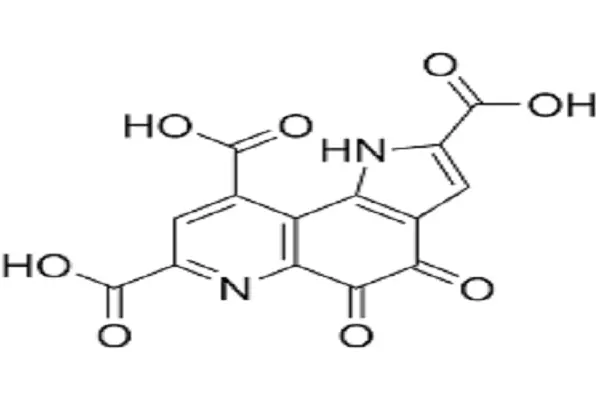
The core difference between Methoxatin Disodium Salt and free pyrroloquinoline quinone is the introduction of two sodium ions. Free pyrroloquinoline quinone carries carboxyl groups and has limited solubility in water. It is easy to precipitate in neutral water environments and difficult to stably function in aqueous systems. The disodium salt form of Methoxatin disodium salt neutralizes carboxyl acidic groups, greatly enhancing its water solubility. It can also be stably dispersed in neutral buffer solutions, making it convenient for biochemical testing in various aqueous solution systems. Many cell system tests related to aqueous solutions prioritize the use of Methoxatin sediment salt over free pyrroloquinoline quinone, relying on its excellent water solubility to evenly disperse in the culture medium and stably contact the cell system.
The molecular size of Methoxatin Disodium Salt is relatively small, and it can penetrate through some cell membrane structures and enter the interior of cells to exert its effects, which is also its characteristic that distinguishes it from many large molecular active substances. Large molecule peptides or polysaccharides are difficult to penetrate the cell membrane and can only act on the extracellular surface. Methoxatin sediment salt, with its small molecule properties, can enter the cell and contact organelles such as mitochondria, participating in the regulation of internal redox reactions. But this penetration ability also has boundaries. Methoxatin sediment salt will not penetrate all biofilms without limitation, and will be affected by membrane proteins and environmental acidity and alkalinity. The efficiency of entering cells will vary significantly in different cell systems.
The functional groups on the molecule of Methoxatin Disodium Salt can also weakly bind with various metal ions in the system. In an environment containing a large number of metal ions, Methoxatin Disodium Salt is prone to form complexes, changing its original molecular state and weakening its redox activity. Therefore, when configuring the aqueous solution of Methoxatin Disodium Salt, pure water with low metal ion content is generally used to reduce the interference of impurity ions, ensure the integrity of the Methoxatin Disodium Salt molecule structure, and maintain stable coenzyme activity.
Principle of action of Methoxatin Disodium Salt
The core identity of Methoxatin Disodium Salt is redox coenzyme, and its most basic ability is to continuously transfer electrons, constantly switch between oxidative and reductive states, and participate in various metabolic reactions inside the cell. During the continuous operation of cells, oxidative active substances are constantly produced. Excessive accumulation of these substances can attack the proteins, lipids, and genetic material inside the cell, gradually causing cellular damage. Methoxatin sediment salt can capture such excess oxidative active substances, receive excess electrons, reduce the damage caused by oxidative substances, alleviate the oxidative stress on cells, and maintain the stability of the internal environment of cells.
Methoxatin sediment salt can also act on mitochondria, which act as the energy factory of cells and are responsible for synthesizing the energy substances needed for cell survival. When cells are under sustained stress, mitochondrial structure is easily damaged, energy production efficiency decreases, and a large amount of oxidative substances are released. Methoxatin sediment salt can assist in regulating mitochondrial related generation signals, help maintain mitochondrial structural integrity, maintain stable energy production, and reduce the accumulation of damaged mitochondria in cells. This regulatory effect on mitochondria is also the reason why Methoxatin sediment salt has received widespread attention, and many related tests have been conducted in the direction of mitochondrial homeostasis.
Methoxatin disodium salt can participate in the regulation of intracellular signaling pathways, affect the active expression of various proteins, and regulate the rhythm of cell growth and renewal. The normal growth and replacement of cells require stable signal regulation. When external stimuli disrupt the balance, the rhythm of cell renewal may become disrupted. Methoxatin sediment salt can gently regulate the transmission of related signals, avoiding signal disorders caused by excessive oxidative stress in cells and maintaining a relatively stable updating state. Methoxatin sediment salt does not forcefully alter the basic metabolic processes of cells, but rather acts as a buffering regulator when cells are subjected to stress shocks, helping them return to steady state.
Methoxatin disodium salt can also work in conjunction with various dehydrogenases, serving as an electron transfer carrier in enzyme reaction systems. Many bacteria and microorganisms require coenzymes such as Methoxatin Disodium Salt to complete catalytic reactions. Without the participation of Methoxatin Disodium Salt, enzyme catalyzed reactions are difficult to proceed smoothly. In the in vitro biochemical reaction system, the addition of Methoxatin Disodium Salt can establish a complete enzyme catalytic chain, observe the changes in enzymatic reactions, and understand the operational mode of microbial metabolism. This is also the irreplaceable value of Methoxatin sediment salt in biochemical enzyme related scenarios.
The effect of Methoxatin Disodium Salt has a clear dosage range, and a low addition amount is difficult to produce observable regulatory effects. On the other hand, a high concentration of Methoxatin Disodium Salt can actually disrupt the redox balance of the system and have a reverse effect. In various testing scenarios, it is necessary to set the concentration of Methoxatin sediment salt in a gradient and find the appropriate dosage for the adapted system. Methodin disease salt itself does not have the ability to directly kill cells or microorganisms, but mainly relies on redox regulation to improve the oxidation environment of cells. It belongs to the stable regulation biochemical raw materials, which is essentially different from the action mode of antibiotics and disinfection and sterilization raw materials.
Scope of use of Methoxatin Disc Salt
Methoxatin disodium salt is widely used in biochemical enzyme related testing scenarios to build in vitro enzyme catalytic reaction systems and study the catalytic processes of various dehydrogenases. Many dehydrogenases in microbial metabolism rely on pyrroloquinoline quinone coenzymes. Methoxatin disodium salt has good water solubility and simple solution preparation, making it the preferred raw material for building such enzyme reaction systems. In enzyme catalytic system testing, Methoxatin disodium salt is added as a coenzyme to the reaction system, driving the catalytic reaction to continue, facilitating observation of reaction rate, substrate conversion efficiency, and understanding of enzyme catalytic characteristics.
Methoxatin sediment salt is used for cell related testing to observe changes in cell state under oxidative stress environment. After artificially creating oxidative stimuli on cells, Methoxatin disodium salt was added to observe changes in cell survival status, mitochondrial morphology, and oxidative indicators, in order to understand the cellular changes related to oxidative stress. This type of test will set different concentration gradients of Methoxatin sediment salt, compare the differences in effects caused by different dosages, collect corresponding data, and provide a basic reference for the development of active raw materials in the future.
Methoxatin disodium salt can serve as a foundational material for the development of dietary supplement ingredients and be used for basic validation in the early stages of formulation. Many dietary active ingredient development projects use Methoxatin Disodium Salt for preliminary basic evaluation, observing the stability of the ingredients in the system, whether there will be interactions with other active ingredients, and determining the feasibility of the formula system. It should be clarified that Methoxatin Disodium Salt is only a biochemical raw material used for early development, not a finished dietary supplement that has already been launched on the market. From raw materials to final products, a large amount of safety assessment and formula optimization work is still needed.
Methoxatin disodium salt is also applied in the field of microbial metabolism to explore the metabolic pathways of methylotrophic bacteria. These naturally occurring microorganisms containing pyrroloquinoline quinone rely on this coenzyme to complete carbon source metabolism. The use of Pyrroloquinoline quinone disodium salt can assist in deciphering the microbial metabolic chain and understanding how microorganisms utilize simple carbon sources for growth and reproduction. This type of work can provide basic support for optimizing microbial fermentation processes, developing biocatalytic systems, and expanding the technological ideas related to biosynthesis.
Methoxatin disodium salt can also be used for the evaluation of antioxidant systems, assessing antioxidant capacity in vitro chemical systems. The in vitro chemical system can quickly determine the ability of Methoxatin Disodium Salt to remove oxidative active substances, compare its performance with other antioxidant materials, and quickly screen for active materials. This type of in vitro chemical testing is easy to operate, cost-effective, and often used as a preliminary screening method. However, the results of the in vitro system cannot be directly equivalent to the in vivo effect, and are only used as basic reference data.
The cutting-edge development direction of Methoxatin sediment salt
Methoxatin disodium salt continues to expand in the development of composite active formulas, combining Methoxatin disodium salt with other antioxidant active ingredients to observe the synergistic regulatory effect brought by the combination system. The regulating ability of a single active ingredient is limited, and the combination of multiple active substances may jointly regulate the oxidation steady state from multiple pathways. The relevant work will continuously adjust the ratio of Methoxatin Disodium Salt to other raw materials, search for combination schemes that can exert synergistic effects, and explore new development ideas for active formulas.
Methoxatin sediment salt has received attention in the development of targeted delivery systems. Methoxatin sediment salt itself is a small molecule that is prone to rapid diffusion and loss in complex biological environments. By encapsulating Methoxatin sediment salt with carrier materials, slow release can be achieved, prolonging the duration of action of Methoxatin sediment salt and increasing the concentration of targeted raw materials. The main purpose of developing such delivery systems is to improve the efficiency of Methoxatin Disodium Salt, reduce losses caused by rapid loss of raw materials, and expand the application potential of Methoxatin Disodium Salt.

Methoxatin sediment salt continues to explore the direction of cellular homeostasis related to aging, and more systematic tests are conducted around the maintenance of mitochondrial function. The process of cellular aging is often accompanied by the accumulation of mitochondrial damage and the continuous increase of oxidative substances. Methoxatin sediment salt, which targets the regulatory properties of mitochondria, has become a highly sought after raw material in this direction. Continuous observation of changes in cellular aging related indicators after long-term addition of Methoxatin Disodium Salt, exploring feasible pathways to maintain cellular homeostasis, and continuously enriching our understanding of the boundaries of Methoxatin Disodium Salt's effects.
The green preparation process optimization of Methoxatin sediment salt is also a key direction. The traditional synthesis process produces a lot of by-products, and the subsequent purification steps are cumbersome. The fermentation method for producing Methoxatin disodium salt is more environmentally friendly. Continuously modifying fermentation strains, optimizing fermentation media and conditions can increase the fermentation yield of Methoxatin Disodium Salt, simplify subsequent purification processes, reduce production costs, and reduce pollutant emissions during the production process, making the large-scale production of Methoxatin Disodium Salt more sustainable.
The stability optimization plan for Methoxatin sediment salt is also continuously being improved. Methoxatin disodium salt is prone to deactivation when exposed to light and heat, which limits its use in some formulation systems. By using methods such as microencapsulation and modification, the Methoxatin disodium salt is protected from damage caused by light and moisture, and the storage stability of Methoxatin disodium salt is improved in different formulation systems. This type of stability improvement technology can broaden the product system adapted to Methoxatin disodium salt and reduce activity loss during raw material storage and processing.
Conclusion
Methoxatin disodium salt (pyrroloquinoline quinone disodium salt) is a reddish-brown biochemical powder that functions as a redox coenzyme. Leveraging its unique tricyclic quinone molecular framework, it facilitates cyclic electron transfer, regulates cellular redox homeostasis, and maintains normal mitochondrial function. Due to its excellent water solubility, methoxatin disodium salt is widely used in applications such as *in vitro* enzymatic assays, cellular system evaluations, microbial metabolism research, and the preliminary development of bioactive formulations. As the compound is sensitive to light, heat, and humidity, it must be stored in a sealed container at low temperatures and protected from light to prevent structural degradation and loss of activity. With ongoing technological advancements, the scope of methoxatin disodium salt continues to expand into areas such as complex formulations, targeted delivery, and green manufacturing, revealing ever-greater application potential.
Xi'an Faithful BioTech Co., Ltd. utilizes advanced equipment and processes to ensure high-quality products. Our Pyrroloquinoline quinone disodium salt meets international pharmaceutical standards. Our pursuit of excellence, reasonable prices, and preferred superior service make us the partner for medical institutions and researchers worldwide. If you require Methoxatin disodium salt research or production,Please contact us Click email: allen@faithfulbio.com Or WhatsApp: +86 13137770562.
FAQ
A1: Are Methoxatin disodium salt and PQQ the same thing?
Methoxatin disodium salt is the disodium salt form of PQQ. While free-form PQQ has poor water solubility, the raw material most commonly available on the market is Methoxatin disodium salt.
A2: Can Methoxatin disodium salt be taken orally?
Methoxatin disodium salt is a raw material for biochemical research, not a finished dietary supplement or pharmaceutical product; it is not intended for direct oral consumption, and doing so poses unknown safety risks.
A3: What are the storage requirements for Methoxatin disodium salt?
Methoxatin disodium salt should be stored in a sealed container within a cool, dry environment protected from light. Exposure to light and high temperatures should be avoided to prevent a loss of activity.
References
- Anthony C, Zatman L J. The structure of methoxatin, a novel coenzyme from methylotrophic bacteria[J]. Biochemical Journal, 1981, 195(1): 167-173.
- Killgore J, Smiley C, Goldberg J, et al. Pyrroloquinoline quinone stimulates mitochondrial biogenesis[J]. Archives of Biochemistry and Biophysics, 2010, 496(2): 128-138.
- Rucker R B, Chowanadisai W, Nakano M. Pyrroloquinoline quinone (PQQ): A new cofactor with antioxidant and cell signaling properties[J]. Nutrition Reviews, 2009, 67(10): 590-602.
- Steinberg F M, Stites T E. Physiological aspects of pyrroloquinoline quinone in humans and animals[J]. Journal of Nutritional Biochemistry, 2014, 25(1): 1-8.
- Bishop A, Anthony C. Biosynthesis of pyrroloquinoline quinone[J]. FEMS Microbiology Reviews, 2008, 32(1): 1-24.
- He K, Nukada H, Urakami T, et al. Antioxidant properties of pyrroloquinoline quinone disodium salt in cellular systems[J]. Free Radical Research, 2003, 37(10): 1045-1054.
- Misra H S, Khairnar N P, Barik A, et al. Pyrroloquinoline quinone: a redox cofactor with broad biological effects[J]. IUBMB Life, 2012, 64(11): 872-880.