

What are the biological functions of 5-ALA powder?
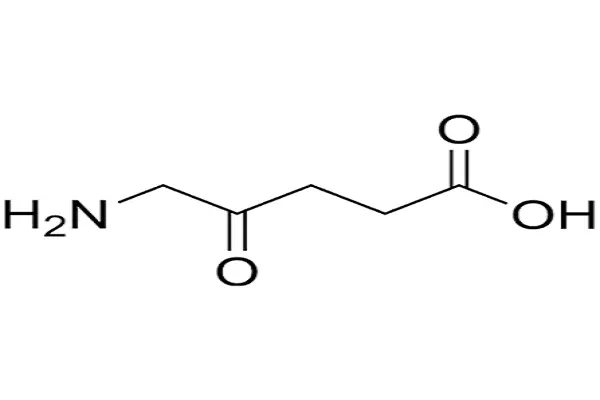
5-ALA powder, short for 5-Aminolevulinic acid powder, is a natural small-molecule precursor compound in the biological heme synthesis pathway. 5-ALA powder exists widely in plants, algae, bacteria and animal cells. In natural organisms, 5-ALA powder is produced through intracellular enzymatic reactions. The industrial 5-ALA powder is manufactured by microbial fermentation or chemical synthesis, followed by purification, desalination and drying to obtain fine powder products. Each batch of 5-ALA powder undergoes strict quality testing, including purity, moisture, heavy metals and related impurities. The purity of commercial 5-ALA powder can reach above 98% by HPLC detection. 5-ALA powder is a biochemical raw material for research and development, not a finished drug. Direct use without safety assessment will bring unknown risks, and it can only be applied in corresponding research scenarios.
Participation in Heme and Porphyrin Biosynthesis
5-ALA powder is the starting raw material for the whole heme and porphyrin synthesis pathway inside living cells. After entering cells, 5-ALA powder will be catalyzed by intracellular enzymes to generate intermediate substances step by step, and finally form porphyrin compounds, and then further synthesize heme. Heme is an indispensable component of many functional proteins in organisms. It constitutes hemoglobin that transports oxygen, myoglobin that stores oxygen in muscle tissue, and various cytochrome proteins participating in mitochondrial electron transfer. Without enough 5-ALA powder as the precursor, the whole synthetic chain will slow down, and the production of heme and related porphyrin substances will decrease accordingly.
The synthesis process of porphyrin strictly follows the quantitative conversion rule of precursors. When exogenous 5-ALA powder is added to the cell system, the intracellular concentration of 5-ALA rises, and the synthesis flux of porphyrin will increase correspondingly. Different types of cells have different enzyme expression levels, so the accumulation speed and quantity of porphyrin substances after adding 5-Aminolevulinic acid vary greatly. Some cells can continuously convert 5-ALA powder into porphyrin, while others have weak enzyme activity, and the conversion efficiency of 5-ALA powder is relatively low. This difference is the core basis for the selective accumulation of porphyrin in different cell populations.
Porphyrin substances produced from 5-ALA powder have special light absorption characteristics. Porphyrin can absorb light of specific wavelengths and then release energy. This property lays the foundation for many downstream applications of 5-ALA powder. It should be noted that 5-ALA powder itself does not have light-sensitive properties. Only after cells convert 5-ALA powder into porphyrin metabolites can the photoresponse function be realized. 5-ALA powder acts as a precursor trigger rather than a photosensitive substance directly.
The metabolic consumption rate of 5-ALA powder is regulated by multiple feedback mechanisms in cells. When the content of heme in cells reaches a certain level, it will inhibit the activity of the rate-limiting enzyme at the upstream of the pathway, reduce the endogenous production of 5-ALA, and avoid excessive accumulation of porphyrin. When exogenous 5-ALA powder is supplied, this feedback regulation cannot fully limit the generation of porphyrin, so porphyrin will gradually accumulate inside cells. This characteristic makes 5-ALA powder widely used in cell-related test systems to observe the metabolic state of porphyrin.
The conversion of 5-ALA powder is closely related to the intracellular ion environment and pH value. Too high or too low pH will affect the activity of the series of enzymes in the porphyrin synthesis pathway, slow down the conversion speed of 5-ALA powder, and even interrupt the synthesis process. Therefore, when preparing the solution of 5-ALA powder, it is necessary to adjust the pH value of the solvent to keep it in a suitable range, so that 5-ALA powder can smoothly enter cells and participate in the subsequent synthesis reaction.
Photodynamic Response Induction Function
5-ALA powder can induce cells to produce porphyrin metabolites, which is the core basis for its photodynamic-related biological function. After 5-ALA powder enters the cell and is converted into porphyrin, when exposed to light of the matching wavelength, the accumulated porphyrin will transfer energy to surrounding oxygen molecules in the cell, generating reactive oxygen species. These reactive oxygen species can oxidize and damage intracellular lipids, proteins and nucleic acid structures, and change the survival state of target cells. This whole process depends on three key factors: the uptake of 5-ALA powder by cells, the conversion efficiency into porphyrin, and the irradiation of specific light sources.
Different cell types have obvious differences in absorbing 5-ALA powder. Some cells have stronger uptake capacity for 5-ALA powder, so porphyrin accumulates rapidly after adding 5-ALA powder. Other cells absorb less 5-ALA powder, and the amount of porphyrin produced is low. This selective uptake feature makes 5-Aminolevulinic acid have targeted characteristics in photodynamic related systems. It can make porphyrin accumulate more in specific cell groups, while the porphyrin content in adjacent normal cells remains at a low level.
The biological effect induced by 5-ALA powder is light-dependent. Without light irradiation, even if cells absorb 5-ALA powder and synthesize porphyrin, there will be no obvious oxidative damage effect. Once the light source of the correct wavelength is applied, the porphyrin will activate the photodynamic reaction immediately. The intensity and duration of light irradiation will affect the final biological effect. Too weak light cannot trigger enough reactive oxygen production, while excessive light may cause non-selective damage to surrounding cells.
The concentration of 5-ALA powder also determines the degree of photodynamic reaction. If the concentration of 5-ALA powder is too low, the amount of porphyrin produced is insufficient, and the effect after light irradiation is not obvious. If the concentration of 5-ALA powder is too high, porphyrin may accumulate in a large amount in non-target cells, reducing the selectivity of the system. In the relevant test system, gradient concentration settings of 5-ALA powder are usually required to find the appropriate concentration range to balance the effect and selectivity.
5-ALA powder induced photodynamic reaction can also affect the microenvironment around cells. Reactive oxygen generated during the reaction can change the redox state of the extracellular matrix, affect the activity of surrounding biomolecules, and further regulate the signal communication between cells. This series of chain reactions is a secondary biological effect brought by 5-ALA powder after photodynamic activation, which is also one of the important observation indicators in related biochemical tests.
Regulation of Plant Physiological Activity
5-ALA powder is an important plant growth regulator precursor, and it participates in the chlorophyll synthesis pathway in plant cells. Chlorophyll and heme share the same early synthetic pathway. Exogenous supplemented 5-ALA powder can enter plant cells and promote the synthesis of chlorophyll precursors. Appropriate amount of 5-ALA powder can help plants maintain stable chlorophyll content, improve the light absorption capacity of leaves, and support the normal progress of photosynthesis.
5-ALA powder can improve the stress resistance of plants. When plants are under adverse conditions such as drought, low temperature and high salinity, a large number of reactive oxygen substances will accumulate in plant cells, destroying cell membrane structure and reducing photosynthetic efficiency. A reasonable dose of 5-ALA powder can adjust the antioxidant system of plant cells, enhance the scavenging capacity of reactive oxygen, reduce the oxidative damage caused by adverse environments, and help plants maintain normal physiological metabolism under stress.
5-ALA powder can affect the development of plant roots and promote root growth. Root system is responsible for absorbing water and mineral nutrients from soil. Appropriate 5-ALA powder can promote the division and elongation of root cells, increase the total root length and root surface area, so that plants can absorb more water and nutrients, and improve the growth state of seedlings. The effect of 5-ALA powder on plant roots has an obvious dose window. Excessively high concentration of 5-ALA powder will inhibit root growth and bring adverse effects.
5-ALA powder participates in regulating plant stomatal movement. Stomata control gas exchange and water transpiration of leaves. 5-ALA powder can affect the opening and closing state of stomata by regulating the signal substances inside plant cells. Under drought conditions, 5-ALA powder helps plants properly adjust stomatal opening degree, reduce water loss through transpiration, and improve drought tolerance of plants. This regulatory function makes 5-ALA powder widely concerned in plant cultivation related research systems.
5-ALA powder can also affect the flowering and fruit setting process of plants. In the growth cycle of many crops, adding an appropriate amount of 5-ALA powder can regulate the transformation of plant endogenous hormones, promote flower bud differentiation, improve fruit setting rate, and reduce fruit drop. The effect of 5-ALA powder varies with different plant varieties and growth stages. The optimal dosage and application time of 5-ALA powder need to be adjusted according to the characteristics of different crops.
Other Biological Regulatory Properties
5-ALA powder participates in the regulation of cellular redox balance in multiple biological systems. As a precursor of porphyrin and heme, 5-ALA powder affects the content of heme-containing antioxidant enzymes in cells. These enzymes can clear excess reactive oxygen species and maintain intracellular redox homeostasis. When the supply of 5-ALA powder is insufficient, the synthesis of these enzymes will be limited, and the ability of cells to resist oxidative stress will decrease.
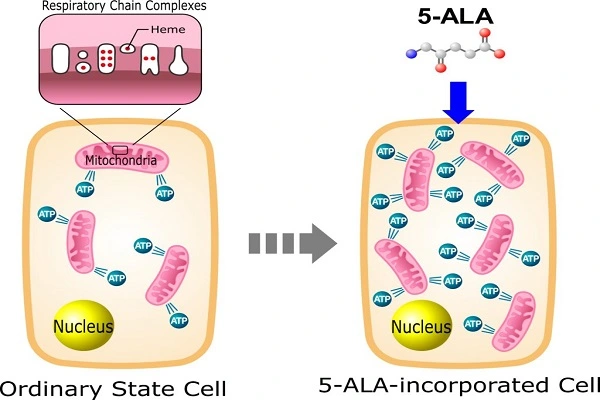
5-ALA powder has an impact on mitochondrial function. Many cytochrome proteins in the mitochondrial electron transport chain contain heme groups. Sufficient precursor supply of 5-ALA powder helps maintain the normal synthesis of these cytochrome proteins, ensures the smooth progress of mitochondrial energy metabolism, and stabilizes the energy supply of cells. Insufficient heme synthesis caused by the lack of 5-ALA powder will reduce the efficiency of mitochondrial electron transfer, and increase the production of reactive oxygen in mitochondria.
5-ALA powder can affect the proliferation and differentiation of some cell types. The synthesis of porphyrin and heme is closely related to cell cycle. Adding 5-ALA powder changes the intracellular porphyrin level, which will interfere with the normal cycle process of cells. The performance of 5-ALA powder varies greatly in different cell types. Some cell groups are sensitive to the change of 5-ALA concentration, while others are not significantly affected.
The biological function of 5-ALA powder is closely related to its stability. Aqueous solution of 5-ALA powder is easy to degrade under light, which will reduce the effective content and weaken its biological activity. Therefore, the aqueous solution prepared from 5-ALA powder is generally prepared before use and protected from light. Solid 5-ALA powder needs to be stored in sealed, low-temperature and dry conditions to avoid degradation and maintain its biological activity.
5-ALA powder also has certain effects on microbial metabolism. Many microorganisms can synthesize porphyrin or related heme substances by using exogenous 5-ALA powder. Adding 5-ALA powder to microbial culture system can adjust the metabolic flux of porphyrin pathway, affect the respiratory efficiency and growth state of microorganisms. This characteristic is often used in microbial metabolic pathway exploration and strain culture related work.
Conclusion
5-ALA powder is a natural small-molecule precursor compound, and its core biological functions are centered on participating in the biosynthesis of heme and porphyrin. 5-ALA powder can induce porphyrin accumulation in cells to realize photodynamic response, regulate plant photosynthesis and stress resistance, and participate in maintaining cellular redox balance and mitochondrial energy metabolism. The biological effect of 5-ALA powder has an obvious concentration window, and the effect will change with different cell types and environmental conditions. 5-ALA powder is sensitive to light and easy to degrade in aqueous solution, so strict storage and operation protection from light are required. It should be emphasized that 5-ALA powder belongs to biochemical raw material for research and development rather than finished medicine. Direct application in human body without complete safety verification has potential risks, and it can only be used in research scenarios.
Xi'an Faithful BioTech Co., Ltd. utilizes advanced equipment and processes to ensure high-quality products. Our 5-ALA powder meets international pharmaceutical standards. Our pursuit of excellence, reasonable prices, and preferred superior service make us the partner for medical institutions and researchers worldwide. If you require 5-Aminolevulinic acid research or production,Please contact us Click email: allen@faithfulbio.com Or WhatsApp: +86 13137770562.
FAQ
Q1: Is 5-ALA powder the same as 5-Aminolevulinic acid?
5-ALA powder is the powder form of 5-Aminolevulinic acid. 5-Aminolevulinic acid is the chemical name, and 5-ALA is the common abbreviation.
Q2: Does 5-ALA powder have photodynamic effect by itself?
No. 5-ALA powder itself is not photosensitive. It must be converted into porphyrin metabolites inside cells to produce photodynamic reaction under light.
Q3: What storage requirements does 5-ALA powder have?
5-ALA powder needs sealed storage under low temperature, dry and dark environment. Its aqueous solution degrades rapidly under light, so prepare it immediately before use.
References
- Beale S I. Biosynthesis of 5-aminolevulinic acid in plants and algae[J]. Photosynthesis Research, 1990, 23(1): 111-127.
- Kennedy J C, Marcus S L, Pottier R H. Photodynamic therapy using 5-aminolevulinic acid induced porphyrin synthesis[J]. Journal of Photochemistry and Photobiology B: Biology, 1990, 6(1-2): 131-148.
- Sasaki K, Watanabe M, Tanaka T, et al. 5-Aminolevulinic acid: a versatile plant growth regulator[J]. Journal of Plant Growth Regulation, 2002, 21(2): 137-149.
- Kadish K M, Smith K M, Guilard R. Porphyrin handbook: biosynthesis of porphyrins from 5-aminolevulinic acid[M]. Academic Press, 2000.
- Fukuda H, Ogura S, Takemoto T. Mitochondrial responses to 5-aminolevulinic acid and porphyrin accumulation[J]. Free Radical Biology and Medicine, 2005, 38(10): 1321-1329.
- Wang J, Zhang L. Effects of 5-aminolevulinic acid on plant antioxidant system under abiotic stress[J]. Plant Physiology and Biochemistry, 2014, 82: 128-136.
- Peng Q, Berg K, Moan J, et al. 5-Aminolevulinic acid-based photodynamic therapy: principles and applications[J]. Photochemistry and Photobiology, 1997, 65(2): 235-251.