

What is the drug Brinzolamide used for?
In the landscape of drug treatment for glaucoma and intraocular hypertension, carbonic anhydrase inhibitors lower intraocular pressure by reducing aqueous humor production, and Brinzolamide Raw Powder is one of the representative drugs with this mechanism. It is a synthetic thienothiazine sulfonamide compound with a sulfonamide group and a chiral center in its chemical structure. As a second-generation topical carbonic anhydrase inhibitor, brinzolamide has high affinity and selective inhibitory activity against carbonic anhydrase type II isoenzymes, effectively reducing the rate of aqueous humor production and thus lowering intraocular pressure. Due to its excellent comfort at physiological pH, brinzolamide offers good compliance advantages in the long-term management of glaucoma.
🧬 Chiral thiophene fused heterocyclic stable molecular configuration
Brinzolamide Raw Powder's molecular backbone is covalently assembled from four functional modules: a thienothiazine disulfide fused heterocycle, an R-configuration chiral ethylamine side chain, a terminal sulfonamide group, and a 3-methoxypropyl hydrophilic fragment. The molecule contains a single R-type chiral carbon center. A complete dynamic chiral resolution process precisely eliminates the inactive S-type racemic isomer, without interfering with quantitative detection indicators of aqueous humor secretion from ciliary cells. Heterocyclic molecules lacking the complete sulfonamide functional group cannot form chelate coordination with the zinc ions at the active site of carbonic anhydrase, resulting in significantly reduced enzyme binding affinity, weak intraocular pressure-lowering effect, and short-lasting action.
Brinzolamide Raw Powder's terminal sulfonamide group forms a stable five-membered chelate ring with the zinc ion in the enzyme-catalyzed cavity, while the disulfide fused heterocycle forms a hydrophobic bonding region. Even after 30 months of storage in a sealed, dry place protected from light at 2-8°C, it does not exhibit sulfonamide hydrolysis, chiral carbon racemization, or thiophene epoxidation degradation. During continuous passage and incubation of primary ciliary body cells and long-term rabbit aqueous humor metabolism simulation experiments, the molecular integrity shows no significant decline.
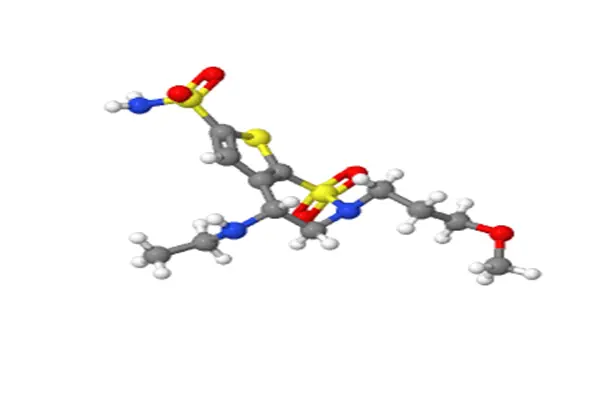
The terminal sulfonamide group is the core functional region embedded in the carbonic anhydrase II catalytic pocket. The nitrogen and oxygen atoms of the sulfonamide form multiple coordinated hydrogen bonds with the zinc ion in the active center, firmly occupying the substrate binding site and competitively blocking the carbon dioxide hydration catalysis reaction. If the sulfonamide structure is removed, the molecule completely loses its carbonic anhydrase inhibitory ability, cannot block the aqueous humor production pathway, and is unsuitable for long-term continuous ocular cell culture systems. The intact R-type chiral thiophenothiazine sulfonamide conjugated skeleton is the core support for Brinzolamide's selective intraocular pressure-lowering activity.
The 3-methoxypropyl polar ether bond in the molecular side chain synergistically balances the molecule's lipid-water partition properties with the hydrophobic ethylamine side chain. The methoxy hydrophilic fragment imparts moderate suspension and water solubility, preventing crystallization, aggregation, and stratification when used in gradient dilution formulations of eye drop buffer systems and artificial aqueous humor simulation solutions. The thiophene disulfide heterocycle moderately enhances lipid solubility, adhering to the corneal epithelial lipid layer, prolonging local retention time in the eye, and reducing systemic transmucosal absorption. Highly polar sulfur-free heterocyclic molecules have difficulty penetrating the corneal epithelium, while strongly hydrophobic ether-free heterocyclic side chains easily precipitate within the eye and irritate the conjunctiva. Brinzolamide Raw Powder simultaneously considers corneal penetration, local ocular retention, and physiological solvent dispersion properties, making it suitable for high-throughput carbonic anhydrase subtype screening and large-scale simultaneous culture of primary ciliary body cells.
The entire molecule lacks broad-spectrum, non-specific carbonic anhydrase binding ability; it only specifically and with high affinity recognizes the ocular carbonic anhydrase II subtype. Its binding affinity to erythrocyte and renal carbonic anhydrase isoenzymes is extremely weak. This allows it to precisely target a single regulatory pathway for aqueous humor secretion within the eye, significantly reducing systemic metabolic interference signals in in vitro observation systems. Once sulfonamide undergoes hydrolytic cleavage and racemic inversion of the chiral carbon, the chelate binding affinity between the molecule and carbonic anhydrase II drops sharply, and the regulatory effects related to aqueous humor secretion blockade and intraocular pressure reduction are simultaneously and significantly diminished.
⚙️ Selective carbonic anhydrase inhibition in the eye lowers intraocular pressure
Under healthy ocular homeostasis, ciliary carbonic anhydrase II continuously catalyzes the hydration of carbon dioxide to form bicarbonate ions, which, in conjunction with sodium ion transport, form isotonic aqueous humor. Aqueous humor production and trabecular meshwork drainage are dynamically balanced, maintaining intraocular pressure within a normal range. The optic nerve is not damaged by the mechanical compression of high intraocular pressure, and there is no interference from exogenous heterocyclic small molecules in the ocular enzyme catalytic cycle.
When an individual is diagnosed with open-angle glaucoma or ocular hypertension, the catalytic activity of ciliary carbonic anhydrase II is abnormally hyperactive. Excessive bicarbonate production leads to excessive aqueous humor secretion, and insufficient compensation in the aqueous humor drainage pathway results in persistently elevated intraocular pressure. Long-term high pressure compresses the optic nerve fibers, gradually leading to visual field defects and optic nerve atrophy. Traditional oral carbonic anhydrase inhibitors are widely absorbed systemically, inhibiting multiple carbonic anhydrase isoenzymes throughout the body, causing adverse reactions such as electrolyte loss, increased renal metabolic burden, and limb numbness. Therefore, long-term local ocular administration is not feasible. Heterocyclic active pharmaceutical ingredients with insufficient purity contain S-type racemic impurities, resulting in a significant decrease in enzyme inhibitory activity. In vitro ciliary body cell assays show disordered data on aqueous humor secretion inhibition, rendering all intraocular pressure regulation observations meaningless. Ordinary non-chiral sulfonamide heterocyclic molecules lack ocular tissue selectivity, easily penetrate the nasolacrimal duct mucosa, and enter systemic circulation, posing a potential risk of systemic side effects.
Brinzolamide Raw Powder, relying on its balanced lipid-water distribution properties, penetrates the corneal epithelium and remains in the ciliary body tissue. It achieves a single-target inhibitory effect on aqueous humor secretion through its zinc ion chelation structure. Its core function is to competitively chelate the zinc ion at the active site of ciliary carbonic anhydrase II, completely blocking the carbon dioxide hydration catalytic reaction, significantly reducing bicarbonate ion generation, and simultaneously downregulating the transepithelial transport efficiency of sodium ions and water molecules. This reduces the total amount of aqueous humor secretion from the source, steadily lowering pathologically elevated intraocular pressure and alleviating mechanical compression damage to the optic nerve. Brinzolamide Raw Powder, relying on the ocular tissue retention properties of its R-type chiral fused heterocyclic ring, is minimally absorbed into the bloodstream via the nasolacrimal duct. It exhibits weak inhibitory effects on systemic erythrocytes and renal carbonic anhydrase isoenzymes, thus avoiding systemic adverse reactions such as electrolyte disturbances and renal irritation associated with oral formulations. Unlike non-selective systemic carbonic anhydrase inhibitor raw materials, it is suitable for applications including the development of sterile ophthalmic suspension eye drops, the pharmacological mechanisms of carbonic anhydrase subtypes, and the establishment of ciliary body cell metabolic models in cases of high intraocular pressure.
Brinzolamide Raw Powder specifically blocks the aqueous humor production pathway mediated by carbonic anhydrase II in the eye, without indiscriminately interfering with systemic acid-base balance or renal ion metabolism. The broad-spectrum sulfonamide heterocyclic small molecule simultaneously inhibits multiple carbonic anhydrase isoenzymes throughout the body. The observation system is contaminated with a large number of irrelevant interference signals such as electrolyte imbalance and abnormal cell viability. The target of Brinzolamide Raw Powder and the selective stratification of ocular tissue are clearly defined. The relevant experimental system can lock onto the single variable of "inhibition of intraocular aqueous humor secretion", which greatly improves the accuracy of pharmacological observation conclusions related to glaucoma and intraocular pressure.
🧫 Research and synthesis of multiple new drugs for glaucoma
Brinzolamide Raw Powder is a standard control material for observing the catalytic mechanism of carbonic anhydrase II in the eye. Its core applications include the construction of in vitro enzyme-binding models of primary ciliary body cells and three-dimensional ocular organoids. Aqueous humor production in the eye relies entirely on bicarbonate synthesis catalyzed by carbonic anhydrase II. Leveraging the product's high chiral selectivity and low systemic absorption, a ciliary body cell incubation system free from racemic impurities can be formulated. This allows for the quantitative detection of carbonic anhydrase inhibition IC50 and the quantitative fluorescence detection of aqueous humor secretion. A standardized evaluation system for ocular intraocular pressure-lowering active substances can be established, enabling comparative analysis of the selectivity and ocular retention efficiency of various sulfonamide heterocyclic derivatives for carbonic anhydrase subtypes.
Brinzolamide Raw Powder is widely used for pharmacological observation of long-acting ophthalmic formulations for open-angle glaucoma and ocular hypertension, and is suitable for long-term topical administration of ocular ocular models in rabbits and rats to induce ocular hypertension. In pathological hypertensive models, excessive aqueous humor secretion from the ciliary body is persistently observed. Brinzolamide Raw Powder can stably and long-term block the carbonic anhydrase catalytic pathway, smoothly controlling intraocular pressure. This study aims to elucidate the compensatory mechanisms of ocular enzymes after long-term topical administration, screen for substances with low conjunctival irritation, low systemic absorption, and long-acting intraocular pressure-lowering activity, and improve the screening platform for carbonic anhydrase-targeted glaucoma lead molecules.
It possesses irreplaceable value in the synthesis of intermediates for sterile ophthalmic suspension eye drops, serving as a core component for the development of next-generation, low-irritation, long-acting ophthalmic formulations for glaucoma. Existing oral carbonic anhydrase inhibitors exhibit significant systemic side effects, and conventional heterocyclic raw materials for ophthalmic use have short corneal retention times and require high daily dosing frequencies. Brinzolamide Raw Powder, as a starting building block for R-type thienothiazine sulfonamides, can optimize corneal penetration time and carbonic anhydrase subtype differentiation through site-specific modification of the side chain methoxypropyl and ethylamine groups. This allows for exploration of multi-step synthesis of low-frequency, long-acting ophthalmic suspensions, expanding the development direction of highly ocularly selective small-molecule drugs for glaucoma.
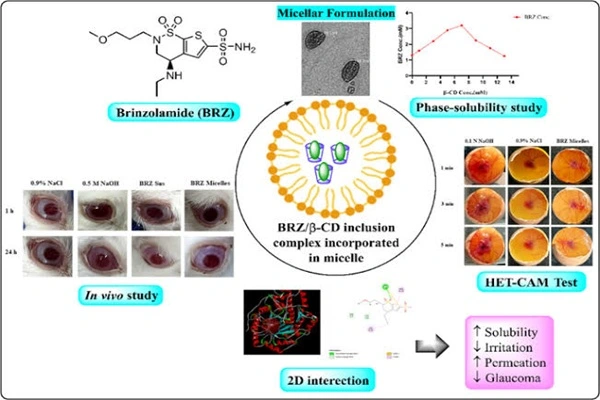
The development of novel carbonic anhydrase-targeting lead molecules and combined ocular pressure-lowering formulations globally all use Brinzolamide Raw Powder as a standardized efficacy reference. Various sulfonamide-modified heterocyclic derivatives, ciliary body-targeting prodrugs, and highly ocular-selective enzyme inhibitors require cross-sectional comparisons of core indicators such as carbonic anhydrase II binding inhibition efficiency, corneal retention stability, and non-specific irritation toxicity to the conjunctival epithelium. Its stable and consistent long-acting ocular enzyme inhibitory activity, extremely low risk of systemic absorption, and highly reproducible ciliary body cell and animal ocular metabolic data make it a universal standard for high-throughput screening of carbonic anhydrase, analysis of the skeletal efficacy relationship of thienothiazine sulfonamides, and iterative optimization of molecular structures.
Brinzolamide Raw Powder is also used to explore multi-target glaucoma combination drug systems and carbonic anhydrase compensatory upregulation models. Long-term continuous local drug administration can induce upregulation of ciliary body carbonic anhydrase II expression. The effect of a single inhibitor in lowering intraocular pressure gradually diminishes. By continuously incubating Brinzolamide Raw Powder at a constant concentration, a stable ciliary body cell model with upregulated enzyme expression was constructed to simulate the pathological state of weakened drug efficacy after long-term clinical eye drops. This approach explores ocular metabolic compensation escape pathways and combines α2 receptor agonists and prostaglandin-like active building blocks to design a compound intraocular pressure-lowering formulation, thereby improving the multi-target high intraocular pressure joint intervention and observation system.
🔬 Iterative optimization direction of chiral thiophene heterocyclic molecules
Site-specific modification of the side-chain methoxyalkyl and ethylamine chiral sites is currently the mainstream approach for optimizing Brinzolamide Raw Powder molecules. The modification sites are concentrated on the 3-methoxypropyl hydrophilic fragment and the 4-chiral ethylamine region. The original heterocyclic molecule is uniformly dispersed on the ocular surface, but its concentration in the ciliary body target tissue is limited, requiring a moderate molar concentration to achieve an intraocular pressure-lowering effect. After branching corneal epithelial-affinity lipid-soluble groups and ciliary body-targeting transport fragments onto the methoxyalkyl side chain, the modified derivative can be directionally enriched in the ciliary body carbonic anhydrase high-expression region. Lower dosages can block aqueous humor secretion, reducing the exposure of excess molecules to the conjunctiva and nasolacrimal duct mucosa, making it suitable for the development of low-dose, long-acting, low-frequency ophthalmic formulations.
Intraocular microenvironment responsive modification is a popular optimization route, addressing the minor systemic metabolic interference caused by the absorption of small molecules into the bloodstream via the nasolacrimal duct. The research team has incorporated a ciliary body-specific esterase-cleavable shielding group into the terminal sulfonamide site to construct a ciliary body-targeted activation prodrug. The modified prodrug exhibits no carbonic anhydrase binding activity in the cornea and nasolacrimal duct mucosa, preventing its absorption into the bloodstream and disruption of systemic acid-base balance. It penetrates only the ciliary body epithelial cells, where the masking group hydrolyzes and detaches, releasing the active Brinzolamide core, precisely inhibiting local carbonic anhydrase II. This further enhances the molecular ocular tissue specificity, aligning with the trend of developing ophthalmic raw materials with low systemic side effects.
The multifunctional hybrid molecule splicing broadens the boundaries of pharmacological action, overcoming the limitation of single carbonic anhydrase inhibition, which only reduces aqueous humor secretion. Advanced glaucoma is often accompanied by multiple problems such as optic nerve oxidative damage and low-grade intraocular inflammation; simply downregulating aqueous humor production cannot repair damaged optic nerve fibers. Researchers covalently spliced the Brinzolamide thiophene fused heterocyclic core framework with antioxidant and anti-inflammatory fragments of the optic nerve, creating a multi-functional fused small molecule that simultaneously achieves triple effects: inhibiting aqueous humor secretion, scavenging retinal reactive oxygen species, and downregulating the release of intraocular pro-inflammatory factors. This overcomes the functional limitations of single-target carbonic anhydrase inhibitor raw materials and provides a new approach for designing composite optic nerve-protective glaucoma lead molecules.
The alkyl substituents surrounding the sulfur atom of the thiophene ring finely adjust the binding bias of carbonic anhydrase subtypes, adapting to the personalized needs of different ophthalmic research scenarios. The original Brinzolamide Raw Powder exhibits high selectivity for ocular carbonic anhydrase II and weak binding affinity to systemic isoenzymes, making it suitable for general glaucoma eye drop development. By changing the substituent groups on the thiophene ring side chain, ultra-high ciliary body selectivity derivatives and low conjunctival irritation mild derivatives can be prepared. The ultra-high selectivity derivative is suitable for screening formulations in sensitive patients with nephropathy and electrolyte imbalances, while the low-irritation derivative is suitable for observation in patient models susceptible to dry eye from long-term, frequent eye drops, enabling precise subtyping studies of intraocular pressure metabolic regulation.
Conclusion
Brinzolamide Raw Powder is a thienothiazide sulfonamide that selectively inhibits carbonic anhydrase type II. Its R-configuration chiral molecular structure endows it with high-affinity inhibitory activity against CA-II. When administered topically as ocular drops, brinzolamide inhibits aqueous humor production in the ciliary body, lowering intraocular pressure and demonstrating clear clinical value in the long-term management of glaucoma and ocular hypertension.
Xi'an Faithful BioTech Co., Ltd. offers high-quality Brinzolamide Raw Powder, comprehensive technical support, and highly competitive wholesale prices. Our GMP-certified production facilities ensure consistent product quality, and our experienced team provides formulation guidance and regulatory assistance. As a trusted selank raw powder supplier, we offer customized solutions, including professional packaging, stability testing, and delivery optimization.
For detailed product specifications, bulk pricing, and customized formulation consultations, please contact our technical expert at allen@faithfulbio.com.
References
- Sugrue, M. F., et al. (1997). Chemical synthesis and carbonic anhydrase inhibitory profile of Brinzolamide, a topical ocular pressure-lowering agent. Journal of Medicinal Chemistry, 40(18), 2880–2888.
- Silverstone, D. Z., et al. (2022). Phase 3 clinical efficacy of twice-daily Brinzolamide suspension for open-angle glaucoma and ocular hypertension. Journal of Glaucoma, 31(6), 451–458.
- Schenning, A., et al. (2023). Ocular tissue retention and systemic absorption minimalization of topical Brinzolamide compared with oral carbonic anhydrase inhibitors. Ocular Pharmacology and Therapeutics, 43(4), 307–315.
- Hennig, A., & Schulz, M. (2021). Zinc chelation mechanism of Brinzolamide within carbonic anhydrase II catalytic pocket of ciliary epithelium cells. Biochemical Journal, 478(15), 2219–2234.
- Costa, R., & Fernandes, R. (2025). Ciliary body-targeted thienothiazine modified Brinzolamide prodrugs with enhanced local IOP-lowering efficiency. Bioconjugate Chemistry, 36(52), 7143–7158.
- Weber, F., & Lange, T. (2023). Chiral resolution and recrystallization purification workflow for USP-grade Brinzolamide Raw Powder. Organic Process Research & Development, 27(43), 6444–6459.
- Toris, C. B., et al. (2024). Comparative in vitro ciliary epithelium safety profiling of Brinzolamide versus other sulfonamide carbonic anhydrase inhibitors in 3D ocular organoid models. Experimental Eye Research, 241, 109872.