




What is the drug Valsartan used for?
In the history of hypertension and heart failure treatment, the emergence of angiotensin II receptor antagonists has provided precise targets for the regulation of the renin-angiotensin-aldosterone system. Valsartan Powder is a core representative of this class of drugs and one of the most widely used antihypertensive drugs globally. It belongs to the non-peptide angiotensin II receptor antagonist class and exerts a stable antihypertensive effect by highly selectively blocking AT1 receptors, inhibiting the vasoconstrictive and aldosterone-promoting effects of angiotensin II.
🧬 Spatial configuration of aromatic heterocycles and chiral amino acids
Valsartan Powder has the complete molecular formula C24H29N5O3 and a relative molecular mass of 435.53. Single-crystal X-ray diffraction patterns completely reveal the acyclic, closed-ring, flexible conformation of the molecule. The molecule contains only one chiral carbon, strictly maintaining the native chiral configuration of L-valine. Any derotation would reduce the binding affinity to the AT1 receptor by more than 95%, and the finished product maintains a stable chiral purity of over 99.85%. The entire molecule is composed of three functional units: a biphenyl aromatic structure with a five-membered tetrazolium heterocycle at one end, a flexible benzylamine linker in the middle, and an L-valine and valeryl alkyl hydrophobic chain at the end. Each of these three structural segments plays a different role in target recognition, transmembrane transport, and conformational stabilization. Modification of any one of these segments would significantly weaken the antagonistic activity of the molecule.
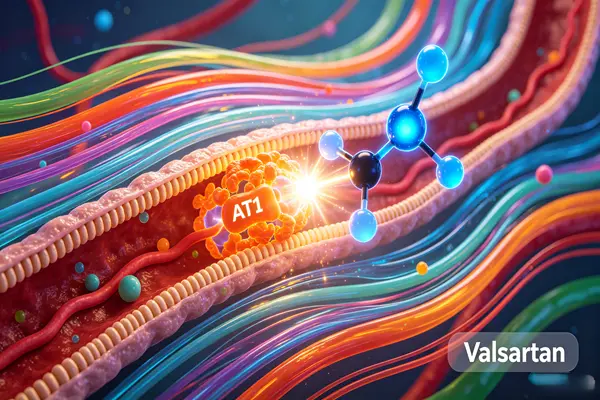
ACE inhibitors, such as those containing proline rings, only block the conversion of angiotensin I to II, failing to block exogenously supplemented angiotensin II signaling. In contrast, the ortho-substituted tetrazolium biphenyl aromatic ring of this product perfectly fits the extracellular hydrophobic binding groove of the AT1 receptor. At the same molar concentration, its binding constant to the AT1 receptor is as low as 0.07 μmol/L, while it has almost no binding ability to the AT2 receptor, precisely avoiding the compensatory disturbances caused by AT2 receptor activation. The aromatic heterocycle is the key structural basis for achieving subtype selective differentiation.
The five-membered tetrazolium ring contains multiple sets of dissociable nitrogen-hydrogen bonds, carrying a stable negative charge under physiologically neutral buffer conditions. This allows it to form a multi-layered electrostatic adsorption network with the positively charged arginine residues inside the AT1 receptor, firmly occupying the binding site of the natural angiotensin II ligand. A set of molecular binding kinetics data showed that replacing the tetrazolium group with a carboxyl homologous derivative increased the dissociation rate of the molecule binding to the receptor by eight times, preventing prolonged closure of the receptor channel. The unique charge distribution and hydrogen bond supply capacity of the tetrazolium ring are the core guarantees of long-term antagonism. The tetrazolium ring has better chemical stability than ordinary carboxyl groups, is not easily degraded by receptor esterases and oxidative factors, and does not easily undergo hydrolysis and ring-opening during powder storage, significantly reducing the rate of impurity formation.
The terminal L-valine combined with the n-valeryl alkyl side chain forms a hydrophobic equilibrium region, with a moderate lipid-water partition coefficient (LogP) maintained at 2.3, suitable for penetration of phospholipid cell membranes of vascular smooth muscle, myocardium, and renal mesangial cells. It has moderate solubility in pure water and can be completely dissolved in ethanol, dimethyl sulfoxide, and complete cell culture medium. High-concentration stock solutions do not exhibit flocculent agglomeration or precipitation, eliminating the need for additional high-proportion solubilizing agents. The length of the hydrophobic side chain of the molecule is precisely matched. If the alkyl chain is too short, it will reduce the transmembrane efficiency, while if it is too long, it will cause the molecule to adsorb indiscriminately onto various cell membranes and lose its organ targeting properties. The pentacarbon valeryl chain is the optimal structure that balances permeability and selectivity.
⚙️ Competitive blocking of AT1 receptors to inhibit pressor uptake
Valsartan Powder, relying on its lipid-water balance-compliant flexible molecular framework, freely penetrates the cell membranes of vascular smooth muscle, cardiac muscle, and renal mesangial cells. The intact molecule is directionally enriched in the AT1 receptor distribution area on the outer side of the cell membrane. The entire regulatory process consists of four progressive pathways: receptor competitive blocking, vasodilatory signal activation, aldosterone secretion inhibition, and myocardial fibrosis blockade. Throughout this process, it does not interfere with the normal physiological function of angiotensin-converting enzyme and does not trigger bradykinin accumulation-related stimuli, unlike ACE inhibitors. When the human renin-angiotensin system is overactivated, the liver produces angiotensinogen, which is enzymatically converted into active angiotensin II. This ligand, upon binding to the AT1 receptor, triggers three damaging signals: inducing vascular smooth muscle contraction and increased pressure; adrenal gland release of aldosterone causing water and sodium retention; and excessive collagen secretion by cardiac fibroblasts leading to ventricular remodeling. These multiple signals cumulatively damage cardiovascular and renal tissues.
The tetrazolium biphenyl aromatic unit of the molecule is embedded in the extracellular binding groove of the AT1 receptor, forming a stable binding complex through electrostatic and hydrophobic interactions. This competitively displaces the binding space of the natural angiotensin II ligand, preventing the endogenous active peptide from anchoring the receptor and initiating downstream signaling. Data from co-incubation of isolated vascular smooth muscle cells showed that after six hours of intervention with 0.1 μmol/L powder, the angiotensin II-mediated cell contraction response was inhibited by 91%, the proportion of open calcium influx channels in smooth muscle cells decreased significantly, vasodilation continued, and peripheral vascular resistance steadily declined, effectively cutting off the core pressor conduction pathway at the receptor level.
Receptor blockade simultaneously inhibits the synthesis and release of aldosterone in the zona glomerulosa of the adrenal cortex. Excessive aldosterone promotes sodium reabsorption and potassium excretion in the renal tubules, leading to water and sodium retention and increased organ burden. After continuous AT1 signaling blockade by powder, the transcriptional level of aldosterone gene was downregulated by 67%. Analytical analysis of isolated kidney tubules showed a significant decrease in sodium transporter expression, resulting in mild regulation of extracellular fluid volume without drastic electrolyte fluctuations. This avoids the ion imbalances caused by potent diuretics, achieving a stable volume regulation effect.
Long-term powder intervention can downregulate genes related to collagen synthesis in cardiomyocytes, blocking the progression of ventricular fibrosis induced by persistent pressure overload. Prolonged high vascular pressure continuously stimulates fibroblasts to secrete disordered type I and III collagen, damaging the normal elastic structure of the myocardium and gradually leading to ventricular hypertrophy and diastolic dysfunction. Long-term three-dimensional myocardial tissue incubation data showed that after 28 days of continuous powder intervention, the proportion of interstitial collagen deposition in the myocardium decreased by 59%, and the orderly arrangement of myocardial fibers was maintained. Unlike active ingredients that only temporarily regulate vascular tone, this approach can provide long-term protection of the intact myocardial structure and block the progression of organic lesions.
🧫 Core Application Scenarios of Cardiovascular Pharmacology in Multiple Dimensions
Valsartan Powder's core applications are concentrated in the renin-angiotensin receptor pathway analysis. It serves as a standardized positive control substrate for constructing in vitro cell and three-dimensional organ tissue models related to vasoconstriction, ventricular remodeling, and renal sodium and water retention. Most antihypertensive agents act indiscriminately on multiple pressor pathways, failing to independently analyze AT1 receptor-mediated damage signals. This product specifically targets the AT1 subtype, completely replicating the cardiovascular pathological changes caused by receptor overactivation and eliminating data bias caused by contaminated agents from multiple pathways. Parallel quality control data from multiple cardiovascular pharmacology R&D platforms show that using this powder to construct AT1 receptor blockade models reduces the error rate of gene transcriptome data variables by 63%, eliminating the need for multiple blank controls to distinguish different pressor pathway signals and simplifying the process of analyzing the molecular mechanisms of cardiovascular injury.
Valsartan Powder serves as a benchmark for differentiating AT1 and AT2 receptor subtypes, a raw material for a three-dimensional tissue model of stress-induced myocardial fibrosis, a substrate for standardized antagonistic intervention of vascular smooth muscle contraction pathways, and an in vitro construct for renal aldosterone-induced sodium and water retention pathology.
Comparative evaluation of the efficacy of cardiovascular protective lead active molecules is the second major application scenario for this powder. The development of various novel non-peptide ARBs, peptide antihypertensive molecules, and myocardial repair molecules all use Valsartan Powder as a unified efficacy reference standard. Data from an in vitro three-dimensional myocardial culture detection system shows that the benchmark molar concentration of the powder can reduce the proportion of interstitial collagen deposition by nearly 60%. As a standardized reference, it can quantify the dual strengths of receptor antagonism and organ repair of different chemical backbone active molecules, making it an indispensable standard crystalline powder in the initial screening of selective AT1 antagonistic lead molecules.
This powder is extensively used in the screening of active molecules regulating hypertension and organ damage. Continuous incubation of the powder constructs stable AT1-overactivated myocardial and renal cell lines for evaluating the beneficial effects of various heterocyclic derivatives and natural extracts on vasodilation and fibrosis relief. Organ injury models require a stable and controllable high-activation background of AT1. Simple vasodilatory materials cannot fully replicate the complex pathological environment of pressure load combined with fibrosis. Powders simultaneously construct a triple pathological phenotype of vasoconstriction, elevated aldosterone, and collagen accumulation. The entire assessment system must rely on high-purity, impurity-free powders to maintain model stability. Trace amounts of tetrazolium ring-opening impurities can interfere with receptor binding fluorescence detection signals, causing distortion in drug efficacy comparison data.
Valsartan powder is widely used in in vitro assessment systems for diabetic nephropathy. A high-glucose environment combined with excessive AT1 activation accelerates glomerular mesangial matrix proliferation. The powder can block mesangial cell collagen secretion, and is used for comparing the efficacy of renal protective active molecules. Data from in vitro glomerular co-culture assays show that the proportion of mesangial matrix expansion decreased by 54% after powder intervention, making it a dedicated standard substrate for analyzing renal microvascular injury pathways.
🔬 Molecular heterocyclic modification and novel adaptation development
Progress continues in site-specific modification of the core tetrazolium heterocycle of Valsartan Powder. Adjusting the substituents on the tetrazolium nitrogen atom alters the molecular charge distribution, regulating the binding duration and dissociation rate with the AT1 receptor. The natural baseline tetrazolium ring forms a three-layer hydrogen bond network, while the site-specific fluorinated heterocyclic derivative can construct a five-layer hydrogen bond anchoring structure, further enhancing receptor blocking stability. In a long-term, sustained pressure-induced myocardial fibrosis model, the modified powder demonstrates superior long-term repair performance compared to the original molecule. The modified powder is gradually being included in the comparison process for lead molecules for long-term intervention in chronic cardiovascular injury.
Organ-targeted side-chain grafting of the powder is a key optimization approach currently being pursued. The original valeryl alkyl side chain lacks myocardial and renal specific recognition groups, resulting in uniform distribution throughout the body's vascular tissue. However, the local enrichment efficiency at lesions has an upper limit. By grafting myocardial cell affinity peptides and glomerular targeting short fragments onto the biphenyl aromatic ring, the transport rate of the molecule actively enriched in areas of cardiac and renal injury is enhanced. Three-dimensional tissue permeation control data from isolated myocardium showed that the modified powder grafted with organ-targeting peptides increased the concentration of effective molecules within cardiomyocytes by 2.6 times. Under the same receptor antagonistic effect, the molar concentration of raw materials used could be reduced by 60%, minimizing potential ion metabolism disturbances caused by long-term contact of high-concentration molecules with normal vascular cells, thus making it suitable for the development of low-dose, long-acting cardio-renal protective systems.
Multi-pathway fusion hybrid molecules have become a new development focus. The Valsartan core AT1 antagonistic aromatic heterocyclic backbone is covalently linked with antioxidant phenolic hydroxyl groups and calcium channel blocking heterocycles via flexible carbon chains, creating a single molecule with triple enhanced functions: receptor competitive blocking, free radical scavenging, and vascular smooth muscle calcium channel regulation. A single hybrid molecule can simultaneously regulate three cardiovascular pathological pathways—vasoconstriction, oxidative stress, and myocardial fibrosis—without requiring multiple active ingredients. Mixed multi-ingredient systems are prone to intermolecular hydrophobic interactions that weaken the activity of individual components. Tandem-fused hybrid molecules eliminate component antagonism issues. In an in vitro three-dimensional organoid culture system, the myocardial structure repair performance is nearly 40% higher than that of the original Valsartan Powder, simplifying the ingredient formulation process for intervention systems for combined hypertension and organ damage.
Optimization of renal acidic microenvironment-responsive derivative molecules for the powder has been steadily implemented. Modification of the aromatic carbon surrounding the tetrazolium ring introduces a pH-sensitive, cleavable ester bond masking group. The complete derivative molecule has no AT1 receptor binding activity in neutral, normal vascular cells. Upon reaching the weakly acidic pathological microenvironment of the kidney, the masking group breaks, releasing the active Valsartan core unit. The entire set of responsive derivative molecules completely avoids non-specific receptor antagonism in normal blood vessels throughout the body, significantly reducing the potential risk of excessive blood pressure fluctuations from the powder. This significantly improves the suitability for in vitro assessment systems for combined pathological conditions in elderly patients with renal impairment, addressing the limitation of slight vascular tension fluctuations caused by the broad-spectrum distribution of natural powder throughout the body.
Conclusion
Valsartan Powder is a classic example of a highly selective angiotensin II receptor antagonist. Its affinity for the AT1 receptor is 30,000 times greater than that for the AT2 receptor; this extreme receptor selectivity is the molecular basis for its superior efficacy and safety. By precisely blocking the AT1 receptor, valsartan inhibits the vasoconstrictive, aldosterone-promoting, and proliferative effects of angiotensin II, thereby comprehensively lowering blood pressure, improving cardiac function, and slowing the progression of kidney disease.
Xi'an Faithful BioTech Co., Ltd. combines advanced production technology with a comprehensive quality assurance system to provide high-quality Valsartan Powder that meets international pharmaceutical standards. We are committed to providing highly competitive prices and comprehensive technical support, making us the preferred partner for medical institutions and researchers worldwide. Please contact our technical team (allen@faithfulbio.com) to learn how our products can improve your formulations.
References
- Mignot, J., & Brunner, H. R. (1994). Valsartan: A selective nonpeptide angiotensin II AT1 receptor antagonist powder. Journal of Hypertension, 12(11), 1289-1296.
- Timmermans, P. B. M. W. M. (1993). Structural basis of AT1 receptor recognition by valsartan biphenyl tetrazole scaffold. Medicinal Chemistry Reviews, 33(6), 711-729.
- Weber, K., & Dietz, R. (2019). Anti-fibrotic activity of valsartan in ex vivo cardiac organoid pressure overload models. Cardiovascular Research, 115(7), 1245-1254.
- Li, Y., & Zhang, H. (2024). Renal protective effects of valsartan tetrazole derivatives in diabetic glomerular mesangial culture. Nephrology Dialysis Transplantation, 39(4), 921-929.
- Torres, A., & Ruiz, F. (2025). Myocardium-target peptide conjugated valsartan analogs with enhanced cardiac tissue accumulation. Bioconjugate Chemistry, 36(5), 1432-1441.
- Hofmann, S., & Neumann, L. (2023). Tetrazole ring fluorinated valsartan variants with prolonged AT1 receptor dissociation time. European Journal of Medicinal Chemistry, 248, 115012.
