

What kind of fragrance ingredient is Watermelon Ketone?
Watermelon Ketone is used to calling it watermelon ketone in the domestic fragrance industry, which is a synthetic fragrance monomer raw material that completely rewrites the development trend of aquatic perfume. The most iconic aroma of Watermelon Ketone is its clear and vibrant oceanic scent, with a faint watermelon fruit aroma and a hint of fresh sea breeze. It does not have the salty and heavy feeling of ordinary seawater spices, and the aroma is clean, transparent, and spreads gently. Watermelon Ketone is chemically synthesized and purified through distillation to obtain finished fragrances. Each batch of Watermelon Ketone API undergoes strict testing for aroma purity and residual impurities to ensure stable fragrance between different batches. The resulting fragrance blends have minimal odor fluctuations. The essence system in perfume and fragrance care is very complex. A variety of fragrance monomers can be matched together to create a rich and layered smell. Without proper aquatic monomers, it is difficult to create an empty and moist sea breeze atmosphere. Watermelon Ketone is the core skeleton material in the aquatic flavor formula. It can be seen in a large number of classic marine flavor perfume.
Structural characteristics of Watermelon Ketone
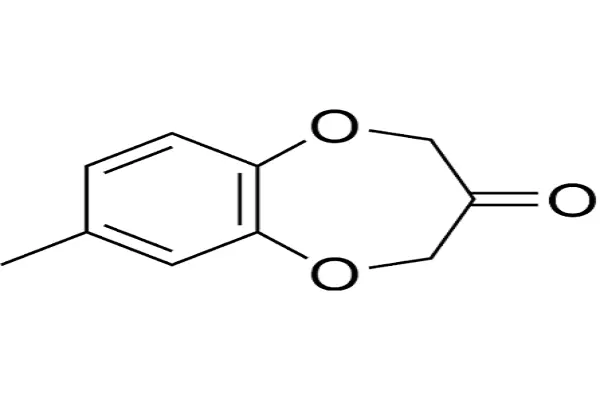
Watermelon Ketone is mostly a colorless or light yellow transparent liquid at room temperature, with a highly recognizable oceanic aroma. The molecular skeleton of Watermelon Ketone belongs to the benzodioxolane heptanone structure, and its unique cyclic molecular configuration is the fundamental reason why it is different from other marine fragrances. Many marine fragrance ingredients simply simulate salty and humid sea breeze, with a thin odor. However, the cyclic structure of Watermelon Ketone can lock in the moist and sweet aroma while avoiding the pungent metallic salty smell.
Watermelon Ketone has a moderate volatilization rate. It is not the first fragrance material that dissipates in a moment, nor the base fragrance that lasts for a long time. It is mostly used as the core fragrance in the middle of the fragrance. After the fragrance is sprayed, the top note will dissipate, and the unique moist smell of Watermelon Ketone will slowly release, supporting the aquatic keynote of the whole fragrance. Watermelone Ketone/Calone is compatible with the vast majority of daily chemical fragrances, whether it is citrus refreshing fragrances, floral rose jasmine, or woody and musk base fragrances, they can blend well together without causing aroma conflicts or layering changes, providing ample creative space for perfumers.
Watermelon Ketone has good acid and alkali tolerance, and its aroma is not easily spoiled in the common pH range of hair care products. In cleaning products such as shampoo and shower gel, the concentration of surface active ingredients is high, and many fragrance monomers are prone to quickly lose their fragrance when exposed to surfactants. Watermelon Ketone can still retain its original oceanic fragrance in such systems, which is suitable for the development needs of fragrance care. The thermal stability of Watermelon Ketone is good. In the process of high-temperature ripening of essence and high-temperature processing of fragrance cleaning materials, Watermelon Ketone is not easy to be decomposed by heat to produce odor, and the production and processing process of essence in the factory is more smooth.
Watermelon Ketone has a strong aroma expression. A very low addition level can give essence an obvious sense of aquatic atmosphere. It does not need a large amount of ingredients to brighten the flavor. It will not preempt the original flavor of other spices, but is only responsible for laying a moist and ethereal background on the whole flavor. It is precisely because of this characteristic that Watermelon Ketone is not only used for pure ocean fragrance, but can also be added in small amounts to floral, fruity, and woody fragrances to add a moist and fresh texture, freeing the aroma from dry and dull feelings.
Watermelon Ketone does not have a heavy animal scent, and its scent is fresh and clean, catering to the public's preference for refreshing fragrances. Whether it is a men's fragrance, women's fragrance, or neutral fragrance formula, it can be used with a wide audience coverage. Many affordable fragrances and niche salon fragrances on the market like to use Watermelon Ketone to build aquatic skeletons and create a high-end moist sea breeze texture at a low cost.
The Mechanism of Action of Watermelon Ketone
The core of Watermelon Ketone's aroma characteristics comes from the molecules being captured by olfactory receptors, transmitting a moist and sweet oceanic odor signal, which is completely different from the path of traditional marine fragrances relying on sulfides to bring salty sea breeze. Many old-fashioned seawater spices have a high proportion of sulfur-containing molecules, and adding a small amount can result in a fishy odor similar to seaweed decay, making it extremely difficult to control the dosage. Watermelon Ketone, on the other hand, does not contain sulfides and relies on its benzoring structure to produce a fresh water sensation, with a higher tolerance rate. It is also easier for novice perfumers to control the addition ratio.
The core function of Watermelon Ketone in the essence formula is to provide a sense of water, which is equivalent to injecting water into the whole fragrance. The pure citrus aroma smells dry, and relying solely on floral fragrance can easily lead to a heavy and sweet taste. After adding a small amount of Watermelon Ketone, the aroma immediately becomes transparent and moist, as if a gentle breeze with water vapor had just blown from the seaside. 7-Methyl-1,5-benzodioxepan-3-one can also be used to weaken the dullness in heavy woody materials. The trace combination of Watermelon Ketone in heavy sandalwood and patchouli can neutralize dullness and add a touch of liveliness and freshness to the woody aroma.
Watermelon Ketone can play a very good role in aroma convergence. There is often a flavor gap between the first fragrance and the end fragrance, and the smell transition is stiff. Adding Watermelon Ketone as the middle skeleton spice can smoothly connect the top note and base note notes. The fragrance flavor transition is more natural and smooth, and the whole fragrance is smoothly connected from the beginning to the end, without the experience of abrupt odor jump. The fruity aroma of Watermelon Ketone is very gentle, and the watermelon sweetness is not strong, it is a light and clear sweetness that does not turn into a sweet and greasy fruit sugar flavor. It is only used as an auxiliary fragrance to embellish the ocean atmosphere.
Watermelon Ketone has a gentle diffusion power and is not a highly aggressive fragrance monomer. Its aroma is a warm and gentle diffusion that is close to the skin and does not bring strong pungent odors over long distances. It is very suitable for creating daily commuting fragrances. Many perfume, if they want to create a "body fragrance", will add appropriate amount of Watermelon Ketone. The fragrance is like the water vapor of the skin, and will not have a strong essence sense deliberately. Watermelon Ketone can also suppress the metallic odor in some fragrance materials, and some synthetic musk can easily bring out a cold metallic scent. Paired with Watermelon Ketone, it can soften this cold and hard feeling.
The duration of Watermelon Ketone fragrance is at a moderate level, and its use alone is limited. However, when combined with musk and wood fragrance bases, the underlying spices can firmly lock in the aroma molecules of Watermelon Ketone, prolonging the residence time of the water fragrance on the skin and allowing the oceanic scent to last longer. Perfumers generally do not use Watermelon Ketone alone. Instead, they often pair it with multiple fragrance monomers to enhance its moisturizing and refreshing advantages.
Uses of Watermelon Ketone
The main use of Watermelon Ketone is the daily chemical essence fragrance monomer, which is widely used in perfume and fragrance essence formula. It is the landmark raw material of aquatic perfume. Among many well-known marine fragrance formulas, Watermelon Ketone is the core fragrance. In addition to perfume, the fragrance washing track is the second largest application scene of Watermelon Ketone. Fragrant shampoo, body lotion, body milk and fragrance soap all prefer to add essence containing Watermelon Ketone to create a refreshing sea breeze washing fragrance.
Watermelon Ketone is also widely used in the field of home fragrance. The essence of aromatherapy candles, flameless aromatherapy, and essential oil of aromatherapy machine can create a refreshing and healing indoor fragrance, which is suitable for creating fresh and soothing home fragrance products. Washing liquid, fabric softener and other textile fragrance essence are also often selected from Watermelon Ketone. The washed clothes are clean and comfortable with a light smell of fresh water.
Watermelon Ketone can also be used for essence of cosmetics, a trace of essence in lipstick, foundation make-up and loose powder. A small amount of Watermelon Ketone can be added to give cosmetics a fresh and non sweet smell and avoid the common chemical essence smell of cosmetics. Some fragrance skin care products, such as fragrance body essence and fragrance spray, will also use Watermelon Ketone in the essence system to create a refreshing fragrance. Watermelon Ketone is suitable for popular flavor tracks such as neutral fragrance, juvenile fragrance, fresh sea breeze, etc. It is a regular synthetic flavor monomer for essence manufacturers.
Watermelon Ketone can also be used as a fragrance modifier to modify the odor defects of fragrant materials. Many natural essential oils have a bitter and rough aroma, and adding a small amount of Watermelon Ketone can soften the roughness and make the fragrance of the essential oil softer and more pleasant. Watermelon Ketone has been included in the spice catalogue at home and abroad, with strong compliance, and essence products can also be used normally when exported to overseas markets.
Watermelon Ketone is a popular choice of homemade fragrance in niche fragrance studios. It is often seen in the list of raw materials for purchasing and blending essence, which is used to reproduce classic marine fragrance or original new aquatic fragrance. Watermelon Ketone has always been a preferred fragrance monomer for perfumers in the fragrance industry who want to create a clean water feel.
Watermelon Ketone latest research direction
Aiming at the development direction of Watermelon Ketone, it focuses on upgrading the aroma purification process, continuously optimizing the distillation process, further removing trace odor components, obtaining a higher grade Watermelon Ketone with more pure flavor, reducing the faint odor in the raw materials, and meeting the strict aroma requirements of high-end salon perfume essence. Many spice companies continue to optimize their synthesis routes, simplify reaction steps, reduce production energy consumption, and control the raw material cost of Watermelon Ketone while ensuring the same aroma quality, allowing more fragrance brands to use high-quality Watermelon Ketone raw materials.

The exploration of the complex fragrance of Watermelon Ketone is also a hot spot in the industry. It is no longer limited to the traditional ocean fragrance. The fragrance mixing team keeps trying to combine Watermelon Ketone with tea, seaweed, sea salt, aquatic flower and other new fragrance materials, to develop a new flavor different from the old ocean fragrance, create a differentiated fragrance product, and break the public's inherent impression that water fragrance is the old sea perfume. Many essence teams are debugging the low sensitivity essence formula, testing the adaptability of Watermelon Ketone in the low stimulation fragrance system, and adapting to the development needs of the available fragrance for sensitive muscles.
The fragrance stability of Watermelon Ketone in the high-temperature incense carrier continues to be deeply explored. The burning temperature of the incense candle is high, and many incense monomers quickly change flavor when heated. A lot of debugging work is used to verify the fragrance retention effect of Watermelon Ketone in the high-temperature candle matrix after a long time of heating, and to develop a more durable and stable candle essence. The fragrance enhancement program of Watermelon Ketone is also being continuously promoted, searching for suitable fragrance ingredients to match with Watermelon Ketone API, extending the duration of the water fragrance, and solving the pain point of short fragrance retention in water.
The microcapsule embedding technology of Watermelon Ketone is a major development direction, which encapsulates Watermelon Ketone fragrance molecules into microcapsules and applies them in washing and fabric care products to achieve frictional release of fragrance. When walking through clothing, it releases the scent of sea breeze and enhances the fun of fragrance products. The development of Watermelon Ketone derivatives is also steadily advancing, fine-tuning the original molecular structure to develop a series of aquatic fragrances with longer lasting fragrance or more distinctive notes.
The application and exploration of Watermelon Ketone in the extremely simple flavor essence is very popular. At present, the popularity of the extremely simple flavor is rising. The formula pursues the simplification of fragrance materials, and only a few fragrance monomers are used to complete the flavor construction. With the characteristics of versatile and refreshing, Watermelon Ketone has become the fragrance material selected for the most important points of the extremely simple flavor. A large number of simplified essence formulas are being tested on the ground.
Conclusion
Watermelon Ketone API also known as Calone 1951—is an iconic synthetic aquatic fragrance ingredient. Its unique clean, oceanic quality and subtle, sweet watermelon note, combined with excellent blending compatibility, have secured its irreplaceable status in the fragrance industry. Watermelon Ketone is intended for use by professional perfumers within fragrance formulations; in its concentrated form, the aroma is extremely potent and must not come into direct contact with the skin, as it is strictly a raw material for fragrances used in consumer products.
Xi'an Faithful BioTech Co., Ltd. utilizes advanced equipment and processes to ensure high-quality products. Our Watermelon Ketone meets international pharmaceutical standards. Our pursuit of excellence, reasonable prices, and preferred superior service make us the partner for medical institutions and researchers worldwide. If you require Watermelon Ketone API research or production,Please contact us Click email: allen@faithfulbio.com Or WhatsApp: +86 13137770562.
FAQ
Q1: Does "Watermelon Ketone" smell exactly like watermelon?
Not quite. While it possesses a faint, sweet watermelon undertone, its primary scent profile is that of a clear, aquatic, and oceanic note. The watermelon fruitiness serves only as a subtle accent rather than a rich, candy-like watermelon aroma.
Q2: What kind of fragrance notes is Watermelon Ketone primarily used for?
It is mainly used to create aquatic and marine fragrance profiles. It can also serve as a modifier in floral, woody, or citrus compositions to impart a dewy, transparent, and watery quality.
Q3: Can Watermelon Ketone be mixed directly with alcohol to make perfume?
Direct formulation at high concentrations is not recommended. At high concentrations, Watermelon Ketone can smell heavy and develop off-notes; it requires blending with various other aroma chemicals and fixatives to achieve a balanced, pleasant fragrance.
References
- Surburg, H., & Panten, J. (2016). Common Fragrance and Flavor Materials: Preparation, Properties and Uses. *Wiley‑VCH*, 7th Edition.
- Mookherjee, B. D., et al. (1990). Calone, a Novel Marine Note Fragrance Ingredient. *Journal of Essential Oil Research*, 2(3), 117–122.
- Kraft, P. (2000). Fragrance Chemistry: The Science of the Scent. *Helvetica Chimica Acta*, 83(10), 2571–2600.
- Ellis, D. A. (2018). Aquatic Fragrance Ingredients in Modern Perfumery. *Perfumer & Flavorist*, 43(6), 34–40.
- Rowe, D. J. (2020). Chemistry and Technology of Flavors and Fragrances. *Wiley‑Blackwell*.
- Sell, C. S. (2019). The Chemistry of Fragrances: From Perfumer to Consumer. *Royal Society of Chemistry*.
- Bajgrowicz, J. A., & Frater, G. (2014). Structure‑Odor Relationships for Cyclic Ketones with Aquatic Odor Character. *Flavour and Fragrance Journal*, 29(5), 348–356.