

How Caprylhydroxamic Acid Inhibits Mold Growth?
Caprylhydroxamic Acid Powder, also known as CHA, is a synthetic organic acid skincare ingredient that is synthesized, purified, crystallized, and dried to obtain a crystalline powder product. Each batch of Caprilhydroxamic Acid Powder will be strictly controlled for heavy metals and residual impurities to ensure stable activity of different batches of raw materials, with minimal effect fluctuations during formula debugging. The skincare product system comes with moisture and nutrients, which can easily breed microorganisms such as mold and yeast during storage. After a large number of microorganisms multiply, the product will become tasteless, layered, and moldy, directly damaging the stability of a whole bottle of skincare products. Caprilhydroxamic Acid Powder, with its unique metal ion chelating ability, cuts off the essential nutritional conditions for microbial growth and is often used to build mild, non-traditional preservative free formula systems, widely added to various personal care products.
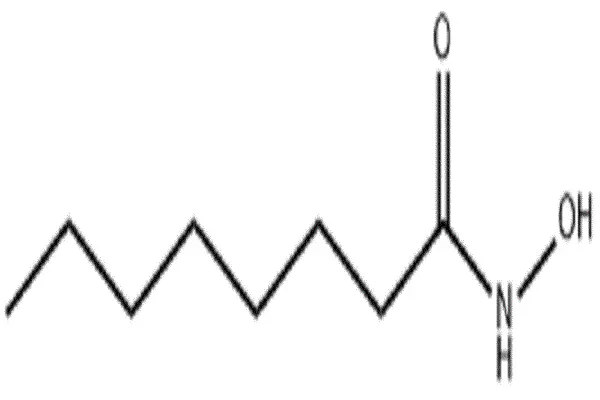
Molecular structural characteristics of Caprilhydroxamic Acid Powder
Caprilhydroxamic Acid Powder is a white or off white crystalline powder at room temperature, with a faint characteristic odor. The whole molecule is composed of an eight carbon alkyl chain and an active group of hydroxamic acid. The long carbon chain brings a certain degree of lipophilicity, and the hydroxamic acid group is the core site for chelation. The combination of the two characteristics enables Caprylhydroxamic Acid Powder to blend with the aqueous phase system and fit the oil phase of the lotion, which is suitable for most emulsification formulas.
Caprilhydroxamic Acid Powder does not have a high solubility in pure water, but it can dissolve well in polyol solvents such as propylene glycol, glycerol, and ethanol. When producing skincare formulas, it is generally first pre dissolved in a cosolvent, and then added to the main system to evenly disperse throughout the entire cream. The applicable pH range of Caprylhydroxamic Acid Powder is very wide, and it can maintain activity in an environment between pH 5 and pH 8. This is also its biggest advantage compared to many acidic antibacterial materials. Many fruit acid antibacterial materials will rapidly decrease in activity once the pH increases, while N-hydroxy-octanamid can still function normally in neutral formulations.
Caprilhydroxamic Acid Powder has good thermal stability and will not decompose rapidly even under high temperature processing conditions of 90 ℃ for a short period of time. The high-temperature production process of cream emulsification can be fully tolerated, without waiting for discharge before low-temperature feeding, simplifying the production process of the factory. Caprilhydroxamic Acid Powder has good compatibility with commonly used surfactants, plant extracts, and various moisturizing oils in skincare products. Other active ingredients in the formula will not offset the antibacterial and synergistic ability of Caprilhydroxamic Acid Powder, and the compound has a high tolerance rate.
The core structural advantage of Caprilhydroxamic Acid Powder is the hydroxamic acid group, which has lone pair electrons between the nitrogen and oxygen atoms and can form stable cyclic chelates with various metal ions such as iron and copper ions. Many microorganisms rely on iron ions to synthesize enzymes in their bodies for growth. After the free iron ions in the system are chelated by Caprilhydroxamic Acid Powder, microorganisms lack key trace elements and their reproductive rate is significantly suppressed, especially for fungi and yeast, which have outstanding inhibitory effects.
Caprilhydroxamic Acid Powder has a simple molecular structure and better biodegradability than traditional chelating agent EDTA. After disposal, it will not remain in the environment for a long time, which is in line with the current development direction of green raw materials for skincare products. Many skincare brands at home and abroad choose Caprilhydroxamic Acid Powder to replace old-fashioned chelating and anti-corrosion materials when creating cleaning formulas.
The Mechanism of Action of Caprylhydroxamic Acid Powder
The core logic of Caprilhydroxamic Acid Powder for antibacterial and anti-corrosion purposes is not to directly kill microbial cells, but to chelate metal ions to seize the trace elements that microorganisms rely on for survival, creating an environment that is not conducive to microbial proliferation and slowing down the growth rate of colonies from the source. Skincare raw materials, production water, and equipment containers all carry trace amounts of metal ions, which are nutrients for the rapid growth of fungi. After Caprylhydro xamic Acid Powder is added to the system, it will preferentially capture free iron ions, and microorganisms will not receive sufficient iron supply, resulting in a decrease in metabolic enzyme activity and inhibition of spore germination and hyphal growth.
The inhibitory ability of Caprilhydroxamic Acid Powder on mold is its biggest highlight. Many binary alcohol based anti-corrosion materials can effectively suppress bacteria, but their anti mold ability is relatively weak. When combined with Caprilhydroxamic Acid Powder, the two can fill the gaps in anti mold and form a broad-spectrum anti-corrosion system. At the same time, they can suppress three major types of contaminating microorganisms: bacteria, yeast, and mold, reducing the risk of mold and deterioration of skincare products after opening.
Caprilhydroxamic Acid Powder also has the additional effect of formula stability maintenance. Free metal ions in the skincare product system can induce oil oxidation, rancidity, and discoloration and deactivation of active ingredients. After chelating metal ions, Caprilhydroxamic Acid Powder can slow down the rate of product yellowing and odor generation, extend the shelf life of skincare products, and achieve dual protection against corrosion and oxidation. Caprylhydroxamic Acid Powder still maintains molecular activity in neutral formula. Many acid free mild face cream and essence can be used, which will not change the original pH of skin care products and will not easily break the acid-base environment on the surface of the skin.
Caprilhydroxamic Acid Powder does not react with the protein and polysaccharide active ingredients in the formula. Many skincare formulas that add plant polysaccharides and hydrolyzed proteins use Caprilhydroxamic Acid Powder for anti-corrosion and efficacy enhancement, without worrying about the active ingredients being destroyed. Caprilhydroxamic Acid Powder can also be combined with various anti-corrosion components such as ethylhexyl glycerol, octyl glycol, phenoxyethanol, etc. Brands can freely adjust the compounding scheme according to product positioning to create finished products without traditional preservatives and low irritation.
The antibacterial effect of Caprylhydroxamic Acid Powder is not easy to be interfered by the formula system. Even if the system contains high content of surface active substances, such as bath gel, shampoo and other cleaning products, Caprylhydroxamic Acid Powder can still play a normal role in chelating bacteriostasis. Its application scenarios are not limited to face cream lotion, but also applicable to shampoo products.
Uses of Caprylhydroxamic Acid Powder
The main use of Caprylhydroxamic Acid Powder is the antiseptic synergist and metal ion chelating agent of cosmetics formula, which can be added to almost all personal care categories, such as face cream, lotion, essence water, facial mask, color makeup, shampoo, shower gel, etc. It is a popular raw material for cleaning label skin care products. Many brands promote preservative free systems that utilize polyols in combination with Caprylhydroxamic Acid Powder to achieve preservative properties, avoiding the controversy caused by traditional preservatives and catering to consumers' demand for mild skincare products.
Caprilhydroxamic Acid Powder can be used to replace disodium EDTA in formulations as a new environmentally friendly chelating agent, controlling system metal ions, delaying oil oxidation and color change issues, and improving product appearance stability. The oil and powder components in cosmetics are complex, which can easily breed mold. Adding Caprylhydro xamic Acid Powder can extend the shelf life of cosmetics and reduce the probability of mold and oil production from the paste. Both anhydrous and low water formula skincare products can also be supplemented with Caprylhydroxamic Acid Powder. Many people mistakenly believe that anhydrous systems will not grow bacteria, and there is still a risk of microbial contamination during the production and filling process. Caprylhydroxamic Acid Powder can serve as a protective line of defense.
Caprilhydroxamic Acid Powder also appears in the formula of hair care products. Body wash and conditioner have high moisture content, rich nutrients, and high risk of mold contamination. When combined with Caprilhydroxamic Acid Powder, the anti mold ability of the entire anti-corrosion system will be significantly upgraded. N-hydroxy-octanamid is widely used in facial mask essence solution. facial mask solution has very high water content, which is an environment where microorganisms are easy to reproduce. Low dose addition of Caprylhydroxamic Acid Powder, together with other anti-corrosion materials, can meet the requirements of anti-corrosion challenges.
Caprilhydroxamic Acid Powder can also be used in some metal mineral flotation fields, relying on its strong metal chelating ability as a collector. However, the usage in this field is much lower than that in the cosmetics industry, and the vast majority of Caprilhydroxamic Acid Powder circulating in the market flows into the skincare raw material market. Caprilhydroxamic Acid Powder has been included in the cosmetic ingredient catalogs of multiple countries and regions overseas, with strong compliance and convenient export and sales of branded products.
Caprilhydroxamic Acid Powder is very suitable for creating products targeting sensitive skin and infant care. Its low irritation is its biggest selling point. When formulators develop mild product lines, they often prioritize using Caprilhydroxamic Acid Powder to build anti-corrosion frameworks.
Latest research directions of Caprylhydro xamic Acid Powder
The development focus of Caprilhydroxamic Acid Powder is on building a lower irritation and higher efficiency compound anti-corrosion system. The industry has been searching for more streamlined compound combinations to achieve comprehensive antibacterial effects with fewer additives, further reducing the total amount of skincare ingredients added and improving product mildness. Many formula teams are testing the synergistic antibacterial scheme of Caprilhydroxamic Acid Powder and plant extracts, using natural plant active ingredients combined with Caprilhydroxamic Acid Powder to create skincare products that are completely free of chemical preservatives, meeting the market demand of the natural skincare track.
The optimization of the formulation of Caprylhydroxamic Acid Powder is also a major direction. Due to the limited solubility of the original powder, many raw material manufacturers have developed pre dissolved Caprylhydroxamic Acid Powder compound solutions, which are directly dissolved in the polyol system in advance. The formula factory can directly feed the finished material solution after receiving it, eliminating the pre dissolution process, reducing the difficulty of operation in the production workshop, and reducing the problem of powder feeding dust. The broad-spectrum antibacterial boundary of Caprylhydroxamic Acid Powder continues to expand. A large amount of formula debugging work is used to test its anti-corrosion stability in the complex system of high active substances and high plant addition. Many highly added herbal essence formulas have high anti-corrosion difficulties. Caprylhydroxamic Acid Powder is a popular alternative raw material.
The application depth of Caprylhydroxamic Acid Powder in the cosmetics system continues to improve. Anti corrosion of lipstick, foundation make-up, eye shadow and other cosmetics products containing a large amount of oil and powder has always been a difficult point in the industry. A large number of formula debugging is verifying the long-term anti mold effect of Caprylhydroxamic Acid Powder in different types of cosmetics matrices. The degradation pathway and skin penetration characteristics of Caprilhydroxamic Acid Powder have also received continuous attention, further confirming the retention behavior of the raw material on the surface of the skin, providing brands with more accurate reference ranges for dosage, balancing anti-corrosion efficacy and skin safety.
The development of derivative raw materials for Caprilhydroxamic Acid Powder is also steadily advancing. While retaining the active groups of hydroxamic acid, the alkyl carbon chain length is fine tuned, and attempts are being made to develop materials of the same series with stronger antibacterial specificity, hoping to achieve more outstanding anti mold effects than Caprilhydroxamic Acid Powder. Many research and development projects are still testing the long-term stability of Caprilhydroxamic Acid Powder in high pH washing and care products, expanding the range of raw material applications, and covering more alkaline washing and care categories.
The optimization of the compounding cost of Caprylhydro xamic Acid Powder is also a key focus of the industry. We are continuously seeking more cost-effective anti-corrosion partners, while ensuring the same anti-corrosion ability, to reduce the raw material cost of the entire anti-corrosion system, so that more affordable skincare products can also use this mild anti-corrosion solution.
Conclusion
Caprilhydroxamic Acid Powder, as a multifunctional organic acid raw material, relies on its unique metal chelation ability to achieve outstanding anti mold and synergistic effects. Its low irritation, strong compatibility, and wide applicability to pH make it an indispensable raw material in clean label skincare products. Caprilhydroxamic Acid Powder cannot be used alone as a complete preservative. It needs to be combined with other antibacterial materials to form an anti-corrosion system. Before use, it is necessary to conduct anti-corrosion challenge tests in conjunction with the product matrix to determine the appropriate addition ratio. Caprilhydroxamic Acid Powder can only be used as an industrial formula ingredient and is prohibited from being directly applied to the skin or taken orally.
Xi'an Faithful BioTech Co., Ltd. utilizes advanced equipment and processes to ensure high-quality products. Our Caprylhydroxamic Acid Powder meets international pharmaceutical standards. Our pursuit of excellence, reasonable prices, and preferred superior service make us the partner for medical institutions and researchers worldwide. If you require Caprylhydroxamic Acid Powder research or production,Please contact us Click email: allen@faithfulbio.com Or WhatsApp: +86 13137770562.
FAQ
A1: Is Caprylhydroxamic Acid Powder a preservative?
In the domestic catalog of cosmetic ingredients, Caprylhydroxamic Acid Powder is classified as a chelating agent rather than a standalone preservative. However, it possesses strong synergistic antimicrobial properties; the industry generally regards it as a key component of preservative systems, often combining it with polyols to achieve effective preservation.
A2: What is the recommended usage level for Caprylhydroxamic Acid Powder?
The typical usage range for skincare products is 0.05% to 0.5%. For the vast majority of formulations, a concentration of around 0.1% is sufficient to achieve excellent synergistic anti-mold effects; using higher concentrations does not yield a proportional increase in antimicrobial efficacy but does raise formulation costs.
A3: Does Caprylhydroxamic Acid Powder cause skin irritation?
At standard formulation concentrations, it causes very little irritation and is a common ingredient in mild preservative systems. However, direct contact with the skin at high concentrations may still cause discomfort, so the dosage within the formulation must be strictly controlled.
References
- Burnett, C. L., et al. (2019). Safety Assessment of Caprylhydroxamic Acid as Used in Cosmetics. International Journal of Toxicology, 38(Suppl. 1), 45–56.
- Jones, A. B., & Smith, L. D. (2021). Metal Chelation Mechanism of Hydroxamic Acid Derivatives for Cosmetic Mold Inhibition. Journal of Applied Microbiology, 131(3), 1142–1154.
- NICNAS. (2012). Caprylhydroxamic Acid Hazard Assessment Report. Australian National Industrial Chemicals Notification and Assessment Scheme.
- Zhang, H., & Liu, P. (2022). Broad‑Spectrum Antimicrobial Performance of Caprylhydroxamic Acid Combined with Polyol Preservative Boosters in Neutral Emulsions. Journal of Cosmetic Science, 73(2), 187–198.
- Rehman, S., & Wagner, M. (2023). Formulation Compatibility and Thermal Stability of Caprylhydroxamic Acid in Surfactant‑Rich Personal Care Systems. International Journal of Cosmetic Science, 45(4), 392–401.
- Garcia, R. (2024). Clean‑Label Preservation Strategies Using Caprylhydroxamic Acid for Color Cosmetics and Mask Formulations. Cosmetics, 11(2), 68.
- Miller, K. T. (2024). Biodegradability and Environmental Safety Evaluation of Caprylhydroxamic Acid as an Alternative Chelator to EDTA in Skincare. Journal of Environmental Management, 358, 120142.