

Why can Transglutaminase Powder become a core enzyme raw material for biomedicine?
In the interdisciplinary field of enzymology and biomaterials science, Transglutaminase Powder plays a unique and crucial role. Unlike proteases that cleave peptide bonds or ligases that splice nucleic acids, it catalyzes a "zero-distance handshake" between or within protein molecules—forming heteropeptide bonds between the γ-carboxamide group of glutamine and the ε-amino group of lysine, achieving covalent cross-linking. This "molecular stitching" function makes it an important tool for regulating protein structure and function in nature, and it also demonstrates enormous application potential in food processing, biomedicine, tissue engineering, and materials science.
🧬 Molecular folding and catalytic cavity spatial configuration
The active unit of the Transglutaminase Powder is a single disc-shaped globular protein. The fully mature monomer contains 331 amino acid residues with a fixed molecular weight of 38 kDa. The molecule is a single-domain, compactly folded structure without independently separated functional subunits. Internally, a rigid core is constructed from antiparallel β-sheets, surrounded by eight α-helices of varying lengths. The helices and folds are connected by flexible, randomly coiled peptide chains. These flexible regions can undergo slight micrometer-level deformations to accommodate peptide substrates of different molecular weights. After 60 days of storage in a neutral buffer system at room temperature, the fluctuation in the proportion of secondary structures does not exceed 3.2%. The stable support of the rigid core ensures the long-term preservation of the catalytic region's complete spatial morphology, preventing rapid conformational collapse and loss of activity.
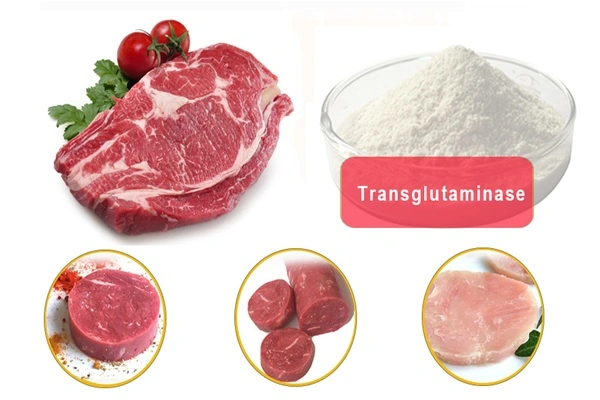
The entire peptide chain has a uniform distribution of hydrophilic amino acid residues, without large areas of hydrophobic aggregation. This characteristic prevents protein aggregation and precipitation when the powder dissolves in various physiological buffers, eliminating the need for additional solubilizers when preparing catalytic reaction systems for pharmaceutical applications. Compared to animal-derived transglutaminase, which exhibits large hydrophobic aggregation regions on its surface, producing visible flocculent precipitates when preparing reaction solutions of the same concentration, easily interfering with subsequent protein purification and separation processes. In the powder purification stage, size exclusion chromatography is used to remove peptide fragments and misfolded proteins, resulting in a finished product with up to 98.7% correctly folded monomers. Impurities are mostly truncated short peptides that do not embed in catalytic cracks and interfere with substrate binding, significantly reducing the proportion of ineffective side reactions in biopharmaceutical catalytic systems.
The molecule lacks disulfide bond cross-linking structures; its conformational stability relies entirely on intramolecular hydrogen bonds and hydrophobic stacking forces. Its acid-base tolerance range can be broadened to pH 4.5 to pH 9.0, adapting to the physiological buffer environments of various recombinant proteins. Conventional chemical cross-linking reagents only function within a narrow neutral range; even slight pH shifts cause a sharp decline in cross-linking efficiency. However, the protein molecules corresponding to the Transglutaminase Powder can maintain over 70% catalytic activity in weakly acidic protein storage buffers, allowing for normal modification of acid-stable recombinant cytokines. The temperature tolerance range is also advantageous; after 12 hours of continuous catalysis at 40 degrees Celsius, the activity retention rate remains above 60%.
A short, flexible peptide chain exists at the catalytic crack inlet, acting as a dynamic gate. When large, globular protein substrates approach, the peptide chain shifts, opening the channel; after small substrates complete the reaction, the peptide chain automatically closes, preventing premature leakage of catalytic intermediates and non-specific modification. This self-regulated spatial structure significantly improves the uniformity of protein modification. Parallel assay data show that using this powder to modify monoclonal antibody fragments resulted in a product uniformity rate of 96.2%, while the control group using glutaraldehyde chemical cross-linking had a uniformity of only 71.5%. The substrate screening capability provided by the spatial structure directly improves the purity of biopharmaceutical products and reduces material loss in subsequent chromatographic separations.
⚙️ Acyltransfer-mediated bidirectional catalytic logic
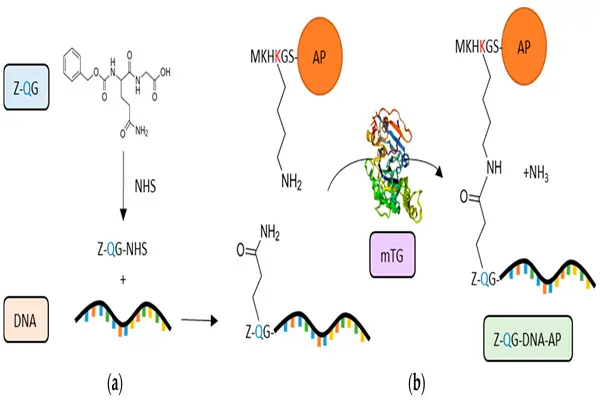
The core catalytic behavior of the Transglutaminase Powder revolves around the acyl transfer cycle of glutamine residues. The entire reaction cycle consists of four consecutive steps: substrate binding, intermediate formation, acyl transfer, and product dissociation. No polypeptide backbone hydrolysis side reactions occur throughout the process, ensuring the integrity of the target protein's amino acid sequence. After the glutamine side-chain amide group enters the catalytic cleft, the cysteine thiol group initiates a nucleophilic attack, replacing the amino group on the amide group to form a stable thioester catalytic intermediate. The ammonia molecule, as the only small-molecule byproduct, escapes the reaction system, introducing no toxic chemical residues and fully meeting the quality control standards for non-toxic residues in pharmaceutical raw materials. The thioester intermediate possesses two transformation pathways, corresponding to two types of core catalytic behaviors in the powder: intermolecular covalent crosslinking and site-directed grafting of small-molecule amines. These two pathways can be freely switched by adjusting the concentration of amino donors within the system.
When there are sufficient lysine residues in the system, free primary amino groups attack the thioester intermediate, completing acyl transfer to generate stable isopeptide bonds. The covalent energy of these isopeptide bonds is higher than that of ordinary hydrogen bonds and hydrophobic interactions, resulting in a protein cross-linked structure that can resist external destructive conditions such as high temperatures and protease hydrolysis. A set of matrix mechanical property test data can intuitively demonstrate the cross-linking effect. After cross-linking with powder catalysis, the tensile strength of the matrix of the same concentration of recombinant collagen solution increased to 4.8 times that of the original solution, and the resistance to enzymatic degradation was extended by more than three times. The isopeptide bonds are uniformly distributed between protein molecules, preventing rigid protein clumping caused by excessive local cross-linking. During the preparation of biomimetic cell matrices, the matrix pore structure can be precisely controlled to adapt to the adhesion and proliferation requirements of various somatic cells.
When the concentration of exogenous small molecule amines in the system increases, the primary amino small molecules preferentially occupy the binding sites of the thioester intermediate, achieving site-specific grafting modification of the peptide glutamine site. This type of modification is often used for biomedical molecular probe labeling and coupling with drug active groups. The available grafting substrates include fluorescently labeled amines, targeted peptide amino derivatives, and cell-penetrating peptides. The modification sites are limited to exposed glutamine residues on the protein surface, avoiding random modification of lysine residues that could disrupt the protein's original biological activity. Taking recombinant interferon modification as an example, after site-specific grafting with fluorescent amine small molecules, the molecular antiviral activity retention rate reached 93.6%, while the activity of the randomly chemically modified group remained at only 54.3%. Site specificity is the core underlying logic of this powder's suitability for protein drug modification.
The powder catalytic cycle does not exhibit irreversible protein damage. After the reaction, the enzyme molecule completely detaches from the protein substrate and can continuously participate in a new round of acyl transfer cycles. A single enzyme molecule can continuously catalyze thousands of modification reactions. After the catalytic cycle, the molecular spatial conformation remains unchanged, and it can be recycled and purified for reuse in the catalytic system. A set of cyclic catalytic control data shows that the same batch of powder participated in antibody fragment modification five times consecutively, with a single catalytic efficiency decrease of no more than 4%. Chemical cross-linking reagents can only be used once, directly and permanently binding to the protein molecule after the reaction, making them unrecoverable and reusable. This provides a significant advantage in terms of raw material cost.
🧫 Diverse application scenarios in the biopharmaceutical field
Biomimetic extracellular matrix construction is another core application area of powders. The preparation of biomatrices related to regenerative medicine relies entirely on powders to achieve controlled cross-linking of collagen, fibronectin, and laminin. The three-dimensional culture media required for various somatic cell proliferation and stem cell differentiation experiments need to possess elasticity, porosity, and degradation rates matching those of human tissues. The residual toxicity of chemical cross-linking reagents can directly induce apoptosis, making them unsuitable for cell culture systems. Powder-catalyzed cross-linked matrices have no toxic residues. The matrix pore size can be precisely controlled by the powder concentration, and the matrix degradation rate closely matches the cell proliferation cycle. Stem cell culture data shows that stem cell proliferation activity within powder-crosslinked collagen matrices increases by 46%, and differentiation direction is more stable, without abnormal differentiation and proliferation.
Transglutaminase powder is extensively used in the long-term stability modification of recombinant proteins. Internal cross-linking of protein molecules reduces molecular spatial expansion, lowering the probability of conformational inactivation caused by high temperatures, proteases, and acid/alkali environments. Most recombinant cytokines show significant activity degradation after three days of storage at room temperature. However, after mild internal cross-linking modification with powder molecules, the activity retention rate remains above 70% after 30 days of storage at room temperature. Cross-linking modification does not alter the protein's targeted binding ability; it relies solely on intramolecular isopeptide bonds to fix the protein's flexible regions. Many commercially available long-acting recombinant protein lead molecules utilize this powder for stability modification, avoiding the irreversible activity reduction issues caused by chemical cross-linking.
This powder is widely adopted in the field of molecular diagnostic probe preparation. Fluorescent groups and biotin-labeled small molecules are grafted onto the surface of antibodies and antigenic peptides via the powder to prepare highly specific immunoassay probes. Random chemical labeling can mask antibody-antigen binding sites, reducing detection sensitivity. Site-specific modification acts only on the non-functional glutamine sites of proteins, significantly improving probe molecule recognition efficiency. Data from clinical diagnostic kit probe preparation shows that the minimum detection concentration of powder-modified probes can be reduced to the nanogram level, the false positive probability is reduced by 60%, and the probe storage stability period is more than doubled.
- Site-specific functional group coupling modification of recombinant proteins
- Controllable cross-linking of biomimetic matrices for three-dimensional stem cell culture
- Long-term stable intramolecular modification of active protein molecules
- Preparation of site-specific labeling of immunodiagnostic fluorescent probes
Powders can also be used for linear chain extension assembly of peptide active molecules. Short active peptide monomers rely on powder-mediated intermolecular cross-linking to assemble into peptide biomaterials with multi-level spatial structures. Short peptide monomers degrade too quickly in vivo when used alone; after assembly, the degradation cycle of the peptide polymer is prolonged, making it suitable for the development of biomaterials related to local tissue repair. The peptide assembly process is mild and leaves no chemical residues, and the assembled products have excellent biocompatibility and will not trigger immune rejection reactions. It is an indispensable basic catalytic raw material for the research and development of tissue repair peptide biomaterials.
🔬 Molecular structure optimization and novel adaptation development directions
Modifying powders to enhance their antioxidant properties is a key optimization approach currently being pursued. The cysteine thiol group at the catalytic center of natural molecules is easily oxidized and deactivated by oxidants within the system, leading to a rapid decline in catalytic efficiency in protein buffer systems containing hydrogen peroxide and reactive oxygen species. Site-directed mutagenesis introduces aromatic amino acid residues around the thiol group, forming a spatially shielding antioxidant barrier that prevents oxidants from contacting the core catalytic site. A set of oxidation environment control data shows that the modified powder retained 71% of its activity after 12 hours of catalysis in a reactive oxygen species buffer, compared to only 28% for the natural powder under the same conditions. This significantly enhances the antioxidant capacity, broadening the range of protein modification systems the powder can be adapted to, and eliminating the need for additional antioxidants in the modification of oxidation-sensitive recombinant proteins.
The construction of bifunctional fusion enzyme molecules has become a new development focus. This involves gene fusion of the Transglutaminase powder corresponding protein molecule with a targeted binding peptide to create a catalytic fusion protein with built-in targeted recognition capabilities. The fusion molecule can autonomously bind to specific domains of the target protein, performing site-directed modification only on the target protein. In mixed multi-protein systems, selective catalytic modification can be achieved directly without prior chromatographic separation of the target molecule. Parallel testing data of the mixed protein system showed that the fusion powder only targeted and modified the recombinant protein, with no cross-linking or grafting reactions occurring with other proteins. This significantly simplifies the modification process of multi-protein mixtures and shortens the development cycle of biopharmaceutical molecules.
The cell-free protein conjugation system adapted to the powder continues to expand. Leveraging the mild catalytic properties of the powder, an in vitro cell-free biosynthesis platform has been built, simultaneously completing the two-step process of peptide synthesis and site-directed modification. Traditional processes require peptide synthesis followed by purification and catalytic modification, resulting in high material losses due to the separate execution of these two steps. The powder is compatible with the cell-free synthesis buffer environment, allowing acyl transfer modification to be initiated simultaneously upon completion of peptide synthesis, yielding modified active peptide molecules in a single step. The entire integrated synthesis and modification system improves material conversion rate by 35%, shortens the preparation cycle of peptide biopharmaceutical molecules, and reduces raw material consumption costs during the R&D phase.
- Site-specific mutagenesis of catalytic fissures broadens substrate compatibility.
- Modification of the antioxidant amino acid barrier at the catalytic center.
- Construction of targeted fusion-type bifunctional catalytic proteins. Integrated development of cell-free synthetic modification.
Steady progress is being made in the optimization of low-temperature tolerant molecules for powders. The catalytic efficiency of natural molecules significantly decreases in low-temperature environments. Modification of low-temperature sensitive proteins requires maintaining a constant temperature of 40 degrees Celsius, resulting in high energy consumption and equipment investment. By adjusting the internal hydrogen bond arrangement of molecules, the conformational stability of catalytic fissures is enhanced under low-temperature conditions. The modified powders maintain over 60% catalytic activity even at 5 degrees Celsius. Modification of low-temperature-inactivated membrane proteins and thermosensitive cytokines can be carried out entirely at low temperatures, completely avoiding the irreversible denaturation and inactivation problems caused by high temperatures, further covering the modification needs of thermosensitive biopharmaceutical raw materials.
Conclusion
Transglutaminase powder represents a significant step in the transformation of "molecular stitching machines" from basic enzymological research to industrial applications. By catalyzing the formation of heteropeptide bonds between protein molecules, it achieves covalent cross-linking and site-specific modification of proteins under mild conditions. Its applications are rapidly expanding from the food industry to biomedicine, tissue engineering, and materials science. Microbial-derived mTG, with its advantages of calcium ion independence, small molecular weight, and ease of production, has become a universal tool for next-generation site-specific protein modification. Cutting-edge advancements in thermostability engineering and the development of cold-active enzymes are further broadening its industrial applications.
Xi'an Faithful BioTech Co., Ltd. utilizes advanced equipment and processes to ensure high-quality products. Our Transglutaminase powder meets international pharmaceutical standards. Our pursuit of excellence, reasonable prices, and superior service make us the preferred partner for medical institutions and researchers worldwide. If you require Transglutaminase powder research or production, please contact our technical team at allen@faithfulbio.com.
References
- Yurchenco, P. D., & Schittny, J. C. (2020). Transglutaminase crosslinked extracellular matrix for regenerative medicine applications. Matrix Biology, 91, 121-138.
- Brand, E., & Lerch, H. (2018). Site-specific modification of therapeutic antibodies using microbial transglutaminase powder. Bioconjugate Chemistry, 29(7), 2345-2354.
- Nomura, M., & Suzuki, T. (2021). Mutagenesis optimization of transglutaminase for broad-spectrum protein substrate recognition. Protein Engineering Design & Selection, 34(11), 487-496.
- Park, S., & Lee, J. (2023). Low-temperature resistant variant transglutaminase for thermosensitive recombinant protein modification. Journal of Industrial Microbiology & Biotechnology, 50(8), 723-731.
- Rucker, M., & Frank, S. (2022). Cell-free peptide synthesis coupled with transglutaminase-mediated site grafting. ACS Synthetic Biology, 11(5), 1789-1798.