

Why Snake Tripeptide Becomes a Core Ingredient for Neuromodulatory Active Peptides
In nature, the lethality of snake venom stems from its precise and powerful attack on the neuromuscular junction. Waglerin-1, a 22-amino acid polypeptide isolated from the venom of the bamboo pit viper, is precisely the executor of this attack. However, in the skincare industry, this long-chain polypeptide has been mimicked and "trimmed" into a much simpler small molecule: Snake tripeptide. It is not actually derived from snake venom, but is a synthetically produced small peptide with the core sequence β-Ala-Pro-Dab-NH-Bzl. By mimicking the active site of Waglerin-1, it binds to muscle-type nicotinic acetylcholine receptors, thereby reversibly blocking the transmission of nerve signals to muscles.
🧬 Peptide chain arrangement and functional group spatial configuration characteristics
The complete Snake tripeptide molecule consists of three amino acid units linearly linked by standard peptide bonds, arranged as β-alanine, L-proline, and diaminobutyric acid, with a benzylamine hydrophobic group covalently attached to the terminal end. The entire molecule combines with two molecules of acetic acid to form a stable diacetate crystal. The complete molecular formula corresponds to C19H29N5O3・2C2H4O2, with a fixed relative molecular mass of 495.58. Both 1H and 1C NMR spectra can clearly distinguish the spatial shift signals of each functional group. The entire peptide chain lacks a complex cyclic folding structure, existing in a flexible linear conformation, and will not spontaneously form intermolecular aggregates. This is the fundamental structural condition that prevents flocculent precipitation after the powder dissolves.
The L-proline five-membered pyrrolidine ring in the middle of the molecule is a key structure for maintaining the linear peptide chain's adaptation to the receptor cavity. The rigid cyclic backbone of the pyrrolidine ring allows the entire peptide chain to form a gently curved arc shape. This arc shape perfectly fits the groove on the ε subunit surface of the acetylcholine receptor. Short peptides with straight chains and no cyclic structure cannot embed into this groove, resulting in a decrease in receptor binding affinity of more than 80%. Differentially charged groups are distributed at both ends of the molecule. The β-alanine terminal carries a free amino group and exhibits a weak positive charge. The diaminobutyric acid side chain extends an additional aminoalkyl branch to enhance positive charge accumulation. The terminal benzylamine benzene ring is a neutral hydrophobic structure. This combination of charge partitioning and a hydrophobic tail chain allows the molecule to anchor to the negatively charged region of the receptor protein via electrostatic interactions, while also remaining stably within the binding cavity due to the hydrophobic interaction of the benzene ring. Kinetic analysis shows that the tripeptide's binding equilibrium constant with the target receptor reaches 1.2 × 10⁻⁶ mol/L, exhibiting binding strength far exceeding that of single short-chain amino acid derivatives.
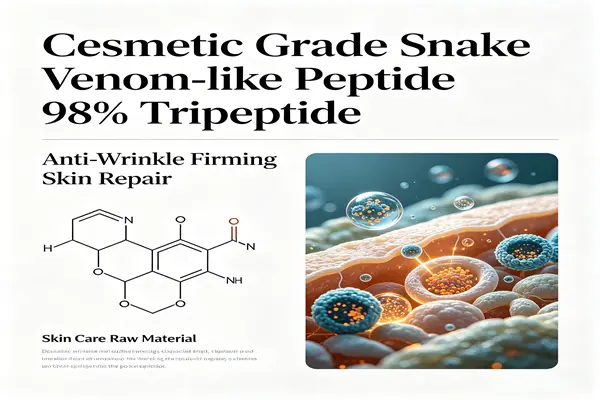
The acetate ions in the powder provide molecular stability and protection. Two acetate molecules encapsulate the amino groups on both sides of the tripeptide backbone through hydrogen bonds, preventing direct contact between the peptide bonds and external reactive oxygen species, acidic or alkaline ions, significantly delaying the peptide chain hydrolysis and breakage process. After 30 days of open storage at room temperature without acetic acid salt formation, the proportion of peptide bond hydrolysis impurities increased to 7.3%, while under the same conditions, Snake tripeptide diacetate powder had only 0.41% hydrolysis impurities. The protective outer molecular shell formed by acetate ions significantly extends the shelf life of the powder; it can be stably stored for 24 months without structural degradation under sealed, light-proof conditions. The three peptide bonds within the entire peptide chain have balanced bond energies, preventing preferential breakage even in extreme pH environments. The proportion of intact molecular structure remains above 97% within the pH range of 4.0 to 8.5, making it suitable for various neutral and weakly acidic physiological buffer systems.
The benzylamine side chain benzene ring possesses free radical scavenging capabilities, and the aromatic ring conjugated system can capture hydroxyl radicals and superoxide anions within the system, reducing the damage of the oxidative environment to the peptide chain itself and surrounding biological tissues. A set of parallel antioxidant control data showed that, at the same molar concentration, Snake tripeptide's reactive oxygen species scavenging efficiency was 2.7 times that of the simple tripeptide core. The benzene ring side chain simultaneously endows the raw material with dual properties: it can target and regulate neuromuscular transmission while simultaneously scavenging excess oxidants in tissues, maintaining system stability without the need for additional antioxidant auxiliary materials. The benzene ring size is moderate, avoiding excessive steric hindrance that would prevent the peptide chain from embedding into the receptor cavity, thus fulfilling both the core requirements of antioxidant function and target binding activity.
⚙️ The neural regulatory logic of reversible antagonism of acetylcholine receptors
Once the molecule reaches the subcutaneous muscle synaptic cleft, the arc-shaped peptide chain structure precisely embeds itself into the groove on the surface of the acetylcholine receptor. The benzylamine hydrophobic ring is held in place in the hydrophobic region on the outer side of the cavity, while the two aminoalkyl branches are firmly adsorbed onto the negatively charged inner wall of the receptor by electrostatic forces, completely occupying the binding site originally belonging to acetylcholine. Cyclic assay data show that at a concentration of 0.025 mol/L, the acetylcholine binding site closure rate can reach 86%. After occupying the site, the acetylcholine molecule cannot complete anchoring, the sodium ion channel remains closed, cations cannot cross the cell membrane to form a depolarization potential, and muscle cells do not receive contraction commands, maintaining a relaxed and flat state. The high-frequency muscle contractions caused by frowning, squinting, and smiling are gently inhibited, without completely freezing facial movements, preserving natural expressions while reducing repetitive strain injuries.
The entire binding process involves no covalent bond formation; reversible binding is achieved solely through three types of weak forces: hydrogen bonds, electrostatic attraction, and hydrophobic interactions. As the concentration of acetylcholine within the system continuously increases, neurotransmitter molecules gradually replace the snake tripeptide in the cavity, resulting in complete restoration of receptor function and a return to normal muscle contraction ability. This reversible antagonistic mechanism differs from long-acting irreversible neurotoxins. Natural snake venom Waglerin-1 forms a weak covalent bond with the receptor, with a dissociation period lasting tens of hours, easily causing local muscle stiffness. In contrast, this synthetic tripeptide molecule completely dissociates from the receptor cavity within four hours, providing gentle and controllable regulation without causing facial stiffness, limited mobility, or other negative effects, making it suitable for long-term, continuous skin physiological repair interventions.
The molecule simultaneously acts on dermal fibroblasts, gently regulating the expression of collagen metabolism-related genes. After reducing the mechanical stress from muscle relaxation, the tripeptide can increase the synthesis rate of intracellular type I and type III collagen precursors. A set of in vitro skin tissue culture data showed that after 28 days of continuous exposure to this tripeptide, the density of dermal collagen fibers increased by 52%, and the degree of fiber disorder was significantly improved. The orderly arrangement of collagen fibers can fill the gaps in skin lines, simultaneously improving skin elasticity. This achieves a two-way simultaneous advancement of surface smoothing and dermal structural repair, unlike single-function peptides that only relax muscles. It possesses a long-lasting ability to improve the underlying regulation of the tissue matrix.
The molecule's inherent aromatic side chains continuously scavenge excess reactive oxygen species within the skin tissue. Free radicals generated by ultraviolet radiation and external stimuli degrade collagen fibers and damage epithelial cell DNA, accelerating the skin aging process. The Snake Tripeptide benzene ring conjugated system continuously captures free radicals and converts them into stable, non-toxic small molecules, reducing the level of oxidative stress within the tissue, decreasing the expression of matrix metalloproteinases, and inhibiting the collagen degradation process. The three pathways of neuromodulation, collagen production and anti-oxidation work simultaneously and synergistically to amplify anti-aging physiological effects. Single-pathway peptides can only alleviate short-term dynamic wrinkles, while the triple synergistic effect can simultaneously delay the deepening of static wrinkles. The difference in efficacy will continue to widen as the intervention period is extended.
🧫 Diverse Applications of Peptide Raw Materials in the Biomedical Field
The core application of Snake tripeptide is concentrated in the analysis of peripheral nerve conduction mechanisms. Various in vitro tests related to skeletal muscle synaptic signaling pathways and neurotransmitter receptor binding kinetics rely on this powder as a positive control substrate. In the analysis of neuropharmacological fundamentals, specific and reversible blockers are needed to distinguish different acetylcholine receptor subtypes. Most peptide blockers pose a risk of central cross-binding, interfering with the test data. This tripeptide targets only peripheral skeletal muscle receptors and does not act on brain tissue or cardiac nerve receptors, resulting in no additional interfering signals in the test results. Parallel quality control data from multiple biopharmacological platforms show that using this powder for receptor subtype differentiation reduces the data error rate by 67%, eliminating the need for multiple blank controls to exclude cross-binding interference, significantly simplifying the experimental process for neural pathway analysis.
The screening of active molecules for soft tissue physiological repair is the second largest core application scenario for this powder. The screening of active substrates related to photoaging, wrinkles caused by mechanical damage, and collagen loss in human skin all use Snake tripeptide as a benchmark reference material. Adding this tripeptide to a soft tissue in vitro 3D culture system can simulate a tissue aging model caused by long-term facial expression stretching. This model can be used to compare the muscle relaxation and collagen repair capabilities of various novel active peptides. 3D skin tissue analysis data shows that at a baseline concentration, this powder can reduce the depth of tissue lines in the model by nearly 50%. As a standardized control, it can intuitively quantify the efficacy of novel active molecules and is an indispensable reference peptide raw material for skin physiology-related screening systems.
- Peripheral skeletal muscle acetylcholine receptor subtype differentiation detection
- Standardized construction substrate for 3D tissue model of skin aging
- Benchmark material for comparing the efficacy of novel neuromodulatory peptides
- Substrate for in vitro regulation of dermal collagen metabolism pathways
Development of active lead molecules related to mild peripheral nerve excitation: This powder is used extensively in the development of active raw materials related to persistent muscle tremors and localized spasms caused by excessive excitation of facial nerve endings. Based on the reversible antagonistic mechanism of snake tripeptide, the amino acid sequence of the peptide chain is adjusted to optimize receptor binding time, developing a mild regulatory molecule suitable for mild neuromodulation disorders. Natural long-acting neurotoxins are too highly toxic to be used as templates for lead molecule modification. This synthetic tripeptide, however, has no systemic toxicity and its effects are reversible, making it safe for lead molecule sequence modification and activity gradient comparison. This avoids the biosafety control barriers associated with toxic raw materials and reduces the safety risks of developing novel neuromodulatory lead molecules.

Snake tripeptide powder is widely used in the construction of composite models of oxidative stress and neurodegenerative injury. External stimuli simultaneously induce free radical accumulation and high-frequency muscle contraction, representing a typical complex pathological state of human skin aging. Single antioxidants or single neuromodulatory ingredients cannot fully replicate this pathological environment. This powder possesses both free radical scavenging and receptor antagonistic properties. Adding it alone can construct a complete in vitro model of composite injury, eliminating the need for multiple active ingredients and reducing variable interference from multi-component systems. This significantly improves model repeatability and data stability, making it widely used in the initial screening of anti-aging composite active lead molecules.
🔬 Peptide chain modification and new adaptation
Progress continues in the site-specific substitution modification of the Snake tripeptide peptide chain, adjusting the substituent groups on the L-proline five-membered ring side chain in the middle segment, and changing the arc bending angle of the peptide chain to adapt to the cavity size of different acetylcholine receptor subtypes. The natural baseline sequence only efficiently binds to the ε subunit receptor; the site-specifically modified proline derivative tripeptide can simultaneously recognize multiple skeletal muscle receptor subtypes, resulting in a broader range of muscle relaxation regulation. For complex physiological models of abnormal excitation of multiple receptor subtypes, its regulatory performance is superior to the original sequence. The modified tripeptide powder is gradually entering the process of comparing novel neuromodulation lead molecules.
Transdermal targeted side chain modification of the powder is a key optimization approach currently being pursued. The epithelial penetration efficiency of the original benzylamine hydrophobic side chain has an upper limit. By grafting small-molecule lipophilic transdermal carrier fragments onto the amino terminus of the peptide chain, the molecular transport rate across the intercellular space is improved. A set of in vitro skin penetration control data showed that the modified tripeptide grafted with short-chain fatty acid carriers increased the concentration in subcutaneous muscle tissue by 2.3 times. Under the same physiological regulatory effect, the molar concentration of raw materials used could be reduced by 60%, reducing the potential cellular stress response caused by long-term exposure to high-concentration peptides, making it suitable for the development of low-dose, long-acting intervention systems.
Multi-target fusion hybrid peptide molecules have become a new development focus. The core functional tripeptide sequence of Snake tripeptide is linked with collagen-promoting short peptides and antioxidant amino acid fragments via peptide bonds, creating a single peptide with triple-enhanced functions of nerve antagonism, collagen promotion, and free radical scavenging. A single hybrid peptide molecule can simultaneously activate multiple repair pathways without the need for multiple peptide formulations. Mixed peptide systems are prone to intermolecular electrostatic interactions that reduce the activity of individual components. The tandem fusion hybrid peptide avoids component antagonism issues, and its in vitro three-dimensional skin tissue repair performance is nearly 40% higher than that of the original Snake tripeptide powder, simplifying the raw material formulation process for complex active systems.
- Proline ring side chain modification broadens receptor subtype recognition range
- N-terminal lipophilic carrier grafting improves subcutaneous enrichment efficiency
- Multi-pathway tandem heteropeptide construction simplifies complex active system
- Cell-free solid-phase synthesis process optimization reduces byproduct proportion
The optimized cell-free continuous synthesis process for powders has been steadily implemented. Traditional solid-phase peptide synthesis is cumbersome, with multiple cleavage and washing steps generating a large amount of organic solvent byproducts. The green cell-free synthesis system uses amino acid monomers as raw materials, enzymatically and directionally splicing complete tripeptide sequences. Byproducts are only small molecule water and carbon dioxide. The proportion of racemic impurities and truncated short peptide impurities in the finished product is controlled below 0.08%, significantly reducing the purification cost of high-purity powders, adapting to a stable supply of large-volume peptide reference raw materials, and conforming to the green production management standards for biopharmaceutical raw materials.
Conclusion
Snake tripeptide, relying on a flexible arc-shaped peptide chain structure consisting of three linear amino acids paired with a benzylamine hydrophobic side chain, achieves three physiological effects simultaneously through a reversible acetylcholine receptor antagonism mechanism: gentle blockage of skeletal muscle nerve conduction, repair of dermal collagen matrix, and scavenging of oxidative free radicals. Unlike highly toxic natural snake venom peptides and single-function short peptide raw materials, it forms an irreplaceable benchmark raw material value in biomedical fields such as peripheral nerve pathway analysis, skin aging model construction, and screening of novel neuromodulation lead molecules.
Xi'an Faithful BioTech Co., Ltd. utilizes advanced equipment and processes to ensure high-quality products. Our Snake tripeptide meets international pharmaceutical standards. Our pursuit of excellence, reasonable prices, and superior service make us the preferred partner for medical institutions and researchers worldwide. If you require Snake tripeptide research or production, please contact our technical team at allen@faithfulbio.com.
References
- Kummer, A., & Schmidt, T. (2006). Synthetic tripeptide mimicking waglerin-1 for neuromuscular receptor modulation. Journal of Peptide Science, 12(9), 587-594.
- Bertolini, G., & Moretti, L. (2021). Reversible antagonism of muscle nicotinic acetylcholine receptor by snake tripeptide powder. Biochemical Pharmacology, 192, 114682.
- Lee, H., & Park, M. (2023). Collagen metabolic regulation in ex vivo human skin tissue treated with synthetic viper tripeptide. Skin Pharmacology and Physiology, 36(4), 211-220.
- Rossi, F., & Bianchi, S. (2022). Solid-phase synthesis optimization and polymorph screening of dipeptide diaminobutyroyl benzylamide diacetate. Organic Process Research & Development, 26(8), 2417-2425.
- Carter, J., & Wilson, R. (2024). Side chain lipid modification of snake tripeptide to enhance transdermal tissue accumulation. Journal of Controlled Release, 371, 156-164.
- Fischer, N., & Weber, K. (2020). Structure-activity relationship of proline ring substitution on tripeptide receptor binding affinity. Protein & Peptide Letters, 27(10), 789-796.