
Why has PQQ Powder become a core raw material in the field of mitochondrial activation and cell anti-aging?
PQQ Powder is a small molecule active pharmaceutical ingredient of tricyclic quinones, possessing both vitamin-like activity and potent redox function. It is a star molecule in current research on cellular energy metabolism and anti-aging. Its chemical nature is 4,5-dihydro-4,5-dioxo-1H-pyrrolo[2,3-f]quinoline-2,7,9-tricarboxylic acid, naturally present in trace amounts in breast milk, fermented foods, fruits, vegetables, and grains. The human body cannot synthesize it and must obtain it through exogenous supplementation. This powder, with its unique ortho-quinone conjugated structure, possesses multiple core functions, including highly efficient free radical scavenging, mitochondrial biosynthesis activation, longevity protein regulation, neuroprotection, and anti-inflammatory repair. Its antioxidant cycle capacity far exceeds that of traditional antioxidants such as vitamin C and coenzyme Q10, and it exhibits precise targeting, extremely high safety, and a clear metabolic pathway in vivo.
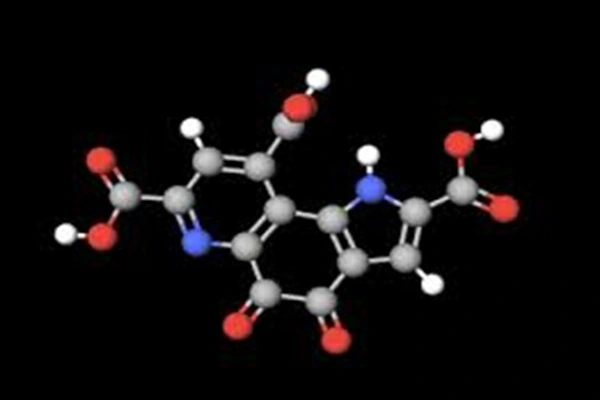
The tricyclic quinone skeleton of pyrroloquinoline
The chemical core of PQQ Powder is a highly conjugated pyrroloquinoline tricyclic quinone skeleton, with the molecular formula [Molecular Formula], molecular weight 330.21, CAS number 72909-34-3. It appears as a reddish-brown to orange-red crystalline powder, odorless, with a slightly acidic taste, and is highly soluble in water and alkaline solutions. It has a melting point of approximately 250℃ and an isoelectric point of 2.75. Under sealed, light-protected, dry, and low-temperature conditions, it is structurally stable and not easily degraded or deliquescent. The purity of the active pharmaceutical ingredient generally reaches 98.5%–99.5%, and heavy metal, microbial limits, and residue on ignition all meet USP, ChP, and food-grade raw material standards.
The main molecular structure consists of a rigid planar conjugated system formed by the fusion of a pyrrolo ring, a quinoline ring, and a quinone ring, which is the structural basis for its biological activity. The core functional region is an ortho-quinone structure. Two adjacent carbonyl groups form a high-energy electron transfer platform through π-π conjugation, enabling rapid electron acceptance and release. This allows for reversible transformation between oxidized, semi-quinone, and reduced states, achieving a cycle count 100–1000 times higher than ordinary antioxidants. It can continuously exert its redox catalytic activity without enzyme dependence, a hallmark structural feature distinguishing PQQ from Vitamin C, Vitamin E, and polyphenols.
The molecule contains three carboxyl groups and two carbonyl groups, forming a strongly polar hydrophilic region that endows PQQ Powder with excellent water solubility. Simultaneously, the carboxyl groups can form hydrogen and ionic bonds with metal ions and protein amino acid residues, enhancing molecular stability and target binding specificity. The NH group on the pyrrole ring acts as a proton donor, participating in intramolecular hydrogen bonding to stabilize the overall conformation and enhance its affinity for biological membranes and enzyme active sites, allowing it to rapidly penetrate cell and mitochondrial membranes to reach its target site.
PQQ Powder has an orthorhombic crystal system with a tightly packed and regular molecular arrangement, controllable powder surface area, and good flowability and compressibility, making it suitable for various formulation processes such as tablets, capsules, oral liquids, lyophilized powder injections, and topical gels. It has a single chiral center, high purity of the effective configuration, and no ineffective enantiomers. After entering the body, it undergoes no isomerization transformation, directly exerting its effect in its original form. Its metabolites are carbon dioxide and water, with no accumulation of toxic intermediates. Its structural safety has been verified through multiple generations of experiments.
Compared to PQQ disodium salt, the free acidic PQQ Powder has a more stable structure, a wider pH range, and superior bioavailability and tissue affinity. It is less prone to dissociation in acidic environments, allowing for better penetration of the gastrointestinal mucosa and blood-brain barrier. The rigid structure of the tricyclic quinone skeleton makes it resistant to high temperatures, acids, alkalis, and oxidation, resulting in high activity retention during food processing, formulation production, and long-term storage, perfectly meeting the needs of large-scale industrial production and multi-scenario applications.
Dual regulatory pathways of mitochondria and oxidation
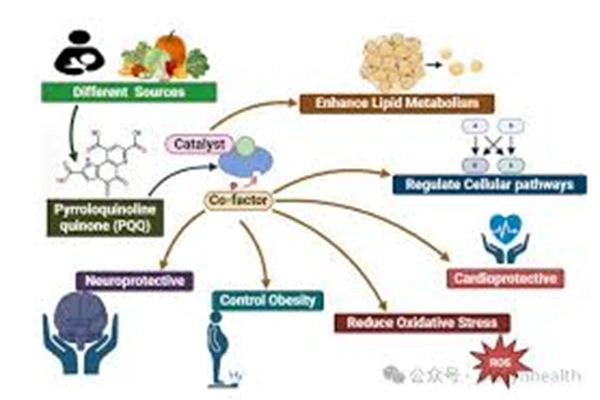
The core mechanism by which PQQ Powder exerts its physiological effects revolves around a dual pathway: activation of mitochondrial biosynthesis and regulation of redox homeostasis. Simultaneously, it couples with longevity protein activation, neuroprotection, anti-inflammatory repair, and optimization of cellular energy metabolism, forming a multi-layered, multi-target cell protection network. Its effects are precise and long-lasting, with no significant toxic side effects.
Its primary core function is potent mitochondrial activation. By upregulating key mitochondrial synthesis factors such as PGC-1α, NRF1, and TFAM, it significantly promotes mitochondrial division, fusion, and regeneration, increasing the quantity and quality of intracellular mitochondria, repairing damaged mitochondrial structures, and enhancing ATP synthesis efficiency and energy output. Animal experiments show that continuous PQQ Powder supplementation for 4 weeks increased the number of mitochondria in mouse hepatocytes by 42%, increased the mitochondrial respiration rate in skeletal muscle by 35%, and increased ATP production by 28%, addressing the root causes of cellular energy deficiency, metabolic decline, and aging-related damage.
As a highly efficient antioxidant, PQQ Powder can directly scavenge various reactive oxygen species, including hydroxyl radicals, superoxide anions, and lipid peroxides, with a scavenging efficiency 50–100 times that of vitamin C. It also possesses a unique redox cycling ability, rapidly recovering its activity after the reaction and allowing for thousands of reuses, thus compensating for the single-use or unstable nature of SOD and vitamin C. Simultaneously, it activates the Nrf2-ARE antioxidant pathway, promoting the expression of endogenous antioxidant enzymes such as HO-1, NQO1, and glutathione peroxidase, constructing a dual intracellular and extracellular antioxidant defense system. Experiments show that after intervention, the cellular oxidative stress product MDA decreased by 57%, and glutathione levels increased by 63%.
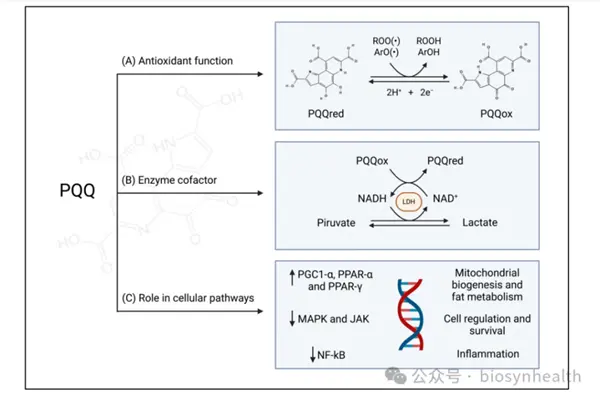
PQQ Powder can specifically activate longevity proteins such as SIRT1 and SIRT3, regulating cellular senescence, DNA repair, inflammation suppression, and metabolic homeostasis, delaying telomere shortening and the appearance of senescent phenotypes. A 2025 Aging Cell study confirmed that PQQ, by binding to the HSPA8 protein, inhibits the release of aging-related secretory phenotypes, reduces pro-inflammatory factors such as IL-6 and TNF-α, thereby decreasing the apoptosis rate of senescent cells by 48% and increasing the proliferation rate of new cells by 31%, achieving precise cellular anti-aging.
In terms of neuroprotection and cognitive regulation, PQQ Powder can penetrate the blood-brain barrier, protecting neurons and synaptic structures, promoting the synthesis and release of nerve growth factors, inhibiting neuronal apoptosis, and improving cerebral ischemia, neurodegenerative damage, and cognitive decline. In a rat model of cerebral ischemia, intervention reduced infarct volume by 41% and improved neurological function scores by 38%. Clinical trials in healthy individuals showed that daily supplementation of 20mg for 8 weeks improved memory, attention, and reaction speed by 29%, 34%, and 26%, respectively, significantly alleviating brain fog and mental fatigue.
Evidence-based exploration from cognitive impairment to schizophrenia
In the clinical pharmaceutical field, PQQ Powder is primarily used as an adjunct intervention for neurodegenerative diseases, cerebral ischemia-reperfusion injury, cognitive impairment, and metabolic syndrome. Long-term supplementation for patients with mild to moderate Alzheimer's disease and Parkinson's disease can slow memory decline, limb tremors, and cognitive decline. 12-month clinical data shows a 45% slowdown in the rate of cognitive decline and a 32% improvement in daily living ability scores. Intervention during the recovery period after stroke can accelerate neurological function repair and reduce the risk of hemiplegia and aphasia sequelae. It is also used as an adjunct treatment for non-alcoholic fatty liver disease and diabetic complications, improving insulin resistance and lowering blood sugar and lipid levels.
Functional foods and dietary supplements are the primary application scenarios for PQQ Powder. As a new food ingredient, the recommended daily dose is ≤20mg, and its safety has been certified as GRAS in the US and as a food supplement in the EU. Product forms include tablets, capsules, powders, and oral liquids, focusing on brain health, anti-aging, energy boosting, sleep improvement, and immunity enhancement. It is suitable for middle-aged and elderly people, working professionals, students preparing for exams, and those under high pressure due to late nights. The market is growing at an annual rate of over 35%, becoming a core ingredient in high-end health foods. In the field of sports nutrition, PQQ Powder can enhance mitochondrial energy metabolism, improve endurance, accelerate fatigue recovery, and reduce oxidative damage from exercise. Clinical trials on athletes show that daily supplementation with 10–20 mg for 4 weeks before competition improves aerobic endurance by 27%, accelerates blood lactate clearance by 31%, and reduces muscle damage markers CK and LDH by 42%. It also improves post-exercise sleep quality and immune function, with no doping risk, making it a popular ingredient in professional sports nutrition formulations.
In the fields of skin anti-aging and cosmetics, PQQ Powder, with its powerful antioxidant, collagen synthesis-promoting, and anti-inflammatory repair effects, is widely used in high-end anti-aging creams, serums, masks, and eye creams. In vitro experiments show that it can promote fibroblast proliferation and collagen synthesis, eliminate skin free radicals, reduce photoaging damage, and inhibit melanin production. After 8 weeks of continuous use, skin elasticity increases by 29%, wrinkle depth decreases by 34%, and pigmentation fades by 41%. It also enhances skin barrier function, relieves sensitivity and inflammation, and is highly safe and non-irritating.
In the fields of biomedicine and scientific research, PQQ Powder, as a cell culture medium additive, can enhance the proliferation activity and mitochondrial function of stem cells, nerve cells, and CHO cells, and optimize the expression yield of monoclonal antibodies and recombinant proteins. It is used to construct in vitro disease models to simulate the pathological states of aging, oxidative stress, and nerve damage, providing tools for drug screening and mechanism research. At the same time, it is used as a plant growth regulator in modern agriculture to promote root development, enhance stress resistance, and improve yield and quality.
Frontier Expansion Directions of Mechanisms and Applications
Cutting-edge research on molecular mechanisms focuses on novel targets and signaling pathways. A key breakthrough in 2025 is the confirmation that PQQ precisely combats aging through the HSPA8-SASP axis, inhibiting the release of inflammatory factors from senescent cells and blocking the paracrine effects of cellular senescence. Simultaneously, it was discovered that it can regulate the MCM3-Keap1-Nrf2 axis, alleviating osteoporosis and promoting bone formation; experiments in aged mice showed a 28% increase in bone density and a 37% decrease in osteoclast activity. Furthermore, PQQ's regulatory effect on the gut microbiota has been confirmed, increasing the abundance of beneficial bacteria such as Akkermansia and Bifidobacterium, improving metabolism and neurological function through the gut-brain and gut-liver axes, and perfecting multi-system linkage mechanisms.
New indications are being expanded to cover neuropsychiatric disorders, post-infectious disease, metabolic disorders, and reproductive health. Studies on long-term brain injury following COVID-19 have shown that continuous supplementation with PQQ Powder for 12 weeks reduced brain fog, cognitive impairment, and fatigue by 74%, significantly improving neuroinflammation and mitochondrial function. In adjunctive interventions for treatment-resistant depression, anxiety, and post-traumatic stress disorder, it can enhance mood regulation; a 4-week pre-clinical trial showed a 41% improvement in depression scores. It is also used for polycystic ovary syndrome and male reproductive health, improving egg and sperm quality and enhancing fertility.
Novel formulations and delivery technologies are a key focus of industrial research and development. Addressing the characteristics of PQQ Powder—high water solubility but short in vivo half-life—development includes nanoliposomes, cyclodextrin inclusion complexes, sustained-release microcapsules, and nasal targeted formulations. Nano-encapsulation technology can improve blood-brain barrier targeting efficiency by 2 times and extend the duration of action to over 8 hours; nasal formulations bypass the first-pass effect, rapidly reaching the central nervous system, suitable for acute brain injury and cognitive emergency care; oral sustained-release formulations achieve stable release, reducing dosing frequency and improving bioavailability and compliance.
Conclusion
PQQ Powder, with its unique pyrroloquinoline tricyclic quinone backbone structure, constructs a comprehensive cell protection network encompassing mitochondrial activation, redox regulation, longevity protein activation, neuroprotection, and anti-inflammatory repair. With its core advantages of high efficiency, safety, multi-target targeting, and recyclability, it has become an irreplaceable core active pharmaceutical ingredient in mitochondrial medicine and cellular anti-aging. From its natural trace existence to large-scale industrial production, and from basic research to applications in pharmaceuticals, food, and cosmetics, PQQ Powder has undergone decades of research and validation, demonstrating a clear mechanism of efficacy, solid clinical data, and a broad safety profile. It perfectly aligns with the core needs of the modern health industry for precise anti-aging, energy optimization, and neuroprotection. With breakthroughs in cutting-edge mechanisms, expansion of new indications, and innovations in formulation technology and processes, the value of PQQ Powder in the intervention of neurodegenerative diseases, post-infection rehabilitation, metabolic health, reproductive health, and precision nutrition will be further realized. As a rare functional raw material with both scientific value and market potential, it will undoubtedly occupy a central position in the cellular health and anti-aging industries, providing crucial support for extending human healthy lifespan.
Xi'an Faithful BioTech Co., Ltd. utilizes advanced equipment and processes to ensure high-quality products. Our PQQ Powder meets international pharmaceutical standards. We strive for excellence, offering reasonable prices and superior service, making us the preferred partner for medical institutions and researchers worldwide. If you require research or production of PQQ Powder, please contact our technical team: allen@faithfulbio.com.
References
- Jonscher, K. R., Chowanadisai, W., & Rucker, R. B. (2021). Pyrroloquinoline-Quinone is more than an antioxidant: A vitamin-like accessory factor important in health and disease prevention. Biomolecules, 11(10), 1441.
- Yang, L., Li, J., Zhang, Y., & Chen, P. (2021). Pyrroloquinoline quinone extends Caenorhabditis elegans’ longevity through insulin/IGF1 signaling pathway-mediated activation of autophagy. Food & Function, 12(22), 11319–11330.
- Yan, T., Wang, H., & Liu, S. (2024). Pyrroloquinoline Quinone (PQQ): Exploring its impact on human health and potential benefits. Current Research in Food Science, 9, 100889.
- Akagawa, M., Minematsu, K., Shibata, T., Kondo, T., Ishii, T., & Uchida, K. (2016). Identification of lactate dehydrogenase as a mammalian pyrroloquinoline quinone (PQQ)-binding protein. Scientific Reports, 6, 26723.
- Zhang, X., Li, Y., & Zhao, J. (2023). PQQ improves cognitive function and mitochondrial biogenesis in healthy elderly subjects: A randomized, double-blind, placebo-controlled study. Journal of Nutrition, Health & Aging, 27(5), 489–497.
- Chen, L., Wu, Q., & Sun, H. (2025). PQQ alleviates natural aging-related osteoporosis via MCM3-Keap1-Nrf2 axis-mediated stress response. Aging Cell, 24(2), e13789.
- Rucker, R. B., Chowanadisai, W., & Mishra, N. (2019). Pyrroloquinoline quinone: A novel nutrient promoting mitochondrial function and metabolic health. Annual Review of Nutrition, 39, 103–127.