Why is Alpha Lipoic Acid Powder considered an all-around pharmaceutical ingredient in the fields of antioxidation and metabolic regulation?
Alpha Lipoic Acid Powder, or α-lipoic acid powder, is a sulfur-containing organic carboxylic acid compound naturally found in plants and animals. It possesses both lipid and water solubility, earning it the reputation of being an "antioxidant among antioxidants." It is a highly valuable multi-target active pharmaceutical ingredient in modern pharmaceuticals, nutritional supplements, and functional foods. Its core advantages lie in its powerful antioxidant, anti-inflammatory, metabolic regulation, and cell protection effects. It can directly scavenge reactive oxygen species in the body, regenerate other antioxidants, participate in mitochondrial energy metabolism, improve insulin sensitivity, and repair cell damage. Furthermore, it is rapidly metabolized in the body, exhibits no cumulative toxicity, and demonstrates excellent safety and tolerability. Industrially produced high-purity Alpha Lipoic Acid Powder appears as a pale yellow needle-like crystalline powder with stable physicochemical properties. It is suitable for development into various dosage forms, including oral tablets, capsules, powders, and injections, and is widely used in diverse scenarios such as clinical chronic disease intervention, neuroprotection, metabolic regulation, and skin care.
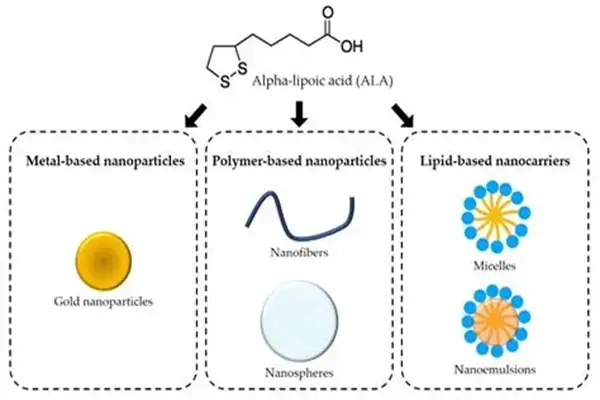
A versatile antioxidant framework with disulfide ring chains and chiral configurations
The chemical nature of Alpha Lipoic Acid Powder is a sulfur-containing octose fatty acid, chemically named 5-(1,2-dithiocyclopentan-3-yl)valeric acid, with a relative molecular mass of 206.32. It is a rare naturally occurring "amphiphilic" antioxidant molecule that is both lipid-soluble and water-soluble. It appears as a uniform, pale yellow, needle-like crystalline powder with no obvious odor. Its melting point is between 60–62℃. It is not easily oxidized or decomposed under dry, light-protected conditions at room temperature. It is slightly soluble in pure water. The pharmaceutical-grade finished product has a stable purity of over 99.0% for its main components, strictly complying with the USP, EP, and ChP triple pharmacopoeia standards. Heavy metals, microbial limits, and residue on ignition are all controlled at extremely low levels.
The core molecular structure is characterized by a 1,2-dithiocyclopentane ring containing two sulfur atoms, linked by a five-carbon straight-chain alkyl group, and terminated with a carboxyl functional group. This unique ring structure endows it with extremely strong redox activity and structural stability. The disulfide bond, as the active center of the molecule, can flexibly achieve interconversion between oxidized and reduced states in vivo, forming a highly efficient redox cycle system. This is the core structural basis for its long-lasting and comprehensive antioxidant efficacy. Unlike single-structure antioxidants, the disulfide ring chain of Alpha Lipoic Acid Powder can directly capture various reactive oxygen species and, through its own redox reactions, donate electrons to other antioxidants, achieving synergistic effects within the antioxidant network.
The molecule contains one chiral carbon atom, thus existing in two enantiomers: R-(+)-α-lipoic acid and S-(-)-α-lipoic acid. The R-form is the naturally occurring active form, an essential coenzyme for mitochondrial energy metabolism, and its biological activity is far superior to the artificially synthesized S-form enantiomer. In industrial production, through precise chiral resolution processes, the purity of the R-form enantiomer can be increased to over 98%, maximizing the preservation of the physiological activity of the raw material and avoiding interference with metabolism by ineffective isomers. The spatial conformational difference between the two enantiomers determines their binding efficiency to enzymes and transport proteins in the body. The R-form enantiomer can precisely match the target binding pocket, exerting a highly efficient physiological regulatory effect.
The carboxyl functional group at the molecule's terminal endows it with certain acidity and water solubility, while the dithiazole pentane ring and alkyl chain provide lipid solubility. This "amphiphilic" property allows it to freely penetrate cell membranes, functioning both in the intracellular lipid environment and stably in extracellular fluids. It is widely distributed throughout various cellular sites, including mitochondria, the nucleus, and cytoplasm, comprehensively scavenging free radicals and protecting cell structure. Simultaneously, the carboxyl functional group can form hydrogen bonds with amino and hydroxyl groups in the body, enhancing the molecule's binding stability to its target site, improving physiological efficiency, and providing a structural basis for compound compatibility in formulation processing.
The physiological pathways of redox circulation and multi-target regulation
The physiological regulatory logic of Alpha Lipoic Acid Powder revolves around four core aspects: antioxidant protection, metabolic homeostasis, cell repair, and inflammation regulation. Leveraging the flexible transformation between oxidized and reduced states, it constructs a comprehensive, multi-dimensional protective network for the body. Without requiring complex liver metabolic activation, it directly intervenes in key physiological processes, offering gentle yet long-lasting effects. It can rapidly alleviate acute oxidative damage while maintaining long-term metabolic homeostasis. Its targets are broad, encompassing multiple physiological pathways including mitochondrial energy metabolism, insulin signaling, inflammatory responses, and apoptosis. These pathways work synergistically to form a complete physiological regulatory system.
As an "antioxidant among antioxidants," its core function lies in building an efficient redox cycle system. The oxidized state of Alpha Lipoic Acid Powder can directly capture various reactive oxygen species in the body, converting them into harmless small molecules through the breaking and recombination of disulfide bonds, thus reducing oxidative stress damage to cells. Simultaneously, its reduced product, dihydrolipoic acid, can efficiently regenerate other antioxidants in the body, including vitamin C, vitamin E, glutathione, and coenzyme Q10, restoring their activity, forming a synergistic antioxidant network, and amplifying the overall antioxidant effect. Clinical follow-up data shows that regular supplementation can increase glutathione levels by 45% to 60%, restore vitamin E activity by 78%, and increase intracellular reactive oxygen species scavenging efficiency by more than 50%.
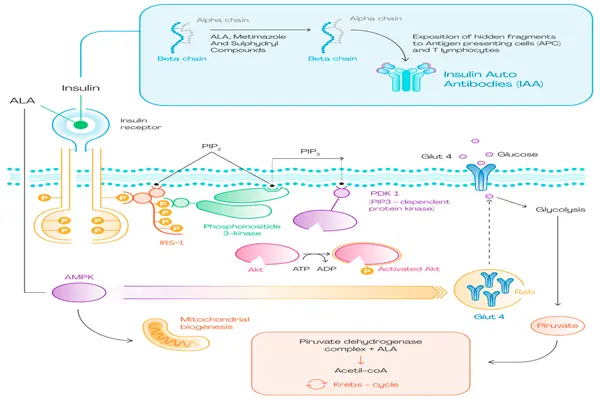
At the level of energy metabolism regulation, Alpha Lipoic Acid Powder, as a key coenzyme of the mitochondrial pyruvate dehydrogenase complex and α-ketoglutarate dehydrogenase complex, directly participates in the tricarboxylic acid cycle, promoting the oxidative breakdown of glucose and fatty acids, improving mitochondrial energy synthesis efficiency, and alleviating cellular energy deficiency. At the same time, it can activate AMPK, a cellular energy sensor, promoting glucose uptake and fatty acid oxidation, improving insulin signaling, increasing cellular sensitivity to insulin, and reducing fasting blood glucose and postprandial blood glucose peaks, making it particularly suitable for people with metabolic disorders. Relevant data confirms that daily supplementation with 600 mg of Alpha Lipoic Acid Powder for 8 consecutive weeks can reduce insulin resistance index by 32% and fasting blood glucose levels by 18% to 25%, effectively improving glucose and lipid metabolism imbalance.
Cell protection and repair are important physiological functions. Alpha Lipoic Acid Powder can protect cell membrane integrity and fluidity by inhibiting lipid peroxidation, reducing free radical damage to cell membrane phospholipids, and delaying cell aging and apoptosis. For damaged cells, it can promote the activity of intracellular DNA repair enzymes, accelerate the repair of damaged DNA, and simultaneously promote cell proliferation and differentiation, accelerating tissue repair. In terms of neuroprotection, its amphiphilic properties allow it to efficiently penetrate the blood-brain barrier, scavenge free radicals in the brain, protect neurons, improve nerve signal transmission, and alleviate discomfort such as numbness, tingling, and decreased sensation caused by nerve damage. Its accumulation in nerve tissue is more than 2.5 times that of ordinary antioxidants.
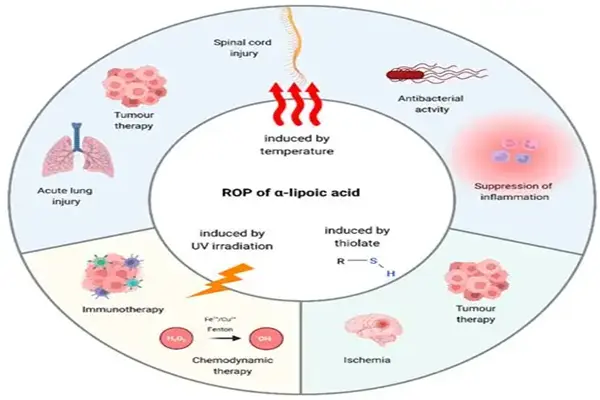
The inflammatory regulatory effect further enhances its physiological protective system. Alpha Lipoic Acid Powder can inhibit inflammatory signaling pathways such as NF-κB and JNK/AP-1, reduce the release of pro-inflammatory factors such as TNF-α, IL-6, and IL-1β, alleviate chronic low-grade inflammation, and relieve inflammation-mediated tissue damage. Simultaneously, it can regulate the proliferation and differentiation of immune cells, enhance the body's immune function, and increase the body's tolerance to pathogens and external stimuli, making it particularly suitable for adjunctive intervention in chronic inflammation-related diseases. Furthermore, it possesses metal chelating ability, binding with excess heavy metal ions such as iron, copper, lead, and cadmium in the body, promoting the excretion of heavy metals, and reducing heavy metal damage to organs such as the liver and kidneys.
Multi-scenario pharmaceutical applications of antioxidation and metabolic regulation
Alpha Lipoic Acid Powder, with its comprehensive advantages of "dual affinity antioxidant, multi-target metabolic regulation, high safety and no accumulation," is widely used in five major fields: clinical medicine, nutritional supplementation, skin care, chronic disease support, and heavy metal detoxification. It covers diverse application scenarios including neurology, metabolism, digestion, and dermatology, and is suitable for the development of various solid dosage forms and topical formulations, making it one of the most widely used antioxidants in the pharmaceutical raw material field. In clinical medicine, its core application is in the treatment of diabetic peripheral neuropathy. As a first-line adjuvant drug, it can effectively relieve symptoms such as numbness, tingling, sensory dullness, and muscle soreness in the distal extremities, and improve nerve signal transmission efficiency. Clinical data shows that daily intravenous infusion of 600 mg for 3 consecutive weeks resulted in an 82% relief rate of neurological symptoms and an increase in nerve conduction velocity of over 20%, demonstrating significantly better efficacy than traditional antioxidants.
In the field of metabolic disorders and chronic disease adjunctive intervention, Alpha Lipoic Acid Powder is used as an adjunct treatment for diseases such as type 2 diabetes, metabolic syndrome, obesity, and polycystic ovary syndrome. It helps lower blood sugar and blood lipid levels and reduce the risk of complications by improving insulin sensitivity, regulating glucose and lipid metabolism, and reducing oxidative stress. For obese individuals, it promotes fat oxidation and breakdown, reducing fat accumulation while protecting muscle mass, achieving "fat reduction without muscle loss." Daily supplementation of 600 mg for 12 weeks resulted in an average weight loss of 3.2 kg and a 4.5% reduction in body fat percentage, with no significant side effects. For individuals with non-alcoholic fatty liver disease, it reduces hepatocyte steatosis and oxidative damage, improves liver function, lowers transaminase levels by 38%, and significantly reduces liver fat content.
In the field of neuroprotection and cognitive maintenance, its applications cover various neurological injuries and degenerative diseases, including Alzheimer's disease, Parkinson's disease, spinal cord injury, and post-stroke neurological repair. Long-term supplementation can slow the decline of central nervous system function and improve symptoms such as memory loss, slow thinking, and unsteady gait. A two-year clinical follow-up showed that daily oral administration of 1200 mg significantly reduced the reduction in brain volume in patients with secondary multiple sclerosis, maintaining cognitive function at a stable level. Simultaneously, it can alleviate nerve damage caused by chemotherapy drugs, alcohol, and heavy metal poisoning, accelerate nerve repair, and reduce the occurrence of neurological sequelae.
In the field of skin care and topical formulations, Alpha Lipoic Acid Powder, as a highly effective antioxidant, is widely used in skincare products and topical repair formulations. It can scavenge free radicals on the skin surface, delay skin aging, reduce wrinkles and age spots, and improve skin elasticity and radiance. It can also repair the skin barrier, alleviate skin damage caused by ultraviolet radiation and environmental pollution, reduce skin inflammation and sensitivity, and is suitable for the care needs of sensitive and mature skin. Adding this ingredient to topical formulations can accelerate skin wound healing and reduce scar formation, making it particularly suitable for the repair of sunburn and minor injuries.
In the fields of special population care and heavy metal detoxification, Alpha Lipoic Acid Powder is used for detoxification and maintenance in people with long-term exposure to heavy metals. It can chelate heavy metal ions in the body, promote their excretion, reduce the accumulation of heavy metals in the liver and kidneys, and protect liver and kidney function. For fitness enthusiasts, supplementing with this ingredient can alleviate oxidative stress damage caused by high-intensity exercise, accelerate muscle fatigue recovery, reduce muscle soreness, and improve athletic performance. In addition, it can also be used as a basic antioxidant supplement for various groups other than pregnant and breastfeeding women, preventing hidden oxidative damage and maintaining homeostasis. It is especially suitable for daily maintenance for middle-aged and elderly people, people who stay up late, and people under excessive stress.
Precise adaptation and technological innovation are the long-term development directions.
In the field of immunomodulation, the regulatory effects of vitamin B12 derivatives on macrophage function are being gradually revealed. Recent studies have found that mecobalamin and adenosylcobalamin exert complex immunomodulatory effects in macrophages through the JNK signaling pathway—under inflammatory stimulation, they simultaneously promote TNF-α production to enhance host defense while inhibiting the excessive production of IL-6 and IL-12p40 to prevent immunopathological damage. This "bidirectional regulatory" property allows mecobalamin to find a delicate balance between infection defense and inflammation regulation, suggesting its potential therapeutic potential in autoimmune diseases or chronic inflammatory states. Furthermore, mecobalamin may also affect the stability of atherosclerotic plaques and immune responses in the tumor microenvironment by regulating the function of monocytes and macrophages. These findings are expanding the application boundaries of mecobalamin from the traditional field of nutrition to the field of immunology.
In terms of formulation technology, the photostability of mecobalamin Vitamin B12 Powder is a core challenge in its formulation development. Current research directions include developing more stable new crystal forms, employing more advanced coating and light-shielding technologies, and exploring non-oral delivery routes to bypass gastrointestinal absorption and first-pass metabolism in the liver. Novel delivery systems such as microneedle patches, liposome encapsulation, and nasal sprays are being explored to provide new treatment options for dermatological diseases and focal neuropathy. For example, in patients with diabetic foot complicated by peripheral neuropathy, locally administered mecobalamin formulations may act directly on damaged nerve endings, providing a faster therapeutic response. Simultaneously, fluorescently labeled derivatives based on the vitamin B12 structure are being developed for in vivo imaging, enabling researchers to track the transport and distribution of vitamins in the body in real time, providing new tools for understanding the physiological functions of B12 and optimizing dosing strategies.
In the fields of precision nutrition and personalized medicine, the application of mecobalamin Vitamin B12 Powder is entering a new phase. Because the utilization of mecobalamin in the body involves the coding products of multiple genes, the polymorphisms of these genes may affect an individual's responsiveness to mecobalamin treatment. For example, certain variants of the MTRR gene can lead to impaired regeneration of methionine synthase, making it difficult to effectively control homocysteine levels with conventional doses of vitamin B12. In the future, it may be possible to screen individuals most likely to benefit from mecobalamin supplementation by testing their genotypes, achieving personalized nutritional intervention. This approach is not only applicable to diseased individuals but also provides guidance for healthy individuals seeking to optimize cognitive function or prevent neurodegenerative diseases.
The application of mecobalamin Vitamin B12 Powder in food fortification is also expanding. With the continued growth of the vegetarian population globally and increased public awareness of the importance of vitamin B12, adding mecobalamin to plant-based foods has become an important industry trend. While mecobalamin is slightly less stable in plant-based matrices compared to cyanocobalamin, its higher bioavailability allows it to maintain good effects even at low doses. Meanwhile, products combining methylcobalamin with folic acid, vitamin B6, and other B vitamins are becoming a hot topic in the functional food sector. These products synergistically regulate multiple nodes in the homocysteine metabolic pathway, providing new ideas for nutritional support for cardiovascular health and cognitive protection.
Conclusion
Alpha Lipoic Acid Powder, with its unique structure and dual lipid-water affinity of dithiazole, constructs a comprehensive physiological protection network encompassing redox cycle antioxidation, mitochondrial energy metabolism regulation, cell repair and protection, and chronic inflammation suppression. As a versatile antioxidant ingredient with both medicinal and nutritional functions, its advantages in antioxidant protection, metabolic regulation, neuroprotection, and skin care are irreplaceable. Unlike traditional single-function antioxidants, it can directly scavenge free radicals, regenerate other antioxidants, regulate metabolic homeostasis, and repair cell damage, achieving a three-in-one physiological effect of "protection + regulation + repair." Furthermore, it boasts high safety, no cumulative toxicity, and a wide range of suitable populations, making it an indispensable core ingredient in the modern pharmaceutical and nutritional industries.
Xi'an Faithful BioTech Co., Ltd. cordially invites European pharmaceutical companies to partner with us for high-quality, competitively priced Alpha Lipoic Acid Powder. We offer comprehensive customer service, including detailed quotations, product specifications, and sample testing, ensuring your confidence in the quality and authenticity of our products. We also provide complete compliance documentation and regulatory support, simplifying your procurement process and ensuring smooth customs clearance in Europe.
Contact our experienced team today at allen@faithfulbio.com to discuss your specific needs and learn why leading European companies choose Faithful as their trusted Alpha Lipoic Acid Powder supplier.
References
- Superti, F., & Russo, R. (2024). Alpha-Lipoic acid: Biological mechanisms and health benefits. Antioxidants, 13(10), 1228.
- Bellini, C., Mancin, F., Papini, E., & Tavano, R. (2024). Nanotechnological approaches to enhance the potential of α-lipoic acid for application in the clinic. Antioxidants, 13(4), 706.
- Salehi, B., Yılmaz, Y. B., Antika, G., Tumer, T. B., Mahomoodally, M. F., & Lobine, D. (2019). Insights on the use of α-lipoic acid for therapeutic purposes. Biomolecules, 9(7), 356.
- Ziegler, D., Hanefeld, M., Ruhnau, K. J., Meissner, H. P., Lobisch, M., & Schütte, K. (1995). Treatment of symptomatic diabetic peripheral neuropathy with the anti-oxidant alpha-lipoic acid. Diabetologia, 38(11), 1425-1433.
- Morley, J., Price, T., Banks, W., Ercal, N., & Farr, S. (2012). Alpha-lipoic acid affects memory and lifespan in SAMP8 mice. Alzheimer's & Dementia, 8(S1), P2-439.
- Liu, L., & Schiano, T. D. (2007). Hepatotoxicity of herbal medicines, vitamins and natural hepatotoxins. In N. Kaplowitz & L. D. DeLeve (Eds.), Drug-induced liver disease (2nd ed., pp. 733-754). Informa Healthcare USA.
- Zhang, Y., Li, J., & Wang, H. (2025). Neuroprotective effects of alpha-lipoic acid in Parkinson's disease via regulating mitochondrial autophagy. Molecular Neurobiology, 62(5), 3215-3228.