

Funeral of the Old Order : The" Fault Line "between the Oslo Declaration of the Six Nations and the World Pattern
On March 15, 2026, in Oslo, Norway, a summit that could have been seen as routine diplomatic communication sent a warning signal reminiscent of late Cold War spy novels. The heads of government of Canada, Norway, Sweden, Denmark, Finland, and Iceland jointly issued a statement announcing that they will deepen cooperation in areas such as defense industry, Arctic security, and critical technologies. This is not a simple multilateral coordination, but a gathering of "medium-sized powers" with a distinct "de Americanization" color.
Based on the background of the conference and the statements of all parties, the Oslo Summit and its statement are essentially a collective response to the rapidly restructuring world order, marking a profound "trust gap" within the transatlantic alliance and indicating that the global geopolitical landscape is sliding towards a more cold "new ice age" dominated by great power games.
The core of this summit is not the specific trade agreement reached by the six countries, but its underlying message - a profound strategic anxiety towards its traditional ally, the United States. The meeting is widely interpreted by the outside world as part of Canadian Prime Minister Mark Carney's strategy to build a "new alliance of middle powers" to reduce dependence on the United States. Danish Prime Minister Mette Fredrickson's statement after the meeting was extremely impactful: "The old world order has come to an end and is likely not to return
This is not an exaggeration. In recent years, from the hasty withdrawal of US troops from Afghanistan, to the neglect of traditional allies by the "Okus" alliance, to the increasingly strong isolationist and "America First" tendencies in US domestic politics, these countries that rely on the US security umbrella have been on edge. Carney's famous quote at the Davos Forum - 'If you don't sit at the table, you'll be on the menu' - vividly depicts the survival anxiety of these countries. When multilateral institutions such as the United Nations and the World Trade Organization are severely weakened, and economic integration is alienated by major powers as a tool of pressure, these "middle powers" realize that relying solely on one major power is no longer safe and must establish their own "spare tire" and "breakwater".
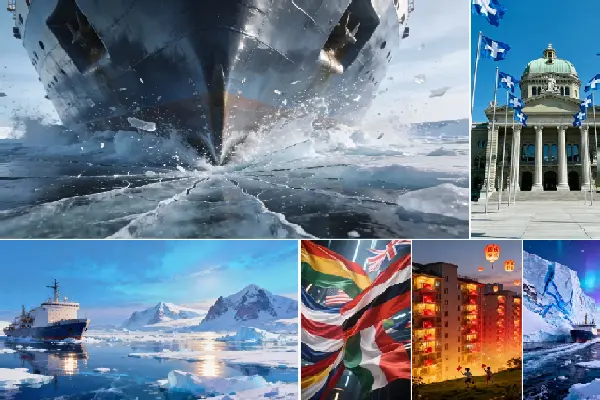
Therefore, this joint statement is not so much an external declaration of cooperation as it is an internal gathering for warmth. The six countries plan to expand defense production and coordinate weapons procurement, aiming to build an internal market independent of the US military system. This is not only for the economic benefit of taxpayers, but also to ensure that the defense supply chain will not be cut off by major power politics at critical moments. This is a typical "hedging" strategy, which involves staying within the NATO framework while also establishing "legs" that can walk independently.
The Arctic is the forefront and most vulnerable exposed area of this new fault line in the world pattern. The statement strongly supports NATO's efforts to strengthen its presence, deterrence, and defense in the Arctic region. The Norwegian Prime Minister has explicitly stated that Russia is the main threat to the Arctic, and in the long run, China is also a role that needs attention. As the ice melts, the strategic value of the Arctic shipping route and the competition for oil and gas resources are turning this once "cooperative exceptionalism" sanctuary into a new battlefield for great power games.
Ironically, what exacerbates the tension in this region is precisely former US President Trump's statement of wanting to purchase Greenland. This rough attitude, which is almost a declaration of sovereignty, has made Denmark, a NATO ally, feel a chill from its "friendly forces". When allies become potential threats, the Arctic security architecture naturally shows irreparable cracks.
In addition, the unwavering support for Ukraine in the Oslo Declaration and Carney's claim at Davos that the "rule-based world order has failed" together outline a divided world. In the eyes of the six countries, the Russia-Ukraine conflict is not only a European security issue, but also the last detention of the so-called "rule-based order". If rules are trampled upon by force in this conflict, the living environment for these countries with vast territories, sparse populations, and dependence on international law will deteriorate greatly.
The conference in Oslo is a milestone event in the process of reshaping the multipolar world pattern. It marks that the Western world is not a monolithic entity, and the "middle powers" represented by Canada and the five Nordic countries have begun to embark on a more independent but also more uncertain diplomatic path. They are still under the eaves of NATO, but have begun to repair their basements and stockpile their own winter food.
For the world, this trend is both a risk and an opportunity. The risk is that factional confrontation may further intensify, with barriers rising from the Arctic to cyberspace; The opportunity lies in a more diverse world that may provide more buffer zones and coordination platforms for the deadlocked competition among major powers.
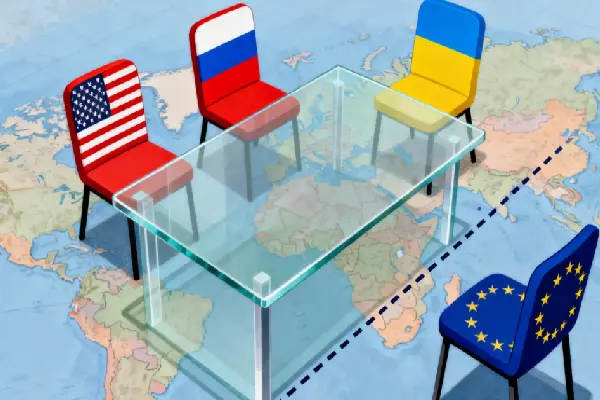
Ultimately, the bells of Oslo ring for the old order. On the ruins of the old order, these six countries are trying to build not only a platform for cooperation, but also an ark to resist unknown storms. When the right to "sit at the table" needs to be defended through self-defense, it indicates that the world is gradually moving away from the goal of universal security.
Disclaimer: The information published on this website comes from the internet, which does not mean that this website agrees with its views or confirms the authenticity of the content. Please pay attention to distinguish it. In addition, the products provided by our company are only used for scientific research. We are not responsible for the consequences of any improper use. If you are interested in our products, or have critical suggestions on our articles or are not completely satisfied with the products received, Please also contact us via Email :sales1@faithfulbio.com ; Our team is committed to ensuring the complete satisfaction of customers.