
Can hegemony rewrite rules at will? Global Warning of US Raid on Venezuela
On the early morning of January 3rd local time, the US military launched a military strike on Venezuela, arresting the incumbent president Maduro and his wife under the pretext of "drug control" and escorting them to the United States for trial. This action that breaks through the bottom line of international law not only triggers strong condemnation from many countries around the world, but also brings fatal impact to the already fragile international order. When the jungle rule of 'strength is truth' openly challenges the principle of sovereign equality, the world has to ask: can the risky behavior of unilateral hegemony really become the international rule of the new era?
The illegality of the US action is evident. As a sovereign head of state, Maduro enjoys immunity granted by international law, while the United States bypasses the United Nations and uses domestic law as a pretext to use cross-border military force to arrest people, completely trampling on the core principles of the United Nations Charter. UN Secretary General Guterres bluntly stated that this move "sets a dangerous precedent". China, Russia and other countries have clearly condemned its infringement of Venezuela's sovereignty, and even US allies have expressed reservations about "complying with international law". Even more ironic is that this unauthorized military operation has sparked controversy within the United States, with lawmakers criticizing it as a "violation of the Constitution and international law." Demonstrators have simultaneously protested against this "predatory war" in over a hundred cities.
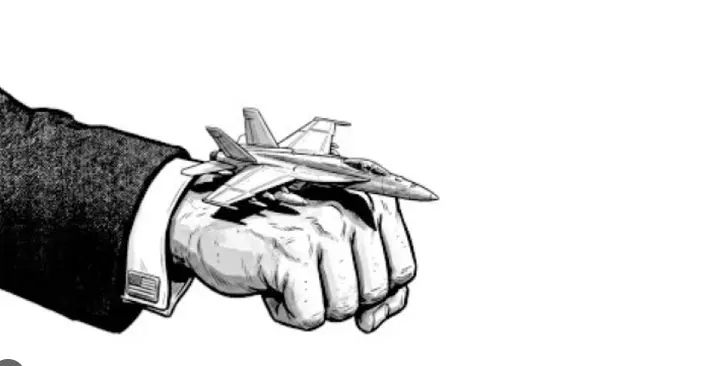
The calculation of interests behind the action is clear. Venezuela has the world's richest oil reserves, and Trump has publicly announced that he will allow American oil companies to return to Venezuela and control its energy resources, exposing the essence of resource plundering under the pretext of "drug control". This operation of deeply binding geopolitical and energy interests is a violent return of the Monroe Doctrine in the 21st century - the United States has long regarded Latin America as its "backyard", and this action is not only aimed at seizing oil, but also at deterring regional countries and consolidating its dominance in the Western Hemisphere. From a historical perspective, the United States' previous foreign interventions under the guise of "democracy" and "counter-terrorism" have ultimately left behind turbulent remnants. The division of Iraq and the chaos in Libya have long proven that hegemonic intervention is never a peace gospel.
The impact of this crisis has already surpassed the geographical boundaries of Latin America, triggering chain reactions in multiple dimensions such as energy, geopolitics, and humanitarianism. In the energy sector, although Venezuela's oil production has dropped from its peak of 3 million barrels per day to less than 700000 barrels per day due to long-term sanctions, as a founding member of OPEC, its turbulent situation still triggers panic in the global energy market. After the incident, international oil prices rose by 3% in the short term, and market concerns about supply disruptions continued to heat up. In the long run, if the United States successfully supports a pro American regime and lifts sanctions, Venezuela's oil production capacity may gradually recover, and its low-cost heavy oil will flood the international market in large quantities. This will not only squeeze the market share of sanctioned oil producing countries such as Russia and Iran, but also trigger a production game within OPEC+, reshaping the global crude oil trade pattern. For major importers of Venezuelan oil such as China and India, the uncertainty of the supply chain will force countries to accelerate the diversification of energy sources and further promote the reconstruction of the global energy security system.
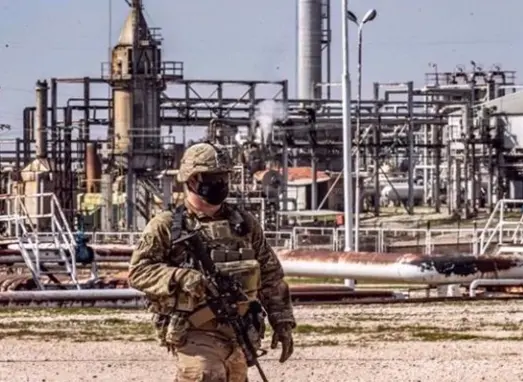
At the geopolitical level, the actions of the United States have directly intensified the great power game. Russia has important military and economic interests in Venezuela, not only providing weapons, equipment, and technical support, but also participating in the country's oil extraction projects. This incident undoubtedly touches the bottom line of Russia's core interests. Analysis suggests that Russia may strengthen its military presence in Latin America and form a direct confrontation with the United States. As Venezuela's main creditor and trading partner, China has established a deep economic relationship with Venezuela through cooperation such as "oil for loans" in recent years. US intervention will directly threaten China's overseas interests and make the competition between China and the United States in Latin America more prominent. In addition, the vigilance of countries in the global South towards the United States has significantly increased. Countries such as South Africa, India, and Brazil have spoken out against unilateral intervention. The unity within multilateral mechanisms such as BRICS and the G7 has further strengthened, and the trend of multipolarity is accelerating under the pressure of hegemony.
The humanitarian crisis is even more worrying. Venezuela has fallen into serious economic difficulties due to long-term sanctions, with food shortages, limited medical resources, soaring inflation rates, and over 7 million people forced to flee their homes, making it the most severe refugee crisis in modern Latin American history. The military operation has led to political chaos in Venezuela, with Vice President Rodriguez hastily taking over as "acting president". However, there are serious internal divisions within the opposition, and the government's control over the country has been greatly weakened. The United Nations High Commissioner for Refugees has warned that if the situation continues to be volatile, it could trigger a new wave of refugees, putting enormous pressure on neighboring countries such as Colombia and Brazil. Meanwhile, the damage to civilian facilities caused by military strikes will further exacerbate the humanitarian disaster in Venezuela, exacerbating the already difficult living conditions.
In the face of this crisis that concerns the future of the international order, the international community must soberly recognize that the United States' hegemonic adventure is essentially a fierce collision between unipolar order and multipolar trends. Currently, with the collective rise of countries in the global South, the expansion of BRICS countries, and the growth of the Shanghai Cooperation Organization, the proportion of developing countries in global GDP has exceeded 50%, and their voting influence in the United Nations continues to increase. The trend towards multipolarity is irreversible. The United States' attempt to use military hegemony to contain the process of multipolarity and maintain its unipolar dominance clearly goes against the trend of the times. History has long proven that hegemonism is the biggest threat to world peace and development - in 2003, the United States invaded Iraq under the pretext of "weapons of mass destruction", causing nearly 20 years of turmoil in the country and resulting in hundreds of thousands of deaths; In 2011, the United States led NATO airstrikes on Libya, dragging this wealthy African country into the abyss of civil war, which continues to this day. These painful lessons have already shown the international community the true face of hegemonic intervention.
The unilateral actions of the United States are also accelerating the decline of its own hegemony. In recent years, the United States has been deeply mired in internal issues such as debt crisis, social division, and industrial hollowing out, but it still insists on maintaining a global military presence and making efforts simultaneously in multiple geopolitical hotspots. This raid on Venezuela further disperses the energy and resources of the United States in dealing with strategic priorities such as the Indo Pacific and the Middle East, making its strategic overdraft problem more prominent. At the same time, the hegemonic behavior of the United States has seriously damaged its international reputation, and more and more countries are beginning to doubt the "ally system" of the United States and seeking strategic autonomy. When America's allies dare not openly support its military actions, and when countries in the global South unite to oppose unilateral intervention, America's hegemonic system is already on the verge of collapse.
Venezuela's experience is a mirror that reflects the danger of unilateralism and highlights the value of multilateralism. In this interdependent world, no country can stand alone. Respecting the sovereignty of all countries and complying with international rules are the guarantees of common security. The hegemonic adventure of the United States may be short-lived, but it will ultimately come at the cost of losing credibility and strategic overdraft. The future of the global order should not be determined by the will of individual major powers, but by the joint commitment of all countries to fairness and justice.
Today is Venezuela, tomorrow could be any country, "warned Chilean President Boric, expressing the widespread anxiety of countries around the world about hegemonic expansion. But the wheels of history roll forward, and any hegemonic behavior that attempts to go against the tide of the times will eventually be abandoned by the times. The US raid on Venezuela once again proves that hegemony can show off for a moment, but cannot rewrite the laws of history; Unilateralism may create short-term chaos, but ultimately cannot stop the historical process of multipolarity. The future of the international order should not be determined by the will of individual major powers, but by the joint commitment of all countries to fairness and justice. Only by firmly defending multilateralism and upholding the authority of international law can we completely curb hegemonic ambitions, keep the world away from the shadow of war, and move towards true peace and prosperity.
Disclaimer: The information published on this website comes from the internet, which does not mean that this website agrees with its views or confirms the authenticity of the content. Please pay attention to distinguish it. In addition, the products provided by our company are only used for scientific research. We are not responsible for the consequences of any improper use. If you are interested in our products, or have critical suggestions on our articles or are not completely satisfied with the products received, Please also contact us via Email :sales1@faithfulbio.com ; Our team is committed to ensuring the complete satisfaction of customers.