

Greenland once again becomes an international focus——Against the backdrop of the soaring strategic value of the Arctic, the issue of "acquisitions" reflects a new trend in great power competition
Recently, as the geopolitical value of the Arctic region continues to rise, a long-standing historical issue - the US acquisition of Greenland - has once again sparked widespread discussion in the international community. Although the proposal was shelved in 2019 due to explicit rejection from Denmark and Greenland, in the context of the rapidly evolving international landscape, the relevant trends have been brought back into the spotlight, becoming an important indicator for observing the strategic game and great power competition situation in the Arctic.
1、 Focus on Arctic Resources and Navigation Value Driven Strategy
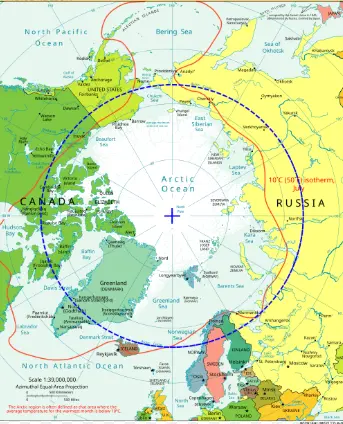
With the acceleration of global warming, the melting trend of the Arctic ice sheet is becoming increasingly significant. According to the latest scientific research, it is predicted that the Arctic Ocean may experience an "ice free state" in the summer of the 2030s, which will directly lead to a significant advance in the commercial navigation time of the Arctic shipping route. Meanwhile, the region's abundant oil and gas resources (accounting for approximately 13% of the world's unexplored reserves), rare earth and key mineral resources further enhance its geo economic value. In recent years, the United States, Russia, Canada, and Nordic countries have significantly strengthened their military deployment and resource development plans in the Arctic, highlighting Greenland's strategic position as a gateway to the Arctic.
2、 The continuity demand of the US Arctic strategy
Although the US government has not formally reintroduced the "acquisition" plan in the near future, its Arctic strategy is showing a clear acceleration trend. In October 2023, the United States released a new version of the Arctic Strategy Report, which clearly identified "enhancing security presence" and "ensuring resource access" as core objectives. At the same time, the upgrade plan of the United States at Thule Air Force Base in Greenland has entered the substantive stage. As a key node of the North American missile warning system, the base's role in space surveillance and strategic deterrence continues to increase. On the 4th of this month, US President Trump stated that the United States "absolutely needs" Greenland for security reasons and stated that the issue will be discussed again in 20 days. This has raised concerns among the public that Trump may replicate actions similar to "Absolute Resolve" in Greenland. Analysts point out that historically, the United States' territorial interest in Greenland essentially reflects its attempt to consolidate its long-term strategic advantage over the Eurasian continent by controlling Arctic strongholds.
3、 The Greenland Home Rule Government and Denmark strengthen their positions
In the face of strategic attention from external forces, the Greenland Home Rule Government has repeatedly reiterated its "non saleable" stance in recent years. In January 2024, Greenland Prime Minister Mikaela Engelt emphasized in an interview that "the future of Greenland can only be decided by the Greenlandic people. We are committed to resource sovereignty and sustainable development, rather than becoming a bargaining chip for major power deals." The Danish foreign ministry also responded, stating that "any discussion involving territorial sovereignty is not on the agenda. Trump's continuous threats have made Danish Prime Minister Mette Fredrickson unable to bear them anymore. She angrily criticized the US government and predicted that if they were to forcibly seize Greenland, NATO would come to an end.
This statement is not unreasonable: NATO member states claim to be willing to defend certain values and resist external aggression, but they will never allow any actions within the alliance to seize allied territories. British Prime Minister Stamer emphasized on the 5th that the future of Greenland can only be decided by itself and Denmark; German Foreign Minister Walder suggested that NATO discuss strengthening the protection of Greenland; The EU has also reiterated its commitment to the principle of national sovereignty.

4、 International community response and regional security concerns
Russia's strong involvement in Arctic affairs has become another variable. In recent years, Russia has not only restarted its Arctic military bases, but also strengthened its control over the Northern Sea Route through legislation. In response to the United States' movements in Greenland, Russian Foreign Ministry Arctic Affairs Representative Kolnovsky recently warned that "the expansion of non regional countries in the Arctic may disrupt the existing balance." There have been disagreements within NATO, with some European member states concerned that the escalation of Arctic militarization will intensify tensions with Russia. In addition, China's identity as a "near Arctic country" participating in Arctic affairs through scientific research cooperation and infrastructure investment has also made the game pattern more complex.
5、 The ongoing controversy at the legal and ethical levels
International legal scholars generally believe that in the context of increasingly strengthened sovereignty norms in the 21st century, the concept of "territorial acquisition" itself is contradictory to the principles of international law. The principle of national self-determination emphasized in the United Nations Charter and the relevant provisions of the Declaration on the Rights of Indigenous Peoples grant the Greenlandic people the right to determine their own political status. The EU has also called for "Arctic development to follow international cooperation and climate priority guidelines", indirectly balancing unilateral actions.
The resurgence of the Greenland acquisition issue reflects a profound shift in the Arctic from a "scientific frontier" to a "strategic competitive frontier". Although direct territorial transactions lack feasibility in contemporary international relations, the game of "soft control" in which major powers compete for influence through economic investment, security cooperation, and technological infiltration will continue to heat up. How Greenland balances its demands for resource development and sovereignty protection will become a key case for testing the Arctic governance system. In the future, whether the multilateral coordination mechanism of the Arctic Council and the framework of the United Nations Convention on the Law of the Sea can effectively ease conflicts will directly affect regional and even global stability.
Disclaimer: The information published on this website comes from the internet, which does not mean that this website agrees with its views or confirms the authenticity of the content. Please pay attention to distinguish it. In addition, the products provided by our company are only used for scientific research. We are not responsible for the consequences of any improper use. If you are interested in our products, or have critical suggestions on our articles or are not completely satisfied with the products received, Please also contact us via Email :sales1@faithfulbio.com ; Our team is committed to ensuring the complete satisfaction of customers.