

The global carbon trading system will cover 26% of greenhouse gas emissions by 2026.
In 2026, the global carbon trading system achieved a milestone expansion. According to the latest "Global Emissions Trading System Report 2026" released by the International Carbon Action Partnership, there are currently 41 carbon emissions trading systems in operation globally, covering 26% of global greenhouse gas emissions. These systems involve economies representing 63% of global GDP, with the total value of carbon trading exceeding US$454 billion. This data signifies that carbon trading has evolved from a supplementary tool to climate policy to a core pillar of global climate governance, and has become a crucial link connecting national emissions reduction actions and promoting green and low-carbon transformation.
The global carbon market is expanding rapidly, with emerging economies becoming the main drivers of growth.
The expansion of the global carbon trading system is not driven by a single region, but rather by a dual-engine pattern of "deepening of mature markets and rise of emerging markets." Currently, in addition to the 41 operational systems, 16 more carbon trading systems are in the planning or construction phase. Japan, India, and Vietnam are expected to launch their national carbon markets by 2026, making emerging economies the core driving force for the expansion of the global carbon market.
Mature markets continue to tighten rules and expand their coverage. The EU carbon trading system, as a global benchmark, has included maritime transport in its scope and is accelerating the implementation of coverage in the construction and transportation sectors, while strengthening global emission reduction coordination through carbon border adjustment mechanisms. China's national carbon market is steadily advancing its transformation, planning to shift from intensity-based control to absolute total emission control by 2027, adding high-energy-consuming industries such as steel and cement to further enhance the market's emission reduction constraints. Markets such as South Korea and California are consolidating their market development foundation by increasing the proportion of quota auctions, adding market stabilization tools, and extending the validity period of policies.
The entry of emerging economies has broken down the geographical limitations of the carbon market. In the past, carbon trading was mostly concentrated in developed economies such as Europe and the United States. Now, Asian countries such as India, Vietnam, and Indonesia, as well as Latin American countries such as Brazil and Mexico, are making their own carbon trading initiatives, extending the coverage of the carbon market from high-income economies to low- and middle-income economies. Although these emerging markets started later, they are becoming an important source of incremental growth for global carbon emission reduction, thanks to their large industrial base and emission reduction potential, and are also injecting new vitality into the global carbon market.
Market functions continue to improve, with efforts focused on both emission reduction and value transformation.
Global carbon market revenue reached a record high of nearly $80 billion in 2025, extending the value of carbon trading beyond emissions reduction constraints to become a crucial source of funding for climate action and ensuring social equity. Countries worldwide are generally investing in clean energy, low-carbon technology research and development, and public welfare. The EU has established a social climate fund, while China uses its carbon market revenue for ecological protection and emissions reduction support, achieving a virtuous cycle of "emissions reduction constraints – financial support – green development."
The scope of industries covered is constantly expanding, extending emissions reduction to all sectors of the economy. Early carbon trading focused only on energy-intensive industries such as power, steel, and cement; now it has gradually covered aviation, shipping, construction, and transportation, achieving a leap from "key industry control" to "emissions reduction across all industries." This comprehensive model eliminates the "gray area" of greenhouse gas emissions, forcing various industries to accelerate their low-carbon transformation and gradually decoupling economic development from carbon emissions.

The quota allocation mechanism is continuously being optimized, highlighting the role of market-based pricing. The global carbon trading system is gradually shifting from primarily allocating free allowances to primarily allocating them through auctions. This allows market supply and demand to create reasonable carbon prices, transforming emission reduction costs into intrinsic motivation for businesses. Simultaneously, the carbon credit mechanism is continuously improving, with 24 operating systems incorporating carbon credits into their compliance mechanisms. This rigorously controls carbon offset standards, prevents double counting and environmental risks, and ensures the authenticity and effectiveness of the carbon market.
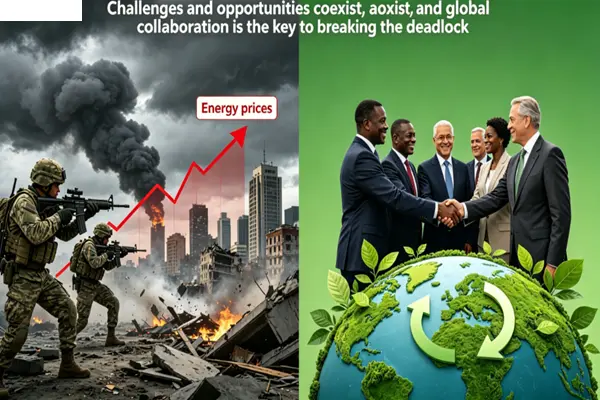
Challenges and opportunities coexist; global collaboration is key to breaking the deadlock.
Despite the continued expansion of the global carbon market, its development still faces multiple challenges. Geopolitical conflicts and energy price volatility have exacerbated uncertainty in the carbon market, with frequent fluctuations in carbon prices in some countries affecting companies' expectations for emissions reduction. Issues such as carbon leakage and inconsistent standards remain prominent, with significant differences in carbon market rules among countries and high difficulties in cross-border integration, hindering the process of global carbon market integration. Furthermore, insufficient capacity building in emerging markets, significant transitional pressures on disadvantaged groups, and the need to increase private capital participation also require gradual solutions.
Behind these challenges, opportunities are equally evident. The global consensus on carbon neutrality continues to solidify. Article 6.4 of the Paris Agreement completed its historic first carbon credit issuance, providing a unified framework for cross-border carbon trading and promoting the restructuring of the global carbon pricing system. Green finance instruments are constantly innovating, with green bonds, transition financing, and carbon futures products being launched at an accelerated pace, attracting more private capital to participate in the carbon market and providing sufficient financial support for low-carbon transition. Major economies such as China and the EU are deepening climate cooperation, promoting the establishment of an open alliance for compliant carbon markets, facilitating rule alignment and experience sharing, and laying the foundation for the coordinated development of the global carbon market.
An ICAP report shows that global carbon market auction revenue will rebound to nearly $80 billion in 2025, with cumulative revenue exceeding $454 billion since 2007. These funds are being used by governments in multiple areas: clean energy investment, compensation for affected households and SMEs, and research and development of green technologies and infrastructure.
The report points out that the "cap-and-trade" model is becoming a global trend in carbon pricing. Demonstrating the actual benefits of carbon pricing to the public through transparent revenue recovery mechanisms helps alleviate political resistance to rising carbon prices and lays a foundation of public opinion for long-term sustainable carbon pricing.
Jurisdictions with carbon trading systems contribute a combined 63% of global GDP and cover more than half of the world's population. Carbon pricing has grown from a niche tool in climate policy to a mainstream policy framework covering the vast majority of major economies globally. Fourteen G20 countries have implemented carbon trading systems, and many countries have listed carbon markets as a core tool for implementing the new Nationally Determined Contributions (NDCs) of the Paris Agreement.
Looking ahead, the global carbon market will exhibit several clear trends: more developing countries will join the ranks of carbon pricing; the existing system will expand its coverage from power and industry to transportation, construction, and shipping; carbon prices are expected to gradually rise as quotas tighten; and the convergence of global carbon pricing driven by carbon border adjustment mechanisms will continue to deepen.
Conclusion
From covering 26% of emissions to linking 63% of GDP, the development of the global carbon trading system in 2026 is not only a significant achievement in global climate governance but also a firm declaration of humanity's transition to a low-carbon economy. The carbon market is no longer a policy experiment for a few countries but a mainstream choice for global cooperation in addressing climate change. Its continuously expanding coverage, trading volume, and functional role are profoundly reshaping the global economic development landscape.
In the future, the global carbon market needs to continue its efforts in coordination, standardization, and inclusiveness. Countries need to strengthen policy coordination, unify core standards, and take into account development differences, so that carbon trading truly becomes a core engine for promoting global emissions reduction and achieving carbon neutrality. With joint global efforts, the carbon market will undoubtedly continue to unleash green momentum, contributing crucial strength to protecting the ecological environment and promoting sustainable development for human society.
Disclaimer: The information published on this website is sourced from the internet and does not represent the views of this website, nor does it guarantee the accuracy of its content. Please be aware of the distinction. Furthermore, the products provided by our company are for scientific research purposes only. We are not responsible for any consequences arising from improper use. If you are interested in our products, have any criticisms or suggestions regarding our articles, or are not completely satisfied with the products you received, please contact us by email: allen@faithfulbio.com; our team is dedicated to ensuring complete customer satisfaction.