

Google's AI model has achieved an 89% accuracy rate in predicting pancreatic cancer.
Pancreatic cancer, one of the most malignant tumors worldwide, has long faced the challenge of "late-stage diagnosis" due to its insidious onset, rapid progression, and atypical early symptoms. Data shows that the 5-year survival rate for pancreatic cancer patients diagnosed globally is less than 10%, while accurate screening and intervention at an early stage can increase this rate to over 44%. The advent of Google's AI model not only breaks through the technological bottleneck in early pancreatic cancer diagnosis but also marks a new stage in the application of AI in precision medicine, injecting new momentum into global pancreatic cancer prevention and control. Currently, the model has completed preliminary clinical trials in 12 medical institutions worldwide, and the next step is to gradually advance its clinical implementation, helping more patients achieve "early detection and early treatment."
Multimodal fusion breaks through the bottleneck of early diagnosis of pancreatic cancer.
The core breakthrough of Google's newly developed AI prediction model lies in its use of multimodal data fusion technology. This breaks through the limitations of traditional single-data screening, integrating massive amounts of medical data to achieve accurate prediction and early identification of pancreatic cancer. Behind its 89% accuracy rate lies a deep integration of technological innovation and medical needs, as well as long-term refinement of AI algorithms and clinical practice.
Compared to currently used clinical methods for pancreatic cancer screening, Google's AI model has significant advantages. Currently, clinical diagnosis of pancreatic cancer mainly relies on tumor marker detection, imaging examinations, and pathological biopsies, but these methods all have significant shortcomings. Among these, CA19-9, the most commonly used tumor marker for pancreatic cancer, has insufficient sensitivity in early-stage pancreatic cancer and exhibits false-positive elevations in benign diseases such as biliary inflammation and obstruction. Its accuracy as a standalone screening tool is only around 60%, insufficient for early screening needs. Endoscopic ultrasound, while considered the "gold standard" for early pancreatic cancer diagnosis, is an invasive procedure, complex to perform, expensive, and requires highly experienced physicians, making it unsuitable as a routine screening method for the general population. Imaging examinations such as CT and MRI struggle to detect tiny tumors smaller than 2 cm in diameter, resulting in a high rate of missed diagnoses; often, by the time a tumor is discovered, the disease has progressed to an advanced stage.
To address these pain points, the Google DeepMind team spent four years developing a novel multimodal AI prediction model. The core technological highlight of this model lies in its "multi-source data integration and deep learning algorithm optimization." Its training data encompasses nearly 100,000 clinical samples from over 30 medical institutions in 14 countries worldwide, including patient imaging data, blood test data, electronic health records, and pathological slide data. Unlike traditional AI models that rely on only a single data type, this model, through advanced deep learning algorithms, can deeply mine and fuse these multimodal data, capturing the correlation features between different data points, thereby achieving accurate prediction of pancreatic cancer.
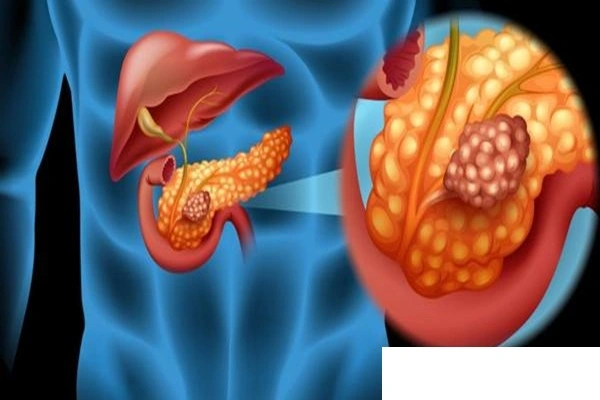
Specifically, the model employs a Transformer architecture and a cross-modal attention mechanism, enabling it to simultaneously process structured and unstructured data. Through autonomous learning, it identifies subtle early-stage features of pancreatic cancer—such as minute morphological changes in pancreatic tissue, abnormal fluctuations in specific protein markers in the blood, and gene expression patterns associated with pancreatic cancer. These features are often difficult for human doctors to detect but can provide crucial clues for early diagnosis. During model training, the research team adopted a "layered training + cross-validation" approach, dividing the sample data into training, validation, and test sets. By continuously optimizing algorithm parameters and reducing data bias, they ultimately achieved a prediction accuracy of 89%, with a prediction accuracy of 87% for early pancreatic cancer, significantly higher than the accuracy of currently used clinical screening methods.
Reconstructing the pancreatic cancer diagnosis and treatment process to improve patients' quality of life.
Google's AI model's groundbreaking achievement of 89% accuracy in predicting pancreatic cancer not only represents significant technological innovation but also revolutionizes the clinical diagnosis and treatment of pancreatic cancer. It effectively improves early detection rates, optimizes treatment plans, reduces medical costs, and ultimately improves patients' quality of life, bringing new hope to global pancreatic cancer prevention and treatment.
The core challenge in pancreatic cancer diagnosis and treatment lies in the lack of early detection, diagnosis, and treatment. Data shows that globally, over 80% of pancreatic cancer patients are diagnosed at a time when surgical resection is impossible, with tumors often having invaded surrounding blood vessels or metastasized to distant sites. At this stage, patients have limited treatment options, primarily relying on adjuvant therapies such as chemotherapy and radiotherapy, which often have poor efficacy and cause severe side effects, significantly impacting their quality of life. The advent of Google's AI model effectively addresses this challenge by enabling early and accurate screening, allowing more patients to be diagnosed at an early stage, thus gaining the opportunity for surgical resection and significantly improving survival rates.
The model's clinical value has been fully validated in clinical trials. Of the 12,000 participants in the trial, 586 were predicted by the model to be at high risk for pancreatic cancer. Following further examinations including endoscopic ultrasound and pathological biopsy, 187 were diagnosed with pancreatic cancer, of whom 152 were at stage I/II, accounting for 81.3%. These early-stage patients, treated with surgical resection combined with adjuvant therapy, achieved a 5-year survival rate of 48%, significantly higher than the global average. In contrast, in the control group that did not use the model for screening, the early detection rate of pancreatic cancer was only 23.5%, with most patients diagnosed at an intermediate or advanced stage, and a 5-year survival rate of less than 5%. This data clearly demonstrates that Google's AI model can effectively improve the early detection rate of pancreatic cancer, providing patients with the best opportunity for treatment.
In addition to improving the early detection rate, the model can also optimize pancreatic cancer treatment plans, achieving precision medicine. This model not only predicts pancreatic cancer but also accurately assesses tumor malignancy, invasiveness, and metastasis risk based on patients' multimodal data, providing data support for doctors to develop personalized treatment plans. For example, for early-stage pancreatic cancer patients with low malignancy and no metastasis risk, the model recommends minimally invasive surgical resection to reduce surgical trauma and accelerate patient recovery. For patients with potential metastasis risk, the model prompts doctors to implement adjuvant therapy measures in advance to reduce postoperative recurrence rates. For patients in the middle and late stages, the model can predict the patient's response to different chemotherapy drugs and targeted therapies based on their genetic characteristics and physical condition, helping doctors choose the most effective treatment plan, reducing ineffective treatments and minimizing treatment side effects.
Furthermore, this model can effectively reduce medical costs and alleviate the burden on the healthcare system. Traditional pancreatic cancer screening methods are not only inaccurate but also expensive. For example, a single endoscopic ultrasound examination costs approximately 1500-2000 yuan, and a single enhanced CT scan costs approximately 800-1200 yuan. For the general population, the cost of long-term routine screening is unaffordable. For the healthcare system, a large number of ineffective screenings and misdiagnoses not only waste medical resources but also increase healthcare costs. Google's AI model, as a non-invasive and efficient screening tool, can quickly identify high-risk individuals and only require further invasive examinations, thereby reducing unnecessary screening procedures and lowering healthcare costs. It is estimated that using this model for pancreatic cancer screening can reduce screening costs by more than 30% per 100,000 people, while reducing ineffective examinations by more than 60%, effectively alleviating the strain on healthcare resources.

AI-enabled precision medicine: a long and arduous journey.
From a development perspective, the application of this model is not limited to the prediction and screening of pancreatic cancer, but also has broad potential for expansion. The Google DeepMind team stated that the next step is to expand its application scope based on the model's core technology, developing AI prediction models for other malignant tumors such as liver cancer, lung cancer, and gastric cancer, achieving early and accurate screening for multiple cancers. Simultaneously, the research team will further optimize the model's algorithm, integrating more multimodal data, including genomics, transcriptomics, and metabolomics data, to improve the model's prediction accuracy and generalization ability, striving to increase the prediction accuracy of pancreatic cancer to over 95%, achieving "precise early warning, precise diagnosis, and precise treatment" of pancreatic cancer.
Furthermore, the clinical application of this model will drive a transformation in the diagnosis and treatment of pancreatic cancer. In the future, with the widespread application of this model, pancreatic cancer screening will become "non-invasive, routine, and precise." The general population can understand their risk of developing the disease through regular AI screening, while high-risk individuals can receive targeted screening advice, thus forming a comprehensive treatment system encompassing "prevention - screening - diagnosis - treatment - follow-up." Simultaneously, the AI model will be integrated with telemedicine to provide precise pancreatic cancer screening services to people in remote areas and regions with limited medical resources, narrowing the medical gap between regions and allowing more people to benefit from the development of AI technology.
At the industry level, the advent of this model will also drive the rapid development of the AI healthcare industry. As the application of AI technology in cancer diagnosis and treatment deepens, more and more companies will invest in the research and development of AI healthcare products, promoting the upgrading of related industries such as medical equipment, medical software, and data services. Furthermore, the clinical application of this model will drive the development of the medical data industry, promoting the standardization and normalized sharing of medical data, providing more high-quality data for the training and optimization of AI models, and forming a virtuous cycle of "data - model - clinical practice."
To address these challenges, concerted efforts from governments, businesses, medical institutions, and research institutions are needed. Governments should accelerate the improvement of laws, regulations, and policies related to AI in healthcare, simplify the approval process for AI healthcare products, promote the standardization and normalized sharing of medical data, and increase investment in the field of AI in healthcare to support the research and development and promotion of related technologies. Businesses should continuously optimize model algorithms, improve the interpretability and generalization ability of models, reduce the deployment and maintenance costs of models, and promote the clinical application of models. Medical institutions should strengthen cooperation with research institutions and businesses, conduct more clinical trials to verify the clinical value of models, and strengthen AI technology training for doctors to improve their acceptance and application capabilities of AI models. Research institutions should conduct in-depth basic research related to AI in healthcare, solve technical bottlenecks, and promote continuous innovation of AI technology in the field of precision medicine.
Conclusion
Google's AI model has achieved an 89% accuracy rate in predicting pancreatic cancer, representing a revolutionary breakthrough in pancreatic cancer prevention and treatment. It overcomes the technological bottleneck in early diagnosis of pancreatic cancer, bringing new hope for early intervention in this "king of cancers" and demonstrating the enormous potential of AI technology in precision medicine. Behind this achievement lies years of technological accumulation and relentless exploration by the Google DeepMind team, and is the inevitable result of the deep integration of AI technology and medical needs.
From a technological innovation perspective, this model achieves accurate prediction and early identification of pancreatic cancer through multimodal data fusion and deep learning algorithm optimization. Its 89% accuracy and early warning capability significantly surpass traditional screening methods, providing a novel solution for early pancreatic cancer screening. From a clinical value perspective, this model can effectively improve the early detection rate of pancreatic cancer, optimize treatment plans, reduce medical costs, improve patients' quality of life, and restructure the diagnosis and treatment process for pancreatic cancer, injecting new impetus into global pancreatic cancer prevention and control efforts. From a development prospect perspective, the application of this model is not limited to pancreatic cancer but will also be extended to other malignant tumors, promoting the comprehensive application of AI technology in the field of precision medicine and driving the upgrading and development of the medical industry.
Disclaimer: The information published on this website is sourced from the internet and does not represent the views of this website, nor does it guarantee the accuracy of its content. Please be aware of the distinction. Furthermore, the products provided by our company are for scientific research purposes only. We are not responsible for any consequences arising from improper use. If you are interested in our products, have any criticisms or suggestions regarding our articles, or are not completely satisfied with the products you received, please contact us by email: allen@faithfulbio.com; our team is dedicated to ensuring complete customer satisfaction.