

The US manned lunar mission was successfully launched.
At 6:35 p.m. local time on April 1 (6:35 a.m. Beijing time on April 2), the U.S. Space Launch System, a new-generation lunar rocket carrying the Orion spacecraft, successfully lifted off from Launch Complex 39B at the Kennedy Space Center in Florida, officially launching four astronauts on their lunar journey. This marks the first time in 54 years that the United States has conducted a manned mission to the moon since the Apollo 17 mission in 1972, signifying a historic step forward in humanity's return to the moon.
A series of twists and turns: After overcoming numerous hardships, the dream finally came true.
On the evening of April 1, 2026, the Florida sky was illuminated by a dazzling burst of light. At the Kennedy Space Center, tens of thousands of spectators held their breath as the Space Launch System rocket lifted the Orion spacecraft into the sky. This moment was one humanity had waited 54 years for—the last manned mission to the moon was the Apollo 17 mission in December 1972.
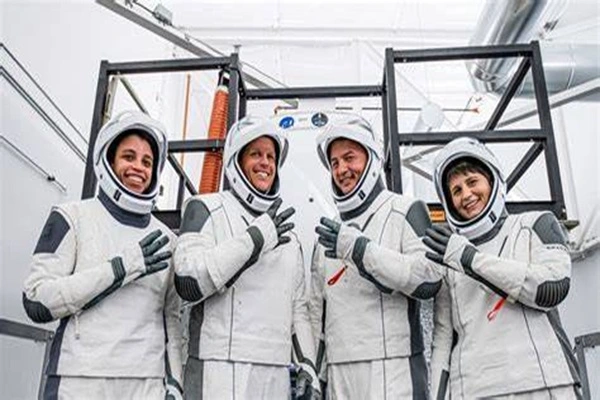
The four astronauts of the Artemis 2 mission included Commander Reid Wiseman, Pilot Victor Glover, Mission Specialist Christina Koch, and Jeremy Hansen from the Canadian Space Agency. This was the first time since the Apollo era that humans had left low Earth orbit. The astronauts would conduct a lunar orbit for approximately 10 days before returning to Earth.
The success of this launch was hard-won. The Artemis 2 mission was originally scheduled for launch at the end of 2024, but was repeatedly delayed due to technical problems, causing space enthusiasts worldwide to experience several cycles of hope and disappointment.
During two integrated rehearsals in February of this year, engineers discovered a liquid hydrogen leak at the propellant interface of the rocket's core stage, forcing the countdown to halt. Liquid hydrogen is an extremely difficult fuel to handle; its molecules are so small that they can easily escape from even tiny gaps. In the aerospace field, liquid hydrogen leaks have always been one of the most challenging problems. Subsequently, the flow of helium to the rocket's transitional cryogenic propulsion stage was interrupted, forcing the rocket to be transported from the launch pad back to the assembly building for repairs. This back-and-forth took several weeks.
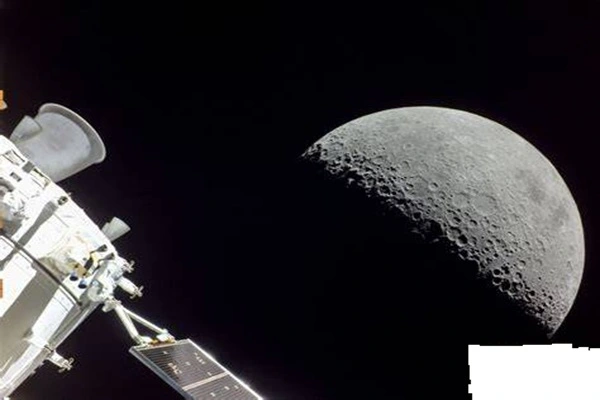
The Orion spacecraft's heat shield problem also kept NASA engineers up at night. During the unmanned Artemis 1 mission, the spacecraft re-entered Earth's atmosphere at an astonishing speed of approximately 40,000 kilometers per hour, with the surface temperature of the heat shield approaching 2,800 degrees Celsius. Although the mission was successfully completed, post-mission analysis revealed that the heat shield experienced asymmetric spalling beyond theoretical models. This meant that if the problem wasn't resolved, the safety of astronauts in manned missions would face uncontrollable risks. Engineers spent months reconstructing thermodynamic models and conducting hundreds of wind tunnel tests before developing an improvement plan.
Even more troublesome was a malfunction in a deeply embedded critical circuit component of the spacecraft's life support system. Repairing this component required disassembling a large amount of peripheral equipment, directly causing delays of several months. In the words of a NASA project manager, "It's like replacing a power line deep inside a building; you have to tear down half the building first."
However, the launch on April 1st proceeded relatively smoothly. Although hardware issues related to communication with the flight abort system and abnormal battery temperature readings in the Orion spacecraft's launch abort system occurred a few hours before launch, NASA engineers quickly resolved these problems. The launch countdown was briefly paused in the final stages, but the issues were quickly resolved, and the rocket ultimately ignited and lifted off on schedule.
Approximately eight minutes after launch, the SLS core-stage main engines shut down and separated from the spacecraft; 24 minutes later, all four solar panels on the Orion spacecraft deployed and began generating power. When control confirmed the successful deployment of the solar panels, thunderous applause and cheers erupted. NASA Administrator Jared Isaacman said at a press conference after the launch, "Today, we made history. But more importantly, we paved the way for the future."
Making History: Four Astronauts, Each with Their Own Significance
The four astronauts on this mission will set a series of records, their names etched in space history.
Commander Reid Wiseman, 50, is a seasoned NASA astronaut. He spent 165 days on the International Space Station in 2014, during which he performed two spacewalks. A graduate of the U.S. Naval Academy, Wiseman was a Navy test pilot with over 3,000 hours of flight experience. In this mission, he will be responsible for overall command and key decision-making regarding the spacecraft. At the pre-launch press conference, Wiseman said, “We stand on the shoulders of giants. The heroes of the Apollo era paved the way for us; now it’s time to take the next step.”
Pilot Victor Glover, 49, will become the first African American astronaut to travel to deep space. Glover participated in the 2020 SpaceX Crew-1 mission, spending 168 days on the International Space Station. He holds a Master of Science degree in Systems Engineering from Caltech. Glover will be responsible for the spacecraft's navigation and control during the mission. He wrote on social media, "When I was a child, I never imagined that a Black kid from Pomona, California, could fly to the moon. Today, I want to tell all kids: dreams have no boundaries."
Mission specialist Christina Koch, 47, will become the first woman to leave low Earth orbit. Koch holds the record for the longest single space stay by a woman at 328 days, during which she completed six spacewalks totaling 42 hours and 15 minutes. She graduated from North Carolina State University with degrees in electrical engineering and physics. Koch's mission is to monitor the spacecraft's systems and oversee scientific experiments. She said, "When I was a girl, I looked up at the moon and wondered what was up there. Now, I finally have the opportunity to see it for myself."
Mission specialist Jeremy Hansen, 49, from the Canadian Space Agency, will become the first Canadian astronaut to enter deep space. Hansen is a former fighter pilot with over 3,000 hours of flight experience. He graduated from the Royal Military College of Canada with degrees in mathematics and physics. Hansen's participation underscores the crucial role of international collaboration in the Artemis program. Following the successful launch, the Canadian Prime Minister issued a statement calling it "the pride of the entire nation."
It's worth noting that the four astronauts are all between 47 and 50 years old, in the prime of their lives with both experience and physical fitness. They all have previous spaceflight experience, but none have ever flown farther than the International Space Station (ISS). The ISS orbits at an altitude of approximately 400 kilometers, while the Moon is about 380,000 kilometers from Earth—nearly 1,000 times farther. This mission will take them into a completely new and uncharted territory.
President Trump congratulated NASA and the astronauts on the successful launch via social media: "Let me start by congratulating the NASA team and our brave astronauts on the successful launch of Artemis 2. That's fantastic!" He specifically pointed out that this spacecraft will travel farther than any manned rocket in history. The Vice President also attended the launch at Kennedy Space Center.
Mission objective: To pave the way for a lunar landing
The core objective of the Artemis 2 mission was not a lunar landing, but rather the first manned verification of the SLS rocket and Orion spacecraft combination. Simply put, it was a "manned test flight"—all the systems previously validated in unmanned missions were now being re-validated in a manned environment.
NASA's description of the mission is clear and explicit: verifying life support and crew capabilities in deep space; verifying navigation, communication, manual control, and emergency response procedures; and verifying the high-speed reentry and splashdown recovery chain. These three objectives are interconnected and indispensable.
This mission employs a "free-return orbit," a very clever orbital design. After launch, the spacecraft will fly towards the moon, using the moon's gravity to perform a "slingshot effect" maneuver, and then automatically return to Earth. The biggest advantage of this orbit is that even if the spacecraft's main engine fails and braking is impossible, the spacecraft can still return to Earth using natural gravity, instead of drifting in space indefinitely.
It is worth noting that this mission carries the Orion Optical Communication System (O2O). Traditional deep-space communication relies on radio waves, which have limited speed and bandwidth. Optical communication uses infrared lasers, achieving downlink speeds of up to 260 Mbps—faster than many home broadband connections. Through a small 100mm telescope and a ground-based optical terminal, the Orion spacecraft can transmit 4K high-definition video back to Earth in real time. This means the public will witness, for the first time, the magnificent spectacle of humanity's lunar flyby in high-definition quality. NASA states that it will continuously release high-definition images throughout the mission, allowing the world to experience this journey "as if they were there."
The successful launch of Artemis 2 was certainly exciting, but for NASA, lunar orbit may only be the relatively simple part; a true lunar landing mission will be far more difficult. As one NASA engineer put it, "Sending people near the moon is one thing; getting them safely onto the lunar surface and back is quite another."
According to the revised plan, the Artemis 3 mission will take place in 2027, conducting systems and operational capability tests in low Earth orbit. This spacecraft will not fly to the moon but will instead conduct more comprehensive tests in Earth orbit, including verifying key capabilities such as docking and extravehicular activities. The Artemis 4 manned lunar landing mission is planned for as early as 2028—67 years after President Kennedy's famous "A Moon Landing in Ten Years" speech.
NASA faces numerous challenges. The first is the lunar lander. NASA chose SpaceX and Blue Origin to develop the lunar lander separately, a "double insurance" strategy. However, progress for both companies has not been smooth. While SpaceX's Starship has conducted multiple test flights, its crewed landing version has not yet been certified; Blue Origin's Blue Moon lander is progressing even slower, with its maiden flight still a considerable distance away. The two landers employ completely different technological approaches—Starship uses liquid oxygen and methane propellant, while Blue Moon uses liquid hydrogen and liquid oxygen propellant—meaning NASA needs to support two entirely independent development systems simultaneously.
Secondly, there is the preparation of new spacesuits. The lunar surface environment is extremely harsh: temperatures range from -173 degrees Celsius to 127 degrees Celsius, with threats from micrometeorites and intense radiation. Apollo-era spacesuits are no longer adequate for modern needs. New spacesuits require greater flexibility, durability, and safety. Currently, Axiom Space is responsible for developing the lunar spacesuit, while Collins Aerospace is responsible for developing the intravehicular activity (IVA) suit. However, audit reports indicate that spacesuit delivery is behind schedule.
Thirdly, there is the development of the second stage of the Space Launch System (SLS) rocket. The current SLS rocket uses a transitional cryogenic propulsion stage, a relatively mature upper stage. But sending astronauts to the lunar surface requires a more powerful upper stage—the "Exploration Upper Stage" (EUS). The development of the EUS has been fraught with difficulties, plagued by technical problems and budget overruns.
Finally, and most fundamentally, is the issue of money. An audit by NASA's Office of Inspector General revealed that from fiscal year 2012 to 2025, Artemis-related projects will have accumulated expenditures of approximately $93 billion, with a single launch costing over $4 billion. This figure has raised questions from Congress and the public: Does returning to the moon really require so much money? Each SLS rocket is "disposable," meaning a completely new rocket must be built for each launch—a stark contrast to SpaceX's reusable rocket philosophy.
Mission Highlights: The next few days are worth looking forward to.
Over the next few days, space enthusiasts worldwide will witness a series of exciting moments. Here are the key timelines for the mission (all times are Eastern Time, 12 hours ahead of Beijing Time):
Day 2 (April 3): The Orion spacecraft will perform its first orbital correction maneuver. This is a small but delicate thruster fire to fine-tune the spacecraft's trajectory, ensuring it flies accurately to the Moon. Although it seems like a small maneuver, it requires extremely high precision—the slightest deviation could cause the spacecraft to miss the Moon.
Day 4 (April 5): The astronauts will conduct their first live broadcast from deep space. Using the Orion optical communication system, the four astronauts will establish a high-definition video link with Earth from hundreds of thousands of kilometers away. This will be the best-quality live broadcast from deep space in human history.
Day 6 (April 7): The Orion spacecraft will fly over the far side of the Moon. This is one of the most exciting moments of the mission. The spacecraft will fly over the far side of the Moon, enter a radio dead zone, and then use the Moon's gravity to deflect the Earth and begin its return journey. If all goes well, the spacecraft will fly past the lunar surface at a distance of approximately 100 kilometers—lower than the International Space Station's orbit.
Day 9 (April 10): Orion makes its final orbital correction, aiming for the Earth reentry point.
Day 11 (April 12): Orion re-enters Earth's atmosphere and splashes down in the Pacific Ocean. This will be the most thrilling part of the entire mission. The spacecraft will plunge into the atmosphere at approximately 40,000 kilometers per hour, with its heat shield reaching temperatures close to 2,800 degrees Celsius—several times hotter than volcanic lava. If the heat shield functions properly, the spacecraft will safely deploy its parachutes and splash down in the Pacific Ocean near California. The U.S. Navy will then send ships to recover it.
Conclusion
At the moment of Artemis 2's successful launch, NASA Launch Director Charlie Blackwell-Thompson delivered a deeply moving speech to the astronauts via radio. These words, later quoted by countless media outlets, are also quoted here: "In this historic mission, you have carried with you the hearts of the Artemis team, the courage of the American people, our partners around the world, and the hopes and dreams of a new generation. Good luck, God bless Artemis 2. Launch!" For the world, the significance of this mission far exceeded spaceflight itself. It marked humanity's dream of returning to the moon, a dream that was gradually becoming a reality. This was not just an achievement for the United States, but for all of humanity—because this mission carried astronauts from Canada, and in the future, astronauts from Europe, Japan, and other countries will participate.
The Artemis program differed fundamentally from the Apollo program: Apollo was a "plant a flag and go," while Artemis's goal was "sustainable presence." NASA plans to establish a permanent base at the lunar south pole, utilizing lunar water resources to produce fuel and oxygen, paving the way for a grander goal—sending astronauts to Mars. The moon will become humanity's outpost and testing ground for deep space exploration. As NASA's science mission manager, Nikki Fox, said, "Many people don't remember the Apollo era. Some generations weren't even born when Apollo launched. This is their Apollo." For those born after 1980, this is the first time they've witnessed humanity's journey to the moon. For those born after 1990, 2000, and 2010, this could be the spark that ignites their spacefaring dreams.
In the days to come, four astronauts will continue their journey to the moon. They will navigate the silent space, watching through the windows of the Orion spacecraft as the Earth gradually transforms from a full circle into a crescent, then into a tiny dot, while the moon gradually evolves from a dot into a giant sphere. They will lead humanity's exploration back to that tranquil, silvery world. As Commander Wiseman said before launch, "We are not repeating the Apollo mission. We are forging a completely new path. This path leads to the Moon, but it will not stop there. Mars awaits us."
Disclaimer: The information published on this website is sourced from the internet and does not represent the views of this website, nor does it guarantee the accuracy of its content. Please be aware of the distinction. Furthermore, the products provided by our company are for scientific research purposes only. We are not responsible for any consequences arising from improper use. If you are interested in our products, have any criticisms or suggestions regarding our articles, or are not completely satisfied with the products you received, please contact us by email: allen@faithfulbio.com; our team is dedicated to ensuring complete customer satisfaction.