

US nonfarm payrolls in April far exceeded expectations, while the unemployment rate remained at 4.3%.
The US added 115,000 non-farm payroll jobs in April, significantly exceeding the market consensus of 65,000. March's non-farm payroll data was also revised upwards to 185,000, marking the largest two-month consecutive increase in nearly two years. Meanwhile, the US unemployment rate remained unchanged at 4.3%, the same as the previous month, the labor force participation rate slightly declined to 61.8%, and the year-on-year growth rate of average hourly wages fell to 3.6%. Overall, the data exhibited the core characteristics of stronger-than-expected employment resilience, moderate and controllable wage pressure, and stable unemployment. This strong performance in the non-farm payroll data completely reversed the market's previous pessimistic predictions of a US economic slowdown and a continued cooling of the job market. It demonstrates the strong resilience of the US economic fundamentals and will have a profound impact on the Federal Reserve's subsequent monetary policy path, global capital market pricing, and the pace of domestic consumption recovery in the US. Against the backdrop of Middle East geopolitical conflicts driving up international oil prices, recurring global inflation risks, and divergent global economic recovery, the unexpected resilience of the US job market has injected new variables into the global macroeconomic landscape. At the same time, deep-seated issues such as divergent employment structures, shrinking labor supply, and uneven industry performance have made the future direction of the US economy still uncertain, making it a key indicator for observing the Federal Reserve's policies and assessing global economic trends.
Key data exceeded expectations across the board, demonstrating strong resilience in the job market.
This April's non-farm payroll report comprehensively showcases the true state of the US labor market across five dimensions: new jobs, unemployment levels, wage performance, industry structure, and labor supply. Overall, the data significantly exceeded market expectations, demonstrating employment resilience far surpassing previous pessimistic estimates and providing crucial evidence of the US economy's stabilization and recovery in the first quarter. In terms of new jobs, April saw 115,000 new non-farm payroll jobs, a slight decrease from the revised 185,000 in March, but nearly double market expectations. This marks the first time in nearly a year that employment has grown for two consecutive months, breaking the previous stalemate of stagnant job growth and fluctuating job positions.
From a historical perspective, the current US job market has moved beyond the rapid expansion phase of millions of new jobs per month following the pandemic, entering a period of low-growth, highly resilient, and stable operation. Federal Reserve calculations show that the "break-even" job growth required to maintain a stable unemployment rate in the US is only 20,000-36,000 per month. The 115,000 new jobs added far exceed this break-even point, directly ensuring the stability of the unemployment rate. Meanwhile, the significant upward revision of March's data confirms that the actual strength of the US job market was underestimated in the early stages, indicating that corporate hiring demand did not experience a systemic contraction and that the economy's endogenous growth momentum remained solid.
Regarding the unemployment rate, the US unemployment rate remained stable at 4.3% in April, without the upward risk feared by the market. The broad U6 unemployment rate also remained unchanged at 7.8%, placing the overall unemployment level at a relatively low level in the past three years. Looking at the detailed data, although the number of employed people declined slightly and the number of unemployed people rose moderately in the monthly survey, the overall size of the labor force contracted simultaneously, ultimately offsetting the upward pressure from increased unemployment and keeping the unemployment rate stable. By population group, the unemployment rates for youth and minorities fluctuated slightly, while the unemployment rates for white people and the core working-age population remained stable, indicating solid job security for core employment groups and no risk of widespread unemployment.
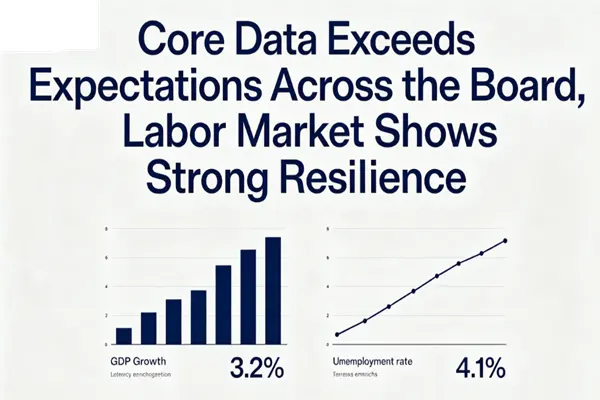
Wage growth showed a moderate cooling trend, effectively mitigating the risk of a wage-inflation spiral. In April, average hourly earnings for private sector employees in the US rose 0.2% month-over-month and 3.6% year-over-year, both figures falling short of market expectations and representing a significant decline compared to the over 5% wage growth projected for 2022-2023. This moderate wage growth indicates a slowdown in upward pressure on labor costs, supporting stable household incomes and maintaining consumer spending power without driving up corporate labor costs or exacerbating inflation. This provides the Federal Reserve with some leeway for monetary policy adjustments, making it the most closely watched positive signal in this non-farm payroll data release.
From an industry perspective, new job creation exhibits a clear structural divergence. The service sector has become the absolute main driver of job growth, while traditional manufacturing and technology sectors continue to face pressure. Healthcare and social assistance continue to absorb a large number of jobs, benefiting from an aging population and the rigid growth in demand for medical services, consistently ranking first among all industries in monthly job creation. Retail trade and transportation/warehousing have seen rapid job growth alongside the recovery in US consumption and the rebound in the logistics industry. The leisure and hospitality industry continues its seasonal recovery trend. Overall, the service sector has driven the vast majority of new jobs. Conversely, the information technology, finance, and high-end professional services sectors are experiencing a continued contraction in employment due to AI-driven job creation, cost-cutting and efficiency-enhancing measures by enterprises, and ongoing layoffs. The manufacturing sector, hampered by weak global demand and declining corporate capital expenditures, has seen near-stagnant job growth, with traditional industrial jobs struggling to recover. This exacerbates the uneven distribution of employment across sectors.
On the labor supply side, the US labor force participation rate fell to 61.8% in April, the lowest level since October 2021. The continued moderate contraction in labor supply is a significant underlying factor contributing to the stability of the unemployment rate. The retirement of a large number of baby boomers, a temporary slowdown in immigration, and the permanent exit of some workers from the labor market have led to stagnant growth in the US's working-age population. Even with slower job growth, the unemployment rate remains stable. This contraction in labor supply is both a source of resilience in the US job market and a potential source of long-term labor shortages and structural labor shortages in various industries, which will continue to impact US industrial development and inflation trends in the future.
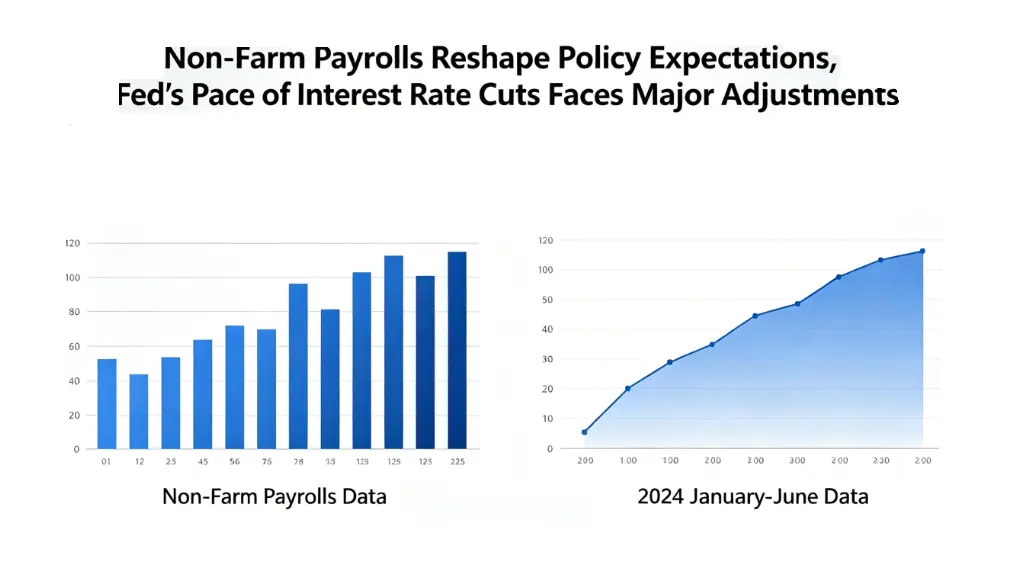
Non-farm payroll data reshapes policy expectations, leading to a major adjustment in the pace of Federal Reserve rate cuts.
Following the release of the better-than-expected April non-farm payroll data, global financial markets reacted sharply, with the most profound impact being a complete reshaping of the Federal Reserve's monetary policy path. Previously, the market widely predicted that due to economic slowdown and cooling employment, the Fed would begin a rate-cutting cycle as early as June, with 2-3 rate cuts this year. However, the unexpectedly resilient employment and moderate wage growth signals significantly raised the threshold for Fed rate cuts. A delayed timing and fewer rate cuts became the mainstream consensus, leading to a simultaneous repricing of the dollar, US stocks, gold, and commodity prices.
From the Fed's policy logic, its core policy objective is to balance the dual tasks of curbing inflation and stabilizing employment. The strong resilience of the job market means that the US economy is not at risk of recession, and the Fed does not need to stimulate the economy through rapid rate cuts. The policy focus will return to curbing inflation. Currently, geopolitical conflicts in the Middle East are pushing up international oil prices, and there is a risk of a rebound in US April CPI inflation. Rising energy prices coupled with stable employment significantly reduce the urgency for Fed rate cuts. Data from CME Group interest rate futures shows that after the release of the non-farm payroll data, the market's probability of a Federal Reserve rate cut in June plummeted from 42% before the data release to 19%, with a significant downward revision to the probability of a September rate cut. The expected number of rate cuts for the whole year has shrunk from two to one, with some institutions even predicting no rate cuts throughout 2026, and the Fed's monetary policy maintaining a "high interest rate for a longer period" approach.
Different institutions have reached a clear consensus on the Fed's subsequent policy path. Mainstream investment banks and macro research institutions generally believe that after this non-farm payroll data release, the Fed's short-term rate cut window is essentially closed. It is highly likely that interest rates will remain unchanged in June, and the probability of rate cuts in July and September has significantly decreased. Only December presents a possibility of a 25 basis point rate cut this year. Even if inflation continues to decline, the Fed will prioritize monitoring the stability of the labor market to avoid premature rate cuts that could stimulate a rebound in inflation. For the Federal Reserve, current policy is in a delicate balance of "going forward or backward." Strong employment limits the room for interest rate cuts, while the risk of a rebound in inflation prevents rate hikes. A stable high-interest-rate environment will be the core policy tone for the Fed in the next six months.
The policy expectation adjustment brought about by the non-farm payroll data directly triggered sharp fluctuations in global capital markets. The US dollar index initially rose and then fell, initially boosted by easing expectations of interest rate cuts, but later declined due to weaker-than-expected wage growth. All three major US stock indices rose, with the service, consumer, healthcare, and retail sectors leading the gains, while the technology sector showed significant divergence. Gold prices bucked the trend, benefiting from limited negative impacts from easing interest rate cut expectations and safe-haven demand driven by geopolitical conflicts, with spot gold rising by over $20 in the short term. In the commodities market, crude oil and industrial metal prices fluctuated upwards, with market trading logic shifting from "economic recession leading to declining demand" to "economic resilience supporting stable demand." The global foreign exchange market adjusted in tandem, with non-US currencies fluctuating due to dollar volatility, emerging market currencies experiencing temporary relief from pressure, and global financial assets entering a new pricing cycle.
From a domestic economic perspective, prolonged high interest rates will continue to suppress the housing market, corporate investment, and household credit consumption. High housing interest rates will keep housing demand under pressure; persistently high corporate financing costs will slow capital expenditure expansion; and increased household credit consumption costs will cool the willingness to engage in excessive consumption. However, a stable job market can offset the downward pressure from high interest rates, and the US economy is likely to achieve a "soft landing," avoiding both a rapid recession and a high-speed recovery. Moderate growth will be the main theme of the economy throughout the year.
Deep-seated risks lurk beneath the surface; structural economic concerns underscore the resilience of employment.
Despite the strong non-farm payroll data in April, demonstrating the robust resilience of the US economy, a deeper analysis reveals multiple underlying structural risks in the US job market. The stability of the employment data masks internal economic divisions, vulnerabilities, and imbalances. Short-term resilience is insufficient to offset long-term risks, and the US economy will continue to face multiple downward pressures.
- First, job growth is highly dependent on low-end service sectors, while high-quality employment continues to shrink, leading to a continued decline in the quality of economic growth. Almost all of the new jobs created this time came from low-end service industries such as healthcare, retail, catering, and transportation/warehousing. These positions have low wages, low technical requirements, and weak resilience. Meanwhile, high-value-added industries such as technology, finance, high-end manufacturing, and professional services continue to experience layoffs, job shrinkage, and hiring freezes, further increasing the employment pressure on highly educated and skilled workers. The job market for young university graduates remains weak, with a scarcity of white-collar positions. A large number of highly educated talents are forced to flow into low-end service industries, resulting in declining employment quality, sluggish income growth, further exacerbating the "K-shaped recovery" pattern of the US economy, widening the wealth gap, and constraining the release of residents' consumption potential in the long term.
- Second, the contraction in labor supply masks a true weakness in employment, creating a "false" stability in the unemployment rate. The current unemployment rate of 4.3% does not indicate ample job opportunities or full employment, but rather a large-scale exit from the labor market and a continued decline in the labor force participation rate. The ongoing retirement of the baby boomer generation has led to a significant aging population leaving the labor market; some groups have been out of work for an extended period after the pandemic and are no longer seeking employment; and a temporary slowdown in immigration has reduced the overseas labor supply. These multiple factors have contributed to the overall contraction of the labor force. Even with a slowdown in new job creation, the unemployment rate remains stable. This stability, achieved through a shrinking labor force, is unsustainable. Once the labor supply recovers in the future, the unemployment rate will rise rapidly, fully exposing the true pressure on the job market.
- Third, the divergence in wage growth is widening, with weak income growth for ordinary workers and a continued weakening of the consumption base. While average wage growth appears moderate and controllable, its internal structure is extremely uneven. High-end industries maintain high wages, while low-end service sector wages have stagnated, and the wage growth of low-income groups is far below the average. Meanwhile, US inflation has consistently outpaced wage growth, leading to a continuous decline in real disposable income. The University of Michigan's consumer sentiment index has fallen to a near 50-year low, and widespread pessimism regarding future income, employment, and the economic outlook persists. Even with stable employment, consumer spending remains weak, weakening the driving force of consumption for economic growth and posing a long-term risk of weakening endogenous growth momentum in the US economy.
- Fourth, the full impact of external geopolitical risks has not yet materialized, and there is a window of opportunity for employment resilience. The April non-farm payroll data was collected in mid-April, and the economic impact of Middle East geopolitical conflicts and soaring international oil prices has not yet fully translated into the job market. If oil prices remain high, significant increases in domestic gasoline, energy, and transportation costs will push up operating costs across all industries, forcing companies to reduce hiring and lay off employees to cut costs. Simultaneously, weak overseas economies and a continued decline in US exports will rapidly put pressure on employment in manufacturing and foreign trade-related sectors. The lagged impact of geopolitical risks will likely be fully reflected in the May-June employment data. The unexpected resilience of the US job market in the short term may only be a temporary stabilization, and subsequent downward pressure should not be ignored.
- Fifth, the rapid replacement of labor by artificial intelligence technology poses a disruptive challenge to the medium- to long-term employment structure. The current wave of layoffs in the US technology and finance sectors is primarily due to AI replacing human labor, with a large number of repetitive white-collar and basic service jobs being taken over by AI. In the future, as technology continues to iterate, AI replacement will spread from high-end industries to all industries, traditional jobs will continue to disappear, and new jobs will be concentrated in emerging technology fields. The structural unemployment risk in the job market will continue to amplify, and a large number of workers will face job loss and difficulty in re-employment, becoming the biggest long-term hidden danger to the US job market.
Conclusion
US non-farm payrolls in April far exceeded expectations, and the unemployment rate remained at 4.3%. This strong monthly employment data brings new variables and directions to the global macroeconomic landscape. In the short term, the US job market has shown unexpected resilience, significantly increasing the probability of a soft landing for the economy. The Federal Reserve has delayed its pace of interest rate cuts, and global capital markets are undergoing a new round of repricing, with the dollar, US stocks, and commodity prices adjusting in tandem. The global macroeconomic policy environment continues its trend of high interest rates and high volatility. However, a deeper analysis of the data reveals that the US job market is not entirely positive. Multiple structural risks persist, including low-end service sector-led job growth, shrinking high-quality employment, a contraction in labor supply masking unemployment pressures, widening wage disparities, delayed impacts from geopolitical risks, and the replacement of labor by AI technology. Short-term resilience cannot mask long-term economic imbalances.
For the US economy itself, stable employment is a double-edged sword. While it supports the economy and prevents a rapid recession, it also makes it difficult for the Federal Reserve to quickly ease monetary policy. The prolonged maintenance of high interest rates will continue to suppress real estate, investment, and consumption, keeping the economy in a range of moderate and slow growth for an extended period, struggling to escape the predicament of recurring inflation and sluggish growth. For global markets, the policy expectation adjustments resulting from the resilience of the US job market will continue to influence central bank monetary policies, cross-border capital flows, and commodity pricing, further exacerbating the divergence in global economic recovery. For global investors and policymakers, this non-farm payroll data serves as a stark reminder that a single month's strong data cannot represent long-term economic trends. Structural risks, external geopolitical shocks, and technological changes are the core factors determining the future global economic landscape.
Looking ahead, with the continued escalation of geopolitical conflicts in the Middle East, high-level volatility in international oil prices, and the accelerated adoption of artificial intelligence, the US job market will gradually face the test of external shocks. The non-farm payroll data for May and June will be crucial in assessing its resilience and sustainability. Countries worldwide need to anticipate changes in the US economy and monetary policy, prepare for imported inflation, capital flow fluctuations, and shifts in external demand, and strengthen their own economic stability in a complex and volatile global macroeconomic environment to achieve a steady economic recovery and high-quality development.
Disclaimer: The information published on this website is sourced from the internet and does not represent the views of this website, nor does it guarantee the accuracy of its content. Please be aware of the distinction. Furthermore, the products provided by our company are for scientific research purposes only. We are not responsible for any consequences arising from improper use. If you are interested in our products, have any criticisms or suggestions regarding our articles, or are not completely satisfied with the products you received, please contact us by email: allen@faithfulbio.com; our team is dedicated to ensuring complete customer satisfaction.