

What are the reasons behind Trump's lawsuit against the BBC?
Triggering the Crisis: A Documentary and a Leaked Internal Memo
The source of this controversy is the BBC Panorama documentary "Trump: A Second Chance?", which aired on October 28, 2024—a week before the US presidential election. At the height of the election campaign, this documentary, focusing on Trump's political career, quickly garnered attention, and a passage about the Capitol Hill riots became the core point of contention in the lawsuit.
On November 3, 2025, the UK's Daily Telegraph exclusively revealed an internal BBC memo, uncovering the key truth behind the incident. Written by an internal investigation team within BBC News, the memo explicitly stated that the documentary contained a "serious editing error": the production team maliciously spliced together two segments of Trump's speech on January 6, 2021. The two speeches were actually nearly an hour apart. The first half saw Trump urging supporters to "go to Congress to voice their demands," while the second half emphasized that "protests must remain peaceful." However, the edited version directly linked "going to Congress" with footage of the riots, creating the misleading impression that "Trump incited the riots."
The memo further revealed that during the documentary's production, editors had questioned the legitimacy of this editing, but BBC management ignored them, ultimately leading to the broadcast of "clearly biased content." The memo's release immediately caused a huge uproar. Then-BBC Director-General Tim Davies and News Chief Executive Deborah Tennessee resigned in mid-November, becoming the highest-ranking executives in the BBC's 103-year history to resign due to a single reporting error.
Faced with public pressure, BBC Chairman Samir Shah issued a public statement on November 13, apologizing to Trump for the "misleading editing" and announcing that all platforms would cease rebroadcasting the documentary in question. However, the BBC explicitly refused the demands from Trump's legal team to "withdraw the documentary and pay $1 billion in damages," stating that "editing errors do not constitute defamation." This response laid the groundwork for the multi-billion dollar lawsuit.
The Lawsuit's Logic: Double Accusations and the Basis for a Multi-Billion Dollar Claim
"The BBC's apology lacked sincerity and failed to take any substantial corrective measures," Trump stated clearly at a White House press conference on December 15th. He asserted that the BBC's actions were not a simple mistake but a "premeditated political attack." His legal team, in the lawsuit, elaborated on the core basis for the $10 billion claim from two dimensions: defamation and violation of trade law.
Regarding the defamation allegations, the lawsuit heavily invoked the US "actual malice" principle. This legal standard, originating from the 1964 case of *The New York Times v. Sullivan*, stipulates that public figures suing media outlets for defamation must prove that the other party "knowingly and intentionally published false information, or showed indifference to the veracity of the information." Trump's team argued that the BBC's internal memo directly proved that management knowingly broadcast controversial editing, fully meeting the legal requirements of "actual malice."
The lawsuit details the damages caused by the BBC's actions: During the final stretch of the 2024 election, the documentary in question was distributed in the United States through the BBC's streaming platform Britbox, reaching over 60 million American users and directly influencing the voting intentions of some swing voters. Simultaneously, the "incitement to riots" label damaged Trump's business partnerships, with bookings for his golf courses and hotels declining by 15% after the documentary's airing, and the related brand value shrinking by over $3 billion.
The allegation of violating Florida's trade conduct laws focuses on the BBC's commercial nature. The Trump team argues that the BBC's collection of subscription fees in the US through the Britbox platform constitutes "commercial operation," and its practice of attracting traffic and increasing subscriptions through false content violates Florida's "prohibition of deceptive trade practices" regulations. The lawsuit specifically emphasizes that some of the documentary's location shooting took place in Florida, including Trump's Mar-a-Lago resort, thus giving Florida courts clear jurisdiction.
Regarding the $10 billion claim, Trump's legal team explained that this figure comprehensively considers direct economic losses, damage to brand reputation, emotional distress, and "punitive damages." "As a public media outlet, the BBC should uphold the principles of objectivity and neutrality, but it has been turned into a political tool. Such behavior must be curbed through substantial compensation," a spokesperson for the legal team told CBS.
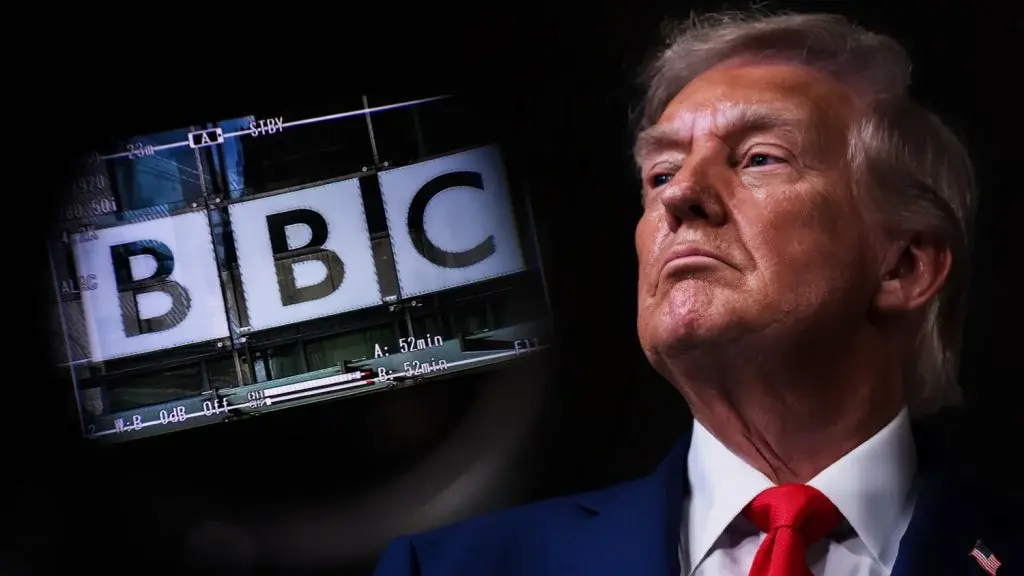
Key Issues: Jurisdiction, Actual Malice, and Press Freedom
Following the filing of the lawsuit, the BBC responded swiftly on December 16th, stating it would "actively defend its position and resolutely uphold its principles." The focus of the dispute has expanded from a simple editorial error to core legal issues such as jurisdiction and the determination of actual malice, even touching upon the boundaries of press freedom.
Jurisdiction has become the BBC's primary defense strategy. In a letter to the Trump team, the BBC's lawyers argued that the documentary in question was a BBC UK channel program, not broadcast on US television, and that the BBC website had previously imposed viewing restrictions on US users; therefore, "US courts have no jurisdiction over British media." However, the Trump team countered in the lawsuit that Britbox has over 2 million paid subscribers in the US, allowing direct access to the documentary, and that filming locations included Florida, fully meeting the "minimum contact principle," thus giving US courts jurisdiction.
The determination of "actual malice" is the key to the case's outcome. The BBC maintains that the editing was an "oversight in the editorial process," not intentional misleading, and therefore does not constitute "actual malice." A spokesperson for the BBC emphasized in a statement: "We have apologized for the editorial error and taken remedial measures. The Trump administration cannot prove that the BBC acted with malicious intent." However, legal experts pointed out that the BBC's internal memo stating that "management ignored editorial questions" could be key evidence of "actual malice."
The incident has also sparked heated debate about press freedom. Seth Stern, advocacy director of the Freedom of the Press Foundation, publicly criticized Trump's exorbitant claim, stating that "demanding billions of dollars in damages for media errors is a threat to press freedom." He specifically pointed out that Trump had repeatedly pardoned those involved in the Capitol Hill riots, yet now claims the connection is "defamation," which is logically contradictory. Trump's supporters argue that "press freedom does not include the freedom to create false information," and that the BBC, as a public media outlet, should bear a higher ethical responsibility than commercial media.
Multiple Reactions: British Government Neutrality, Public Opinion Divided, and Election Aftermath
This transoceanic lawsuit quickly attracted attention from various sectors in both the UK and the US, with clear divisions in the positions of the parties involved. British Prime Minister Keir Starmer's office issued a statement on December 16th, adopting a neutral stance: "Any legal proceedings should be handled by the BBC itself, and the government trusts that the BBC will uphold its reputation and correct its mistakes promptly." This response was interpreted as the British government's unwillingness to let the media incident affect the UK-US alliance, especially given that cooperation between the UK and the US in defense, trade, and other areas is at a crucial stage after Trump's re-election.
Public opinion in the UK was polarized. Some criticized the BBC on social media for "betraying public trust" and believed it "should be held accountable for its mistakes"; others worried that Trump's high-value demands could "stifle independent media," launching an online petition to "support the BBC," which garnered over 500,000 signatures in just 24 hours. Senior Labour Party officials explicitly stated they "would stand up for the BBC, an important institution," while some Conservative MPs called on the BBC to "face its mistakes and avoid escalation."
In the US, the incident is intertwined with the aftermath of the 2024 general election. Since his 2016 presidential campaign, Trump has consistently made "fake news reporting by mainstream media" a core issue, and this lawsuit against the BBC is seen as a continuation of his "combat against media bias." His supporters believe it's a "just move against international media interference in US domestic affairs," while Democrats criticize Trump for "using legal tools to suppress dissent media," further undermining American democracy.
Legal opinions on the case's outcome are divided. Janet Hall, a professor at the University of Florida School of Law, points out that the internal memos possessed by the Trump team are a significant advantage, but the standard of proof for "actual malice" is extremely high, and the determination of jurisdiction over foreign media by US courts is uncertain; the case could potentially last for years. It's worth noting that Trump has previously sued mainstream US media outlets multiple times, winning $15 million and $16 million in damages against ABC and CBS respectively. This lawsuit against the BBC is seen as an escalation of his "media litigation strategy."
Profound Impact: Media Trust Crisis and New Challenges to Transoceanic Communication
This lawsuit not only concerns the personal and institutional feud between Trump and the BBC, but also reflects the trust crisis and transoceanic communication challenges facing the global media industry. Data shows that since 2020, public trust in mainstream media in the United States has been declining, with only 32% of the public believing that "media reporting is objective and fair." The BBC's editorial error has further exacerbated public skepticism about media credibility.
For the BBC, this lawsuit could have a survival-level impact. According to the BBC's 2024 financial report, its total annual revenue is approximately $7.8 billion. The $10 billion claim far exceeds its annual revenue. If it ultimately loses the case, it may face the risk of asset freezes or business restructuring. More seriously, the BBC's international credibility has been severely damaged. Public media in several countries have indicated they will reassess their cooperation with the BBC, and some advertisers are considering suspending their advertising.
At the level of cross-cultural communication, the incident highlights the "politically sensitive boundaries" of media reporting. As the world's most influential public media outlet, the BBC's reporting should consider the political contexts of different countries. However, its one-sided presentation of a recent US political event not only violates journalistic ethics but also raises potential diplomatic risks. Although the US and UK are allies, the Trump administration has hinted that if the BBC refuses to take responsibility, it may reassess its media cooperation agreement with the UK.
As of press time, the Southern District of Florida federal court has accepted the case, with the first hearing scheduled for January 20, 2026. The BBC stated it will "prepare ample evidence to defend itself," while Trump posted on Truth Social, "This will be a war for the truth." This transatlantic legal and public opinion battle will not only determine the BBC's future but may also reshape the rules of interaction between global media and political power, and its trajectory warrants continued attention.
Disclaimer: The information published on this website comes from the internet, which does not mean that this website agrees with its views or confirms the authenticity of the content. Please pay attention to distinguish it. In addition, the products provided by our company are only used for scientific research. We are not responsible for the consequences of any improper use. If you are interested in our products, or have critical suggestions on our articles or are not completely satisfied with the products received, Please also contact us via Email :sales9@faithfulbio.com ; Our team is committed to ensuring the complete satisfaction of customers.