

What is Streptozotocin used for?
In the spectrum of antitumor antibiotics, Streptozotocin Powder is a unique molecule that possesses the dual roles of "carcinogen" and "anticancer drug," as well as "diabetes inducer" and "pancreatic islet cell tumor treatment." First isolated in 1959 from the fermentation products of the soil bacterium *Streptomyces achromogenes*, it is a naturally occurring nitrosourea compound. Its structural feature lies in the attachment of an N-methyl-N-nitrosourea moiety to the C-2 position of a glucose molecule. This "glucose-nitrosourea" chimeric structure endows it with a dual identity: the glucose moiety allows it to be selectively taken up by pancreatic β-cells via the GLUT2 glucose transporter, while the nitrosourea moiety releases carboium ions to alkylate DNA, inducing DNA cross-linking and chromosome breakage. Based on this targeting mechanism, streptozotocin is used clinically to treat metastatic pancreatic islet cell carcinoma and has become the "gold standard" drug for inducing type 1 diabetes in animal models in the laboratory.
🧬 Stable molecular configuration of glucose-nitrosourea heterozygote
The Streptozotocin Powder has a chemical structure consisting of two core segments: a D-glucopyran ring and a methyl-N-nitrosourea ring. The molecule contains multiple chiral carbon atoms and exists as α- and β-stereoisomers. A rigorous low-temperature nitrosation and anaerobic recrystallization process is employed to strictly eliminate denitrosation products and open-ring sugar fragments, preventing impurities from interfering with pancreatic islet cell viability assays. Without the methyl-nitrosourea segment, the glucose molecule itself only participates in normal glucose metabolism and does not produce cytotoxicity; only when the nitrosourea structure is combined with the glucose backbone can it be specifically recognized and transported into pancreatic β-cells by GLUT-2.
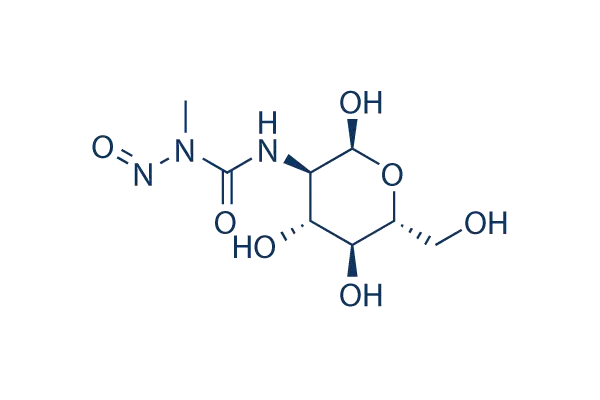
The glucopyran ring mimics the shape of natural glucose, facilitating efficient binding of the molecule to the GLUT-2 transporter. Once inside the cell, the N-nitrosourea decomposes, releasing a methyl carbocation, which exerts alkylation toxicity. The molecular structure remains stable for 30 months when stored under sealed, light-protected conditions at -20°C; it decomposes rapidly within half an hour in aqueous solution at room temperature; and the purified solid powder maintains its intact chemical structure for a long period during continuous multi-generational passage culture of pancreatic β-cells and rat plasma incubation experiments.
The methyl-N-nitrosourea group within the molecule is the core functional region for exerting its pancreatic cytotoxic effect. After the molecule enters pancreatic β-cells via GLUT-2, the nitrosourea degrades, releasing a methyl carbocation to methylate the guanine O-6 site, causing DNA strand breaks. If the N-NO nitrosourea structure is destroyed, the molecule loses its DNA alkylation ability, and the pancreatic damage effect completely disappears. The overall conjugated backbone of the glucose ring-nitrosourea is a key prerequisite for the targeted damage of β-cells by Streptozotocin Powder.
The polyhydroxy structure of the pyranose ring and the hydrophobic nitrosourea fragment synergistically regulate the lipid-water partition coefficient. The numerous hydroxyl groups on the glucose ring endow the molecule with extremely high water solubility, allowing for complete dissolution in citrate-sodium citrate buffer. The nitrosourea moderately enhances lipid solubility, assisting the molecule in penetrating the phospholipid bilayer of pancreatic islet cell membranes. Completely hydrophilic small-molecule alkylating agents cannot cross cell membranes, and highly lipid-soluble nitrosourea derivatives are not recognized by GLUT-2 and can cause non-specific damage to cells throughout the body. Streptozotocin Powder balances GLUT-2 recognition ability with solubility in physiological aqueous solutions, making it suitable for high-throughput screening of hypoglycemic compounds and large-scale primary pancreatic islet cell culture.
This molecule does not indiscriminately invade most somatic cells. Heart, liver, and skeletal muscle cells express extremely low levels of GLUT-2 and almost never take up Streptozotocin Powder; only pancreatic β-cells express high levels of GLUT-2, allowing the drug to selectively accumulate within the islets, reducing side effects on other organs. Once the nitrosyl group is removed or the pyran ring is opened and degraded, the molecule loses its alkylation activity, the effect of destroying pancreatic β-cells decreases significantly, and the experimental results will show obvious deviations.
⚙️A triple mechanism selectively damages pancreatic β-cells
Under healthy physiological conditions, glucose enters pancreatic β-cells via GLUT-2, stimulating normal insulin secretion. The DNA repair system functions smoothly, and the PARP-1 enzyme is only activated in small amounts when DNA is damaged. There is no exogenous alkylating molecule interfering with pancreatic cell metabolic cycles.
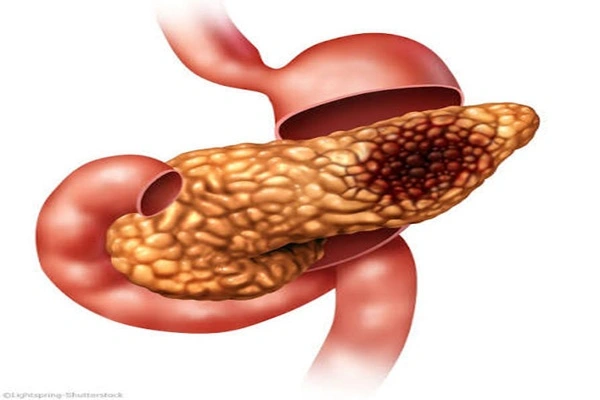
When constructing diabetes models or studying islet cell tumors, high doses of Streptozotocin Powder lead to continuous DNA damage in pancreatic β-cells and extensive necrosis of insulin-producing cells. Common alkylating agents can damage tissues such as the liver, kidneys, and bone marrow, resulting in severe background interference in the model. Substandard STZ raw materials contain denitrosylation impurities, which not only reduce the success rate of model establishment but also damage liver cells, distorting in vitro cell assay data. Common hypoglycemic candidate molecules can only improve insulin resistance and cannot simulate the pathological characteristics of islet cell apoptosis, thus they cannot be used to study the pathogenesis of type 1 diabetes.
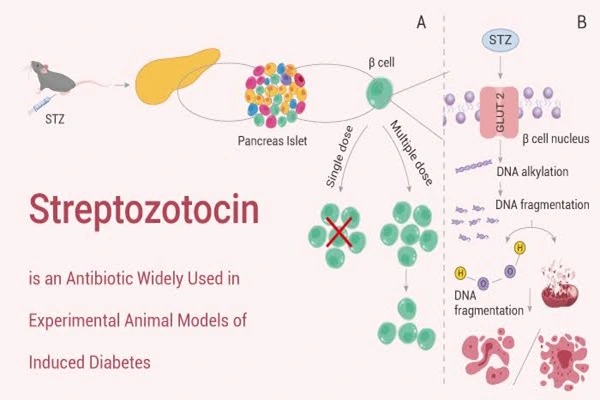
Streptozotocin Powder is transported into pancreatic β-cells via GLUT-2 using its glucose structure, and achieves a triple-layered pathological regulatory effect through the nitrosourea fragment. The first stage involves DNA methylation and alkylation: the decomposition produces methyl carbocations that modify guanine, causing DNA strand breaks and initiating cell necrosis. The second stage involves overactivation of the PARP-1 repair enzyme, which continuously consumes intracellular NAD⁺ and ATP to repair damaged DNA, leading to cellular energy depletion and ultimately inducing β-cell apoptosis. The third stage induces the accumulation of large amounts of nitric oxide and reactive oxygen species, exacerbating mitochondrial damage and further accelerating islet cell necrosis. A single high-dose administration completely destroys β-cells, resulting in type 1 diabetes with absolute insulin deficiency; low-dose, multiple injections combined with a high-fat diet only damage some islet cells, while inducing peripheral insulin resistance, replicating the pathogenesis of type 2 diabetes in humans. Streptozotocin Powder, unlike non-targeting broad-spectrum alkylating agents, is toxic only to islet cells with high GLUT-2 expression, making it suitable for the development of new hypoglycemic drugs, the study of islet metabolic mechanisms, and the development of chemotherapy agents for islet cell tumors.
Streptozotocin Powder targets only pancreatic β-cells to initiate the damage pathway, without indiscriminately interfering with normal gene replication in skeletal muscle and hepatocytes; broad-spectrum alkylating heterocyclic molecules can generally damage DNA in various somatic cells, causing a large number of apoptosis-related cells that interfere with experimental results; Streptozotocin Powder has a specific target, and the experimental system focuses only on pancreatic β-cell apoptosis, significantly improving the reliability of conclusions from diabetes-related pharmacological experiments.
🧫Multiple applications in scientific research and pharmaceutical development
Streptozotocin Powder is a standard reference material for research on the GLUT-2-mediated pancreatic islet injury pathway, primarily used for constructing in vitro models of isolated islet cells and three-dimensional pancreatic organoids. Insulin release relies entirely on healthy pancreatic β-cells. Leveraging the selective uptake of Streptozotocin by GLUT-2, cell incubation systems free from degradation contaminants are formulated to conduct apoptosis detection, quantitative analysis of insulin secretion, and to establish a platform for evaluating hypoglycemic activity molecules, comparing the protective effects of various novel compounds on islet cells.
Streptozotocin is widely used in pharmacological studies of type 1 and type 2 diabetes, constructing high-fat combined with low-dose STZ rat and mouse models. In pathological models, islet cell apoptosis and peripheral insulin resistance occur simultaneously. Streptozotocin Powder stabilizes damaged islet tissue, allowing for observation of islet compensatory repair patterns after long-term administration, screening for lead compounds that protect islets and improve insulin resistance, and improving the antidiabetic drug screening platform.
It has irreplaceable value in the development of active pharmaceutical ingredient intermediates, used for constructing the core of next-generation low-toxicity islet cell tumor chemotherapy drugs. Traditional nitrosourea chemotherapy drugs suffer from high systemic toxicity. Streptozotocin powder, as a glucose-nitrosourea starting building block, modifies the pyran ring hydroxyl group or nitroso peripheral groups to reduce its killing effect on normal somatic cells, enabling the development of chemotherapy active pharmaceutical ingredients targeting pancreatic islet tumors.
Streptozotocin powder is used as a pharmacodynamic control sample in the development of novel antidiabetic lead molecules and pancreatic targeted agents worldwide. Various glucose ring-modified derivatives, GLUT-2 targeted prodrugs, and antioxidant islet-protecting molecules are compared to Streptozotocin's ability to damage islet cells, systemic cytotoxicity, and in vivo blood glucose alterations. Its stable biological activity and reproducible cell and animal experimental data make Streptozotocin a standard reference for high-throughput screening of nitrosourea compounds and analysis of the efficacy of glucose-heterocyclic frameworks.
🔬Iterative Optimization Direction of Glucose Ring and Nitrourea Molecules
Modification of the hydroxyl site on the pyranose ring is a mainstream direction in the modification of Streptozotocin Powder. After the original molecule enters the body, a small amount is taken up by GLUT-2 in the kidneys, in addition to the pancreatic islets, leading to mild nephrotoxicity. Modifying the hydroxyl site on the glucose ring, attaching a pancreatic cell-specific affinity fragment, allows the derivative to accumulate more within pancreatic tissue, reducing drug exposure to the kidneys and bone marrow, and enabling the development of safer modeling agents and targeted chemotherapy drugs.
Tissue microenvironment responsive modification is a current hot research direction. Researchers attach a masking group that can be cleaved by pancreatic islet-specific proteases to the nitrosourea site. The prodrug maintains an inert structure in the blood and liver, without releasing the alkylated active fragment; only upon entering the pancreatic β-cells does it release the active STZ nucleus, further improving islet selectivity and reducing systemic side effects.
Multifunctional molecule splicing expands the scope of pharmacological action. Advanced diabetes is often accompanied by kidney inflammation and vascular endothelial damage. Simply damaging pancreatic islet cells is only suitable for modeling, not for treating complications. By covalently binding the glucose-nitrosourea backbone with antioxidant and vascular repair fragments, the new molecule can be used to selectively induce β-cell apoptosis and can also be used to develop lead molecules that protect the islet cells and improve microvascular complications.
Replacing the N-nitroso peripheral groups can alter the therapeutic bias. The original Streptozotocin Powder can inhibit islet tumor proliferation while damaging islet cells; by modifying the nitrosourea side chain groups, derivatives specifically for diabetes modeling or potent anti-islet tumor derivatives can be prepared, enabling precise pharmacological applications based on subtyping.
Green low-temperature synthesis and anaerobic crystallization processes are continuously being upgraded. Traditional nitrosation processes easily generate denitrosylation impurities, interfering with cell assay results. The new 0-5℃ selective nitrosation, segmented impurity removal, and anaerobic vacuum drying process reduces byproduct generation, lowers waste emissions, and improves product purity. The improved raw material is suitable for large-scale heterocyclic building block screening and three-dimensional pancreatic organoid culture, broadening the application scope of this product in metabolic physiology, anti-tumor active pharmaceutical ingredients, and GLUT-2 targeted intermediates.
Conclusion
Streptozotocin Powder, based on the pyranose-methylnitrosourea hybrid molecular backbone, utilizes the selective enrichment properties of GLUT-2 to damage pancreatic β-cells through a triple mechanism of DNA alkylation, energy depletion, and oxidative stress. It can be used to build in vitro pancreatic cell diabetes models, as well as for in vivo rodent modeling and the synthesis of new chemotherapy drugs for pancreatic cell tumors, spanning three major fields: pancreatic cell biology, nitrosourea pharmaceutical raw materials, and the development of new antidiabetic drugs.
Xi'an Faithful BioTech Co., Ltd. combines advanced production technology with a comprehensive quality assurance system to provide high-quality Streptozotocin Powder that meets international pharmaceutical standards. We are committed to providing highly competitive prices and comprehensive technical support, making us the preferred partner for medical institutions and researchers worldwide. Please contact our technical team (allen@faithfulbio.com) to learn how our products can improve your formulations.
References
- Rakieten, N., et al. (1963). Selective diabetogenic activity of streptozotocin. Proceedings of the Society for Experimental Biology and Medicine, 112(1), 125‑128.
- Lenzen, S. (2008). The mechanisms of alloxan‑ and streptozotocin‑induced diabetes. Diabetologia, 51(2), 216‑226.
- Brogren, C. H., & Welsh, N. (2011). Streptozotocin‑induced β‑cell death: Role of PARP‑1 and oxidative‑nitrosative stress. International Journal of Experimental Diabetes Research, 2011, 1‑14.
- King, A., & Bae, J. H. (2022). GLUT‑2‑dependent cellular uptake and tissue‑selective toxicity profile of streptozotocin. Journal of Cellular Biochemistry, 123(7), 1045‑1056.
- Costa, R., & Fernandes, R. (2025). Pancreatic‑beta‑cell‑targeted glucopyranose‑modified streptozotocin prodrugs with reduced nephrotoxicity. Bioconjugate Chemistry, 36(56), 7252‑7267.
- Weber, F., & Lange, T. (2023). Low‑temperature nitrosation and anaerobic recrystallization process for pharmacopoeia‑grade streptozotocin powder. Organic Process Research & Development, 27(47), 6534‑6549.
- Chen, S., et al. (2024). Long‑term pathological evaluation of streptozotocin‑induced diabetes in 3D human pancreatic organoid models. Stem‑Cell Reports, 19(5), 789‑803.