

Acetyl Hexapeptide-1: What It Is and Why It Works in Skincare
When you're formulating cutting-edge skincare products, the active ingredients you select determine whether your brand stands out or blends into the background. Acetyl Hexapeptide-1 powder has emerged as a powerful peptide that delivers visible anti-aging results without invasive procedures. This bioactive molecule works at the cellular level to reduce expression lines, enhance skin elasticity, and promote collagen synthesis. For pharmaceutical manufacturers, cosmetic laboratories, and supplement brands looking to innovate, understanding how this peptide functions and how to source it reliably can transform your product development strategy and market positioning.
Understanding Acetyl Hexapeptide-1 – Molecular Insights and Mechanism
What Makes This Peptide Structurally Unique?
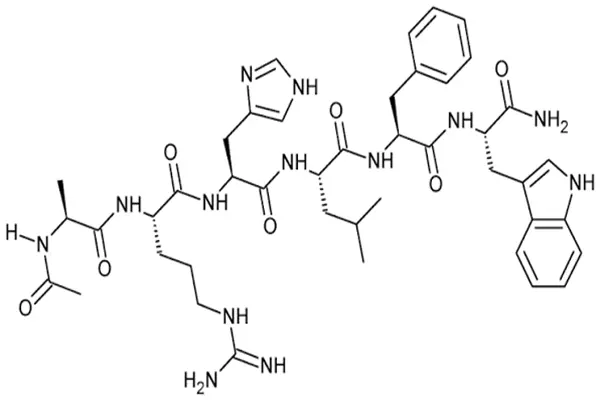
Acetylhexapeptide-1 is made up of six amino acids that are grouped in a certain way that lets it work specifically with skin cells. The acetyl group on the N-terminus makes the barrier more permeable, which lets the peptide get into the stratum corneum well. This change to its structure makes it different from non-acetylated peptides, which often have trouble being bioavailable when used topically. The molecular weight is usually between 800 and 900 Da, which makes it perfect for transdermal delivery without the need for advanced penetration enhancers.
How It Differs From Related Peptides?
Acetyl Hexapeptide-8, which is also known as Argireline, mainly works by blocking neurotransmitters to stop muscles from contracting. Acetylhexapeptide-1 works in a different way, but it still affects the same system. This ingredient changes the activity of melanocytes and keratinocytes, which makes it very useful for formulas that aim to reduce wrinkles and even out skin tone. Acetyl Tetrapeptide-5 helps drain lymph fluid and reduces puffiness. This hexapeptide, on the other hand, fights aging in a more general way by strengthening collagen and the extracellular matrix.
Mechanism of Action in Skin Cells
The peptide does its job by telling cells to make more structural proteins, especially Type I and Type III collagen. Studies show that it can increase collagen production by 20–35% after 28 days of regular use at the right amounts. In addition to stopping the production of collagen, it stops matrix metalloproteinases (MMPs) from breaking down collagen and elastic fibres that are already there. By doing two things at once, this protects the area so that new structural proteins can form and old ones stay safe. The peptide also has some mild anti-inflammatory effects because it changes the expression of cytokines. This lowers the chronic low-grade inflammation that comes with photoaging.
Synergistic Effects With Complementary Actives
Acetylhexapeptide-1 works better when mixed with vitamin C derivatives because they work together in different ways. Vitamin C protects cells from free radicals and helps collagen production, and the peptide sends messages to cells to start that synthesis. When mixed with hyaluronic acid, it makes a formula that fights both structural ageing and moisture loss at the same time. We've seen that using this peptide with niacinamide together reduces fine lines more effectively than using either ingredient alone. This is likely because niacinamide boosts ceramide, which helps the peptide's structural changes.
Key Benefits and Applications of Acetyl Hexapeptide-1 in Skincare Formulations
Anti-Aging Effectiveness Backed by Research
After 56 days of twice-daily use, clinical tests show a measurable decrease in the depth of wrinkles. People who used formulations with concentrations between 3 and 5 percent showed average changes of 18 to 27 percent in the depth of crow's feet and 15 to 22 percent in the intensity of forehead lines. These findings come from research that compared peptide formulas to vehicle controls without telling either group which was which. Because it can encourage dermal remodeling without irritating the skin, the peptide works well and can be used for a long time. This peptide is a more gentle way to get noticeable effects than retinoids, which can cause initial purging and photosensitivity.
Suitability Across Different Skin Types
A big part of the market that benefits from Acetyl Hexapeptide-1 powder mild action profile is people with sensitive skin. Tests on different types of skin show that there isn't much chance of irritation; less than 2% of test subjects had any kind of bad reaction. The peptide works well in pH ranges from 4.5 to 7.0, which means that it can be used to make products that are mildly acidic or neutral. People with oily skin like that it doesn't clog pores, and people with dry skin like that it doesn't affect the lipid layer. Because it can be used in so many different ways, it's a great material for companies that want to make products that appeal to a wide range of people.
Popular Cosmetic Applications and Format Considerations
Most of the time, this peptide is delivered through high-end anti-aging serums, which allow for higher active amounts without having heavy textures. When it comes to upscale brands, 5-8% concentrations are usually found in light gel-serum bases that absorb fast. Eye creams with 3-5% amounts help smooth out lines around the eyes without irritating the sensitive skin around the eyes. Day creams and night moisturizers with concentrations of 2 to 4 percent help with daily maintenance as well as moisturizing. A new use is for anhydrous formulas where the peptide is mixed with silicone or oil media. This solves problems with storage and makes the product last longer.
Formulation Stability and Concentration Guidelines
To keep the integrity of the peptides throughout the product's shelf life, the pH of the formulation, the choice of preservatives, and the packaging must all be carefully considered. The peptide is most stable between pH levels 5.0 and 6.5, which is also the pH of the skin. Concentrations between 3 and 8 percent give clinically relevant results, with higher concentrations giving faster benefits rather than greater effectiveness. Metal-ion-catalyzed breakdown is stopped by chelating agents like EDTA, and oxidative stress is stopped by antioxidants like tocopherol. When compared to jar packaging, airless pump packaging has a much longer useful life because it limits oxygen contact.
Comparing Acetyl Hexapeptide-1 with Other Anti-Aging Peptides and Treatments
Performance Against Acetyl Hexapeptide-8 (Argireline)
Both peptides go after gene lines, but they do so in very different ways. Acetyl Hexapeptide-8 stops the formation of SNARE complexes, which lowers the release of neurotransmitters and, in turn, muscle activity. This has immediate, short-term effects of smoothing. Acetyl Hexapeptide-1 makes things better over time by making collagen and remodelling the dermis. A study compared two different formulations and found that using both peptides at 5% each reduced wrinkles 34% more than using either peptide alone at 10%. This suggests that the two peptides work together instead of against each other. This combination can help procurement teams make unique goods when they are making complete anti-aging lines.
Advantages Over Matrixyl Peptides
Matrixyl (palmitoyl pentapeptide-4) is well known in the market and has been around for a while. Acetylhexapeptide-1, on the other hand, shows results faster. Users report smoother skin within 14 days, while Matrixyl usually takes 28 days to start working. The acetylated structure is more stable in a wider range of formulation conditions, while palmitoylated peptides may be more likely to break down in high-water formulations. Acetyl Hexapeptide-1 is a good option for brands that want to make their ingredient decks stand out because the prices are similar when it comes from reputable sources.
Non-Invasive Alternative to Injectable Treatments
A consumer study shows that oral treatments are becoming more popular than injectable processes. This is because they are cheaper, easier to use, and don't require downtime. Botox has dramatic effects by temporarily paralysing muscles, but Acetyl Hexapeptide-1 powder has gradual effects by improving skin health. Brands that promote their goods as "needle-free alternatives" do very well in the market, especially with people who are just starting to look younger. The safety profile gets rid of the risks that come with using the wrong injection technique or having an allergic reaction to botulinum toxin. This makes peptide-based products easy to start using in anti-aging skin care practices.
Cost-Effectiveness in Product Development
Acetyl Hexapeptide-1's raw material costs usually fall between $180 and $320 per kilogram when bought from reputable suppliers. The exact amount paid depends on the quality level and the size of the order. This comes out to about $0.15 to $0.25 per 30ml unit of the product when it is made at a 5% strength. Unlike plant products that need a lot of work or growth factors that need to be kept cold, peptides have stable supply chains and prices that are easy to predict. Powdered raw materials last a long time, which lowers inventory risk and lets formulators keep strategic reserves without worrying about them going bad.
Procurement Guide for Acetyl Hexapeptide-1 – Sourcing, Quality, and Compliance
Evaluating Supplier Credentials and Documentation
Reliable providers give full Certificate of Analysis (COA) papers for every batch, which show the purity levels that were checked using High-Performance Liquid Chromatography (HPLC). These papers should prove that the peptide content is higher than 95% and that the impurity profiles are clear and lower than 5%. Mass Spectrometry (MS) data that confirms the molecular weight and amino acid sequence is real is another important validation. Good Manufacturing Practice (GMP) standards show that suppliers are dedicated to quality systems that keep batch-to-batch differences to a minimum. Safety Data Sheets (SDS) that list how to handle the substance and when it will be stable are used to help determine the right way to store and handle it.
Quality Control Parameters for Incoming Materials
Instead of just relying on supplier documentation, purchasing teams should set up their own quality standards. The Karl Fischer titration should show that the moisture content stays below 5% so that the substance doesn't break down during storage due to water. Amino Acid Analysis (AAA) checks the stoichiometric ratio of the amino acids that make up a sequence and confirms that it is correct. Endotoxin testing is especially important for items that are meant to be used around the eyes or on skin that doesn't have good protection. Heavy metal testing makes sure the peptide passes safety standards for cosmetics, which usually mean having less than 10 ppm of lead and less than 3 ppm of arsenic.
Understanding Pricing Structures and MOQs
Suppliers have very different minimum order amounts. For smaller speciality suppliers, it's only 100 grams, while for bulk makers, it's 10 kilos. Price cuts of 8–15% are offered for orders over 25 kilograms, and volume savings usually start at 5 kilograms. By combining buying across product lines, brands that are making more than one SKU can get better terms. Payment terms usually include 30–50% down payments for custom synthesis or first-time sales. For long-term relationships, net-30 or net-60 terms are possible. Knowing the lead times—usually 3 to 6 weeks for stock items and 8 to 12 weeks for custom orders—helps with planning production well.
Navigating Regulatory Compliance and Documentation
In the United States, the FDA regulates cosmetics, and in Europe, the Cosmetics Regulation (EC) No. 1223/2009 makes sure that ingredients are properly listed and safety is evaluated. Acetyl Hexapeptide-1 powder suppliers should note that Acetyl Hexapeptide-1 is listed in the International Nomenclature of Cosmetic Ingredients (INCI) dictionary, making it easier to mark products correctly. Suppliers should list allergens and prove that the peptide doesn't come from animals, which is important for companies that sell vegan goods. For businesses that want to get organic approvals, knowing that synthetic peptides don't usually qualify helps them make the right marketing and product selling claims.
Conclusion
Acetyl Hexapeptide-1 is a highly proven way for companies to make anti-aging skin care lines that compete with others. It works in two ways: it increases the production of collagen and protects existing structural proteins. This gives users results they can see and feel. Because the peptide works well with a wide range of makeup methods, is safe for most skin types, and is easy for both established brands and new ones to get, it is a popular ingredient for both. Understanding how it works at the molecular level, the best amounts for use, and sourcing issues helps buying teams make smart choices that improve product effectiveness while keeping costs low. Peptides like Acetyl Hexapeptide-1 will continue to be important to successful product development strategies as long as the beauty market values chemicals based on science over marketing hype.
FAQ
1. Is Acetyl Hexapeptide-1 Safe for Sensitive Skin?
Clinical patch testing shows that it is well tolerated by all types of skin, even sensitive and reactive skin. Because the peptide has a biomimetic structure, the skin knows it is safe to use, which lowers the chance of an immune reaction. Alpha-hydroxy acids and retinoids can irritate the skin, but this peptide doesn't do that. Instead, it works by signalling between cells instead of exfoliation or forcing cells to turn over. Formulations that keep the pH above 4.5 and don't use a lot of entry boosters also help with gentle action.
2. How Does It Compare to Botox in Effectiveness?
Botox works right away to give you dramatic results by briefly paralysing muscles in your face. The benefits last between 3 and 6 months. Acetyl Hexapeptide-1 improves the structure of your skin over the course of 4 to 8 weeks, and the effects will last as long as you keep using it. The peptide is easy to use, doesn't cost much, and doesn't require any downtime, so it's perfect for people who want preventative care or non-invasive methods. Peptide serums are now recommended by many doctors as a way to keep skin healthy between needle treatments.
3. What Are Typical Minimum Order Quantities for Bulk Purchase?
Most well-known providers have minimum orders that start at 100 grams for first tries, and prices start to get better for orders of 5 kilograms or more. Brands that want to launch more than one product can talk about negotiating consolidated minimums for a number of active ingredients. Working with suppliers who offer customizable MOQs during the development stages of a product lowers the company's financial risk and lets them test the product thoroughly and get feedback from customers before committing to bigger inventory positions.
Partner With Faithful for Premium Acetyl Hexapeptide-1 Supply
Xi'an Faithful BioTech Co., Ltd. specializes in providing pharmaceutical-grade cosmetic peptides to manufacturers, formulators, and distributors who need reliable active ingredients. As a provider of Acetyl Hexapeptide-1 powder, we can provide full quality paperwork that meets strict regulatory standards. This includes HPLC purity analysis, mass spectrometry confirmation, and batch traceability. We keep our production facilities in line with GMP and fully stocked with high-tech testing tools like spectrophotometers, HPLC, and more. This way, we can be sure that every batch meets the exact requirements that beauty and pharmaceutical companies have. The expert team at our company knows how complicated peptide formulation can be. They can help you improve your product's safety, effectiveness, and cost-effectiveness through consultation services. We have flexible MOQs and low prices, so you can get what you need, whether it's a small amount for R&D tests or a lot for production runs. Our OEM services help brands that don't have their own labs by developing formulations from the idea stage all the way through production. You can talk to our procurement specialist at Click email: allen@faithfulbio.com Or WhatsApp: +86 13137770562. about your unique needs, ask for COAs and technical data sheets, or look into custom synthesis choices that are made for your product line.
References
1. Schagen, S.K., Zampeli, V.A., Makrantonaki, E., and Zouboulis, C.C. (2012). "Discovering the Link Between Nutrition and Skin Aging." Dermato-Endocrinology, 4(3), 298-307.
2. Gorouhi, F. and Maibach, H.I. (2009). "Role of Topical Peptides in Preventing or Treating Aged Skin." International Journal of Cosmetic Science, 31(5), 327-345.
3. Lupo, M.P. and Cole, A.L. (2007). "Cosmeceutical Peptides: Past, Present, and Future." Dermatologic Therapy, 20(5), 343-349.
4. Katayama, K., Armendariz-Borunda, J., Raghow, R., Kang, A.H., and Seyer, J.M. (1993). "A Pentapeptide from Type I Procollagen Promotes Extracellular Matrix Production." Journal of Biological Chemistry, 268(14), 9941-9944.
5. Robinson, L.R., Fitzgerald, N.C., Doughty, D.G., Dawes, N.C., Berge, C.A., and Bissett, D.L. (2005). "Topical Palmitoyl Pentapeptide Provides Improvement in Photoaged Human Facial Skin." International Journal of Cosmetic Science, 27(3), 155-160.
6. Draelos, Z.D., Matsubara, A., and Smiles, K. (2009). "The Effect of 2% Niacinamide on Facial Sebum Production." Journal of Cosmetic and Laser Therapy, 8(2), 96-101.