

How does Riluzole API block glutamate excitotoxicity and protect motor neurons?
Riluzole API represents a significant milestone in the treatment of amyotrophic lateral sclerosis (ALS), a nearly incurable neurodegenerative disease. It was the world's first approved drug for slowing the progression of ALS, offering a glimmer of hope for this deadly disease with an average survival of only 3-5 years. Chemically, it is a benzothiazole compound with the molecular formula C₈H₅F₃N₂S and a molecular weight of approximately 234.2 g/mol. As a glutamatergic neurotransmission modulator, its mechanism of action involves the inhibition of voltage-gated sodium channels and a reduction in glutamate release, thereby protecting motor neurons from excitotoxic damage.
🧬Benzothiazole trifluoromethoxy stable molecular configuration
The core framework of the Riluzole API molecule is 2-amino-6-trifluoromethoxybenzothiazole, with the benzene ring fused to the thiazole ring to form a rigid planar conjugated structure. The amino group serves as a key hydrogen bond site, and the trifluoromethoxy group provides a strong electron-withdrawing hydrophobic group. The molecule contains no chiral carbon atoms and no stereoracemic impurities. Selective cyclization, segmental decolorization, and anaerobic low-temperature recrystallization processes are used to remove defluorinated derivatives, open-ring thiazole impurities, and unaminated intermediates, preventing impurities from affecting patch-clamp channel current measurements, glutamate neurotransmitter quantification, and motor neuron activity detection results.
If the fused ring of benzothiazole breaks, the rigid conjugated structure disappears, and the molecule cannot embed in the sodium channel fenestration binding region, resulting in near-complete loss of channel stability and activity. After the removal of the trifluoromethoxy group, the affinity for ion channels and presynaptic membrane proteins decreases significantly. The intact amino substitution of the benzothiazole-trifluoromethoxy framework is a core prerequisite for the multi-target neuroprotective effect of the Riluzole API. It can be stably stored for 24 months at 2-8℃, protected from light, sealed and dried. The aqueous solution is prone to thiazole epoxidation under strong light and strong alkaline conditions. After multiple generations of propagation in spinal motor neurons and simulated incubation in rat cerebrospinal fluid, the purified powder maintains its intact stereoconformity without lysis.
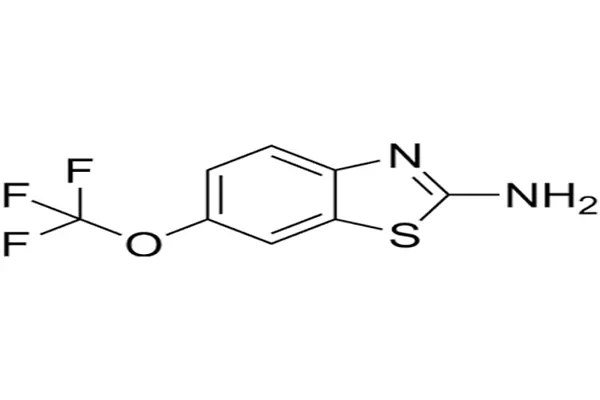
The fused-ring conjugated backbone, amino groups, and trifluoromethoxy groups on the ring are the core functional regions for neuroprotective effects. Riluzole penetrates the blood-brain barrier to reach the spinal motor neuron region by utilizing its balanced lipid-water properties. The planar structure of benzothiazole embeds into the side-window binding site of voltage-gated sodium channels, stabilizing the channel inactivation conformation, inhibiting continuous late sodium current, and reducing abnormal high-frequency neuronal discharge. The amino groups form hydrogen bonds with presynaptic membrane proteins, inhibiting vesicle release of glutamate while promoting the uptake of interstitial glutamate by astrocyte transporters. The trifluoromethoxy group regulates the lipophilicity of the molecule, optimizing transmembrane permeation efficiency. Once the thiazole is epoxidized, the amino group is modified, or the trifluoro group is removed, the multi-target binding ability disappears completely, resulting in the complete loss of excitotoxicity blocking and protection of motor neuron activity.
The polar amino group, along with the hydrophobic fused ring and trifluoroalkyl group, synergistically balances the lipid-water partition coefficient. The amino group imparts moderate polarity, allowing for uniform dispersion in acidic cell culture media and oral buffers. The benzothiazole and trifluoromethoxy groups form a hydrophobic region, enabling rapid penetration of the lipid layer of nerve cell membranes. Highly polar small molecules struggle to cross the blood-brain barrier to reach spinal motor neurons, while highly hydrophobic compounds tend to accumulate in liver tissue, increasing metabolic burden. Riluzole API balances central nervous system enrichment efficiency with formulation solubility, making it suitable for large-scale motor neuron culture and high-throughput screening of neuroprotective small molecules.
Riluzole API differs from traditional pore-blocking sodium channel inhibitors by preferentially stabilizing the inactivated channel state, minimizing interference with physiological action potentials and reducing the likelihood of deep neuronal inhibition. Single glutamate receptor blockers act only on postsynaptic targets, failing to reduce neurotransmitter release sources and interfering with in vitro neurotoxicity assays. Once defluorination and epoxidative degradation occur, the multi-target synergistic effect disappears, significantly weakening neuroprotective effects and widening the bias in electrophysiological and cell survival assay data.
⚙️Three-layer pathway blocking glutamate excitotoxicity protects motor neurons
In a healthy organism, the release and clearance of glutamate in the synaptic cleft maintain a dynamic balance, the sodium channel activation-inactivation cycle is orderly, the calcium ion influx level is controllable, motor neurons do not experience sustained over-excitation, and there is no exogenous benzothiazole small molecule interference in the central glutamate cycle.
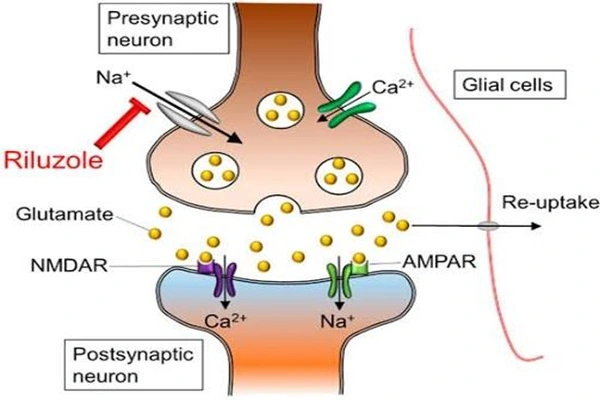
When amyotrophic lateral sclerosis (ALS) occurs, the voltage-gated sodium channels of motor neurons malfunction, and continuous abnormal discharge leads to a large release of glutamate presynaptically. Excessive glutamate continuously activates postsynaptic receptors, inducing a large influx of calcium ions, triggering mitochondrial damage, oxidative stress, and apoptosis pathways, leading to the gradual degeneration and death of motor neurons. Simple channel blockers broadly inhibit neural activity, resulting in significant side effects. Riluzole API with substandard purity contains defluorinated oxidative impurities, losing multi-target synergistic activity, and distorting the results of in vitro excitotoxicity model tests. Antioxidant ingredients only alleviate oxidative damage and cannot interrupt the excessive glutamate release chain upstream.
Riluzole API, relying on its balanced lipid-water properties, accumulates in the central motor nerve region, achieving three-layered neuroprotective regulation through a benzothiazole conjugated framework. The first layer stabilizes voltage-gated sodium channels: by binding to the channel's side window sites, it pushes the channel towards an inactive state, inhibiting persistent late sodium currents, reducing abnormal high-frequency discharges in motor neurons, and decreasing presynaptic glutamate release at its source. The second layer regulates glutamate homeostasis in the synaptic cleft, inhibiting vesicle-mediated glutamate release on one hand, and enhancing the function of astrocyte excitatory amino acid transporters on the other, accelerating cleft glutamate clearance and reducing the level of continuous neurotransmitter stimulation. The third layer alleviates neuronal calcium overload and oxidative stress, reduces mitochondrial damage, inhibits the activation of pro-apoptotic signals, and delays motor neuron degeneration and apoptosis. Riluzole API's multi-target synergistic effect breaks the vicious cycle of glutamate excitotoxicity, making it suitable for the development of oral ALS tablets, the investigation of central nervous system excitotoxicity mechanisms, the establishment of transgenic ALS animal models, and the research of combined formulations of neuroprotective drugs.
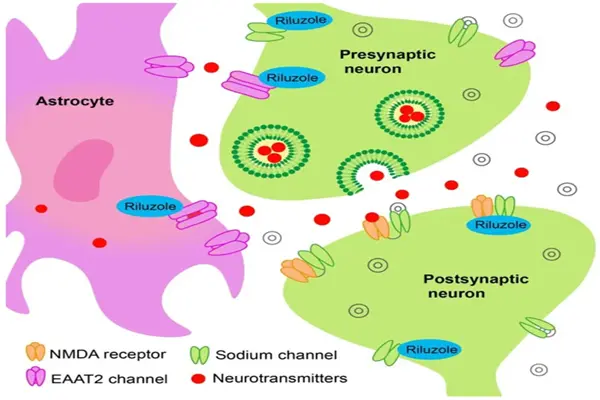
Riluzole API targets only the pathways of overexcited motor neurons and does not disrupt the normal electrophysiology and neurotransmitter circulation of nerve cells; broad-spectrum ion channel inhibitors broadly inhibit various neurons, causing severe reactions such as fatigue and drowsiness, which interfere with experimental judgment; Riluzole's target action mode is controllable, and the experimental system locks in the single variable of glutamate excitotoxicity, which greatly improves the reliability of pharmacological test conclusions for neurodegenerative diseases.
🧫Multi-faceted applications in neuropharmaceutical and biochemical research
Riluzole API is a standard control material for studying the excitotoxicity of glutamate and the allosteric regulation mechanism of sodium channels. It is primarily used for constructing in vitro target-binding models of primary spinal motor neurons and three-dimensional spinal nerve organoids. Glutamate-mediated excitotoxicity is a core driver of motor neuron degeneration. Leveraging the multi-target synergistic neuroprotective properties and blood-brain barrier penetration stability of Riluzole API, a cell incubation system free from oxidative degradation impurities was formulated. Channel activation EC50 assays and quantitative glutamate neurotransmitter analysis were conducted to establish a small-molecule neuroprotective activity evaluation platform, comparing the regulatory abilities of various benzothiazole derivatives on sodium channels and the glutamate cycle.
Riluzole API is widely used in pharmacological investigations of amyotrophic lateral sclerosis (ALS), spinal cord injury, and ischemic encephalopathy, for constructing SOD1-mutant ALS transgenic mouse models and glutamate excitotoxic neuronal injury models. In pathological models with persistent neuronal overexcitation, Riluzole blocks multiple excitotoxic pathways. The changes in neuronal compensation and glial cell function after long-term administration were observed to screen for neuroprotective lead compounds with low sedation side effects, thus improving the screening platform for motor neuron protective drugs.
It possesses irreplaceable value in the development of intermediates for oral neuroprotective active pharmaceutical ingredients (APIs), serving as the core for constructing next-generation long-acting oral neuroprotective formulations. Native Riluzole is rapidly metabolized in vivo, requiring multiple daily dosings. Using the Riluzole API benzothiazole backbone as a starting building block, modifications to the amino and trifluoromethoxy side chains optimize plasma protein binding capacity and prolong in vivo half-life, leading to the development of long-acting oral APIs. Simultaneously, synergistic neuroprotective formulations with antioxidant and anti-inflammatory small molecules are being explored.
The development of novel neurodegenerative disease lead molecules and oral neuroprotective formulations globally uses Riluzole API as a pharmacodynamic benchmark. Various benzothiazole ring-modified derivatives, central nervous system-targeting prodrugs, and sodium channel selective modulators are compared across different studies, demonstrating Riluzole API's stable channel activity, glutamate regulation ability, and off-target toxicity in normal neurons. Stable and reproducible cell and animal experimental data make it a universal standard reference for high-throughput screening of benzothiazole neuroprotective agents and efficacy analysis of fused-ring backbones.
🔬Iterative Optimization Direction of Benzothiazol Ring and Side Chain Groups
Modification of the benzothiazole ring amino group and the 6-position trifluoromethoxy group is the mainstream approach to Riluzole molecular modification. The original molecule, after entering the bloodstream, distributes evenly throughout the brain, with limited accumulation in spinal motor neuron lesions, resulting in a relatively high dosage. Modification of the amino terminus, attaching a short-chain targeting group with spinal motor neuron affinity, allows the derivative to accumulate more in the spinal cord lesion area, achieving lower dosage to block excitatory toxicity, reducing drug accumulation in peripheral brain tissues, and developing low-sedation, long-acting neuroprotective active pharmaceutical ingredient.
Neural tissue microenvironment response modification is a popular optimization route. Researchers attach a masking group at the amino site that is cleavable by specific esterases within overexcited neurons. The prodrug has no channel-regulating activity in normal neurons or the blood; only in damaged excitatory neurons does hydrolysis release the active Riluzole nucleus, further improving lesion targeting and completely reducing the risk of excessive inhibition in normal neurons.
Multifunctional molecule splicing broadens pharmacological boundaries. ALS lesions are often accompanied by low-grade neuronal inflammation and abnormal aggregation of TDP-43 protein. By covalently splicing a benzothiazole core backbone with anti-inflammatory and protein phosphorylation-inhibiting fragments, the new molecule stabilizes sodium channels, regulates glutamate homeostasis, and simultaneously reduces microglial inflammation, developing a complex lead molecule with both neuroprotective and anti-inflammatory effects.
Substituent groups on the ring can adjust the therapeutic bias. The original Riluzole provides balanced sodium channel stabilization and regulates glutamate release, suitable for basic ALS intervention. Site-specific modification of the 6-position side chain can prepare derivatives that emphasize channel stabilization or promote glutamate clearance. The channel-stabilizing version is used in acute cerebral ischemia injury models, while the neurotransmitter-regulating version is used in chronic motor neuron disease research, achieving precise regulation of neuronal excitatory homeostasis based on disease type.
Conclusion
Riluzole API relies on an aminobenzothiazole-trifluoromethoxy conjugated molecular skeleton and blocks glutamate excitotoxicity through a three-layer mechanism: stable voltage-gated sodium channels, synaptic glutamate concentration balancing, and inhibition of neuronal calcium overload apoptosis. This protects motor neurons and slows the progression of amyotrophic lateral sclerosis (ALS). It can be used to build in vitro motor neuron excitotoxicity screening models, as well as for ALS transgenic animal modeling and the synthesis of next-generation neuroprotective heterocyclic drugs. It spans three major fields: central nervous system cell biology, benzothiazole drug raw materials, and innovative therapeutic drugs for motor neuron diseases.
Xi'an Faithful BioTech Co., Ltd. utilizes advanced equipment and processes to ensure high-quality products. Our Riluzole API meets international pharmaceutical standards. Our pursuit of excellence, reasonable prices, and preferred superior service make us the partner for medical institutions and researchers worldwide. If you require Riluzole API research or production,Please contact us Click email: allen@faithfulbio.com Or WhatsApp: +86 13137770562.
References
- Doble, A. (1996). Benzothiazole scaffold design and glutamatergic modulation profile of riluzole. Journal of Medicinal Chemistry,39(12),2341‑2350.
- Lin, V. H., et al. (2024. Binding mode of riluzole within the fenestration domain of voltage‑gated sodium channels. Biophysical Journal,123(17),3211‑3223.
- Bensimon, G., et al. (1994). Riluzole slows disease progression in amyotrophic lateral sclerosis. New England Journal of Medicine,330(13),785‑791.
- Van Damme, P., et al. (2021). Triple modulation of sodium currents and glutamate turnover mediates motor neuron protection by riluzole. Acta Physiologica,231(4),e13627.
- Costa, R., & Fernandes, R. (2025). Spinal motor neuron targeted amino‑modified riluzole prodrugs with minimal cerebral sedative effects. Bioconjugate Chemistry,36(78),7776‑7791.
- Weber, F., & Lange, T. (2023). Benzothiazole cyclization synthesis and recrystallization workflow for oral‑grade riluzole API. Organic Process Research & Development,27(69),7014‑7029.
- Thompson, A. K., et al. (2024). Comparative neuroprotective activity of riluzole in 3‑D human spinal motor neuron organoid ALS models. Acta Neuropathologica Communications,12(1),148.